Jocelyn Szczepaniak-Gillece - Böcker
Visar alla böcker från författaren Jocelyn Szczepaniak-Gillece. Handla med fri frakt och snabb leverans.
6 produkter
6 produkter
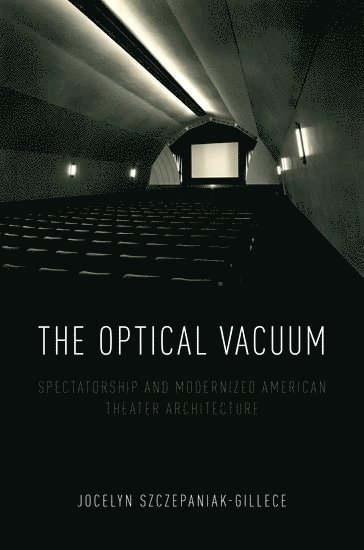
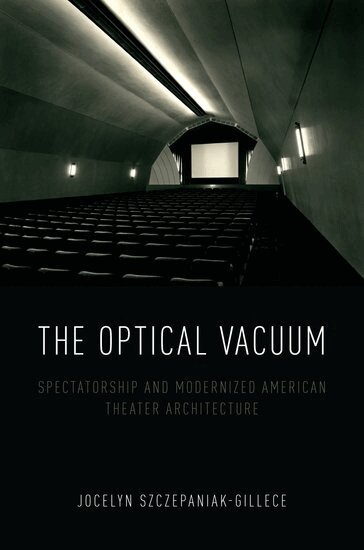
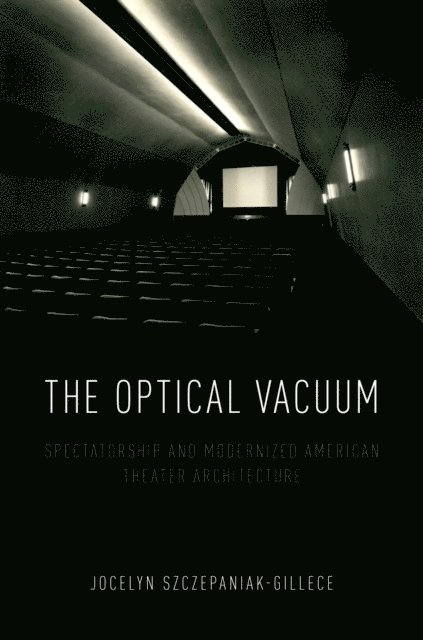
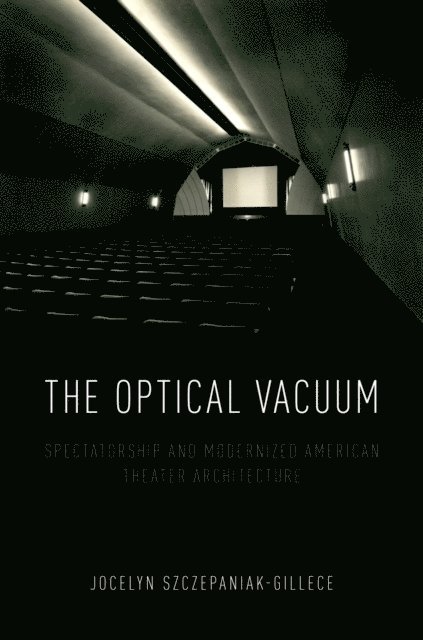
The Optical Vacuum
Spectatorship and Modernized American Theater Architecture
Inbunden, Engelska, 2018
1 347 kr
Skickas inom 7-10 vardagar
Between the 1920s and the 1960s, American mainstream cinematic architecture underwent a seismic shift. From the massive movie palace to the intimate streamlined theater, movie theaters became neutralized spaces for calibrated, immersive watching. Leading this charge was New York architect Benjamin Schlanger, a fiery polemicist whose designs and essays reshaped how movies were watched. In its close examination of Schlanger's work and of changing patterns of spectatorship, this book reveals that the essence of film viewing lies not only in the text, but in the spaces where movies are shown. The Optical Vacuum demonstrates that our changing models of cinephilia are always determined by physical structure: from the decorations of the palace to the black box of the contemporary auditorium, variations in movie theater design are icons for how viewing has similarly transformed.
428 kr
Skickas inom 5-8 vardagar
Between the 1920s and the 1960s, American mainstream cinematic architecture underwent a seismic shift. From the massive movie palace to the intimate streamlined theater, movie theaters became neutralized spaces for calibrated, immersive watching. Leading this charge was New York architect Benjamin Schlanger, a fiery polemicist whose designs and essays reshaped how movies were watched. In its close examination of Schlanger's work and of changing patterns of spectatorship, this book reveals that the essence of film viewing lies not only in the text, but in the spaces where movies are shown. The Optical Vacuum demonstrates that our changing models of cinephilia are always determined by physical structure: from the decorations of the palace to the black box of the contemporary auditorium, variations in movie theater design are icons for how viewing has similarly transformed.
1 189 kr
Skickas inom 7-10 vardagar
At the dawn of the digital era in the final decades of the twentieth century, film and media studies scholars grappled with the prospective end of what was deemed cinema: analog celluloid production, darkened public movie theaters, festival culture. The notion of the “end of cinema” had already been broached repeatedly over the course of the twentieth century-from the introduction of sound and color to the advent of television and video-and in Ends of Cinema, contributors reinvigorate this debate to contemplate the ends, as well as directions and new beginnings, of cinema in the twenty-first century.In this volume, scholars at the forefront of film and media studies interrogate multiple potential “ends” of cinema: its goals and spaces, its relationship to postcinema, its racial dynamics and environmental implications, and its theoretical and historical conclusions. Moving beyond the predictable question of digital versus analog, the scholars gathered here rely on critical theory and historical research to consider cinema alongside its media companions: television, the gallery space, digital media, and theatrical environments. Ends of Cinema underscores the shared project of film and media studies to open up what seems closed off, and to continually reinvent approaches that seem unresponsive. Contributors: Caetlin Benson-Allott, Georgetown U; James Leo Cahill, U of Toronto; Francesco Casetti, Yale U; Mary Ann Doane, U of California Berkeley; AndrÉ Gaudreault, U de MontrÉal; Michael Boyce Gillespie, City College of New York; Mark Paul Meyer, EYE Filmmuseum; Jennifer Lynn Peterson, Woodbury U, Los Angeles; Amy Villarejo, Cornell U.
283 kr
Skickas inom 7-10 vardagar
At the dawn of the digital era in the final decades of the twentieth century, film and media studies scholars grappled with the prospective end of what was deemed cinema: analog celluloid production, darkened public movie theaters, festival culture. The notion of the “end of cinema” had already been broached repeatedly over the course of the twentieth century-from the introduction of sound and color to the advent of television and video-and in Ends of Cinema, contributors reinvigorate this debate to contemplate the ends, as well as directions and new beginnings, of cinema in the twenty-first century.In this volume, scholars at the forefront of film and media studies interrogate multiple potential “ends” of cinema: its goals and spaces, its relationship to postcinema, its racial dynamics and environmental implications, and its theoretical and historical conclusions. Moving beyond the predictable question of digital versus analog, the scholars gathered here rely on critical theory and historical research to consider cinema alongside its media companions: television, the gallery space, digital media, and theatrical environments. Ends of Cinema underscores the shared project of film and media studies to open up what seems closed off, and to continually reinvent approaches that seem unresponsive. Contributors: Caetlin Benson-Allott, Georgetown U; James Leo Cahill, U of Toronto; Francesco Casetti, Yale U; Mary Ann Doane, U of California Berkeley; AndrÉ Gaudreault, U de MontrÉal; Michael Boyce Gillespie, City College of New York; Mark Paul Meyer, EYE Filmmuseum; Jennifer Lynn Peterson, Woodbury U, Los Angeles; Amy Villarejo, Cornell U.
1 224 kr
Skickas inom 7-10 vardagar
A cultural history of the enduring relationship between film spectatorship and intoxicating substances Movies under the Influence charts the entangled histories of moviegoing and mind-altering substances from early cinema through the psychedelic 1970s. Jocelyn Szczepaniak-Gillece examines how the parallel trajectories of these two enduring aspects of American culture, linked by their ability to influence individual and collective consciousness, resulted in them being treated and regulated in similar ways. Rather than looking at representations of drug use within film, she regards cinema and intoxicants as kindred experiences of immersion that have been subject to corresponding forces of ideology and power. Exploring the effects of intoxicants such as caffeine, nicotine, alcohol, marijuana, and psychedelics on film spectatorship, Szczepaniak-Gillece demonstrates how American movie theaters sought to cultivate a dual identity, presenting themselves as both a place of wholesome entertainment and a shadowy zone of illicit behavior. Movies under the Influence highlights the various legislative, legal, and corporate powers that held sway over the darkened anonymity of theaters, locating the convergence of moviegoing and drug use as a site of mediation and social control in America. As much as substances and cinema are points where power intervenes, they are also settings of potential transcendence, and Movies under the Influence maintains this paradox as a necessary component of American film history. Recontextualizing a wide range of films, from Hollywood to the avant-garde, this book examines the implicit relationship intoxicants suggest between mass media, spectatorship, and governmental regulation and provides a new angle from which to understand cinema’s lasting role in evolving American culture.
291 kr
Skickas inom 7-10 vardagar
A cultural history of the enduring relationship between film spectatorship and intoxicating substances Movies under the Influence charts the entangled histories of moviegoing and mind-altering substances from early cinema through the psychedelic 1970s. Jocelyn Szczepaniak-Gillece examines how the parallel trajectories of these two enduring aspects of American culture, linked by their ability to influence individual and collective consciousness, resulted in them being treated and regulated in similar ways. Rather than looking at representations of drug use within film, she regards cinema and intoxicants as kindred experiences of immersion that have been subject to corresponding forces of ideology and power. Exploring the effects of intoxicants such as caffeine, nicotine, alcohol, marijuana, and psychedelics on film spectatorship, Szczepaniak-Gillece demonstrates how American movie theaters sought to cultivate a dual identity, presenting themselves as both a place of wholesome entertainment and a shadowy zone of illicit behavior. Movies under the Influence highlights the various legislative, legal, and corporate powers that held sway over the darkened anonymity of theaters, locating the convergence of moviegoing and drug use as a site of mediation and social control in America. As much as substances and cinema are points where power intervenes, they are also settings of potential transcendence, and Movies under the Influence maintains this paradox as a necessary component of American film history. Recontextualizing a wide range of films, from Hollywood to the avant-garde, this book examines the implicit relationship intoxicants suggest between mass media, spectatorship, and governmental regulation and provides a new angle from which to understand cinema’s lasting role in evolving American culture.