Johannes Novy - Böcker
Visar alla böcker från författaren Johannes Novy. Handla med fri frakt och snabb leverans.
5 produkter
5 produkter
670 kr
Skickas inom 10-15 vardagar
Cities are many things. Among their least appealing aspects, cities are frequently characterized by concentrations of insecurity and exploitation. Cities have also long represented promises of opportunity and liberation. Public decision-making in contemporary cities is full of conflict, and principles of justice are rarely the explicit basis for the resolution of disputes. If today’s cities are full of injustices and unrealized promises, how would a Just City function? Is a Just City merely a utopia, or does it have practical relevance? This book engages with the growing debate around these questions. The notion of the Just City emerges from philosophical discussions about what justice is combined with the intellectual history of utopias and ideal cities. The contributors to this volume, including Susan Fainstein, David Harvey and Margit Mayer articulate a conception of the Just City and then examine it from differing angles, ranging from Marxist thought to communicative theory. The arguments both develop the concept of a Just City and question it, as well as suggesting alternatives for future expansion. Explorations of the concept in practice include case studies primarily from U.S. cities, but also from Europe, the Middle East and Latin America. The authors find that a forthright call for justice in all aspects of city life, putting the question of what a Just City should be on the agenda of urban reform, can be a practical approach to solving questions of urban policy. This synthesis is provocative in a globalised world and the contributing authors bridge the gap between theoretical conceptualizations of urban justice and the reality of planning and building cities. The notion of the Just City is an empowering framework for contemporary urban actors to improve the quality of urban life and Searching for the Just City is a seminal read for practitioners, professionals, students, researchers and anyone interested in what urban futures should aim to achieve.
2 238 kr
Skickas inom 10-15 vardagar
Cities are many things. Among their least appealing aspects, cities are frequently characterized by concentrations of insecurity and exploitation. Cities have also long represented promises of opportunity and liberation. Public decision-making in contemporary cities is full of conflict, and principles of justice are rarely the explicit basis for the resolution of disputes. If today’s cities are full of injustices and unrealized promises, how would a Just City function? Is a Just City merely a utopia, or does it have practical relevance? This book engages with the growing debate around these questions. The notion of the Just City emerges from philosophical discussions about what justice is combined with the intellectual history of utopias and ideal cities. The contributors to this volume, including Susan Fainstein, David Harvey and Margit Mayer articulate a conception of the Just City and then examine it from differing angles, ranging from Marxist thought to communicative theory. The arguments both develop the concept of a Just City and question it, as well as suggesting alternatives for future expansion. Explorations of the concept in practice include case studies primarily from U.S. cities, but also from Europe, the Middle East and Latin America. The authors find that a forthright call for justice in all aspects of city life, putting the question of what a Just City should be on the agenda of urban reform, can be a practical approach to solving questions of urban policy. This synthesis is provocative in a globalised world and the contributing authors bridge the gap between theoretical conceptualizations of urban justice and the reality of planning and building cities. The notion of the Just City is an empowering framework for contemporary urban actors to improve the quality of urban life and Searching for the Just City is a seminal read for practitioners, professionals, students, researchers and anyone interested in what urban futures should aim to achieve.
670 kr
Skickas inom 10-15 vardagar
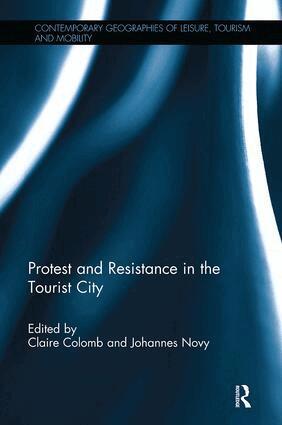
Across the globe, from established tourist destinations such as Venice or Prague to less traditional destinations in both the global North and South, there is mounting evidence that points to an increasing politicization of the topic of urban tourism. In some cities, residents and other stakeholders take issue with the growth of tourism as such, as well as the negative impacts it has on their cities; while in others, particular forms and effects of tourism are contested or deplored. In numerous settings, contestations revolve less around tourism itself than around broader processes, policies and forces of urban change perceived to threaten the right to ‘stay put’, the quality of life or identity of existing urban populations. This book for the first time looks at urban tourism as a source of contention and dispute and analyses what type of conflicts and contestations have emerged around urban tourism in 16 cities across Europe, North America, South America and Asia. It explores the various ways in which community groups, residents and other actors have responded to – and challenged – tourism development in an international and multi-disciplinary perspective. The title links the largely discrete yet interconnected disciplines of ‘urban studies’ and ‘tourism studies’ and draws on approaches and debates from urban sociology; urban policy and politics; urban geography; urban anthropology; cultural studies; urban design and planning; tourism studies and tourism management. This ground breaking volume offers new insight into the conflicts and struggles generated by urban tourism and will be of interest to students, researchers and academics from the fields of tourism, geography, planning, urban studies, development studies, anthropology, politics and sociology.
2 171 kr
Skickas inom 10-15 vardagar
Across the globe, from established tourist destinations such as Venice or Prague to less traditional destinations in both the global North and South, there is mounting evidence that points to an increasing politicization of the topic of urban tourism. In some cities, residents and other stakeholders take issue with the growth of tourism as such, as well as the negative impacts it has on their cities; while in others, particular forms and effects of tourism are contested or deplored. In numerous settings, contestations revolve less around tourism itself than around broader processes, policies and forces of urban change perceived to threaten the right to ‘stay put’, the quality of life or identity of existing urban populations. This book for the first time looks at urban tourism as a source of contention and dispute and analyses what type of conflicts and contestations have emerged around urban tourism in 16 cities across Europe, North America, South America and Asia. It explores the various ways in which community groups, residents and other actors have responded to – and challenged – tourism development in an international and multi-disciplinary perspective. The title links the largely discrete yet interconnected disciplines of ‘urban studies’ and ‘tourism studies’ and draws on approaches and debates from urban sociology; urban policy and politics; urban geography; urban anthropology; cultural studies; urban design and planning; tourism studies and tourism management. This ground breaking volume offers new insight into the conflicts and struggles generated by urban tourism and will be of interest to students, researchers and academics from the fields of tourism, geography, planning, urban studies, development studies, anthropology, politics and sociology.
1 250 kr
Skickas inom 7-10 vardagar
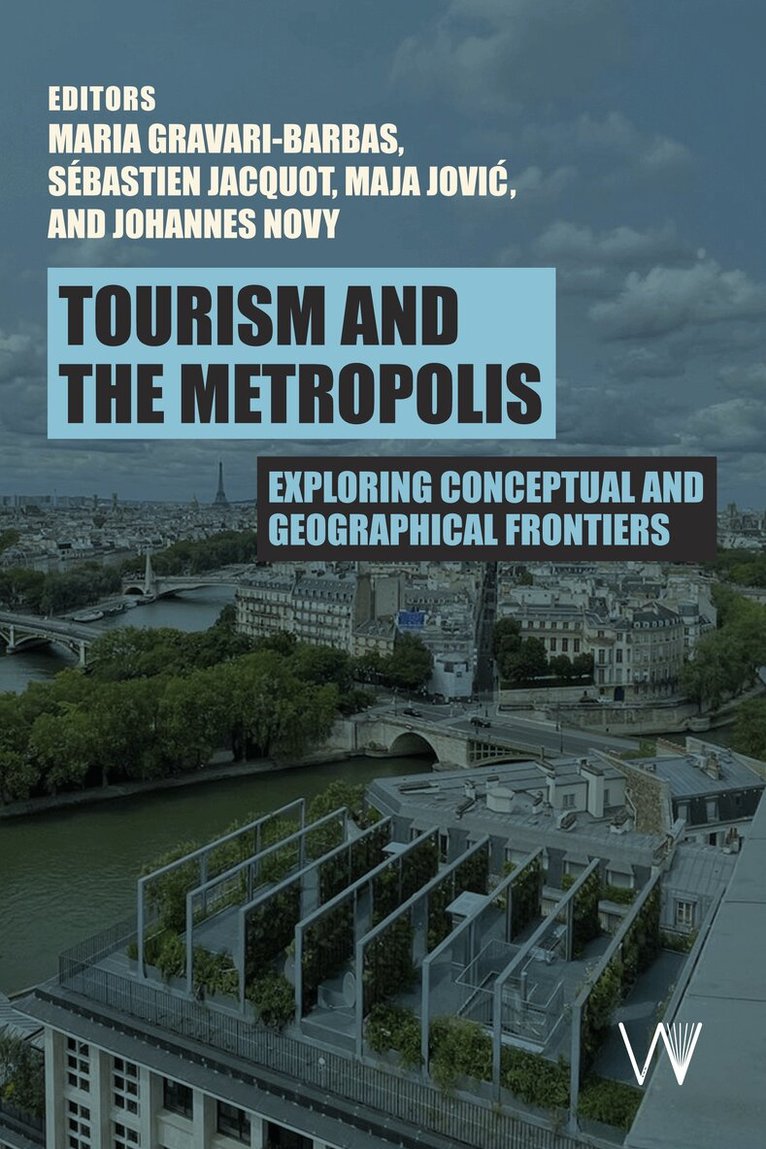
The growing role and relevance of tourism in cities – and of cities in tourism – has in recent decades emerged as a topic of great interest to scholars across many social sciences disciplines. Yet, while urban tourism research has flourished, various issues relating to tourism in metropolitan contexts are in need of greater scholarly engagement.What forms does tourism take in today’s metropolises and metropolitan regions? How do these forms differ from tourism in other urban contexts? Are these differences significant enough to warrant the classification of ‘metropolitan tourism’ as a distinct type of urban tourism? What are their implications for policy and planning processes? How do policy and planning processes in different metropolises and metropolitan regions differ from each other, and what can they learn from each other? And finally, how could tourism in metropolises and metropolitan regions be made more sustainable, resilient, and inclusive?Given the importance widely attributed to major metropolises and metropolitan regions as contemporary engines of economic development, innovation, and change, the widespread portrayal of tourism as a leading economic and social force of the 21st century, and the fact that the world's large metropolitan areas are key recipients of tourism flows, it is surprising how little systematic attention is paid to tourism in metropolitan contexts. This book aims to fill these gaps.