John A Mathews - Böcker
Visar alla böcker från författaren John A Mathews. Handla med fri frakt och snabb leverans.
11 produkter
11 produkter
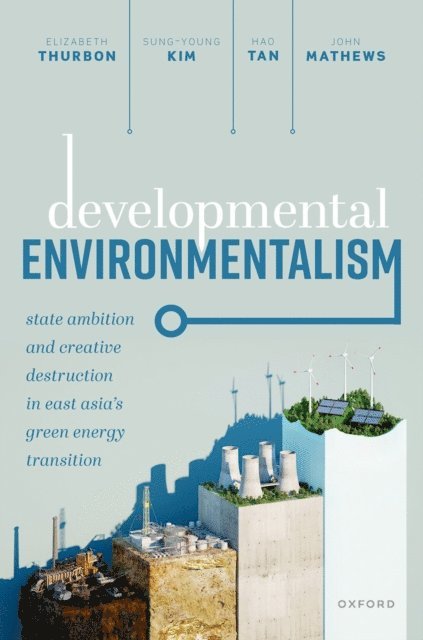
Developmental Environmentalism
State Ambition and Creative Destruction in East Asia’s Green Energy Transition
Inbunden, Engelska, 2023
1 010 kr
Skickas inom 5-8 vardagar
Why has East Asia emerged as the global leader in green energy industries but - until recently - lagged on carbon emission reduction? What is new and distinctive about East Asia's approach to the green energy transition? And what does this approach mean for the world? Developmental Environmentalism provides the first comprehensive account of East Asia's green energy shift. It highlights the powerful and symbiotic role of state ambition, geostrategic competition, and capitalist market dynamics in driving forward the region's greening efforts. Through an analysis of the ambitious national strategies of China and South Korea, the authors show how state actors have pursued a distinctively East Asian approach to transforming their energy systems, involving first the rapid creation of new green energy industries and then the coordinated destruction of fossil-fuel incumbencies. This approach - described as 'Developmental Environmentalism' - is aimed at establishing East Asian economies as leaders in the green industries of the future, while at the same time addressing the pressing environmental, social and political problems associated with the carbon-intensive industries of the past. By developing four detailed, longitudinal case studies of green industry creation and fossil-fuel phase out in China and Korea, the authors identify the key successes and failures of East Asia's green shift to date and anticipate its most likely future trajectory. Based on their findings, the authors reject the idea that East Asia's greening strategies are mere exercises in 'greenwashing' or fossil-fuelled 'business as usual'. Rather, there is something fundamentally transformative underway in the region at the level of elite ideation, strategic ambition, and policy action; the green energy shift represents much more than continuity in Asia's erstwhile developmental states. To execute their analysis, the authors synthesise insights from cutting-edge Developmental State and Schumpeterian theorising. They show how state actors in East Asia are engaging in a sophisticated kind of economic statecraft, strategically harnessing the capitalist market dynamics of 'creative-destruction' to advance their transformative green ambitions through green growth. They also assess the implications of developmental environmentalism for developed and developing countries, and the future of the global green shift in an era of geostrategic rivalry.
Developmental Environmentalism
State Ambition and Creative Destruction in East Asia’s Green Energy Transition
Häftad, Engelska, 2023
434 kr
Skickas inom 5-8 vardagar
Why has East Asia emerged as the global leader in green energy industries but - until recently - lagged on carbon emission reduction? What is new and distinctive about East Asia's approach to the green energy transition? And what does this approach mean for the world? Developmental Environmentalism provides the first comprehensive account of East Asia's green energy shift. It highlights the powerful and symbiotic role of state ambition, geostrategic competition, and capitalist market dynamics in driving forward the region's greening efforts. Through an analysis of the ambitious national strategies of China and South Korea, the authors show how state actors have pursued a distinctively East Asian approach to transforming their energy systems, involving first the rapid creation of new green energy industries and then the coordinated destruction of fossil-fuel incumbencies. This approach - described as 'Developmental Environmentalism' - is aimed at establishing East Asian economies as leaders in the green industries of the future, while at the same time addressing the pressing environmental, social and political problems associated with the carbon-intensive industries of the past. By developing four detailed, longitudinal case studies of green industry creation and fossil-fuel phase out in China and Korea, the authors identify the key successes and failures of East Asia's green shift to date and anticipate its most likely future trajectory. Based on their findings, the authors reject the idea that East Asia's greening strategies are mere exercises in 'greenwashing' or fossil-fuelled 'business as usual'. Rather, there is something fundamentally transformative underway in the region at the level of elite ideation, strategic ambition, and policy action; the green energy shift represents much more than continuity in Asia's erstwhile developmental states. To execute their analysis, the authors synthesise insights from cutting-edge Developmental State and Schumpeterian theorising. They show how state actors in East Asia are engaging in a sophisticated kind of economic statecraft, strategically harnessing the capitalist market dynamics of 'creative-destruction' to advance their transformative green ambitions through green growth. They also assess the implications of developmental environmentalism for developed and developing countries, and the future of the global green shift in an era of geostrategic rivalry.
1 738 kr
Skickas inom 5-8 vardagar
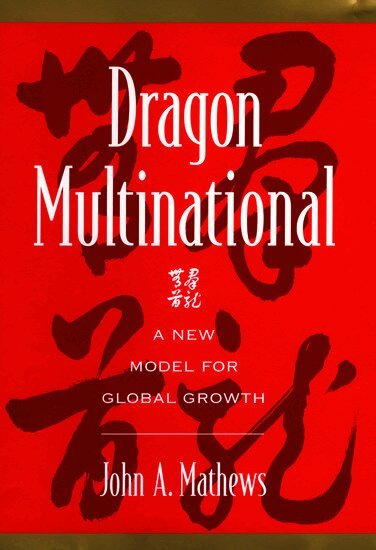
The conventional view of globalization sees it as a process driven by giant firms from the Triad regions of North America, Europe, and Japan, shaping the world in their own image. This book contests such a view, describing the extraordinary success of a handful of multinationals from the "Periphery" in globalizing their operations extremely rapidly. Focusing on Acer, the Taiwanese IT company; the Hong Leong hotel group of Singapore; Ispat International in steel; Cemex of Mexico in cement; and Li and Fung from Hong Kong in contract manufacturing, Matthews demonstrates that these firms have been able to utilize strategies of international linkage and leverage to accelerate their global coverage. He contends that they are pioneers of a new kind of global firm, indicators that the global business civilization being created in the 21st century is like to be pluralistic and diverse, offering unprecedented opportunities for firms that know how to enmesh themselves in global networks.
2 575 kr
Skickas inom 5-8 vardagar
Economic development, in its traditional formulation, ignores the impact of decisions made regarding energy, resources, and finance. The standard choices made are to use stocks of fossil fuels, stocks of resources and their linear flow, and generic finance. The implications of this are now clear. An alternative is being crafted which is based on flows of renewable energy and renewable fuels, on circular flows of resources, and on greening of financial instruments, such as equities and bonds. This involves a vast industrial revolution, creating the 'next' Great Transformation of the global economic system, one that is creating an economy that emulates life through its interconnections and circular flows. The shift is comprehensive, global, and all-encompassing. Greening of economic development is driven by industrial policy, technological capability, and enhancement of industrial capacity.With over fifty contributors, this volume draws on specialist expertise to provide a comprehensive overview of this process of greening of economic development. It demonstrates how the shift in energy, resource flows, and finance is a process rather than an endpoint; that it is compatible with economic growth; that it is powered by economic drivers such as cost reductions generated by experience curves; and that at the vast scale and rapid pace required it calls for a global Green Deal.The handbook frames novel objectives through greening that take state action and guidance in fresh directions and argues that the strategies involved are as relevant for emerging industrial economies creating new industries as to developed economies looking to transform themselves. Overall, it emphasizes how 'greening' creates a self-sustaining economy that does not cost the earth.
428 kr
Skickas inom 7-10 vardagar
This book grows out of a five-year collaborative research project undertaken by the authors in East Asia. They have worked with firms and institutions in Korea, Taiwan, Singapore and Malaysia, to inquire into the micro-processes of firm-level organizational learning that underpin technology leverage in an industry such as semiconductors. The processes investigated are not specific to microchips, but can be seen working in one knowledge-intensive sector after another. Mathews and Cho argue that indeed these are the processes that will shape industrial evolution in the twenty-first century, not just in East Asia but in the developed world as well. Tiger Technology concludes with an important observation - that wealth can be generated just as much through management of technology diffusion as through conventional concerns with innovation, provided the institutions of leverage are carefully constructed.
1 619 kr
Skickas inom 10-15 vardagar
This book starts from the proposition that frameworks used in business strategy lack realism because they are built on equilibrium-based foundations carried over from the domain of neoclassical economics. Mathews proposes instead a conceptual framework consistent with the turbulence found in real economies, and brings strategizing into conformity with such phenomena as innovation and technological change, network formation, capture of substitution effects in modular systems, and many other interesting features of modern economies that are passed over by mainstream equilibrium-based analysis. This new framework is based on the way firms assemble resources into a distinctive bundle, then build activities out of these resources to generate revenue, and link the resources to the activities through routines created and administered by management.
400 kr
Skickas inom 7-10 vardagar
This book starts from the proposition that frameworks used in business strategy lack realism because they are built on equilibrium-based foundations carried over from the domain of neoclassical economics. Mathews proposes instead a conceptual framework consistent with the turbulence found in real economies, and brings strategizing into conformity with such phenomena as innovation and technological change, network formation, capture of substitution effects in modular systems, and many other interesting features of modern economies that are passed over by mainstream equilibrium-based analysis. This new framework is based on the way firms assemble resources into a distinctive bundle, then build activities out of these resources to generate revenue, and link the resources to the activities through routines created and administered by management.
969 kr
Skickas inom 10-15 vardagar
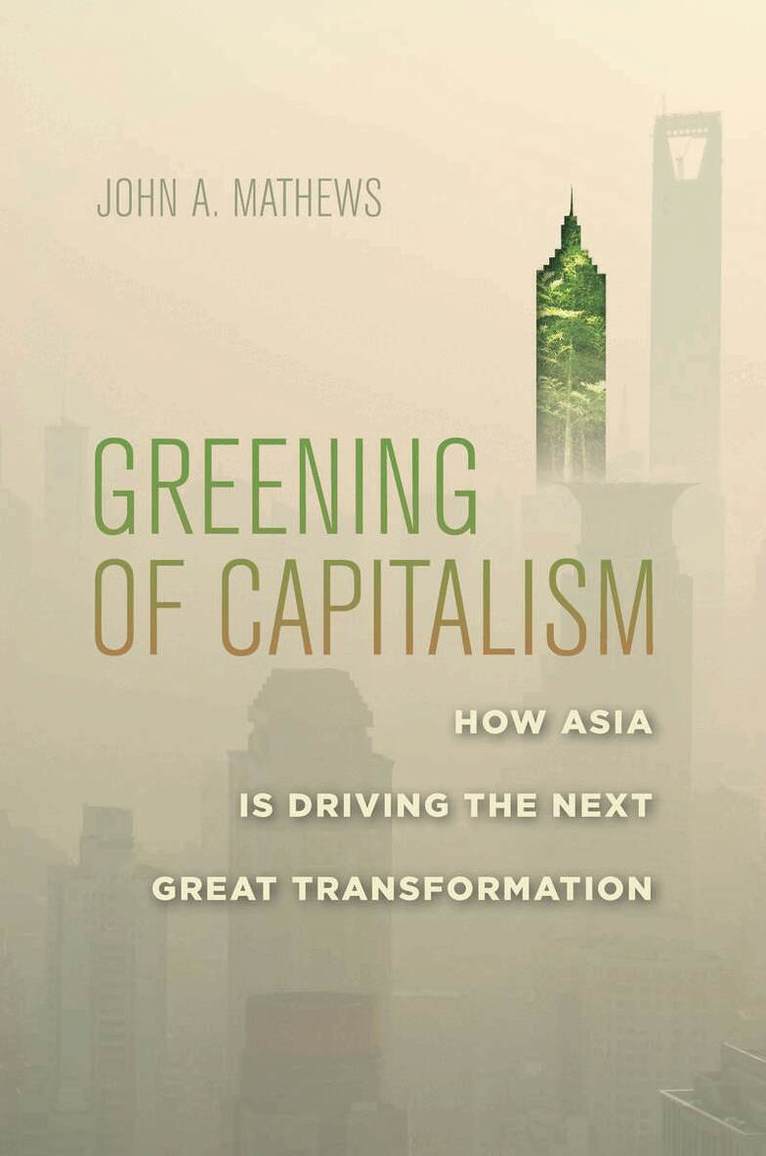
As China, India, and other industrializing giants grow, they are confronted with an inconvenient truth: They cannot rely on the conventions of capitalism as we know them today. Western industrialism has achieved miracles, promoting unprecedented levels of prosperity and raising hundreds of millions out of poverty. Yet, if allowed to proceed unencumbered, this paradigm will do irreversible harm to the planet.By necessity, a new approach to environmentally conscious development is already emerging in the East, with China leading the way. Positioning its argument against zero-growth advocates and free-market environmentalists, Greening of Capitalism charts this transformation and sketches out a framework for more sustainable capitalism. State-mandated changes in energy use (as opposed to carbon taxes), a circular flow of resources (as opposed to emissions standards), and the introduction of new financial instruments that support green growth are cornerstones of China's framework. John A. Mathews argues that these tenets will be emulated around the world—first in India and Brazil. In light of this emerging shift, Mathews considers core debates over national security, international relations, and economic policy, ultimately addressing the question of whether these measures will be far-reaching or timely enough to prevent further damage.
556 kr
Skickas inom 10-15 vardagar
The authors suggest that China's renewable energy system, the largest in the world, will quickly supersede the black energy system that has powered the country's rapid rise as workshop of the world and for reasons that have more to do with fixing environmental pollution and enhancing energy security than with curbing carbon emissions.
1 099 kr
Skickas inom 5-8 vardagar
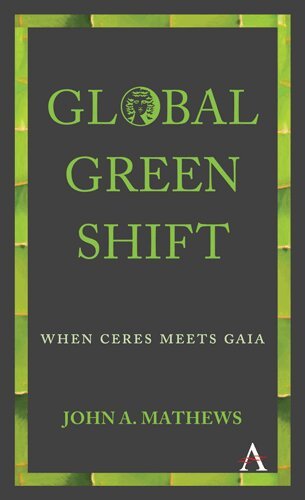
The world that created modern industry, pioneered in the West, is in decline. It is being transformed by a global green shift, creating new industries based on clean energy, clean water and clean food – all produced in a safe, clean and sustainable way, in abundance, at low (and diminishing) cost and without making further inroads into nature. This twenty-first century world is being driven by newly emerging industrial giants like China and India – just as the twentieth-century infrastructure of oil, automobiles and highways was created by the United States. It is China and India that are feeling the worst effects of industrializing along conventional ‘business as usual’ lines, and which have the greatest incentive to drive their own green shift. But the old world order based on a linear economy and fossil fuels is resisting bitterly, and will not give up without a fight. John A. Mathews explains how these trends and counter-trends are creating a new world order where an industrial system based on the Ceres (Circular Economy and Renewable Energy System) is seeking to take over from the world of fossil fuels, and provide scope for Gaia to become her wild self again. The outcome of this struggle is far from determined. It is the central issue to be resolved in the twenty-first century.
196 kr
Skickas
The world that created modern industry, pioneered in the West, is in decline. It is being transformed by a global green shift, creating new industries based on clean energy, clean water and clean food – all produced in a safe, clean and sustainable way, in abundance, at low (and diminishing) cost and without making further inroads into nature. This twenty-first century world is being driven by newly emerging industrial giants like China and India – just as the twentieth-century infrastructure of oil, automobiles and highways was created by the United States. It is China and India that are feeling the worst effects of industrializing along conventional ‘business as usual’ lines, and which have the greatest incentive to drive their own green shift. But the old world order based on a linear economy and fossil fuels is resisting bitterly, and will not give up without a fight. John A. Mathews explains how these trends and counter-trends are creating a new world order where an industrial system based on the Ceres (Circular Economy and Renewable Energy System) is seeking to take over from the world of fossil fuels, and provide scope for Gaia to become her wild self again. The outcome of this struggle is far from determined. It is the central issue to be resolved in the twenty-first century.