Hao Tan - Böcker
Visar alla böcker från författaren Hao Tan. Handla med fri frakt och snabb leverans.
4 produkter
4 produkter
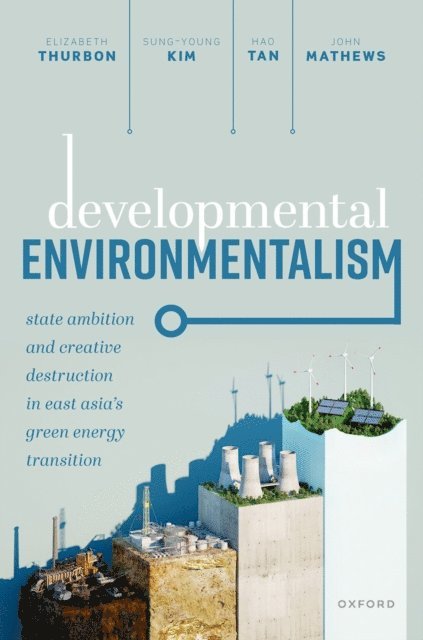
Developmental Environmentalism
State Ambition and Creative Destruction in East Asia’s Green Energy Transition
Inbunden, Engelska, 2023
1 010 kr
Skickas inom 5-8 vardagar
Why has East Asia emerged as the global leader in green energy industries but - until recently - lagged on carbon emission reduction? What is new and distinctive about East Asia's approach to the green energy transition? And what does this approach mean for the world? Developmental Environmentalism provides the first comprehensive account of East Asia's green energy shift. It highlights the powerful and symbiotic role of state ambition, geostrategic competition, and capitalist market dynamics in driving forward the region's greening efforts. Through an analysis of the ambitious national strategies of China and South Korea, the authors show how state actors have pursued a distinctively East Asian approach to transforming their energy systems, involving first the rapid creation of new green energy industries and then the coordinated destruction of fossil-fuel incumbencies. This approach - described as 'Developmental Environmentalism' - is aimed at establishing East Asian economies as leaders in the green industries of the future, while at the same time addressing the pressing environmental, social and political problems associated with the carbon-intensive industries of the past. By developing four detailed, longitudinal case studies of green industry creation and fossil-fuel phase out in China and Korea, the authors identify the key successes and failures of East Asia's green shift to date and anticipate its most likely future trajectory. Based on their findings, the authors reject the idea that East Asia's greening strategies are mere exercises in 'greenwashing' or fossil-fuelled 'business as usual'. Rather, there is something fundamentally transformative underway in the region at the level of elite ideation, strategic ambition, and policy action; the green energy shift represents much more than continuity in Asia's erstwhile developmental states. To execute their analysis, the authors synthesise insights from cutting-edge Developmental State and Schumpeterian theorising. They show how state actors in East Asia are engaging in a sophisticated kind of economic statecraft, strategically harnessing the capitalist market dynamics of 'creative-destruction' to advance their transformative green ambitions through green growth. They also assess the implications of developmental environmentalism for developed and developing countries, and the future of the global green shift in an era of geostrategic rivalry.
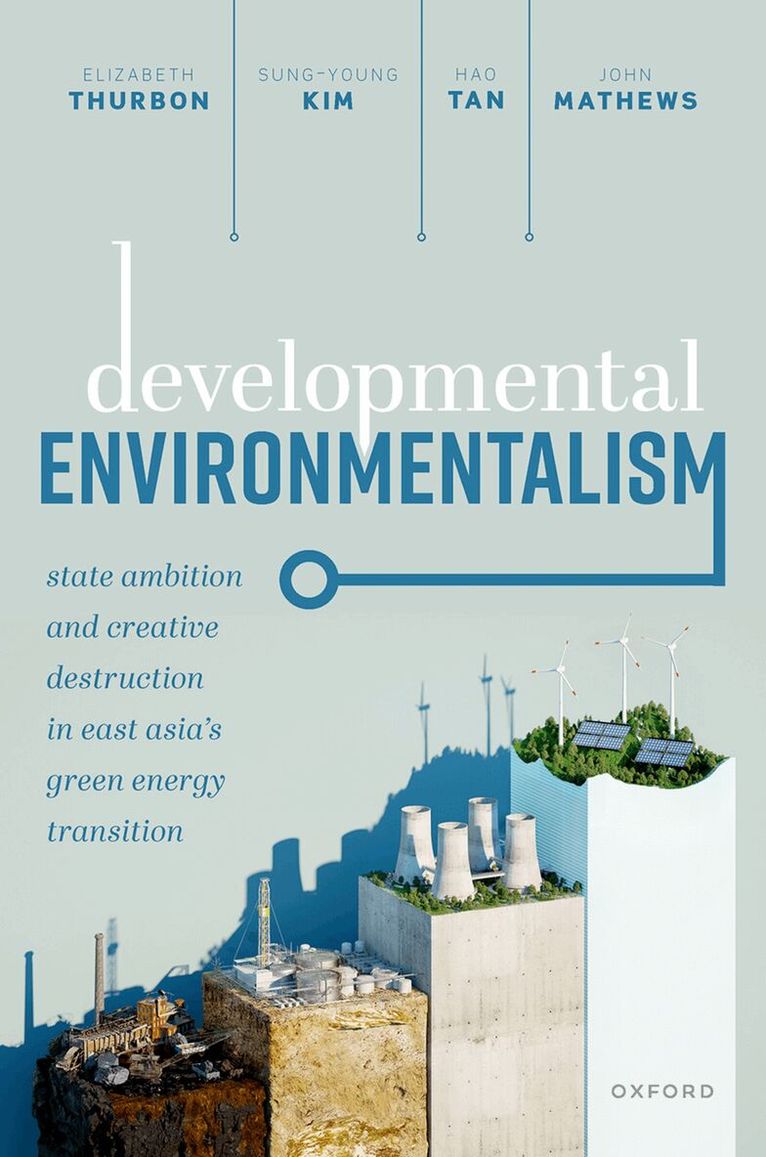
Developmental Environmentalism
State Ambition and Creative Destruction in East Asia’s Green Energy Transition
Häftad, Engelska, 2023
434 kr
Skickas inom 5-8 vardagar
Why has East Asia emerged as the global leader in green energy industries but - until recently - lagged on carbon emission reduction? What is new and distinctive about East Asia's approach to the green energy transition? And what does this approach mean for the world? Developmental Environmentalism provides the first comprehensive account of East Asia's green energy shift. It highlights the powerful and symbiotic role of state ambition, geostrategic competition, and capitalist market dynamics in driving forward the region's greening efforts. Through an analysis of the ambitious national strategies of China and South Korea, the authors show how state actors have pursued a distinctively East Asian approach to transforming their energy systems, involving first the rapid creation of new green energy industries and then the coordinated destruction of fossil-fuel incumbencies. This approach - described as 'Developmental Environmentalism' - is aimed at establishing East Asian economies as leaders in the green industries of the future, while at the same time addressing the pressing environmental, social and political problems associated with the carbon-intensive industries of the past. By developing four detailed, longitudinal case studies of green industry creation and fossil-fuel phase out in China and Korea, the authors identify the key successes and failures of East Asia's green shift to date and anticipate its most likely future trajectory. Based on their findings, the authors reject the idea that East Asia's greening strategies are mere exercises in 'greenwashing' or fossil-fuelled 'business as usual'. Rather, there is something fundamentally transformative underway in the region at the level of elite ideation, strategic ambition, and policy action; the green energy shift represents much more than continuity in Asia's erstwhile developmental states. To execute their analysis, the authors synthesise insights from cutting-edge Developmental State and Schumpeterian theorising. They show how state actors in East Asia are engaging in a sophisticated kind of economic statecraft, strategically harnessing the capitalist market dynamics of 'creative-destruction' to advance their transformative green ambitions through green growth. They also assess the implications of developmental environmentalism for developed and developing countries, and the future of the global green shift in an era of geostrategic rivalry.
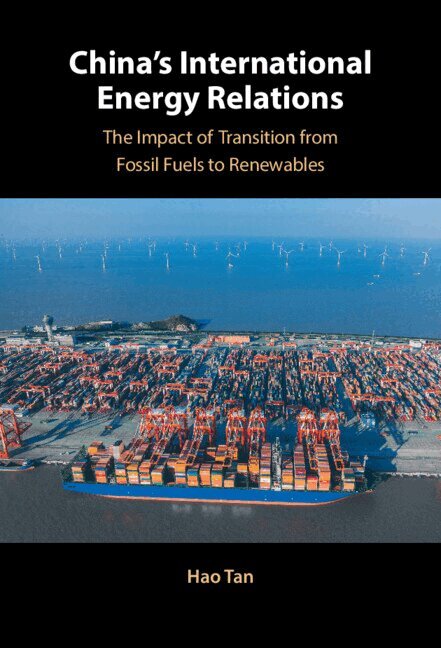
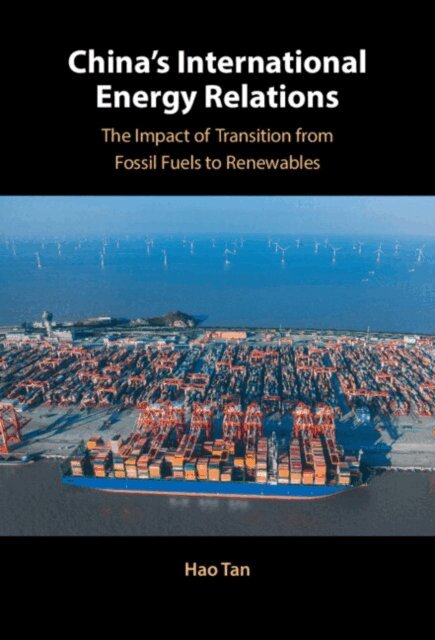
China's International Energy Relations
The Impact of Transition from Fossil Fuels to Renewables
Inbunden, Engelska, 2025
1 324 kr
Skickas inom 7-10 vardagar
This book presents a comprehensive account of China's evolving international energy relations (IER) as the world's largest energy user transitions from fossil fuels to renewables amidst significant geopolitical shifts. It introduces an original analytic framework for IER, focusing on three interconnected dimensions: the international business activities of energy companies at the micro level, state energy diplomacy and energy statecraft at the state level, and the nation's engagements with the global energy governance at the global level. Drawing an extensive range of Chinese and English-languages sources and employing novel perspectives, the book provides a timely analysis on this significant phenomenon. It constructs a compelling narrative on the profound impact of China's domestic energy transition and the changing geopolitical landscape on the country's international energy engagements.
556 kr
Skickas inom 10-15 vardagar
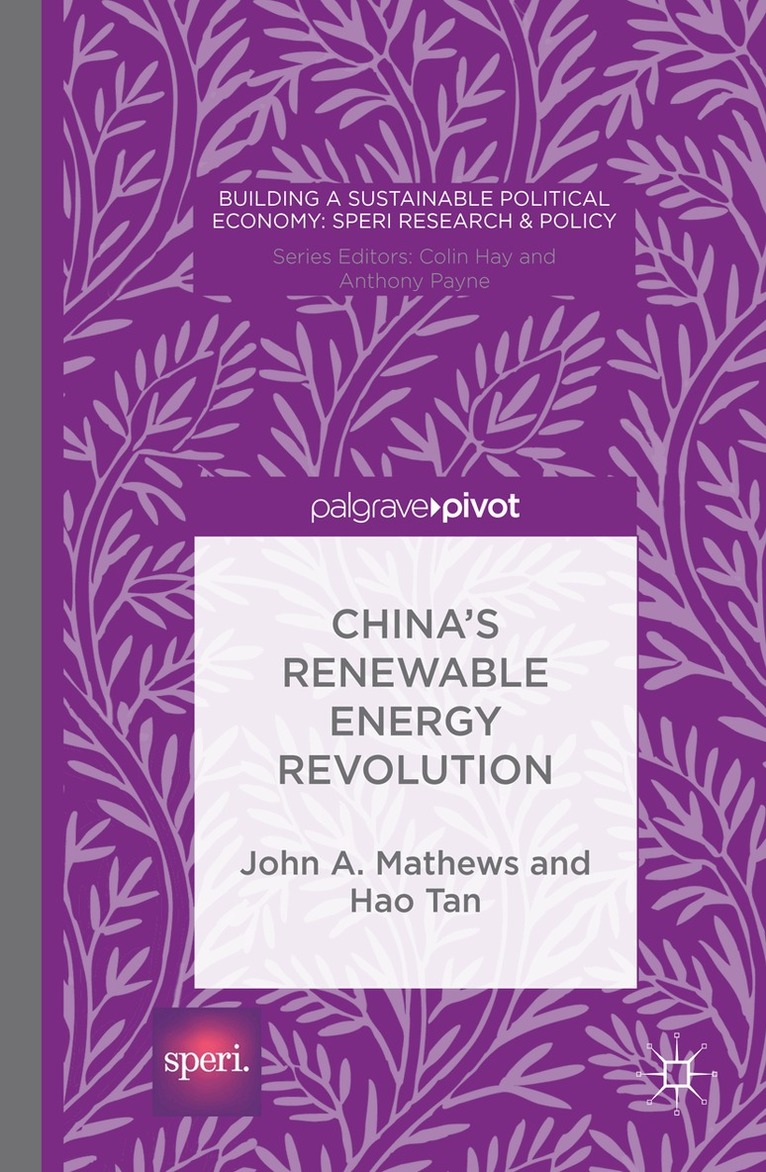
The authors suggest that China's renewable energy system, the largest in the world, will quickly supersede the black energy system that has powered the country's rapid rise as workshop of the world and for reasons that have more to do with fixing environmental pollution and enhancing energy security than with curbing carbon emissions.