John F. Jr. Stack - Böcker
Visar alla böcker från författaren John F. Jr. Stack. Handla med fri frakt och snabb leverans.
2 produkter
2 produkter
809 kr
Skickas inom 10-15 vardagar
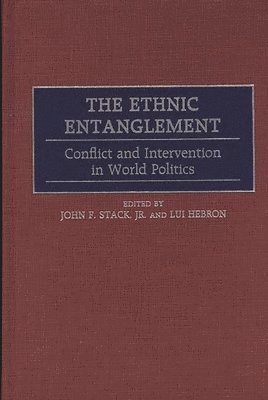
The ongoing reconstruction of world politics following the collapse of Soviet and Eastern European variants of communism have seemingly unleashed the power of ethnicity with a vengeance. Stack, Hebron, and their contributors explore the concept of ethnicity in international relations, seeking to address this most destabilizing, yet ubiquitous dimension of the emerging new world order. As a central force in international politics, ethnicity and ethnonational movements raise two fundamental questions about the nature of power and politics in contemporary international relations. First, what is the relationship between ethnicity and conflict within, across, and among states? Second, what role does ethnicity play in exacerbating conflicts which result in the intervention by external forces, both state and nonstate, manifested by increasing levels of violence and spillover instability, as exemplified by the Middle East, the Asian Republics of the former Soviet Union, and Yugoslavia?This book is designed to provide scholars of international relations with a compelling approach to the study of ethnicity. The study of ethnic nationalism is a growing area of scholarly inquiry not fully appreciated. Thus, this collection is designed to fill a void in the literature and, as such, will be of interest to students, scholars, and policy makers involved with issues of ethnicity and world politics.
1 009 kr
Skickas inom 10-15 vardagar
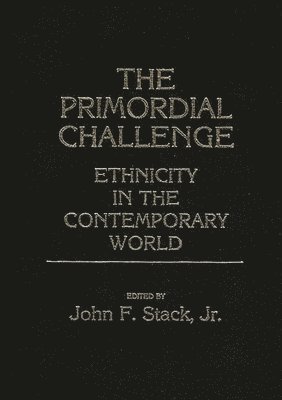
Ethnicity plays a vital role in contemporary world politics. This collection of essays documents the international dimensions of ethnic identity by examining the interaction between ethnicity and the actions of modern nation-states in a variety of global, regional, and urban settings throughout the world. The editor, John F. Stack, Jr., provocatively argues that the dynamics of ethnicity in the contemporary world are best examined from the perspective of primordial attachments--those givens of social existence based on family ties, race, custom, language, religion, and region. This perspective is disputed by a number of the contributors who see ethnicity as the result of instrumental forces--state building, socioeconomic class, modernization, political development, and the transformation of the global political economy.