Lui Hebron - Böcker
Visar alla böcker från författaren Lui Hebron. Handla med fri frakt och snabb leverans.
7 produkter
7 produkter
809 kr
Skickas inom 10-15 vardagar
The ongoing reconstruction of world politics following the collapse of Soviet and Eastern European variants of communism have seemingly unleashed the power of ethnicity with a vengeance. Stack, Hebron, and their contributors explore the concept of ethnicity in international relations, seeking to address this most destabilizing, yet ubiquitous dimension of the emerging new world order. As a central force in international politics, ethnicity and ethnonational movements raise two fundamental questions about the nature of power and politics in contemporary international relations. First, what is the relationship between ethnicity and conflict within, across, and among states? Second, what role does ethnicity play in exacerbating conflicts which result in the intervention by external forces, both state and nonstate, manifested by increasing levels of violence and spillover instability, as exemplified by the Middle East, the Asian Republics of the former Soviet Union, and Yugoslavia?This book is designed to provide scholars of international relations with a compelling approach to the study of ethnicity. The study of ethnic nationalism is a growing area of scholarly inquiry not fully appreciated. Thus, this collection is designed to fill a void in the literature and, as such, will be of interest to students, scholars, and policy makers involved with issues of ethnicity and world politics.
526 kr
Skickas inom 10-15 vardagar
This book examines the security challenges and opportunities that the nation-states of Asia confront in an era of globalization. With consideration of the increasingly border-less nature of international relations via the integrative process of globalization, this book explores the emerging threats to regional and national security in Asia. It looks beyond traditional military threats, analysing non-traditional aspects of security including economic, social, environmental, transnational, energy, health concerns and threats posed by organized-crime groups. Its approach is organized both theoretically and, in a country-specific, case study form which provides contemporary examples of the threats faced in the region. By acknowledging that contemporary Asian security has become much more complex and complicated, it highlights the uncertainty and instability that the nation-states of the Indo-Pacific region confront. Presenting both a globally oriented and expanded vision of Asian security, this book is an excellent resource for scholars and students of Asian Studies, International Relations and Global Studies.
1 968 kr
Skickas inom 10-15 vardagar
This book examines the security challenges and opportunities that the nation-states of Asia confront in an era of globalization. With consideration of the increasingly border-less nature of international relations via the integrative process of globalization, this book explores the emerging threats to regional and national security in Asia. It looks beyond traditional military threats, analysing non-traditional aspects of security including economic, social, environmental, transnational, energy, health concerns and threats posed by organized-crime groups. Its approach is organized both theoretically and, in a country-specific, case study form which provides contemporary examples of the threats faced in the region. By acknowledging that contemporary Asian security has become much more complex and complicated, it highlights the uncertainty and instability that the nation-states of the Indo-Pacific region confront. Presenting both a globally oriented and expanded vision of Asian security, this book is an excellent resource for scholars and students of Asian Studies, International Relations and Global Studies.
2 103 kr
Skickas inom 10-15 vardagar
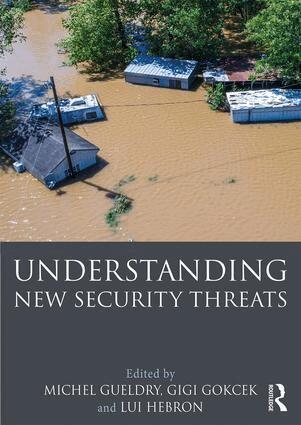
This textbook examines non-traditional forms of security and expands the notion of security to include non-state actors and non-human actors. Proposing an expansive view of non-traditional forms of security that go beyond traditionally recognized issues of threats to state and national territory, this new textbook rests on the following premises: traditional state-centered threats, such as nuclear proliferation and espionage, remain a concern; old and new threats combine and create interlocking puzzles—a feature of wicked problems and wicked messes; because of the global erosion of borders, new developments of unconventional insecurity interact in ways that frustrate traditional conceptual definitions, conceptual maps, and national policies; unconventional security challenges which have traditionally been seen as "low politics" or "soft" issues are now being recognized as "hard security" challenges in the twenty-first century; many of the so-called "new" threats detailed here are in fact very old: diseases, gender violence, food insecurity, under-development, and crime are all traditional security threats, but deeply modified today by globalization. The chapters offer local and global examples and engage with various theoretical approaches to help readers see the bigger picture. Solutions are also suggested to these problems. Each chapter contains discussion questions to help readers understand the key points and facilitate class discussion. This book will be of great interest to students of international security studies, human security, global politics, and international relations.
567 kr
Skickas inom 10-15 vardagar
This textbook examines non-traditional forms of security and expands the notion of security to include non-state actors and non-human actors. Proposing an expansive view of non-traditional forms of security that go beyond traditionally recognized issues of threats to state and national territory, this new textbook rests on the following premises: traditional state-centered threats, such as nuclear proliferation and espionage, remain a concern; old and new threats combine and create interlocking puzzles—a feature of wicked problems and wicked messes; because of the global erosion of borders, new developments of unconventional insecurity interact in ways that frustrate traditional conceptual definitions, conceptual maps, and national policies; unconventional security challenges which have traditionally been seen as "low politics" or "soft" issues are now being recognized as "hard security" challenges in the twenty-first century; many of the so-called "new" threats detailed here are in fact very old: diseases, gender violence, food insecurity, under-development, and crime are all traditional security threats, but deeply modified today by globalization. The chapters offer local and global examples and engage with various theoretical approaches to help readers see the bigger picture. Solutions are also suggested to these problems. Each chapter contains discussion questions to help readers understand the key points and facilitate class discussion. This book will be of great interest to students of international security studies, human security, global politics, and international relations.
1 076 kr
Skickas inom 10-15 vardagar
Now in a fully revised and updated edition, this balanced and clearly written text explores globalization and its impact from economic, political, social, environmental, and cultural perspectives. Providing a framework and platform for student learning, the book gives readers the tools to unravel the complexities of globalization in all its facets. Lui Hebron and John Stack note that as a hot-button term, globalization is used to describe any number of changes within, among, and between societies and states. Their goal isto reduce the noise engulfing debates and interpretations of one of the most dynamic, contested, applauded, and disparaged phenomena of the twenty-first century.Arguing that current assessments—both positive and negative—of globalization are overblown, the authors treat the dramatically changing landscapes of world politics as less a revolution than an evolution of already established structures and patterns of transnational relations. They trace how globalization has affected individuals, societies, states, and intergovernmental and supranational organizations. Making sense of a world seemingly smaller and incomprehensibly larger, simultaneously centralizing and fragmenting, Globalization: Debunking the Myths offers both an indispensableintroduction for undergraduates and a concise review for more advanced students.
434 kr
Skickas inom 10-15 vardagar
Now in a fully revised and updated edition, this balanced and clearly written text explores globalization and its impact from economic, political, social, environmental, and cultural perspectives. Providing a framework and platform for student learning, the book gives readers the tools to unravel the complexities of globalization in all its facets. Lui Hebron and John Stack note that as a hot-button term, globalization is used to describe any number of changes within, among, and between societies and states. Their goal isto reduce the noise engulfing debates and interpretations of one of the most dynamic, contested, applauded, and disparaged phenomena of the twenty-first century.Arguing that current assessments—both positive and negative—of globalization are overblown, the authors treat the dramatically changing landscapes of world politics as less a revolution than an evolution of already established structures and patterns of transnational relations. They trace how globalization has affected individuals, societies, states, and intergovernmental and supranational organizations. Making sense of a world seemingly smaller and incomprehensibly larger, simultaneously centralizing and fragmenting, Globalization: Debunking the Myths offers both an indispensableintroduction for undergraduates and a concise review for more advanced students.