John H. Langbein – författare
Visar alla böcker från författaren John H. Langbein. Handla med fri frakt och snabb leverans.
4 produkter
4 produkter
1 056 kr
Skickas inom 5-8 vardagar
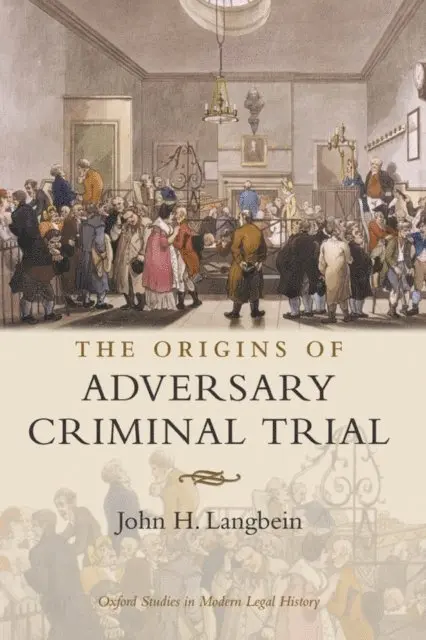
The adversary system of trial, the defining feature of the Anglo-American criminal procedure developed late in English legal history. For centuries, defendants were forbidden to have counsel, and lawyers seldom appeared for the prosecution either. Trial was meant to be an occasion for the defendant to answer the charges in person.The transformation from lawyer-free to lawyer-dominated criminal trial happened within the space of about a century, from the 1690s to the 1780s. This book explains how the lawyers captured the trial. In addition to conventional legal sources, Professor Langbein draws upon a rich vein of contemporary pamphlet accounts about trials in London's Old Bailey. The book also mines these novel sources to provide the first detailed account of the formation of the law of criminal evidence.Responding to menacing prosecutorial initiatives (including reward-seeking thieftakers amd crown witnesses induced to testify in order to save their own necks), the judges of the 1730s decided to allow the defendant to have counsel to cross-examine accusing witnesses. By restricting counsel to the work of examining and cross-examining witnesses, the judges intended that the accused would still need to respond in person to the charges against him. Langbein shows how counsel manipulated the dynamics of adversary procedure to defeat the judges' design, ultimately silencing the accused and transforming the very purpose of the criminal trial. Trial ceased to be an opportunity for the accused to speak, and became instead an occasion for defense counsel to test the prosecution case.
805 kr
Skickas inom 5-8 vardagar
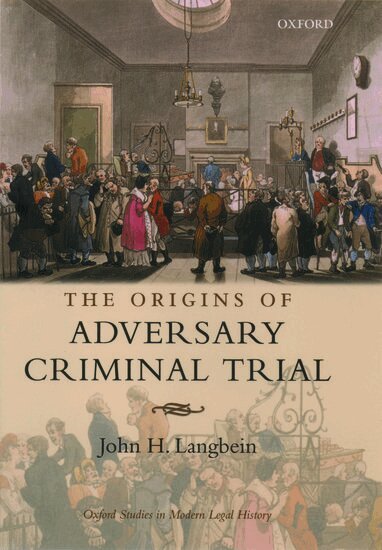
The adversary system of trial, the defining feature of the Anglo-American legal procedure, developed late in English legal history. For centuries defendants were forbidden to have legal counsel, and lawyers seldom appeared for the prosecution either. Trial was meant to be an occasion for the defendant to answer the charges in person.The transformation from lawyer-free to lawyer-dominated criminal trial happened within the space of about a century, from the 1690's to the 1780's. This book explains how the lawyers captured the trial. In addition to conventional legal sources, Professor Langbein draws upon a rich vein of contemporary pamphlet accounts about trials in London's Old Bailey. The book also mines these novel sources to provide the first detailed account of the formation of the law of criminal evidence.Responding to menacing prosecutorial initiatives (including reward-seeking thieftakers and crown witnesses induced to testify in order to save their own necks) the judges of the 1730's decided to allow the defendant to have counsel to cross-examine accusing witnesses. By restricting counsel to the work of examining and cross-examining witnesses, the judges intended that the accused would still need to respond in person to the charges against him. Professor Langbein shows how counsel manipulated the dynamics of adversary procedure to defeat the judges design, ultimately silencing the accused and transforming the very purpose of the criminal trial. Trial ceased to be an opportunity for the accused to speak, and instead became an occasion for defense counsel to test the prosecution case.
414 kr
Skickas inom 7-10 vardagar
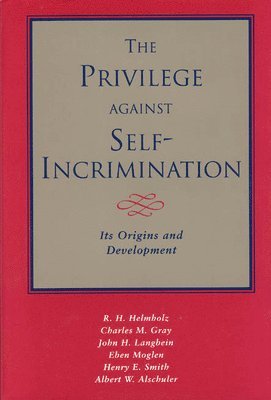
This is a history of the privilege in law against self-incrimination, demonstrating that what is sometimes considered an unchanging tenet of the legal system has actually encompassed many different legal consequences. The book seeks to uncover what the privilege meant in practice, and traces its history from its origins in the medieval period to its first appearance in English common law; and from its translation to the American colonies to its development into an effective protection for criminal defendants in the 19th century. The authors aim to show that the modern privilege, "the right to remain silent", is far from being a basic civil liberty. The book also questions how well an expansive notion of the privilege accords with commonly accepted principles of morality. This study seeks to provide a revision of our understanding of an important aspect of both criminal and constitutional law.
268 kr
Skickas inom 7-10 vardagar
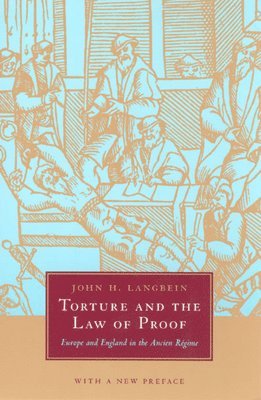
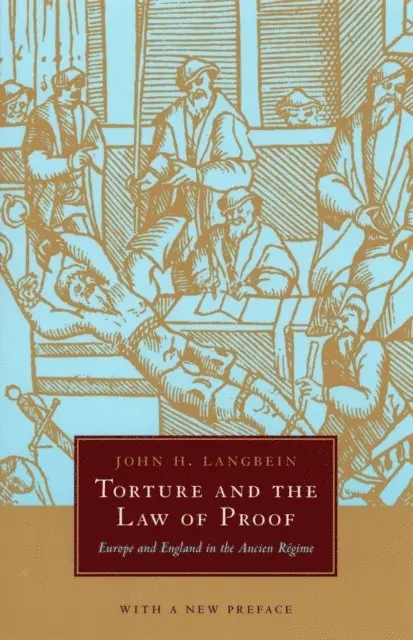
"In Torture and the Law of Proof", John H. Langbein explores the world of the thumbscrew and the rack, engines of torture authorized for investigating crime in European legal systems from medieval times until well into the eighteenth century. Drawing on juristic literature and legal records, Langbein's book, first published in 1977, remains the definitive account of how European legal systems became dependent on the use of torture in their routine criminal procedures and how they eventually worked themselves free of it. The book has recently taken on an eerie relevance as a consequence of controversial American and British interrogation practices in the Iraq and Afghanistan wars. In a new introduction, Langbein contrasts the "new" law of torture with the older European law and offers pointed lessons about the difficulty of reconciling coercion with accurate investigation. Embellished with fascinating illustrations of torture devices taken from eighteenth-century criminal code, this crisply written account will engage all those interested in torture's remarkable grip on European legal history.