
John H. Monnett – författare
Visar alla böcker från författaren John H. Monnett. Handla med fri frakt och snabb leverans.
4 produkter
4 produkter
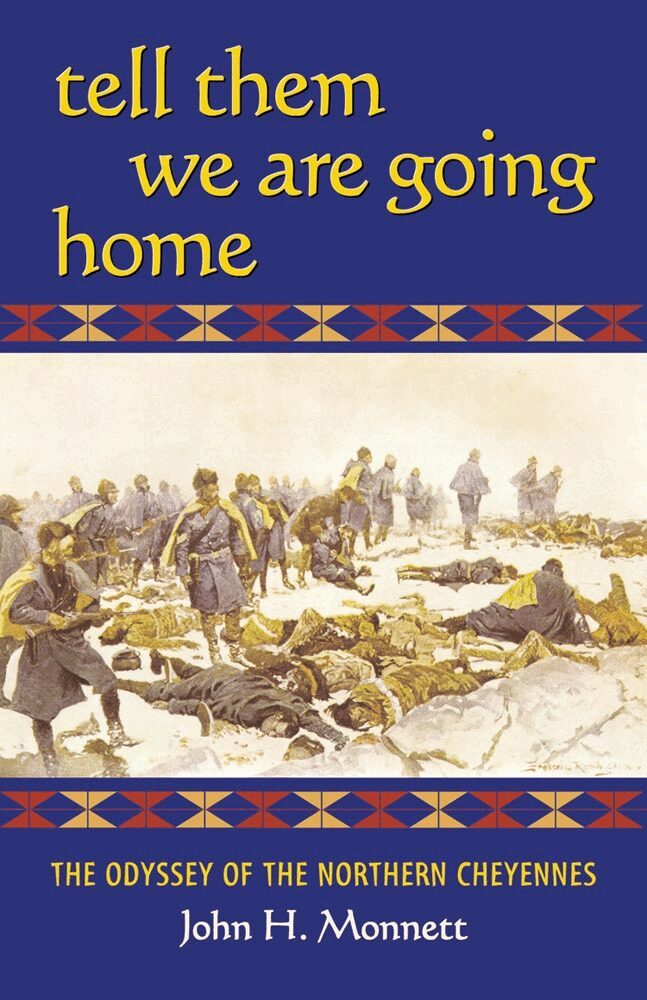
Häftad, Engelska, 2004
160 kr
Skickas inom 5-8 vardagar
Tell Them We Are Going Home details the courageous journey of the Northern Cheyennes, under the leadership of Little Wolf and Dull Knife, from Indian Territory northward to their homelands in the Powder River country. Incorporating the perspectives of the Cheyennes, the U.S. military, the Indian Bureau, and the Kansas settlers who encountered the traveling Indians, this book provides a complete account of the odyssey. The dramatic fifteen-hundred-mile trek of the Northern Cheyennes through Kansas, Nebraska, South Dakota, and Montana, lasting from 1878 to 1879, would become one of the most important episodes in American history and in Cheyenne memory.
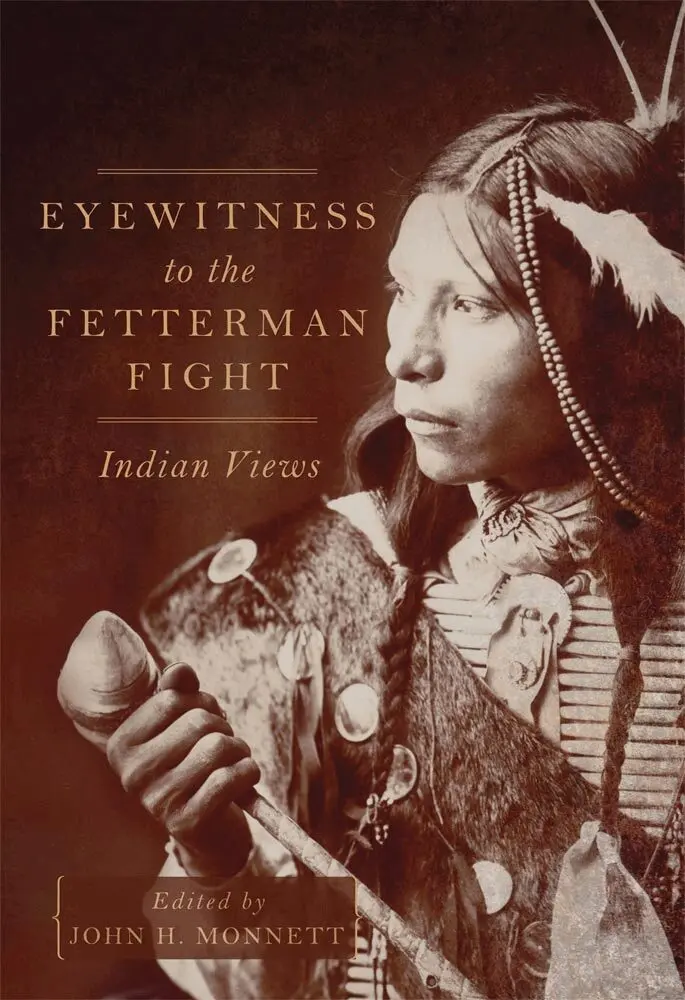
Inbunden, Engelska, 2017
367 kr
Skickas inom 10-15 vardagar
The Fetterman Fight ranks among the most crushing defeats suffered by the U.S. Army in the nineteenth-century West. On December 21, 1866 - during Red Cloud's War (1866-1868) - a well-organized force of 1,500 to 2,000 Oglala Lakota, Northern Cheyenne, and Arapaho warriors annihilated a detachment of seventy-nine infantry and cavalry soldiers - among them Captain William Judd Fetterman - and two civilian contractors. With no survivors on the U.S. side, the only eyewitness accounts of the battle came from Lakota and Cheyenne participants. In Eyewitness to the Fetterman Fight, award-winning historian John H. Monnett presents these Native views, drawn from previously published sources as well as newly discovered interviews with Oglala and Cheyenne warriors and leaders.Supplemented with archaeological evidence, these narratives flesh out historical understanding of Red Cloud's War. Climate change in the mid-nineteenth century made the resource-rich Powder River Country in today's Wyoming increasingly important to Plains Indians. At the same time, the discovery of gold in Montana encouraged prospectors to pass through the Powder River region on their way north, and so the U.S. Army began to construct new forts along the Bozeman Trail. In the resulting conflict, the Lakotas and Cheyennes defended their hunting ranges and trade routes.Traditional histories have laid the blame for Fetterman's 1866 defeat and death on his incompetent leadership - and thus implied that the Indian alliance succeeded only because of Fetterman's personal failings. Monnett's sources paint another picture. Narratives like those of Miniconjou Lakota warrior White Bull suggest that Fetterman's actions were not seen as rash or reprehensible until after the fact. Nor did his men flee the field in panic. Rather, they fought bravely to the end. The Indians, for their part, used their knowledge of the terrain to carefully plan and execute an ambush, ensuring them victory.Critical to understanding the nuances of Plains Indian strategy and tactics, the firsthand narratives in Eyewitness to the Fetterman Fight reveal the true nature of this Native victory against regular army forces.
Häftad, Engelska, 2018
243 kr
Skickas inom 10-15 vardagar
The Fetterman Fight ranks among the most crushing defeats suffered by the U.S. Army in the nineteenth-century West. On December 21, 1866 - during Red Cloud's War (1866-1868) - a well-organized force of 1,500 to 2,000 Oglala Lakota, Northern Cheyenne, and Arapaho warriors annihilated a detachment of seventy-nine infantry and cavalry soldiers - among them Captain William Judd Fetterman - and two civilian contractors. With no survivors on the U.S. side, the only eyewitness accounts of the battle came from Lakota and Cheyenne participants. In Eyewitness to the Fetterman Fight, award-winning historian John H. Monnett presents these Native views, drawn from previously published sources as well as newly discovered interviews with Oglala and Cheyenne warriors and leaders.Supplemented with archaeological evidence, these narratives flesh out historical understanding of Red Cloud's War. Climate change in the mid-nineteenth century made the resource-rich Powder River Country in today's Wyoming increasingly important to Plains Indians. At the same time, the discovery of gold in Montana encouraged prospectors to pass through the Powder River region on their way north, and so the U.S. Army began to construct new forts along the Bozeman Trail. In the resulting conflict, the Lakotas and Cheyennes defended their hunting ranges and trade routes.Traditional histories have laid the blame for Fetterman's 1866 defeat and death on his incompetent leadership - and thus implied that the Indian alliance succeeded only because of Fetterman's personal failings. Monnett's sources paint another picture. Narratives like those of Miniconjou Lakota warrior White Bull suggest that Fetterman's actions were not seen as rash or reprehensible until after the fact. Nor did his men flee the field in panic. Rather, they fought bravely to the end. The Indians, for their part, used their knowledge of the terrain to carefully plan and execute an ambush, ensuring them victory.Critical to understanding the nuances of Plains Indian strategy and tactics, the firsthand narratives in Eyewitness to the Fetterman Fight reveal the true nature of this Native victory against regular army forces.
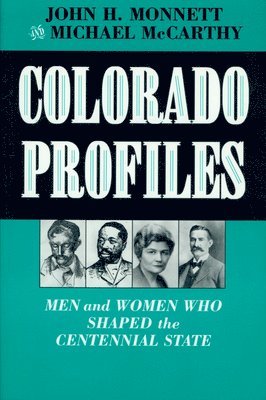
Häftad, Engelska, 1996
420 kr
Skickas inom 5-8 vardagar
This popular volume presents the exciting history of Colorado through the lives of thirty-two of its most noteworthy citizens, both famous and obscure, who helped to shape Colorado as we know it today. Among those featured are: Black Kettle, David Day, Anne Bassett, Lewis Price, Casimiro Barela, Josephine Roche, Jefferson Randolph "Soapy" Smith, and Enos Mills.