John Hoyles – författare
Visar alla böcker från författaren John Hoyles. Handla med fri frakt och snabb leverans.
4 produkter
4 produkter
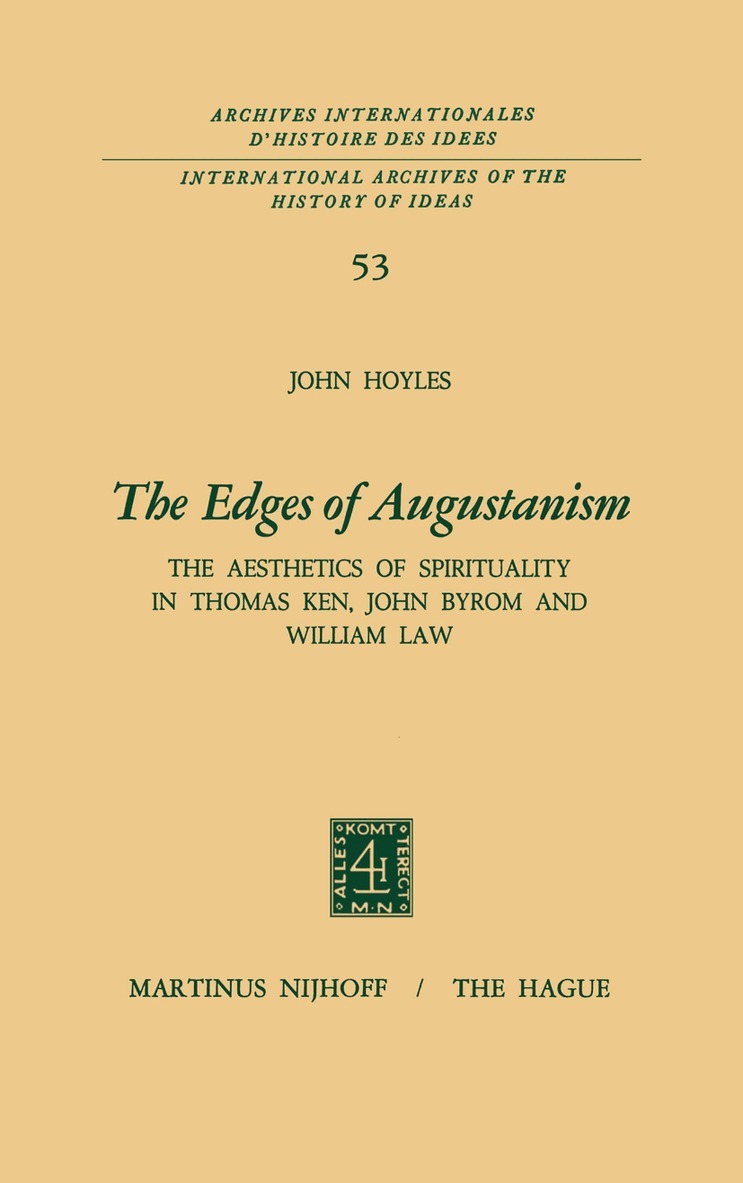
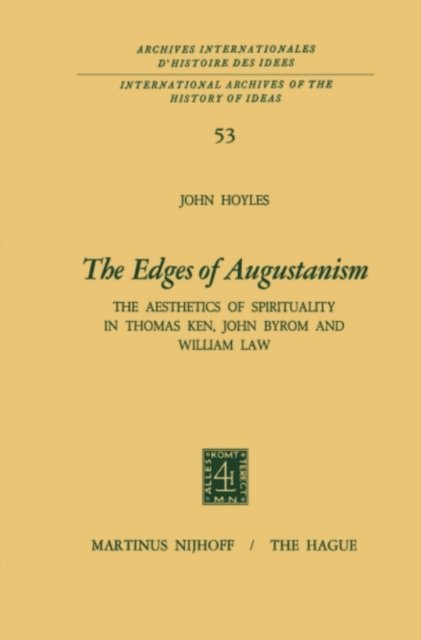
Edges of Augustanism
The Aesthetics of Spirituality in Thomas Ken, John Byrom and William Law
Inbunden, Engelska, 1972
1 062 kr
Skickas inom 10-15 vardagar
It has recently been argued that the 18th century can no longer be 1 seen as gripped in the strait-jacket of Augustanism and Neoclassicism. Such labels are seen as doing less than justice to the rich variety of individual talents and intellectual trends which collectively constitute 18th century culture. While welcoming the interment of the long standing myth of the peace of the Augustans, there seems little point in placing an interdict on labels which, willy-nilly, have stuck. In economic, social and ecclesiastical terms there is an age between 1689 and 1789 whose homogeneity is reflected in its cultural products. There is a mainstream which the strength and variety of counter currents and cross-currents corroborate rather than disintegrate. It is the purpose of this study to reveal some aspects of this mainstream by examining certain cross-currents which overlap its edges. Hence the choice of Thomas Ken (1637-1711), John Byrom (1692-1763) and William Law (1686-1761).
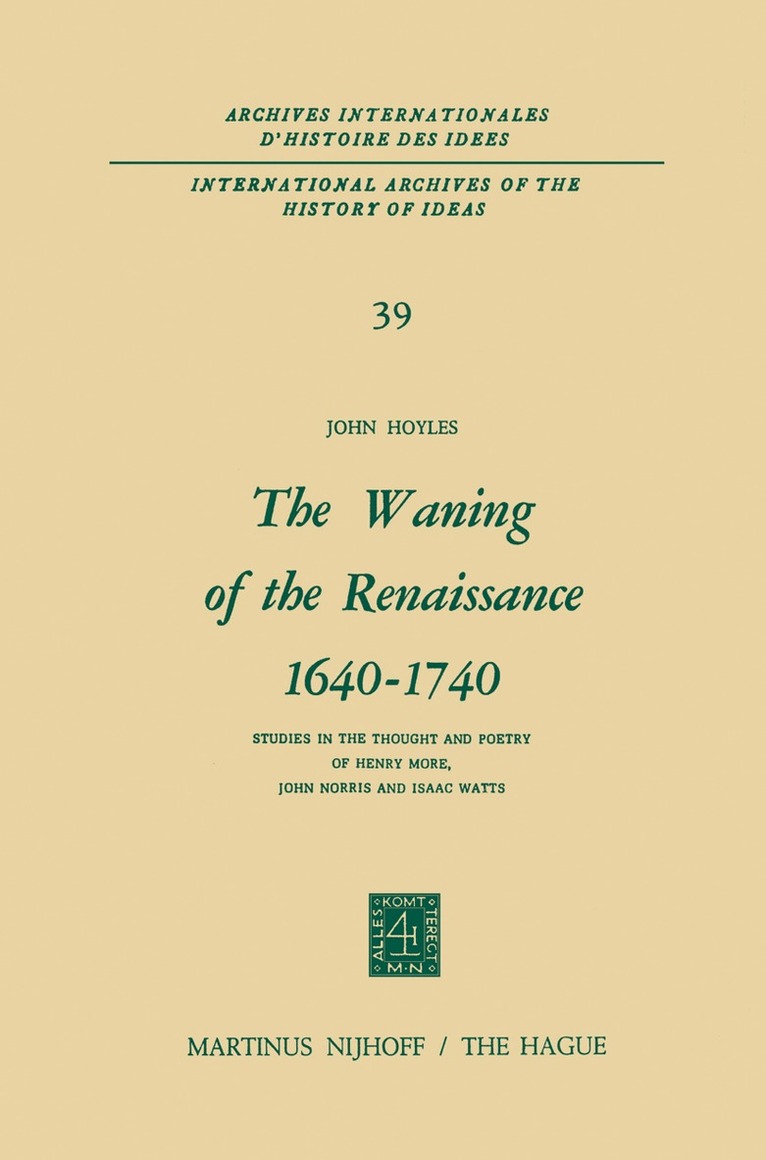
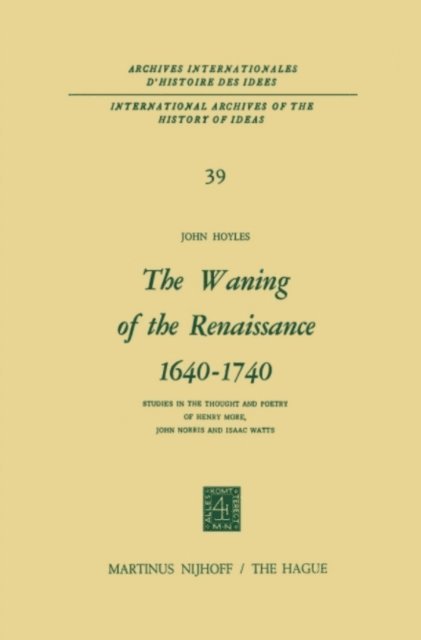
Waning of the Renaissance 1640–1740
Studies in the Thought and Poetry of Henry More, John Norris and Isaac Watts
Inbunden, Engelska, 1971
1 062 kr
Skickas inom 10-15 vardagar
It is not always easy to maintain a proper balance between the delineation of cultural development within a given literary field and the claims of practical criticism. And yet if the history of ideas is to be more than a pastime for the student of literature, it must be rooted in the precise art of discrimination. The following chapters attempt to describe and evaluate a particular cultural development by relating the background of ideas to the literary achievement of three writers. It will be sufficient here to out line the nature of the problem, and the method and approach employed. The concept of cultural development implies a recognition of the con nections between ideology and aesthetics. There are at least two ways of exploring such connections. The one, pioneered by Basil Willey, seeks to situate the critical moments of our cultural development in the back ground of ideas, without which the contribution of a particular author cannot be justly evaluated. The danger of such an approach is that the task of discrimination comes to depend over-heavily on extra-literary criteria.
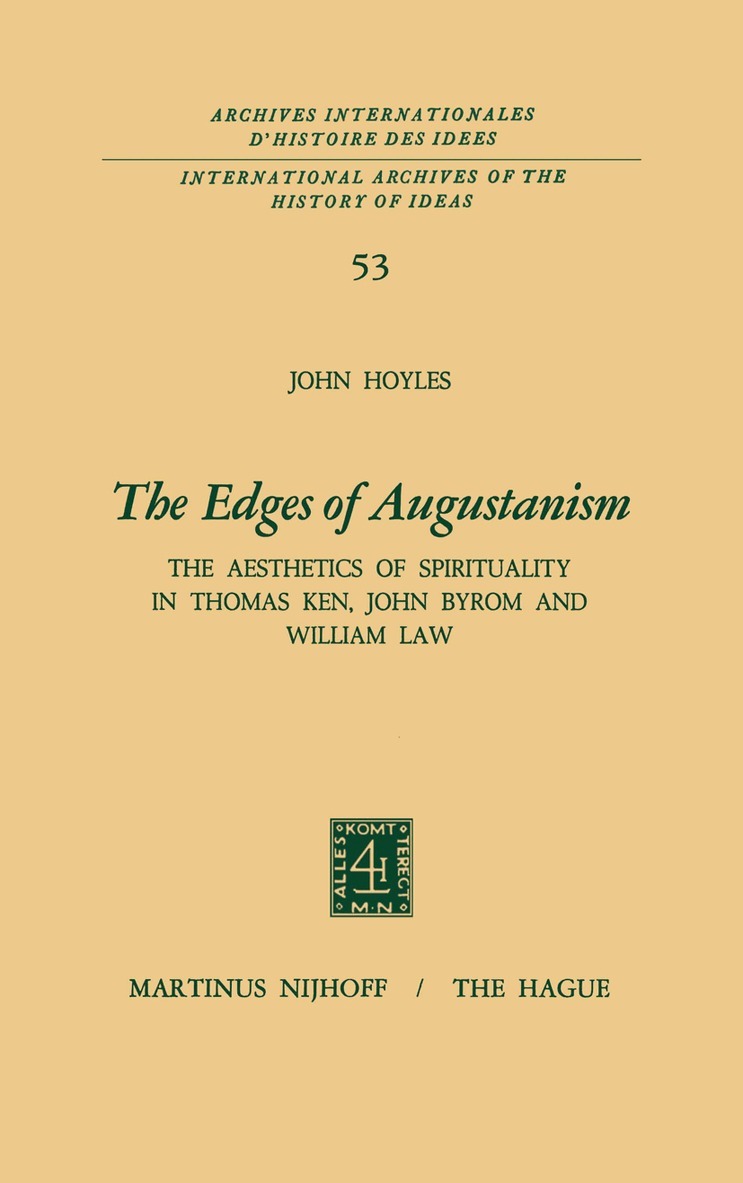
Edges of Augustanism
The Aesthetics of Spirituality in Thomas Ken, John Byrom and William Law
Häftad, Engelska, 2011
1 062 kr
Skickas inom 10-15 vardagar
It has recently been argued that the 18th century can no longer be 1 seen as gripped in the strait-jacket of Augustanism and Neoclassicism. Such labels are seen as doing less than justice to the rich variety of individual talents and intellectual trends which collectively constitute 18th century culture. While welcoming the interment of the long standing myth of the peace of the Augustans, there seems little point in placing an interdict on labels which, willy-nilly, have stuck. In economic, social and ecclesiastical terms there is an age between 1689 and 1789 whose homogeneity is reflected in its cultural products. There is a mainstream which the strength and variety of counter currents and cross-currents corroborate rather than disintegrate. It is the purpose of this study to reveal some aspects of this mainstream by examining certain cross-currents which overlap its edges. Hence the choice of Thomas Ken (1637-1711), John Byrom (1692-1763) and William Law (1686-1761).
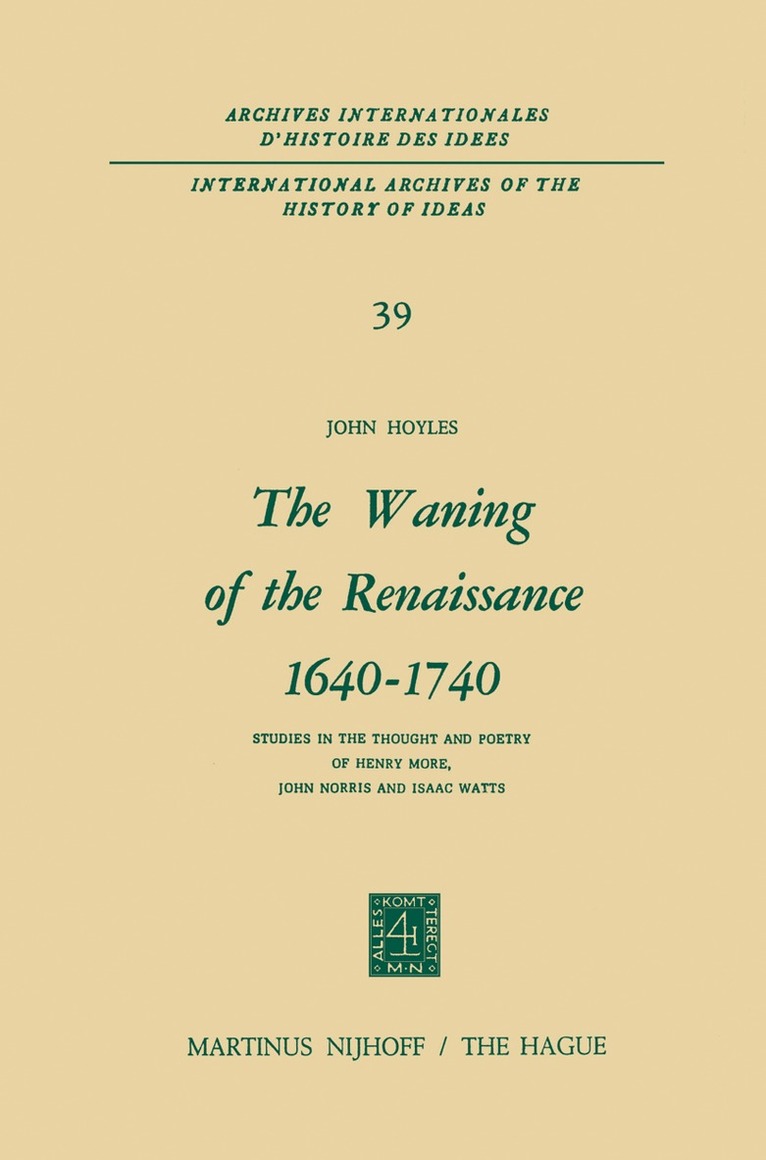
Waning of the Renaissance 1640–1740
Studies in the Thought and Poetry of Henry More, John Norris and Isaac Watts
Häftad, Engelska, 2011
1 062 kr
Skickas inom 10-15 vardagar
It is not always easy to maintain a proper balance between the delineation of cultural development within a given literary field and the claims of practical criticism. And yet if the history of ideas is to be more than a pastime for the student of literature, it must be rooted in the precise art of discrimination. The following chapters attempt to describe and evaluate a particular cultural development by relating the background of ideas to the literary achievement of three writers. It will be sufficient here to out line the nature of the problem, and the method and approach employed. The concept of cultural development implies a recognition of the con nections between ideology and aesthetics. There are at least two ways of exploring such connections. The one, pioneered by Basil Willey, seeks to situate the critical moments of our cultural development in the back ground of ideas, without which the contribution of a particular author cannot be justly evaluated. The danger of such an approach is that the task of discrimination comes to depend over-heavily on extra-literary criteria.