John J. White – författare
Visar alla böcker från författaren John J. White. Handla med fri frakt och snabb leverans.
8 produkter
8 produkter
597 kr
Skickas
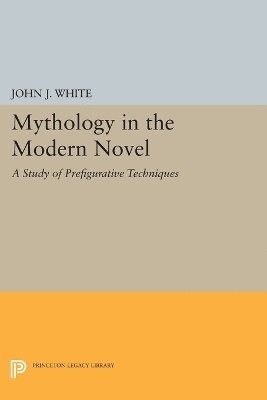
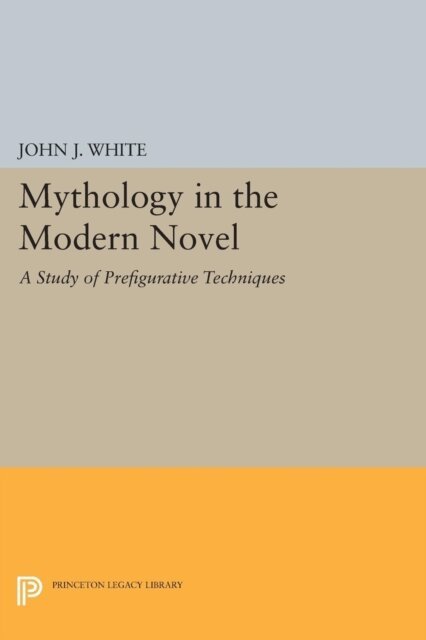
J. J. White reexamines the use of myth in fiction in order to bring a new terminological precision into the field. While concentrating on the German novel (Mann, Broch, and Nossack), he discusses the work of Alberto Moravia, John Bowen, Michel Butor, and Macdonald Harris as well, in order to show the modern predilection for myth in whatever national literature. Throughout his discussion, Mr. White delineates carefully his specific subject: the novel in which mythological motifs are used to prefigure events and character--Joyce's Ulysses is, of course, the archetypal novel in this tradition. Setting forth his terms, and making clear his use of them, Mr. White then analyzes the wide appeal of the mythological novel for both twentieth-century novelists and critics: he distinguishes four ways in which modern novelists use myth and surveys the range of critical literature on the subject.His concluding chapters are discussions of specific texts in which he differentiates between novels which have a unilinear parallel between myth and plot, novels of "juxtaposition" in which chapters retelling myth parallel modern action, and novels of fusion in which the action of the modern account synthesizes more than one mythic prefiguration of mythological motif. Originally published in 1972. The Princeton Legacy Library uses the latest print-on-demand technology to again make available previously out-of-print books from the distinguished backlist of Princeton University Press. These editions preserve the original texts of these important books while presenting them in durable paperback and hardcover editions. The goal of the Princeton Legacy Library is to vastly increase access to the rich scholarly heritage found in the thousands of books published by Princeton University Press since its founding in 1905.
2 089 kr
Skickas inom 3-6 vardagar
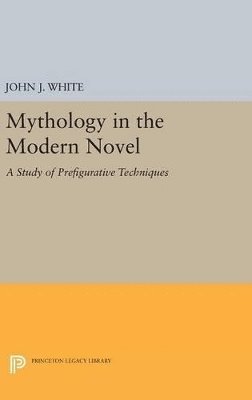
J. J. White reexamines the use of myth in fiction in order to bring a new terminological precision into the field. While concentrating on the German novel (Mann, Broch, and Nossack), he discusses the work of Alberto Moravia, John Bowen, Michel Butor, and Macdonald Harris as well, in order to show the modern predilection for myth in whatever national literature. Throughout his discussion, Mr. White delineates carefully his specific subject: the novel in which mythological motifs are used to prefigure events and character--Joyce's Ulysses is, of course, the archetypal novel in this tradition. Setting forth his terms, and making clear his use of them, Mr. White then analyzes the wide appeal of the mythological novel for both twentieth-century novelists and critics: he distinguishes four ways in which modern novelists use myth and surveys the range of critical literature on the subject.His concluding chapters are discussions of specific texts in which he differentiates between novels which have a unilinear parallel between myth and plot, novels of "juxtaposition" in which chapters retelling myth parallel modern action, and novels of fusion in which the action of the modern account synthesizes more than one mythic prefiguration of mythological motif. Originally published in 1972. The Princeton Legacy Library uses the latest print-on-demand technology to again make available previously out-of-print books from the distinguished backlist of Princeton University Press. These editions preserve the original texts of these important books while presenting them in durable paperback and hardcover editions. The goal of the Princeton Legacy Library is to vastly increase access to the rich scholarly heritage found in the thousands of books published by Princeton University Press since its founding in 1905.
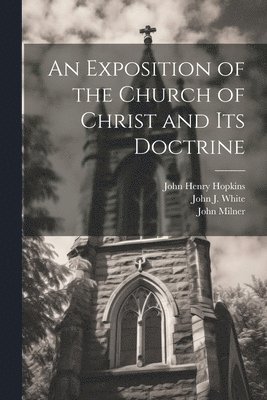
Exposition of the Church of Christ and Its Doctrine
Forming a Supplement to "the End of Controversy, Controverted"
Häftad, Engelska, 2021
231 kr
Skickas inom 5-8 vardagar
367 kr
Skickas inom 5-8 vardagar
231 kr
Skickas inom 5-8 vardagar
Del 77 - Studies in German Literature Linguistics and Culture
Bertolt Brecht's Furcht und Elend des Dritten Reiches
A German Exile Drama in the Struggle against Fascism
Inbunden, Engelska, 2010
983 kr
Tillfälligt slut
First thorough treatment in English of one of Brecht's most important antifascist works.Brecht's Furcht und Elend des Dritten Reiches (Fear and Misery of the Third Reich) gives a compelling documentary picture of life in Nazi Germany. Close readings of individual scenes are accompanied by a detailed analysis of their role within the play's overall structure. Contrary to the assumption that it is a work of Aristotelian realism, Brecht is shown to employ covert alienation devices that are an integral part of his literary campaign againstThird Reich Germany.This first study in English on the subject of Brecht and fascism offers a corrective to the overconcentration on the play's artistic aspects. It considers Brecht's relationship to the Popular Front's campaign against the National Socialist regime. Attention is paid to the play's genesis, and, in the case of The Private Life of the Master Race, to the partial shift from the Third Reich of 1933-38 to the war period predictedin the original Furcht und Elend cycle.The play's central theme of resistance, its propaganda value, and its political and artistic reception are addressed within their historical and ideological framework. The result is a challenging assessment of the play's strengths and limitations as a response to German totalitarianism.John J. White is Emeritus Professor of German and Comparative Literature at King's College London, and Ann White is Senior Lecturer in German at Royal Holloway, University of London.
Del 83 - Studies in German Literature Linguistics and Culture
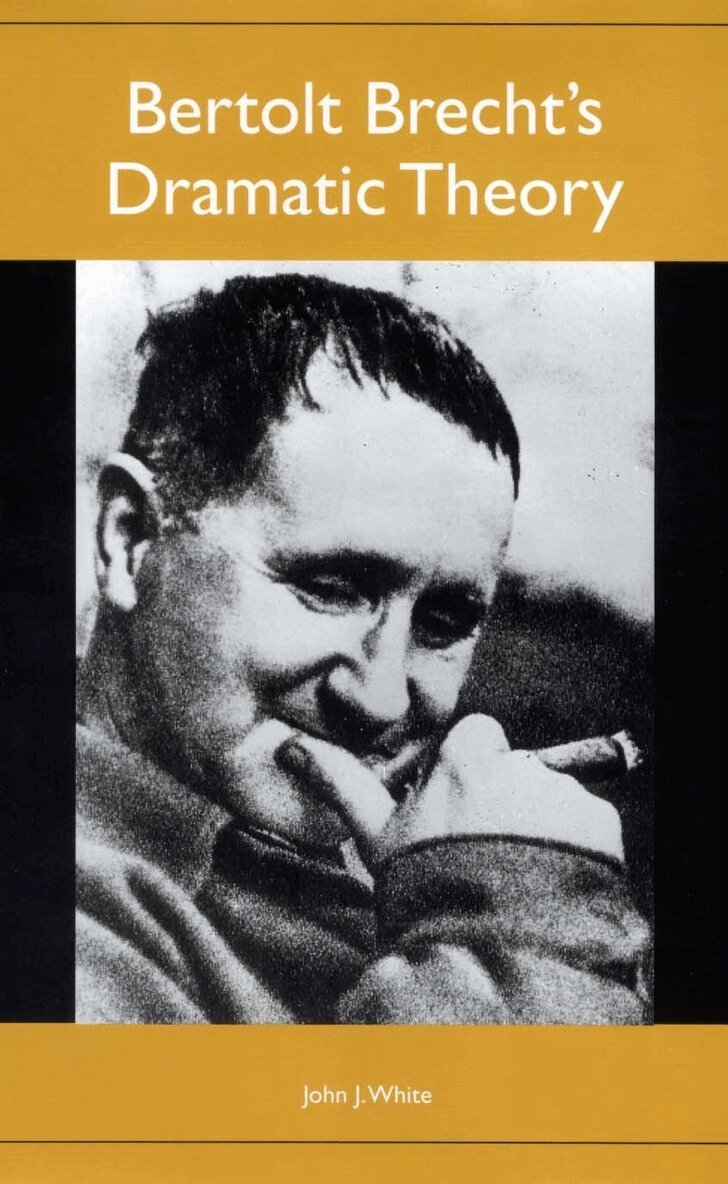
Bertolt Brecht's Dramatic Theory
Häftad, Engelska, 2010
453 kr
Skickas inom 5-8 vardagar
Detailed analysis of Brecht's extensive theoretical writings on the theater, including newly available works.As an integral part of his work as a political playwright and dramaturge, Bertolt Brecht concerned himself extensively with the theory of drama. He was convinced that the Aristotelian ideal of audience catharsis through identification with a hero and the resultant experience of terror and pity worked against his goal of bettering society. He did not want his audiences to feel, but to think, and his main theoretical thrusts -- "Verfremdungseffekte" (de-familiarization devices) and epic theater, among others -- were conceived in pursuit of this goal. This is the first detailed study in English of Brecht's writings on the theater to take account of works first made available in the recent German edition of his collected works. It offers in-depth analyses of Brecht's canonical essays on the theater from 1930 to the late 1940s and early GDR years. Close readings of the individual essays are supplemented by surveys of the changing connotations within Brecht's dramaturgical oeuvre of key theoretical terms, including epic and anti-Aristotelian theater, de-familiarization, historicization, and dialectical theater. Brecht's distinct contribution to the theorizing of acting and audience response is examined in detail, and each theoretical essay and concept is placed in the context of the aesthetic debates of the time, subjected to a critical assessment, and consideredin light of subsequent scholarly thinking. In many cases, the playwright's theoretical discourse is shown to employ methods of "epic" presentation and techniques of de-familiarization that are corollaries of the dramatic techniques for which his plays are justly famous.John J. White is Emeritus Professor of German and Comparative Literature at King's College London.
377 kr
Skickas inom 10-15 vardagar
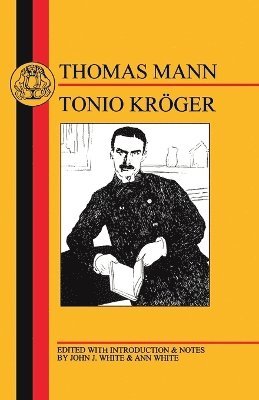
A title in the Bristol Classical Press German Texts series, in German with English notes, vocabulary and introduction. Thomas Mann (1875-1955), was awarded the Nobel Prize for literature in 1929, and "Tonio Kroger" occupies a central position in his spiritual and artistic development. A study of youth, it draws together many strands of his life and work: the duality of his parentage; his abhorrence of discipline; and the influence of Schopenhauer and Wagner on his early phase of writing.