John K. Hale - Böcker
Visar alla böcker från författaren John K. Hale. Handla med fri frakt och snabb leverans.
5 produkter
5 produkter
1 800 kr
Skickas inom 5-8 vardagar
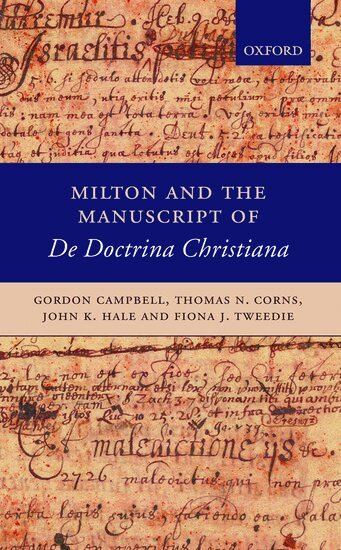
Debate about the authorship of the manuscript known to us as De Doctrina Christiana has bedevilled Milton studies over recent years. In this book four leading scholars give an account of the research project that demonstrated its Miltonic provenance beyond reasonable doubt. But the authors do much more besides, locating Milton's systematic theology in its broader European context, picking open the stages and processes of its composition, and analysing its Latinity.
629 kr
Skickas inom 7-10 vardagar
Milton's poetry is one of the glories of the English language, and yet it owes everything to Milton's widespread knowledge of other languages: he knew ten, wrote in four, and translated from five. In Milton's Languages, John K. Hale first examines Milton's language-related arts in verse-composition, translations, annotations of Greek poets, Latin prose and political polemic, giving all relevant texts in the original and in translation. Hale then traces the impact of Milton's multilingualism on his major English poems. Many vexed questions of Milton studies are illuminated by this approach, including his sense of vocation, his attitude to print and publicity, the supposed blemish of Latinism in his poetry, and his response to his literary predecessors. Throughout this full-length study of Milton's use of languages, Hale argues convincingly that it is only by understanding Milton's choice among languages that we can grasp where Milton's own unique English originated.
1 371 kr
Skickas inom 7-10 vardagar
Milton's poetry is one of the glories of the English language, and yet it owes everything to Milton's widespread knowledge of other languages: he knew ten, wrote in four, and translated from five. In Milton's Languages, John K. Hale first examines Milton's language-related arts in verse-composition, translations, annotations of Greek poets, Latin prose and political polemic, giving all relevant texts in the original and in translation. Hale then traces the impact of Milton's multilingualism on his major English poems. Many vexed questions of Milton studies are illuminated by this approach, including his sense of vocation, his attitude to print and publicity, the supposed blemish of Latinism in his poetry, and his response to his literary predecessors. Throughout this full-length study of Milton's use of languages, Hale argues convincingly that it is only by understanding Milton's choice among languages that we can grasp where Milton's own unique English originated.
2 036 kr
Skickas inom 7-10 vardagar
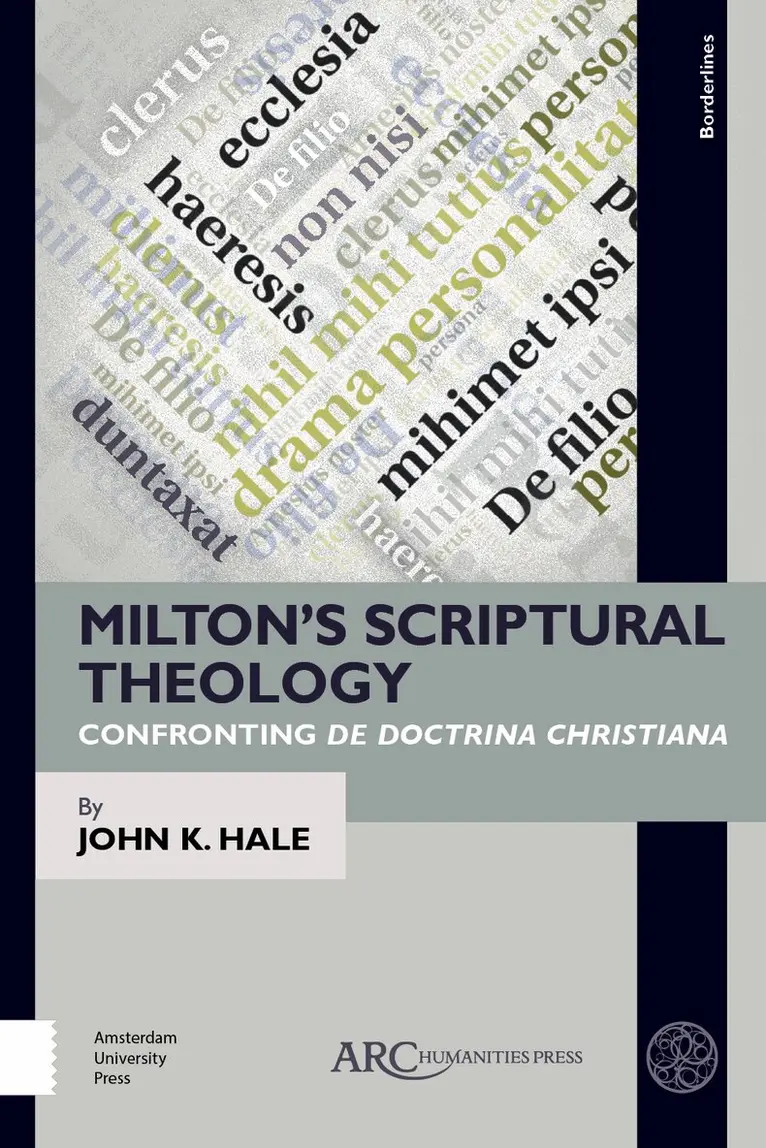
Milton spoke of De Doctrina as “my best and most precious possession” (haec, quibus nihil melius aut pretiosius habeo). In this book, John K. Hale confronts De Doctrina as Milton’s “best”, and in many senses personal, contribution to theology. Its theology is distinctive in several unorthodoxies, and their zestful advocacy; and in some orthodoxies too, like his measured account of Predestination. At the very least, De Doctrina is Milton’s one and only worked-out Credo. And it figures, albeit belatedly, in histories of the great mid-century Trinitarian debate: it is on the wider map of theology; it counts. Through close reading of the Latin itself, the author assesses the work and its aim, its degrees of success and its by-products, as these reveal Milton at his “personal best.” While to a candid appraisal—or to historians or methodologists of theology—his best might not seem the very best ever, this work remains unutterably precious to Milton, and close reading reveals the passion and energy of his mind in its acts of thought. To understand the personal dimension of Milton’s theology is to understand, and evaluate, his mind in action.
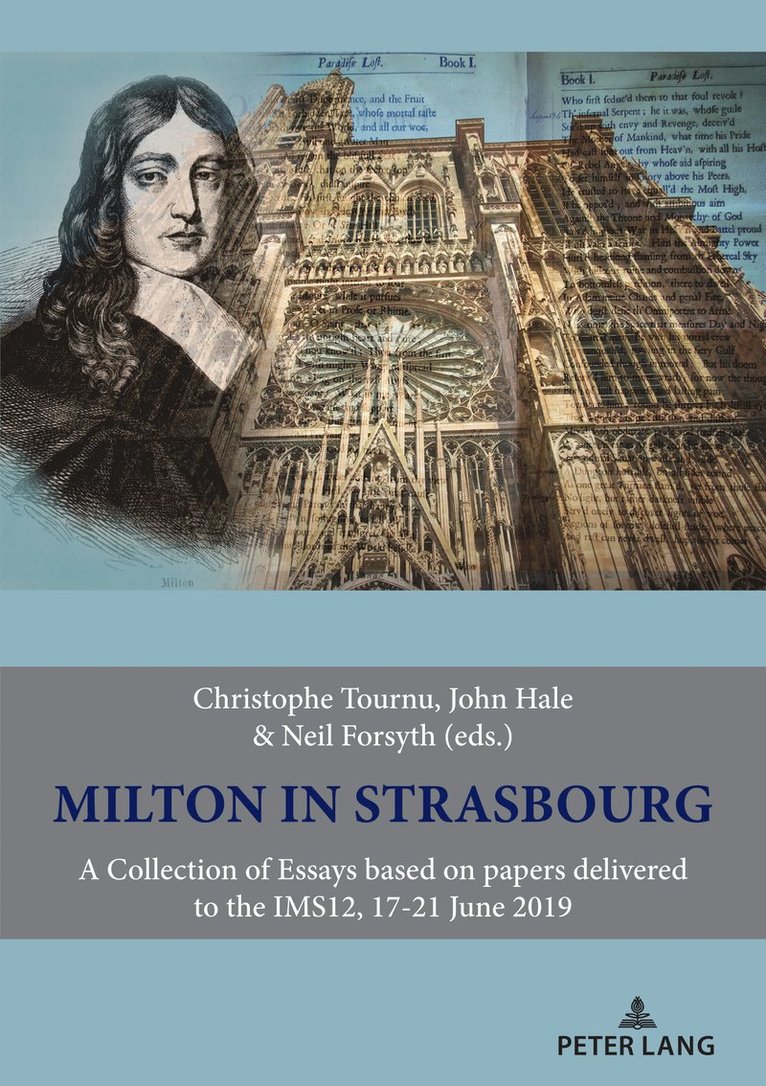
Milton in Strasbourg
A Collection of Essays based on papers delivered to the IMS12, 17-21 June 2019
Häftad, Engelska, 2022
803 kr
Skickas inom 5-8 vardagar
This book showcases cutting-edge research papers from the XIIth international Milton Symposium hosted by the University of Strasbourg, 17-21 June 2019. Strasbourg is home to Martin Bucer, the Protestant reformer from whom Milton drew support for his theory of divorce, and to Gustave Doré, the famous French illustrator of Paradise Lost. The 26 essays gathered in the present volume are by international scholars, including ones from countries outside the Anglosphere, young or experienced.Opening with a tribute to all Milton symposia organized since 1981, the book falls into eight parts, covering all aspects of Milton studies. "Milton and Materiality" starts with an essay by James G. Turner on personal bodily reference in Milton. In "Milton’s Style and Language", the polemicist’s use of satire is scrutinized and his relation to enthusiasm is examined, while a new light is shed on his sonnets. In "Milton’s Prose", in a rare essay on Observations upon the Articles of Peace (1649), David H. Sacks compares Milton’s view of Ireland with what he thought of Russia, delving into the notions of "civilization" and "tyranny". Then the reader will find six essays on Paradise Lost, including one by Hiroko Sano, followed by three essays on his minor poems by promising scholars. The debate on the authorship of De Doctrina Christiana is reopened, with many stylometric tables and charts. A new track leads us to Silesia.In "Reception Studies", two Brazilian contributors study Milton through the lens of French philosophers, and the next essay by Christophe Tournu focuses on the first French verse translation of Paradise Lost. The concluding part, "Milton and his Audience", considers Milton’s relationship to his readers, music in Haydn’s Creation, while Beverley Sherry analyses portraits of Milton and his works in stained glass.