Inbunden, Engelska, 2019
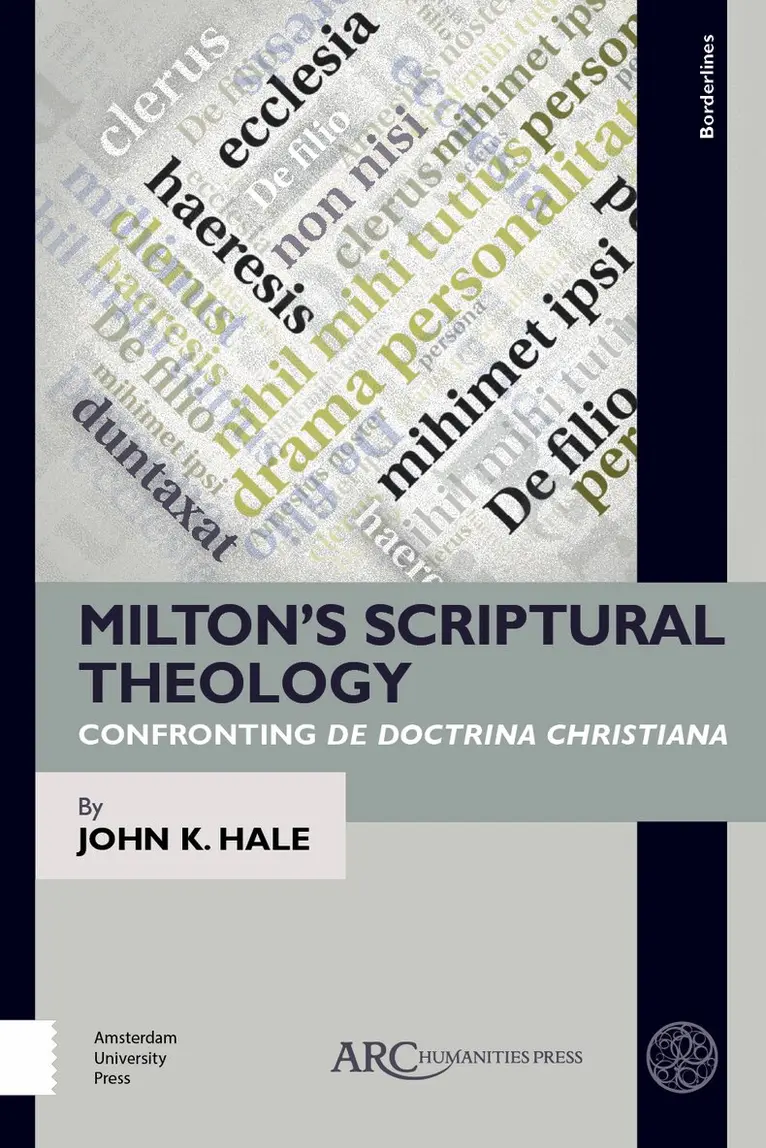
Milton’s Scriptural Theology
Confronting De Doctrina Christiana
Av John K. Hale
Del i serien Borderlines
2179 kr
Beställningsvara. Skickas inom 7-10 vardagar. Fri frakt över 249 kr.
Beskrivning
Produktinformation
- Utgivningsdatum: 2019-09-30
- Mått: 156 x 234 x 15 mm
- Vikt: 358 g
- Format: Inbunden
- Språk: Engelska
- Serie: Borderlines
- Antal sidor: 160
- Förlag: Arc Humanities Press
- ISBN: 9781641893404
Utforska kategorier
Mer om författaren
John K. Hale is an Honorary Fellow of the Department of English at the University of Otago.
Recensioner i media
Although many studies of Milton’s theology refer to the arguments that appear in the Miltonic De Doctrina Christiana, the account provided by John Hale in Milton’s Scriptural Theology is distinctive; rather than construe the treatise as a gloss on Paradise Lost or on another of Milton’s poems, Hale engages De Doctrina on its own terms as a work of Latin theology in the Ramist Protestant tradition. As a result, the study is notable for its detailed attention to the Latin constructions, considering the grammatical, dialectical, and rhetorical features of Milton’s theological arguments. The central recurring theme of the study is the animating personality of Milton that appears through the details of Latin idiom, habits of thought, and modes of argument.[...]Because of its combination of Latin learning, engaged appreciation, and lively theological argument, Hale’s monograph provides a challenge and a benefit for any reader who is interested in Milton’s theology. Against those who want to categorize Milton as an “Arian,” a “subordinationist,” or even a “Unitarian,” Hale maintains that the details of the argumentation do not actually quite support such designations (101). Against those who would dismiss the treatise as merely subjective musings, Hale maintains that the sense of personhood that permeates the treatise offers an experience of something more: “The mind and self which so reveal themselves in his Latin have a strangeness which translation (literal or freer, both) must muffle” (110). Any future work on Milton’s theology will need to account for this study, not only allowing for the analytic and synthetic claims that it offers but also reckoning with the degree of Latin fluency required for such work.
Betyg & recensioner
0 recensioner
Inga recensioner tillgängliga.