John Keown – författare
Visar alla böcker från författaren John Keown. Handla med fri frakt och snabb leverans.
12 produkter
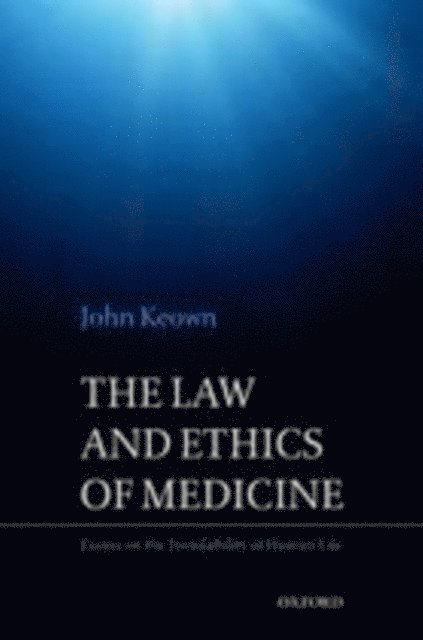
Law and Ethics of Medicine
Essays on the Inviolability of Human Life
Av John Keown
E-bok, 2012
1619 kr
Lägg i varukorg
The Law and Ethics of Medicine: Essays on the Inviolability of Human Life explains the principle of the inviolability of human life and its continuing relevance to English law governing aspects of medical practice at the beginning and end of life.The book shows that the principle, though widely …
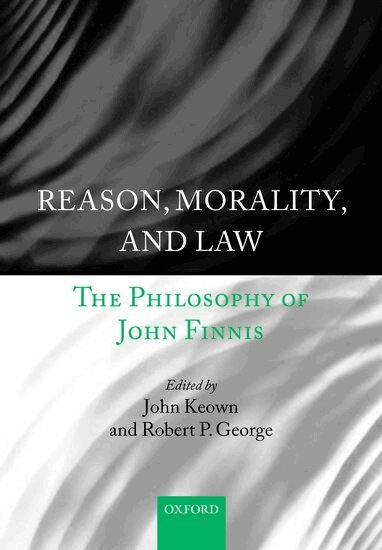
Reason, Morality, and Law
The Philosophy of John Finnis
Av John Keown, Robert P. George m. fl.
Häftad, 2015
1025 kr
Lägg i varukorg
John Finnis is a pioneer in the development of a new yet classically-grounded theory of natural law. His work offers a systematic philosophy of practical reasoning and moral choosing that addresses the great questions of the rational foundations of ethical judgments, the identification of moral …
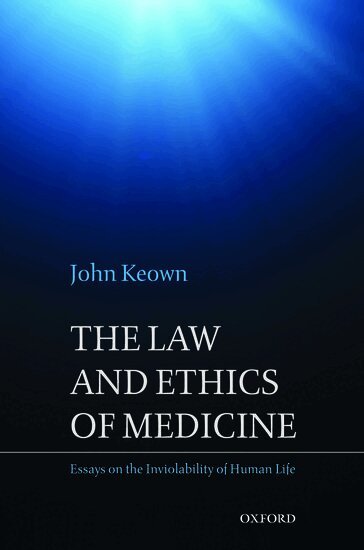
The Law and Ethics of Medicine
Essays on the Inviolability of Human Life
Av John Keown
Inbunden, 2012
2501 kr
Lägg i varukorg
The Law and Ethics of Medicine: Essays on the Inviolability of Human Life explains the principle of the inviolability of human life and its continuing relevance to English law governing aspects of medical practice at the beginning and end of life.The book shows that the principle, though widely …
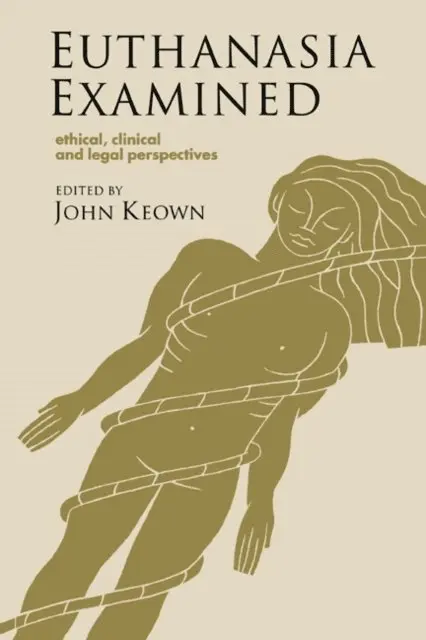
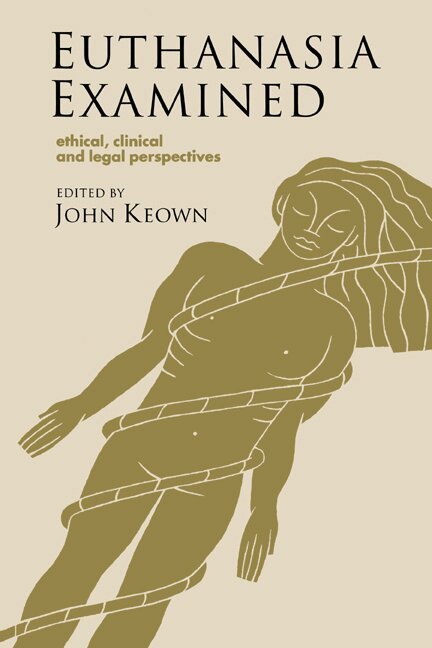
Euthanasia Examined
Ethical, Clinical and Legal Perspectives
Av John Keown
E-bok, 1997
1500 kr
Lägg i varukorg
Whether euthanasia or assisted suicide should be legalised is one of the most pressing and profound questions facing legislators, health-care professionals, their patients and indeed all members of society. Regrettably, the debate is too often characterised by rhetoric rather than reason. This book …
Euthanasia Examined
Ethical, Clinical and Legal Perspectives
Av John Keown, J. Keown m. fl.
Häftad, 1997
1514 kr
Lägg i varukorg
Whether euthanasia or assisted suicide should be legalised is one of the most pressing and profound questions facing legislators, health-care professionals, their patients and indeed all members of society. Regrettably, the debate is too often characterised by rhetoric rather than reason. This book …
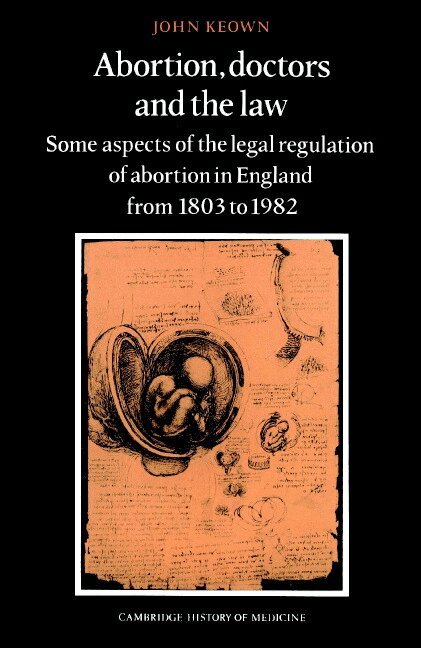
Abortion, Doctors and the Law
Some Aspects of the Legal Regulation of Abortion in England from 1803 to 1982
Av John Keown, Charles Rosenberg m. fl.
Häftad, 2002
813 kr
Lägg i varukorg
Ranging from the beginning of the nineteenth century to the 1980s, this book focuses on the evolution of the law and medical practice of abortion in England. Little academic attention has hitherto been given to the development and scope of abortion law in England, the formative influence of the …
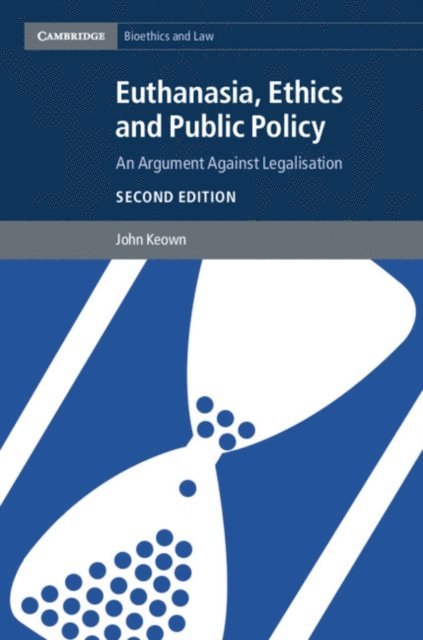
Euthanasia, Ethics and Public Policy
An Argument against Legalisation
Av John Keown
Inbunden, 2018
1573 kr
Lägg i varukorg
This book argues against the legalisation of voluntary euthanasia and/or physician-assisted suicide on the ground that, even if they were ethically defensible in certain 'hard cases', neither could be effectively controlled by law. It maintains that the experience of legalisation in the …
Euthanasia, Ethics and Public Policy
An Argument against Legalisation
Av John Keown
Häftad, 2018
688 kr
Lägg i varukorg
This book argues against the legalisation of voluntary euthanasia and/or physician-assisted suicide on the ground that, even if they were ethically defensible in certain 'hard cases', neither could be effectively controlled by law. It maintains that the experience of legalisation in the …
Euthanasia, Ethics and Public Policy
An Argument against Legalisation
Av John Keown
E-bok, 2018
690 kr
Lägg i varukorg
This book argues against the legalisation of voluntary euthanasia and/or physician-assisted suicide on the ground that, even if they were ethically defensible in certain ''hard cases'', neither could be effectively controlled by law. It maintains that the experience of legalisation in the …
Euthanasia, Ethics and Public Policy
An Argument against Legalisation
Av John Keown
E-bok, 2018
690 kr
Lägg i varukorg
This book argues against the legalisation of voluntary euthanasia and/or physician-assisted suicide on the ground that, even if they were ethically defensible in certain ''hard cases'', neither could be effectively controlled by law. It maintains that the experience of legalisation in the …
Debating Euthanasia
E-bok, 2011
393 kr
Lägg i varukorg
In this new addition to the ''Debating Law'' series, Emily Jackson and John Keown re-examine the legal and ethical aspects of the euthanasia debate. Emily Jackson argues that we owe it to everyone in society to do all that we can to ensure that they experience a ''good death''. For a small minority …
Debating Euthanasia
Av Emily Jackson, John Keown m. fl.
Häftad, 2011
371 kr
Lägg i varukorg
In this new addition to the 'Debating Law' series, Emily Jackson and John Keown re-examine the legal and ethical aspects of the euthanasia debate.Emily Jackson argues that we owe it to everyone in society to do all that we can to ensure that they experience a 'good death'. For a small minority of …