John Leibacher – författare
Visar alla böcker från författaren John Leibacher. Handla med fri frakt och snabb leverans.
5 produkter
5 produkter
1 589 kr
Skickas inom 10-15 vardagar
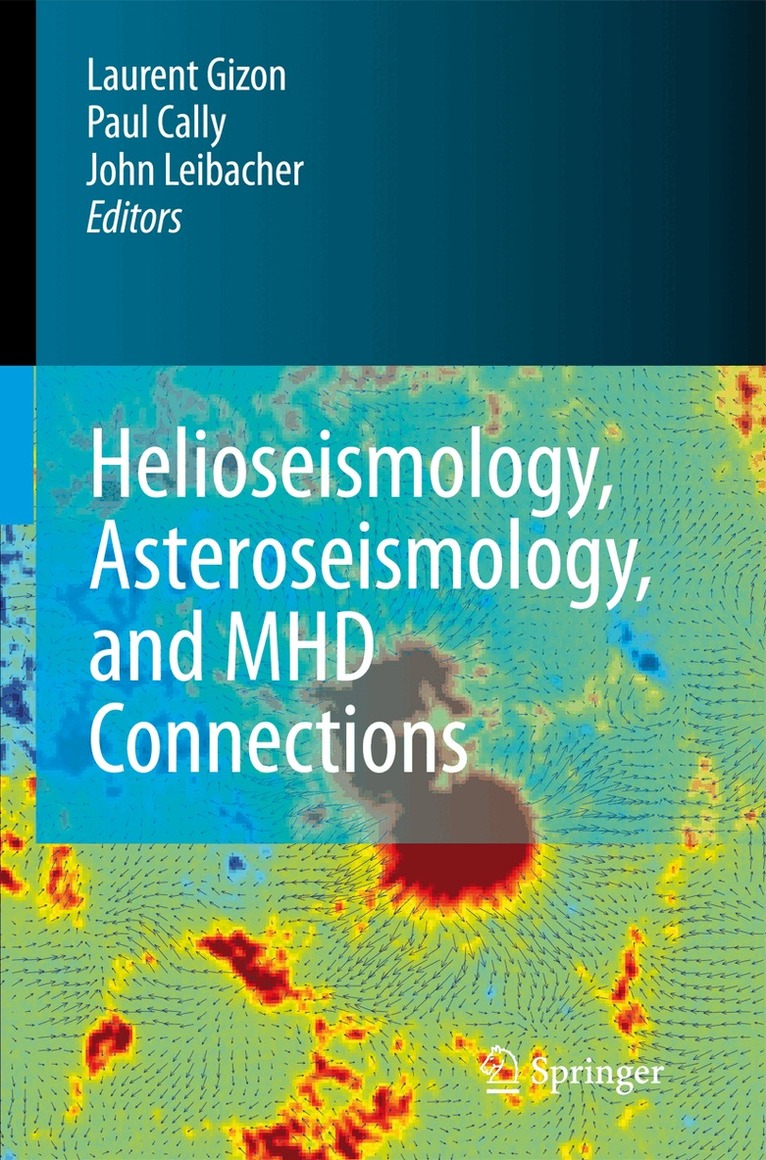
Laurent Gizon*Paul Cally*John Leibacher Originally published in the journal Solar Physics, Volume 251, Nos 1-2, 1-2. DOI: 10. 1007/s11207-008-9248-y (c) The Author(s) 2008 The seismology of the Sun and stars has come a long way in a short time. The "original" Global Helioseismology has reached a level of maturity that allows many internal prop- ties of the Sun to be probed with exquisite precision, although it currently faces a severe challenge to reconcile interior models with helioseismic inversions near the base of the c- vection zone in the age of the new solar chemical abundances. Asteroseismology suffers in comparisonbybeingrestrictedtoverylowsphericalharmonicdegree( ),butitmakesupfor this by providing many more subjects for study (including solar-like stars) and many cases of well-identi ed g modes. Where once we were restricted to stellar spectra in studying in- vidual stars, asteroseismology now provides a crucial tool with which we may explore their deep structure. Its natural synergy with planet-search programs also invigorates it.Local Helioseismology has seen the development of an exciting array of techniques and insights over the two decades since observations of surface oscillations in and around active regions gave the rst clues that something different was happening there, and it has been parti- larly important in mapping ows of various types in shallow subsurface layers.
1 589 kr
Skickas inom 10-15 vardagar
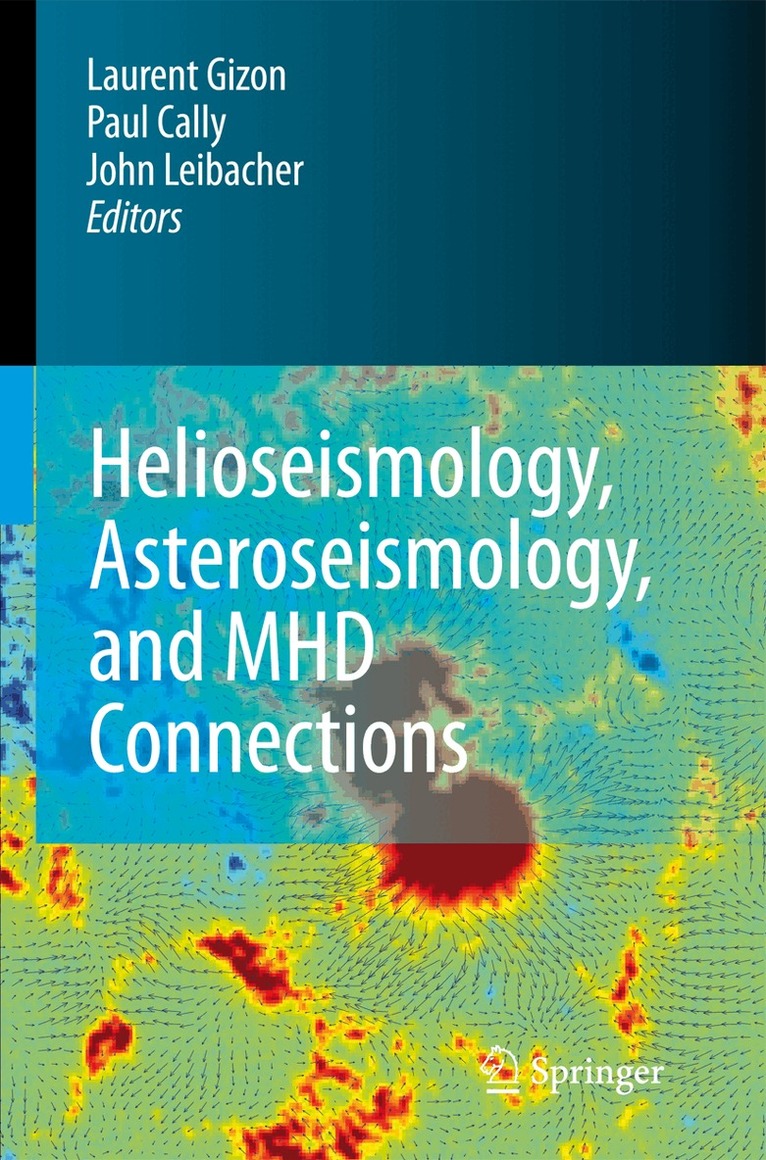
Laurent Gizon*Paul Cally*John Leibacher Originally published in the journal Solar Physics, Volume 251, Nos 1-2, 1-2. DOI: 10. 1007/s11207-008-9248-y (c) The Author(s) 2008 The seismology of the Sun and stars has come a long way in a short time. The "original" Global Helioseismology has reached a level of maturity that allows many internal prop- ties of the Sun to be probed with exquisite precision, although it currently faces a severe challenge to reconcile interior models with helioseismic inversions near the base of the c- vection zone in the age of the new solar chemical abundances. Asteroseismology suffers in comparisonbybeingrestrictedtoverylowsphericalharmonicdegree( ),butitmakesupfor this by providing many more subjects for study (including solar-like stars) and many cases of well-identi ed g modes. Where once we were restricted to stellar spectra in studying in- vidual stars, asteroseismology now provides a crucial tool with which we may explore their deep structure. Its natural synergy with planet-search programs also invigorates it.Local Helioseismology has seen the development of an exciting array of techniques and insights over the two decades since observations of surface oscillations in and around active regions gave the rst clues that something different was happening there, and it has been parti- larly important in mapping ows of various types in shallow subsurface layers.
1 062 kr
Skickas inom 10-15 vardagar
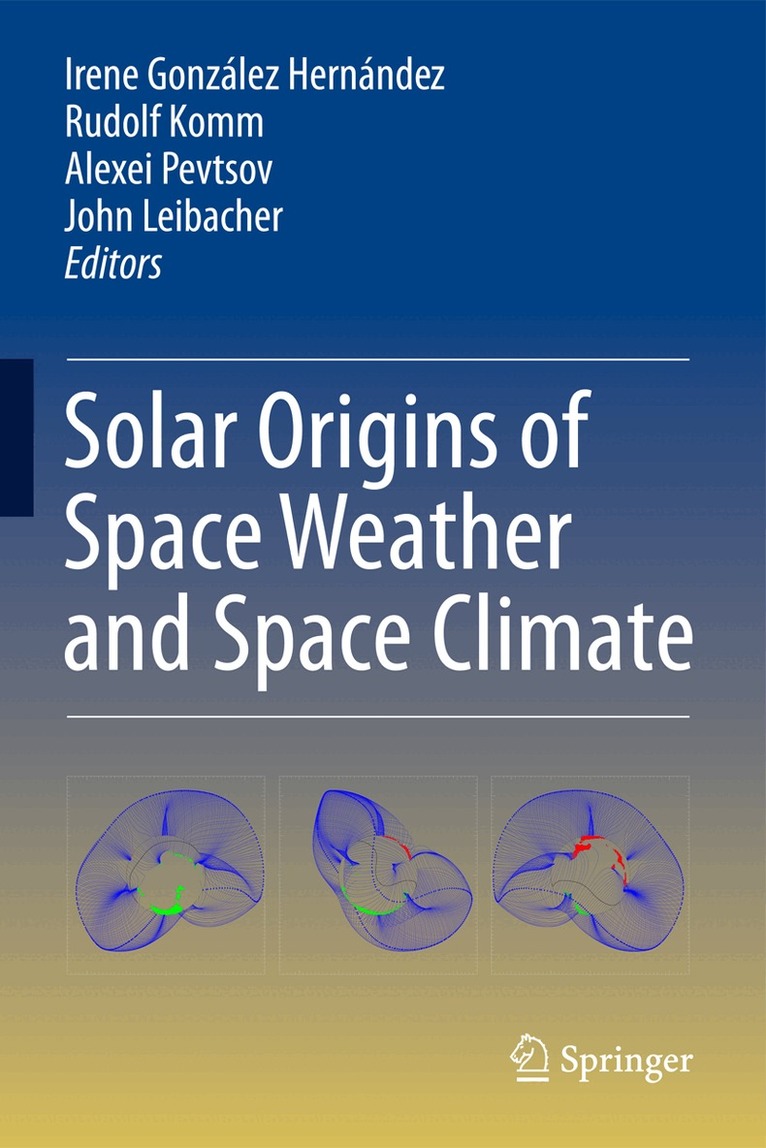
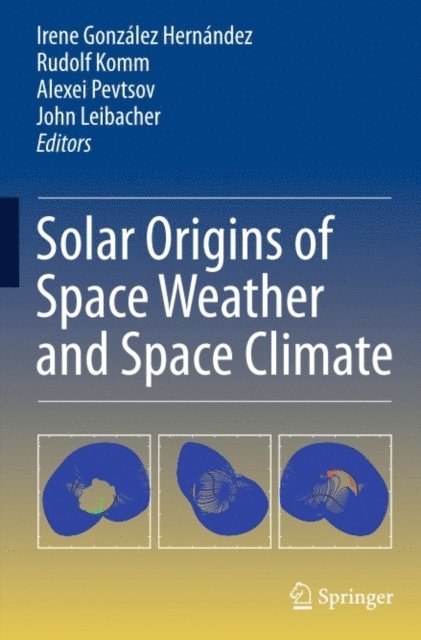
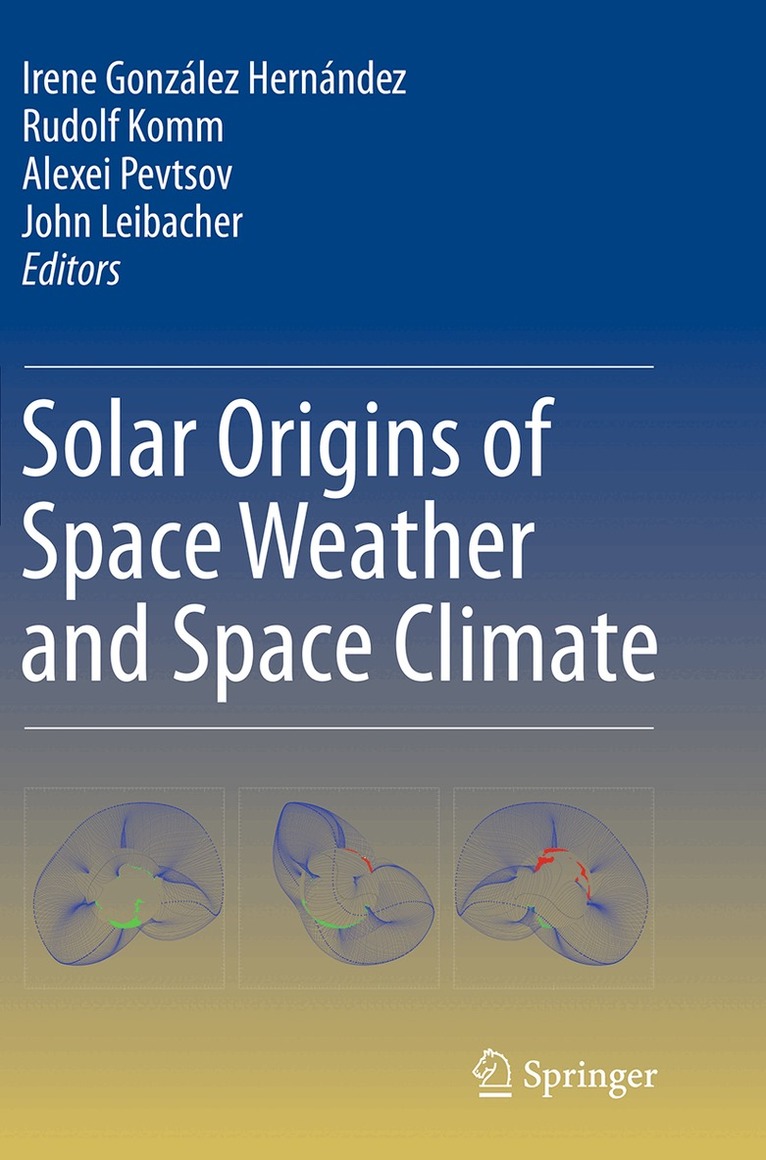
Presents an overview of recent research on the original of solar phenomena that affect Earth’s technological systems.This topical issue is based on the presentations given at the 26th National Solar Observatory (NSO) Summer Workshop held at the National Solar Observatory/Sacramento Peak, New Mexico, USA from 30 April to 4 May 2012. This unique forum brought together experts in different areas of solar and space physics to help in developing a full picture of the origin of solar phenomena that affect Earth’s technological systems. The articles include theory, model and observation research on the origin of the solar activity and its cycle, as well as a discussion on how to incorporate the research into space-weather forecasting tools.This volume is aimed at graduate students and researchers active in solar physics and space science.Previously published in Solar Physics, Vol. 289/2, 2014.
1 062 kr
Skickas inom 10-15 vardagar
Presents an overview of recent research on the original of solar phenomena that affect Earth’s technological systems.This topical issue is based on the presentations given at the 26th National Solar Observatory (NSO) Summer Workshop held at the National Solar Observatory/Sacramento Peak, New Mexico, USA from 30 April to 4 May 2012. This unique forum brought together experts in different areas of solar and space physics to help in developing a full picture of the origin of solar phenomena that affect Earth’s technological systems. The articles include theory, model and observation research on the origin of the solar activity and its cycle, as well as a discussion on how to incorporate the research into space-weather forecasting tools.This volume is aimed at graduate students and researchers active in solar physics and space science.Previously published in Solar Physics, Vol. 289/2, 2014.
2 117 kr
Skickas inom 10-15 vardagar
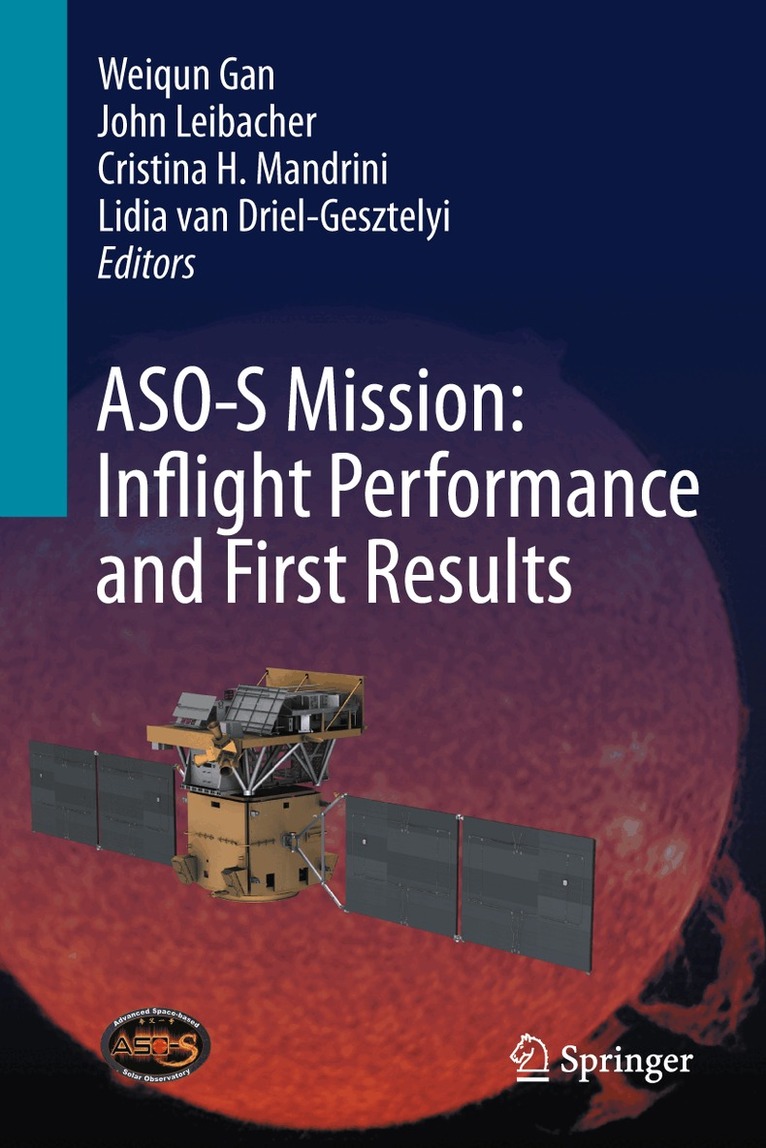
The Advanced Space-based Solar Observatory (ASO-S) is China’s first comprehensive mission dedicated to solar research. It was successfully launched on October 9, 2022. This book is a reprint of a collection of articles originally published in the journal of Solar Physics, comprising 30 papers that present the in-flight performance and early scientific results of ASO-S, with data collected up to March 15, 2024. Together, these papers provide an overview of the mission’s progress during the first one and a half years after the launch. Earlier studies on the mission and its instruments, conducted prior to launch, can be found primarily in special issues of RAA (2019, Vol. 19, No. 11) and Acta Astronomica Sinica (2020, Vol. 61, No. 4). Additional related research has also appeared in journals such as ApJ, A&A, and MNRAS.ASO-S aims to investigate the relationships between the solar magnetic field, solar flares, and coronal mass ejections (CMEs). It is equipped with three onboard instruments: the Full-disc vector MagnetoGraph (FMG), the Hard X-ray Imager (HXI), and the Lyman-alpha Solar Telescope (LST), which are designed to observe the solar magnetic field, solar flare hard X-ray emissions, and the formation and propagation of CMEs, respectively. The book is organized into four parts. Part One includes five papers detailing the mission’s final technical configuration prior to launch, the first-light results, the in-flight performance and calibration of FMG, HXI, and LST, and the mission’s data center. The remaining three parts are each devoted to scientific research based on observations from FMG, HXI, and LST, respectively. Reprinted from Solar Physics, Topical Collection: ASO-S Mission: Inflight Performance and First Results.