John McGregor - Böcker
Visar alla böcker från författaren John McGregor. Handla med fri frakt och snabb leverans.
6 produkter
6 produkter
178 kr
Skickas
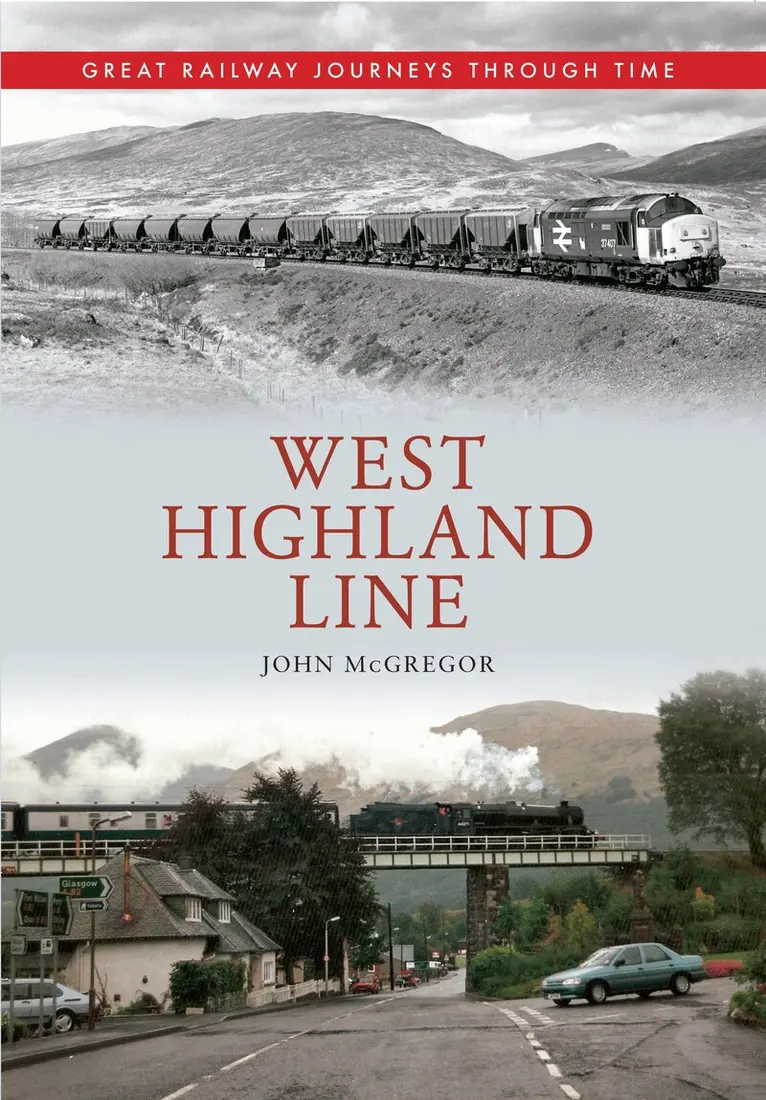
Twice voted the top railway journey in the world, the West Highland route to Mallaig (like the Dingwall & Skye and the Callander & Oban) accessed the remote and mountainous west coast of Scotland. The original West Highland line, described here, links Glasgow and Fort William. In the late nineteenth century, with their nearest railheads many miles away, the inhabitants of Fort William sought their own railway, approved in 1889. It was opened all at once in 1894. From the north shore of the Firth of Clyde, the line passes the Gareloch, Loch Long and Loch Lomond, before crossing desolate but beautiful Rannoch Moor. From Corrour, Britain's highest and most inaccessible railway station, it descends through Glen Spean towards Fort William. In this book, Dr John McGregor uses a wonderful collection of photographs to bring the history of the line to life.

178 kr
Skickas inom 11-20 vardagar
The Mallaig Extension was approved in 1894 to provide a continuation of the West Highland route for the benefit of the fishing industry on Scotland's west coast. It revived, more ambitiously, the Fort William to Roshven line lost in 1889. With controversial state aid in place, construction began in 1897 and the Extension was opened in 1901. Steam was reintroduced on the line in 1984 and the Jacobite service to Mallaig is now a major tourist attraction. Crossing the famous Glenfinnan viaduct, the line touches Loch Eilt, Loch Ailort, Loch-nan-Uamh, Arisaig and Morar, giving wonderful views of the coastline and the Small Isles. In this book, a companion to his volume on the West Highland Line, Dr John McGregor uses a wide selection of period and modern photographs to bring the history and dramatic landscape of the Mallaig Extension to life for the reader.
221 kr
Tillfälligt slut
2014 sees the 120th anniversary of the opening of the West Highland Railway between Craigendoran and Fort William, when the through journey from Glasgow took some five hours. With the great age of railway building almost over, the West Highland was from the outset a ‘social line’, though corporate empire building and speculation played a part. Subsequently extended to Mallaig, with state assistance, the West Highland route has been voted top railway journey – and the most scenic – in the world. From the north shore of the Firth of Clyde, the line passes the Gare Loch, Loch Long and Loch Lomond before crossing desolate but beautiful Rannoch Moor. From Corrour, Britain’s highest and most inaccessible railway station, it descends through Glen Spean into Lochaber. In this profusely illustrated book, Dr John McGregor takes a look at this famous line, from its construction to the present day – the men who built it; its early years and varied fortunes thereafter; changing traffic patterns; advertising and tourism; maintenance and mishaps; and the return of heritage steam.
196 kr
Skickas inom 5-8 vardagar
242 kr
Skickas
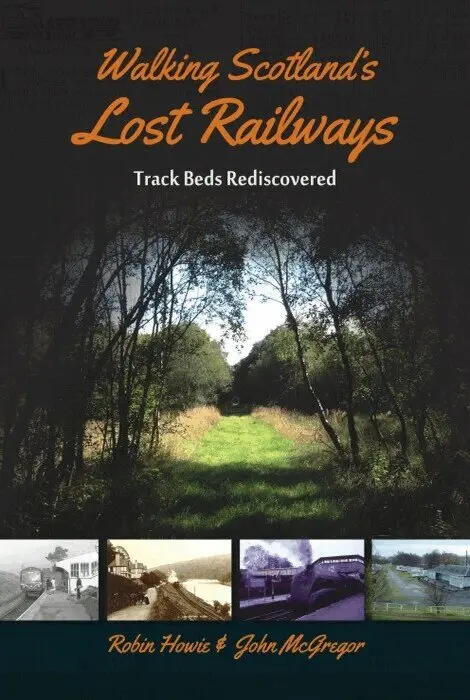
Scotland still has hundreds of miles of ‘dismantled railways’, the term used by Ordnance Survey, and the track beds give scope for many walks. Some track beds have been ‘saved’ as Tarmacadam walkway/cycleway routes while others have become well-trodden local walks. The remainder range from good, to overgrown, to well-nigh impassable in walking quality.This book provides a handy guide to trackbed walks with detailed information and maps. It is enhanced by numerous black and white old railway photographs, recalling those past days, and by coloured photographs that reflect the post-Beeching changes. The integral hand-crafted maps identify the old railway lines and the sites of stations, most of which are now unrecognisable.The ‘Railway Age’ is summarised and describes the change from 18th century wagon ways and horse traction to the arrival of steam locomotives c.1830. The fierce rivalry that then ensued between the many competing companies as railway development proceeded at a faster pace is recounted. Although walkers may be unaware of the tangled history of the development of the railway system during the Victorian era, many will have heard of, or experienced, the drastic 1960s cuts of the Beeching axe. However, in more recent times Scotland has experienced a railway revival – principally in the Greater Glasgow area but with new stations and station re-openings elsewhere. The long awaited 30-mile Borders Railway from Edinburgh to Tweedbank, the longest domestic railway to be built in Britain for more than a century, is something on a very different scale. Early passenger numbers have exceeded expectations and towns served by the line have seen significant economic benefits. Many railway enthusiasts cling to the hope that more lines will be reinstated. Meanwhile, those walks offer a fascinating and varied selection of routes that can fill an afternoon, a day or a long weekend – an ideal opportunity to get walking!
234 kr
Kommande
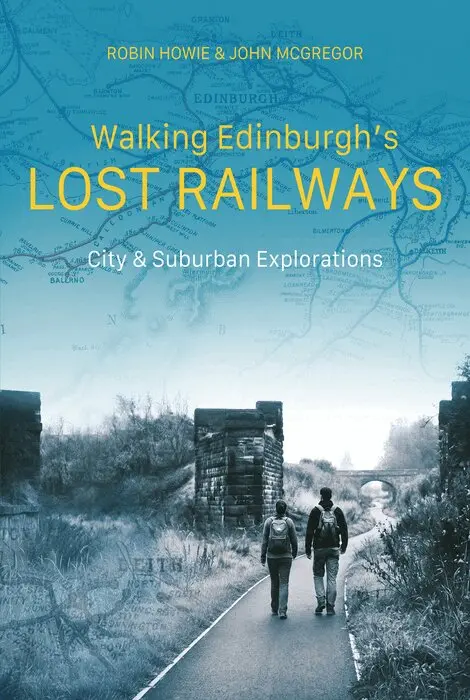
A book that literally walks the reader through the many miles of 'dismantled railway' in Edinburgh, which have have been transformed into smooth, gently-graded, tarmac routes, ideal for pedestrians of all ages, cyclists and joggers. The railway engineers, who balanced excavation and infill, have left a legacy of cuttings and embankments which are generally unobtrusive and often surprisingly tucked away from today’s city life.In 1981 Lothian Regional Council acquired various disused lines and other railway land, making possible the creation of cycleways-cum-footpaths. The programme began in 1983 and has flourished ever since. More might have been achieved had the line closures of the 1960s been accompanied by comprehensive plans for re-utilisation, which the mood of the times did not favour. There was instead piecemeal redevelopment for domestic housing, commerce and industry. Although a more enlightened policy subsequently prevailed, these results are not easily undone.Nevertheless, the maze of track beds has very largely been preserved covering a total of some 40 miles – in part the product of inter-company rivalry and duplicated provision. Thirteen walks are described and, although each stands alone, tackling them in sequence opens windows on two centuries of urban expansion which has subsumed once-independent communities, all with their own histories.The first walks described begin at Waverley Station in the city centre. Where track beds have been lost – especially through parts of old Leith – exploratory detours are detailed. The authors therefore advise that more time is allowed than the distances cited may suggest!