John Minnis - Böcker
Visar alla böcker från författaren John Minnis. Handla med fri frakt och snabb leverans.
7 produkter
7 produkter
189 kr
Tillfälligt slut
535 kr
Tillfälligt slut
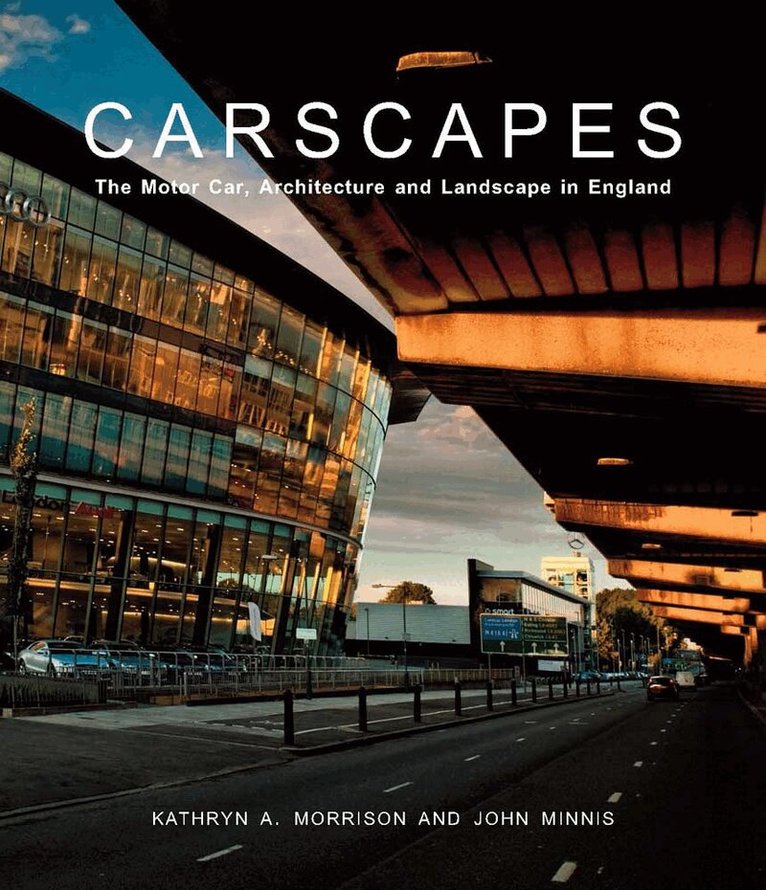
When the motor car first came to England in the 1890s, it was a luxury item with little practical purpose—drivers couldn't travel very far or quickly without paved roads or traffic laws. Thus began a transformation that has affected the architecture, infrastructure, and even the natural environment of the country. Carscapes relates the history of the car's impact on the physical environment of England from its early beginnings to the modern motorway network, focusing especially on its architectural influence.The authors offer a detailed look at the litany of structures designed specifically to accommodate cars: garages, gas stations, car parks, factories, and showrooms. Presenting a comprehensive study of these buildings, along with highways, bridges, and signage, Carscapes reveals the many overlooked ways in which automobiles have shaped the modern English landscape.Published for the Paul Mellon Centre for Studies in British Art
277 kr
Skickas inom 5-8 vardagar
277 kr
Skickas inom 5-8 vardagar
299 kr
Skickas inom 5-8 vardagar
931 kr
Skickas inom 7-10 vardagar
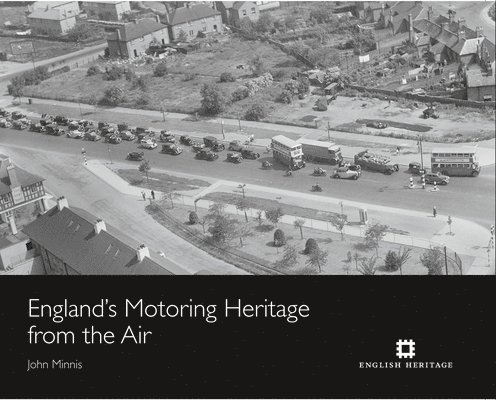
The arrival of aerial photography came at a particularly significant moment in terms of the visual appearance of England. This selection of photographs makes use of the Aerofilms collection, acquired by English Heritage in 2007 and subsequently digitised and made available on the Britain from Above website. When Aerofilms fliers first went up in the skies in 1919, they captured a country that, with the obvious exception of some large scale structures such as aircraft hangers and munitions factories, had more or less been preserved in aspic in 1914. What we are looking at in many of the earliest photographs in this book is essentially Edwardian England, with towns and villages generally quite compact, with fields reaching almost up to the High Streets in many cases, and little sign of the sprawl that was to engulf them in the 1920s and 30s. The streets of many towns, especially the seaside resorts that provided the aerial photographers with many of their earliest subjects, have an orderly, almost pristine appearance to them, with the Victorian and Edwardian houses undisturbed by any out of place redevelopment.The purpose of this book is to show just how radically that position changed over the ensuing half century. We trace the outward expansion of places brought about by the availability of the car: the new suburbs and ribbon development. We see how new arterial roads came into being to meet the needs of motor transport and how the centre of cities start to be rebuilt to accommodate it. We witness the growth of sprawl around road junctions on the edge of built up areas and the arrival of new types of building there to service both cars and people: the filling station, the roadhouse. We see how the car encouraged more people to go further afield for sport and pleasure: to the seaside, the races or to new forms of attractions such as the amusement park in the country. And we see how public transport changes over the period from trams to buses with the advent of new facilities such as bus stations. The scale of traffic congestion becomes apparent by the late 1930s. In addition, the impact on the landscape of large motor factories and provision for motor sport is made clear.
257 kr
Skickas inom 7-10 vardagar
Although goods traffic accounted in many cases for a higher proportion of railway companies’ revenue than passengers, the buildings associated with it have received very little attention in comparison to their passenger counterparts. They once played as important a role in distribution as the ‘big sheds’ near motorway junctions do today. The book shows how the basic design of goods sheds evolved early in the history of railways, and how the form of goods sheds reflected the function they performed. Although goods sheds largely functioned in the same way, there was considerable scope for variety of architectural expression in their external design. The book brings out how they varied considerably in size from small timber huts to the massive warehouses seen in major cities. It also looks at how many railway companies developed standard designs for these buildings towards the end of the 19th century and at how traditional materials such as timber, brick and stone gave way to steel and concrete in the 20th This building type is subject to a high level of threat with development pressure in urban and suburban areas for both car parking and housing having already accounted for the demise of many of these buildings. Despite this, some 600 have been identified as still extant and the book will, for the first time, provide a comprehensive gazetteer of the surviving examples.