John Niles - Böcker
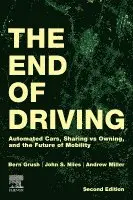
The End of Driving
Transportation Systems and Public Policy Planning for Autonomous Vehicles
1 083 kr
Skickas inom 7-10 vardagar
While many transportation and city planners, researchers, students, practitioners, and political leaders are familiar with the technical nature and promise of vehicle automation, consensus is not yet often seen on the impact that will result, or the policies and actions that those responsible for transportation systems should take.
The End of Driving: Transportation Systems and Public Policy Planning for Autonomous Vehicles explores both the potential of vehicle automation technology and the barriers it faces when considering coherent urban deployment. The book evaluates the case for deliberate development of automated public transportation and mobility-as-a-service as paths towards sustainable mobility, describing critical approaches to the planning and management of vehicle automation technology. It serves as a reference for understanding the full life cycle of the multi-year transportation systems planning processes, including novel regulation, planning, and acquisition tools for regional transportation.
Application-oriented, research-based, and solution-oriented rather than predict-and-warn, The End of Driving concludes with a detailed discussion of the systems design needed for accomplishing this shift.
From the Foreword by Susan Shaheen: The authors . extend potential solutions through a set of open-ended exercises after each chapter. Their approach is both strategic and deliberate. They lead the reader from definitions and context setting to the transition toward automation, employing a range of creative strategies and policies. While our quest to understand how to deploy automated vehicles is just beginning, this book provides a thoughtful introduction to inform this evolution.
Offers a workable public transit solution design melding the traditional "acquire-and-operate� mode with the absorption of new technology Provides a step-by-step discussion of digital systems designs and effective regulation-by-data approaches needed for a new urban mobility Learning aids include case study scenarios, chapter objectives and discussion questions, sidebars and a glossaryThe End of Driving
Automated Cars, Sharing vs Owning, and the Future of Mobility
915 kr
Skickas inom 7-10 vardagar
Vehicle automation is on dual paths of entrenching private car ownership while simultaneously enhancing transportation services that would make driving unnecessary. Future impacts are uncertain.The End of Driving challenges the assumption that self-driving cars will by themselves reduce traffic congestion and crashes. Evolving vehicle automation will create safer, more convenient vehicles, yet continued reliance on private ownership will increase traffic volume. The authors explore psychological factors sustaining private vehicle use and the challenges of mixed-driver roads, examining why shared robotaxis face behavioral, political, and policy hurdles that will impede mass adoption, despite substantial public benefit.This updated edition examines real-world deployments through 2025 and introduces concepts such as zero car-ownership communities, robotaxi pickup and drop-off orchestration, and urban spaces redesigned around greater mode choices for physical access rather than parking. The book compares privately owned automated cars against shared, on-demand driverless vehicles, using new data to show which model best serves cities.Rather than predicting timelines, the authors use backcasting to map paths toward preferred mobility futures. They propose micro-subsidies, flexible transit integration, and regulatory frameworks to guide automation toward all three pillars of sustainability: ecology, economy, and equity. Shared, automated mobility is achievable and desirable but requires the deliberate actions described in this book.
Offers a workable public transit solution design melding the traditional “acquire-and-operate” mode with the absorption of new technologyProvides a step-by-step discussion of digital systems designs and effective regulation-by-data approaches needed for a new urban mobilityLearning aids include case study scenarios, chapter objectives and discussion questions, sidebars, a glossary, and updated exercises for student readers at the end of every chapterNew to the second edition: entirely new chapters or sections on the important distinctions between robotaxis and automated driver assistance, analysis of why automated vehicle deployment has not achieved early optimistic forecasts, infrastructure requirements supporting scaled-up robotaxi deployment, importance of on-demand automated microtransit in transit territories where fixed route is inefficient, how private fleets can be managed to expand universal urban mobility, developmental progress on vehicle automation deployment in countries around the world, and the steps needed to achieve zero-car ownership in urban zones.