John Philoponus – författare
Visar alla böcker från författaren John Philoponus. Handla med fri frakt och snabb leverans.
19 produkter
On Aristotle on the Intellect
Av John Philoponus, W. Charlton m. fl.
Inbunden, 1991
2119 kr
Lägg i varukorg
Against Philoponus on the Eternity of the World
Av John Philoponus, David Furley m. fl.
Inbunden, 1991
2119 kr
Lägg i varukorg
Philoponus: On Aristotle On Coming-to-Be and Perishing 1.1-5
Inbunden, 1999
2119 kr
Lägg i varukorg
This series translates the 15,000 pages of philosophical writings by the ancient Greek commentators on Aristotle, written mainly between 200 and 600 AD. Now translated into English, these works include introductions, notes and comprehensive indexes, filling a gap in the history of European thought.
Philoponus: On Aristotle On Coming to be 1.6-2.4
Inbunden, 1999
2119 kr
Lägg i varukorg
This series translates the 15,000 pages of philosophical writings by the ancient Greek commentators on Aristotle, written mainly between 200 and 600 AD. Now translated into English, these works include introductions, notes and comprehensive indexes, filling a gap in the history of European thought.
On Aristotle "On the Soul 3.1-8"
Inbunden, 2000
2119 kr
Lägg i varukorg
This volume translates the earlier part of the commentary by Philoponus on Aristotle's "On the Soul".
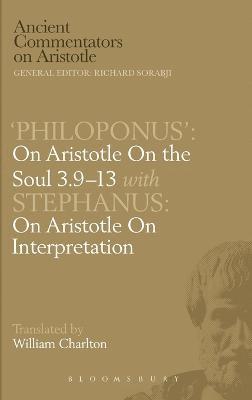
On Aristotle "On the Soul 3.9-13"
Inbunden, 2000
2119 kr
Lägg i varukorg
The ancient Greek commentators on Aristotle constitute a large body of Greek philosophical writings, not previously translated into European languages. This volume includes notes and indexes and forms part of a series to fill this gap.
Against Proclus "On the Eternity of the World 1-5"
Inbunden, 2005
1842 kr
Lägg i varukorg
This is a post-Aristotelian Greek philosophical text, written at a crucial moment in the defeat of paganism by Christianity, AD 529, when the Emporor Justinian closed the pagan Neoplatonist school in Athens. Philoponus in Alexandria was a brilliant Christian philosopher, steeped in Neoplatanism, …
Against Proclus "On the Eternity of the World 6-8"
Av John Philoponus, Michael Share
Inbunden, 2005
2119 kr
Lägg i varukorg
This is one of the most interesting of all post-Aristotelian Greek philosophical texts, written at a crucial moment in the defeat of paganism by Christianity, AD 529, when the Emperor Justinian closed the pagan Neoplatonist school in Athens. Philoponus in Alexandria was a brilliant Christian …
On Aristotle "On the Soul 2.1-6"
Av John Philoponus, William Charlton
Inbunden, 2005
1842 kr
Lägg i varukorg
In 'On The Soul 2.1-6', Aristotle gives a very different account of the sould from Plato's by tying the soul to the body. The soul is the life-manifesting capacities that we all have and that distinguish living things, and explain their behaviour. He defines sould and life by reference to the …
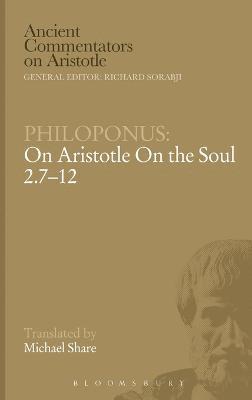
On Aristotle on the Soul 2.7-12
Inbunden, 2005
1842 kr
Lägg i varukorg
Until the launch of this series over ten years ago, the 15,000 volumes of the ancient Greek commentators on Aristotle, written mainly between 200 and 600 AD, constituted the largest corpus of extant Greek philosophical writings not translated into English or other European languages. Over 30 …
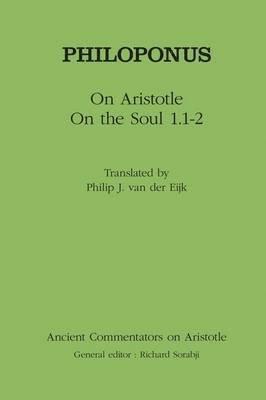
Philoponus
On Aristotle on the Soul 1.1-2
Inbunden, 2005
1842 kr
Lägg i varukorg
Until the launch of this series over ten years ago, the 15,000 volumes of the ancient Greek commentators on Aristotle, written mainly between 200 and 600 AD, constituted the largest corpus of extant Greek philosophical writings not translated into English or other European languages. Over 30 …
Commentaria in Aristotelem Graeca
Av Joannes Philophonus, John Philoponus
Inbunden, 2025
485 kr
Lägg i varukorg
Commentaria in Aristotelem Graeca
Av Joannes Philophonus, John Philoponus
Häftad, 2025
363 kr
Lägg i varukorg