W. Charlton – författare
Visar alla böcker från författaren W. Charlton. Handla med fri frakt och snabb leverans.
10 produkter
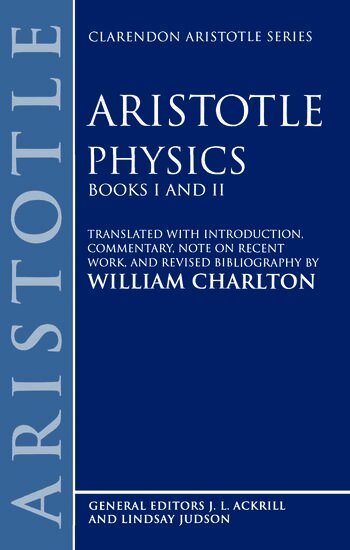
Physics Books I and II
Av Aristotle, W. Charlton
Häftad, 1983
1219 kr
Lägg i varukorg
In the first two books of the Physics Aristotle discusses philosophical issues involved in the investigation of the physical universe. He introduces his distinction between form and matter and his fourfold classification of causes or explanatory factors, and defends teleological explanation. These …
On Aristotle on the Intellect
Av John Philoponus, W. Charlton m. fl.
Inbunden, 1991
2119 kr
Lägg i varukorg
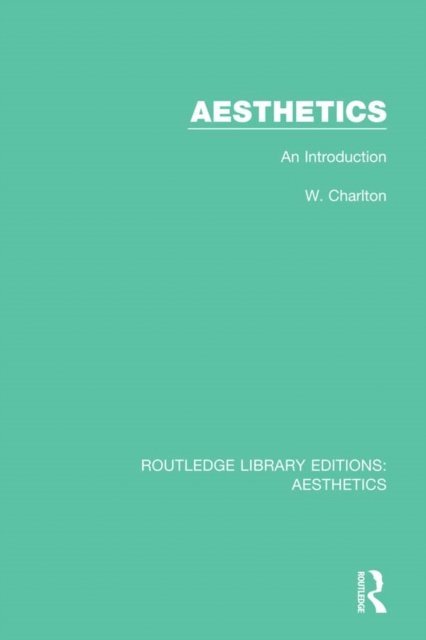
Aesthetics
An Introduction
Av W. Charlton
Inbunden, 2016
2131 kr
Lägg i varukorg
First published in 1970. What is a work of art? What is the status of things in pictures and books? How are we to distinguish and ascertain the meaning of a literary work at various levels? This book is intended both to introduce the reader to classic philosophical accounts of art and beauty, and …
Aesthetics
An Introduction
Av W. Charlton
Häftad, 2017
560 kr
Lägg i varukorg
First published in 1970. What is a work of art? What is the status of things in pictures and books? How are we to distinguish and ascertain the meaning of a literary work at various levels? This book is intended both to introduce the reader to classic philosophical accounts of art and beauty, and …
Aesthetics
An Introduction
Av W. Charlton
E-bok, 2016
658 kr
Lägg i varukorg
First published in 1970. What is a work of art? What is the status of things in pictures and books? How are we to distinguish and ascertain the meaning of a literary work at various levels? This book is intended both to introduce the reader to classic philosophical accounts of art and beauty, and …
Aesthetics
An Introduction
Av W. Charlton
E-bok, 2016
658 kr
Lägg i varukorg
First published in 1970. What is a work of art? What is the status of things in pictures and books? How are we to distinguish and ascertain the meaning of a literary work at various levels? This book is intended both to introduce the reader to classic philosophical accounts of art and beauty, and …
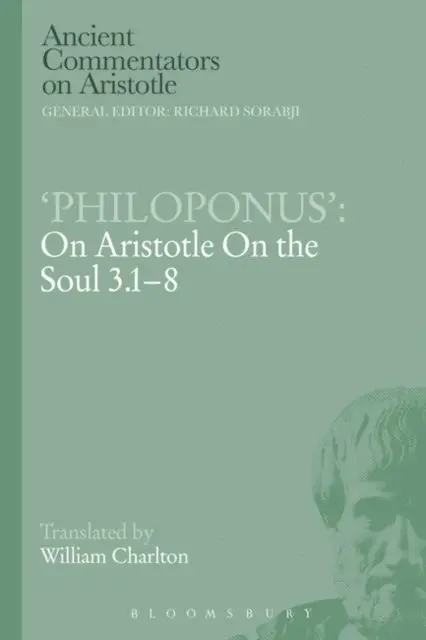
Philoponus': On Aristotle On the Soul 3.1-8
Av W. Charlton
E-bok, 2014
595 kr
Lägg i varukorg
In On the Soul 3.1-8, Aristotle first discusses the functions common to all five senses, such as self-awareness, and then moves on to Imagination and Intellect. This commentary on Aristotle''s text has traditionally been ascribed to Philoponus, but William Charlton argues here that it should be …
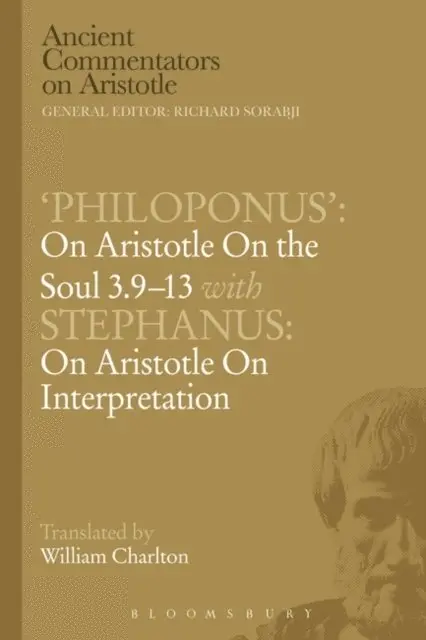
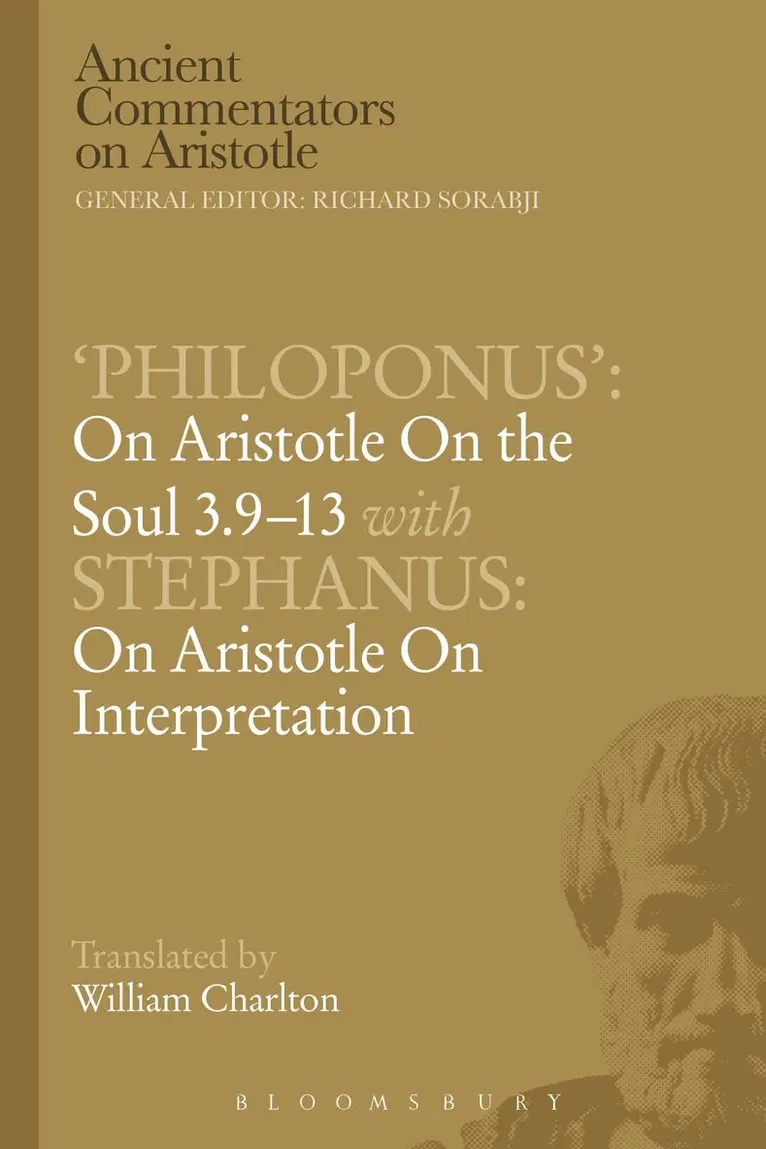
Philoponus': On Aristotle On the Soul 3.9-13 with Stephanus: On Aristotle On Interpretation
Av W. Charlton
E-bok, 2014
590 kr
Lägg i varukorg
The earlier part of the commentary by ''Philoponus'' on Aristotle''s On the Soul is translated by William Charlton in another volume in the series. This volume includes the latter part of the commentary along with a translation of Stephanus'' commentary on Aristotle ''s On Interpretation. It thus …
Philoponus': On Aristotle On the Soul 3.1-8
Av W. Charlton, Richard Sorabji
Häftad, 2014
558 kr
Lägg i varukorg
In On the Soul 3.1-8, Aristotle first discusses the functions common to all five senses, such as self-awareness, and then moves on to Imagination and Intellect. This commentary on Aristotle's text has traditionally been ascribed to Philoponus, but William Charlton argues here that it should be …
Philoponus': On Aristotle On the Soul 3.9-13 with Stephanus: On Aristotle On Interpretation
Av W. Charlton, Richard Sorabji
Häftad, 2014
558 kr
Lägg i varukorg
The earlier part of the commentary by 'Philoponus' on Aristotle's On the Soul is translated by William Charlton in another volume in the series. This volume includes the latter part of the commentary along with a translation of Stephanus' commentary on Aristotle 's On Interpretation. It thus …