John S. Pletz – författare
Visar alla böcker från författaren John S. Pletz. Handla med fri frakt och snabb leverans.
4 produkter
4 produkter
875 kr
Skickas inom 10-15 vardagar
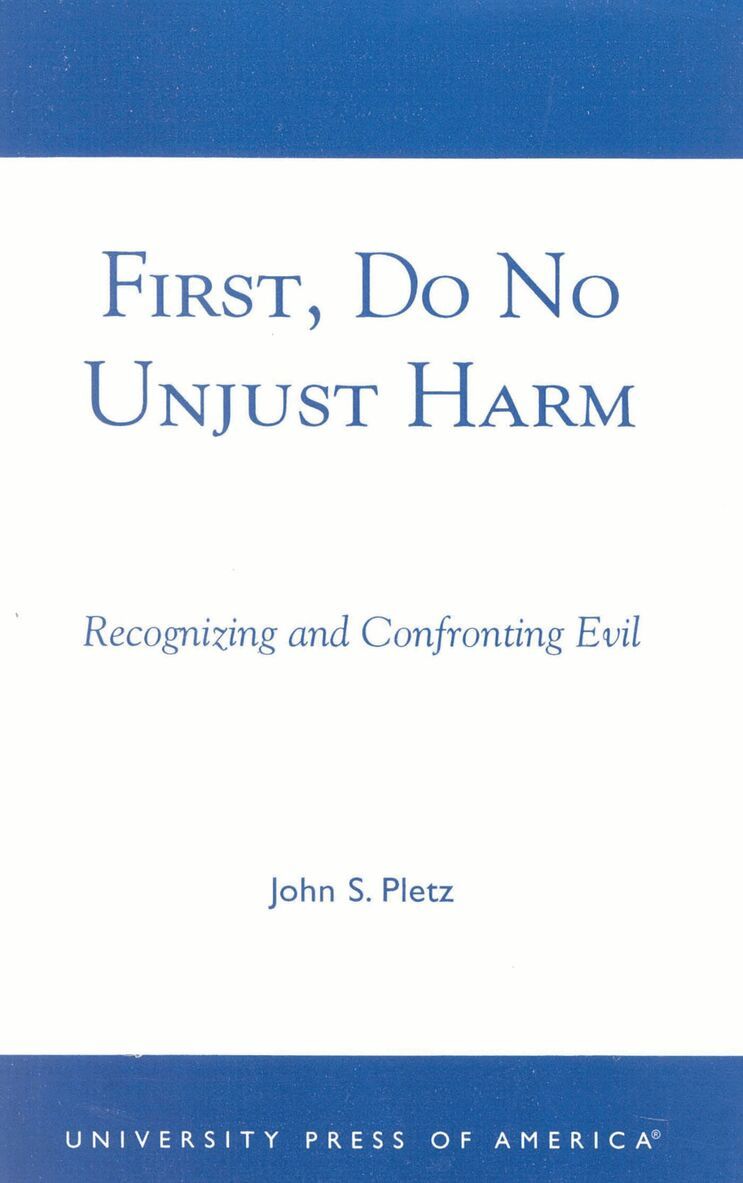
First, Do No Unjust Harm begins from the premise that one of our primary moral duties is to avoid doing wrong and from the observation that people seem to violate that duty not infrequently in their quest to oppose "evil" in the pursuit of some ostensibly "higher good." Since many of these ethical problems appear to be caused by faulty or insufficient analysis of what is "wrong," Pletz has worked out some more rigorous guidelines for such analyses. The recognition of evil begins with the proposition that its three main elements are: (a) harm which has been inflicted on another; (b) responsibility for its resting with one or more persons who have caused it; and (c) the unjust nature of the harm. The author also provides a framework for considering how we can confirm or refute our tentative conclusions about evil, and how we can ascertain their relative degrees of intensity. First, Do No Unjust Harm then proceeds to address the question of how to confront the temptations that we face and the inclinations that we have to do wrong things. Pletz also discusses strategies for actions designed to thwart the evil that others may be doing or intending to do; for even though opposing evil may constitute one of our most dangerous undertakings, we must sometimes do precisely that, if we want the world to be a more moral place. Critical to the success of such efforts, however, is the accurate application of our powers of judgment; for we must be as sure as we can possibly be that what we are opposing is, in fact, wrong and in need of redress.
528 kr
Skickas inom 10-15 vardagar
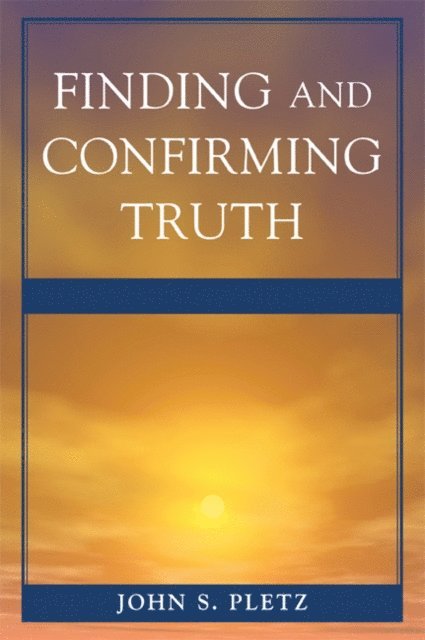
Is truth a word we use only to affirm a statement, or is it also something more? In Finding and Confirming Truth, John S. Pletz explains that truth is more than mere affirmation. It also is the conclusion reached when we have effectively confirmed that an assertion accurately depicts the facts that it describes. Following a delineation of the major types of inferences used in confirming the truth of statements and the justifications for each of them, Pletz discusses the process used in identifying and verifying factual truth. That process includes the critical step of assessing the degree of certainty we have in a confirmed assertion, which the author contends must be ascertained before we should conclude that any statement is true. Finally, Pletz employs this confirmation framework and process in seeking the truth of the concept of truth itself.
287 kr
Kommande
Examining the concepts of good vs evil under an omnipotent and loving God, the author seeks answers to great and divisive questions we have all asked.Answering Theodicy Questions: The Role of Plausibility presents a two-part explanation of how an omnipotent and loving God could have created this world even though it has so much evil and suffering in it. John S. Pletz contends that a plausible theodicy (and not just a logically possible one) can be found in the strong net benefits that human beings receive from having four key attributes, even though those are the things that enable and facilitate much of the harm that occurs here. Those attributes have also allowed people to engage in substantive relationships with others and to take advantage of the continual opportunities that they have to lead meaningful lives.The author then examines the nature of plausibility and its differences from both possibility and probability. He sets out how this approach to a theodicy answer provides rational support for the proposition that if an all-powerful creator God exists, that God could also be omnibenevolent. He argues that because this tripartite answer to the general theodicy question is not dependent upon any religious premise, it should be considered to be reasonably believable regardless of personal belief or non-belief.In the second part of the book the author discusses how some people might be able to better deal with specific theodicy questions that they may have (e.g., “If God is good, why is this bad thing now happening to me?”). It addresses not only their searches for underlying reasons for the harms that have occurred to them but also several ways in which they could confront the kinds of challenges that often follow from those harms.
1 077 kr
Kommande
Examining the concepts of good vs evil under an omnipotent and loving God, the author seeks answers to great and divisive questions we have all asked.Answering Theodicy Questions: The Role of Plausibility presents a two-part explanation of how an omnipotent and loving God could have created this world even though it has so much evil and suffering in it. John S. Pletz contends that a plausible theodicy (and not just a logically possible one) can be found in the strong net benefits that human beings receive from having four key attributes, even though those are the things that enable and facilitate much of the harm that occurs here. Those attributes have also allowed people to engage in substantive relationships with others and to take advantage of the continual opportunities that they have to lead meaningful lives.The author then examines the nature of plausibility and its differences from both possibility and probability. He sets out how this approach to a theodicy answer provides rational support for the proposition that if an all-powerful creator God exists, that God could also be omnibenevolent. He argues that because this tripartite answer to the general theodicy question is not dependent upon any religious premise, it should be considered to be reasonably believable regardless of personal belief or non-belief.In the second part of the book the author discusses how some people might be able to better deal with specific theodicy questions that they may have (e.g., “If God is good, why is this bad thing now happening to me?”). It addresses not only their searches for underlying reasons for the harms that have occurred to them but also several ways in which they could confront the kinds of challenges that often follow from those harms.