John Seely Brown - Böcker
Visar alla böcker från författaren John Seely Brown. Handla med fri frakt och snabb leverans.
12 produkter
12 produkter
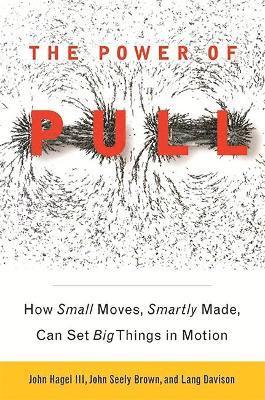
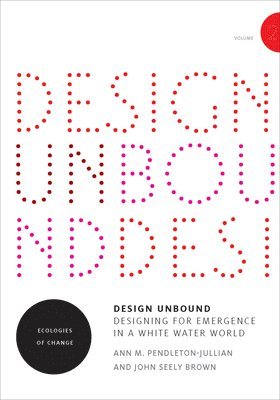
Design Unbound: Designing for Emergence in a White Water World
Designing for Emergence
Häftad, Engelska, 2018
618 kr
Skickas
341 kr
Tillfälligt slut
369 kr
Skickas inom 3-6 vardagar
In a radical break with the past, information now flows like water, and we must learn how to tap into its stream. Individuals and companies can no longer rely on the stocks of knowledge that they've carefully built up and stored away. Information now flows like water, and we must learn how to tap into the stream. But many of us remain stuck in old practices- practices that could undermine us as we search for success and meaning. In this revolutionary book, three doyens of the Internet age, whose path-breaking work has made headlines around the world, reveal the adjustments we must make if we take these changes seriously. In a world of increasing risk and opportunity, we must understand the importance of pull . Understood and used properly, the power of pull can draw out the best in people and institutions by connecting them in ways that increase understanding and effectiveness. Pull can turn uncertainty into opportunity, and enable small moves to achieve outsized impact. Drawing on pioneering research, The Power of Pull shows how to apply its principles to unlock the hidden potential of individuals and organizations, and how to use it as a force for social change and the development of creative talent. The authors explore how to use the power of pull to: Access new sources of information Attract likeminded individuals from around the world Shape serendipity to increase the likelihood of positive chance encounters Form creation spaces to drive you and your colleagues to new heights Transform your organization to adapt to the flow of knowledge The Power of Pull is essential reading for entrepreneurs, managers, and anybody interested in understanding and harnessing the shifting forces of our networked world.
1 553 kr
Skickas inom 7-10 vardagar
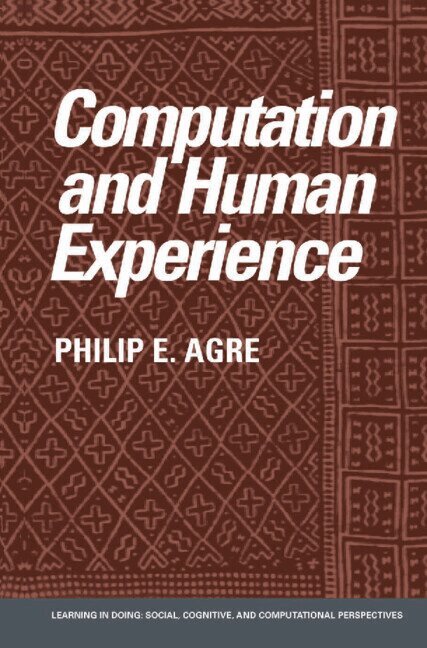
This book offers a critical reconstruction of the fundamental ideas and methods of artificial intelligence research. Through close attention to the metaphors of artificial intelligence and their consequences for the field's patterns of success and failure, it argues for a reorientation of the field away from thought in the head and towards activity in the world. By considering computational ideas in a large, philosophical framework, the author eases critical dialogue between technology and the social sciences. AI can benefit from an understanding of the field in relation to human nature, and in return, it offers a powerful mode of investigation into the practicalities of physical realization. This is one of a series of publications associated with the Earth System Governance Project. For more publications, see www.cambridge.org/earth-system-governance.
523 kr
Skickas inom 7-10 vardagar
This book offers a critical reconstruction of the fundamental ideas and methods of artificial intelligence research. Through close attention to the metaphors of artificial intelligence and their consequences for the field's patterns of success and failure, it argues for a reorientation of the field away from thought in the head and towards activity in the world. By considering computational ideas in a large, philosophical framework, the author eases critical dialogue between technology and the social sciences. AI can benefit from an understanding of the field in relation to human nature, and in return, it offers a powerful mode of investigation into the practicalities of physical realization. This is one of a series of publications associated with the Earth System Governance Project. For more publications, see www.cambridge.org/earth-system-governance.
672 kr
Skickas inom 7-10 vardagar
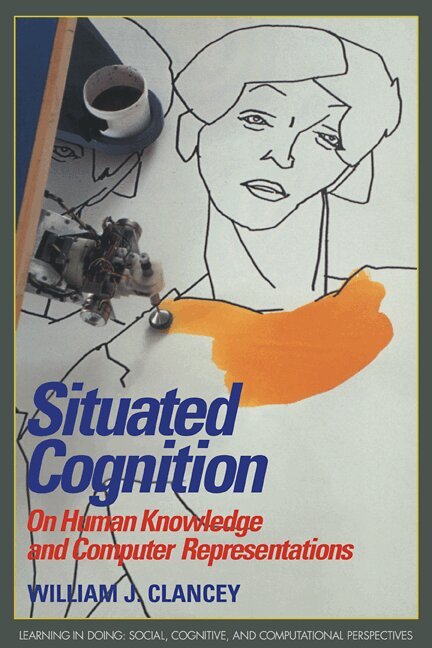
This 1997 book examines recent changes in the design of intelligent machines. New computer models of vision and navigation in animals suggest a different way to build machines. Cognition is viewed not just in terms of high-level 'expertise,' but in the ability to find one's way around the world, to learn new ways of seeing things, and to coordinate activity. This approach is called situated cognition. Situated Cognition differs from other purely philosophical treatises in that Clancey, an insider who has built expert systems for twenty years, explores the limitations of existing computer programs and compares them to human memory and learning capabilities. Clancey examines the implications of 'situated action' from the perspective of artificial intelligence specialists interested in building robots.
570 kr
Skickas inom 7-10 vardagar
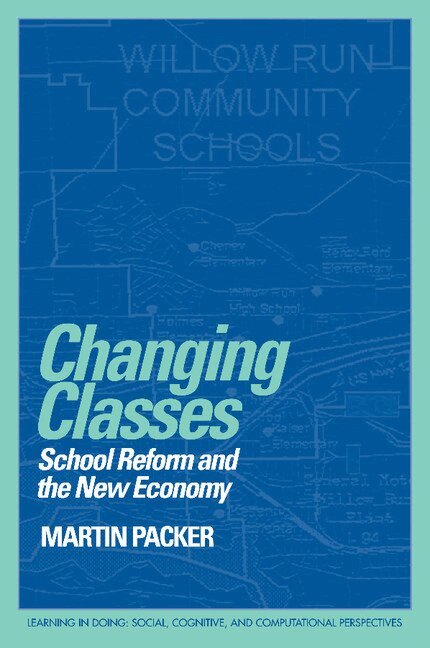
How do schools help to create the kind of person a child becomes? Changing Classes tells the story of a small, poor, ethnically-mixed school district in Michigan's rust-belt, a community in turmoil over the announced closing of a nearby auto assembly plant. As teachers and administrators found ways to make schooling more relevant to working-class children, two large-scale school reform initiatives swept into town: the Governor's 'market-place' reforms and the National Science Foundation's 'state systemic initiative'. All this is set against the backdrop of the transformation to a global, post-Fordist economy. The result is an account of the complex linkages at work as society structures the development of children to adulthood.
724 kr
Skickas inom 10-15 vardagar
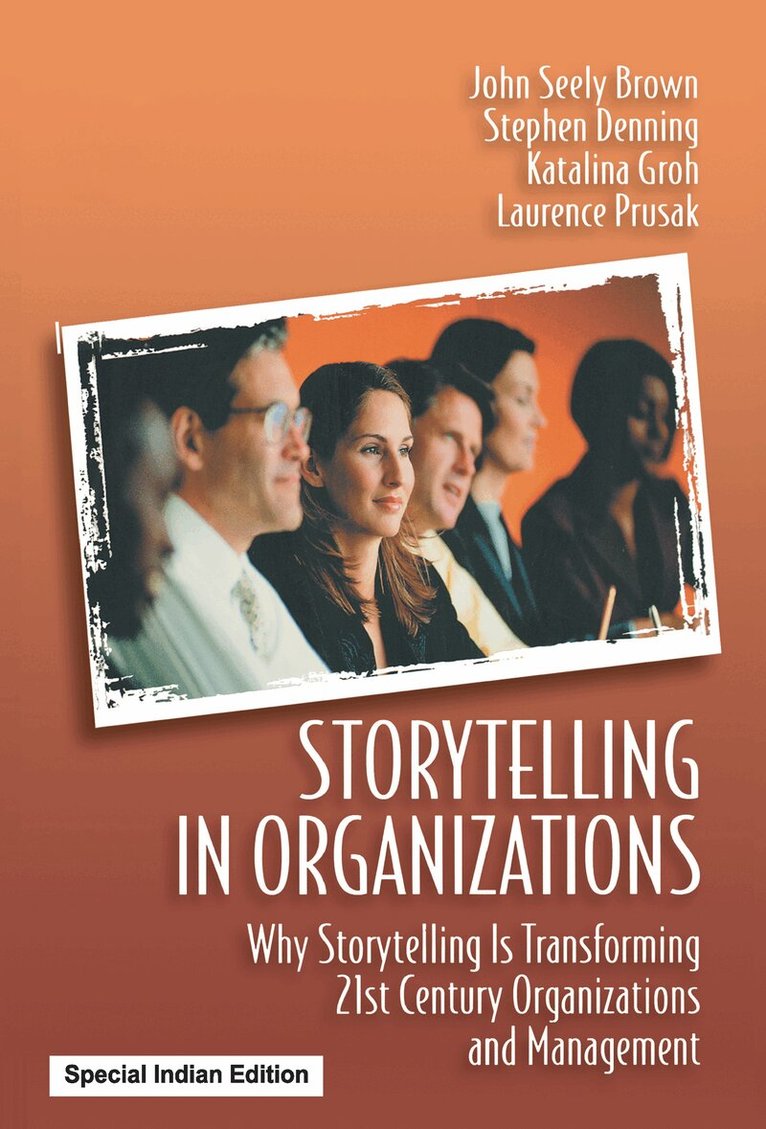
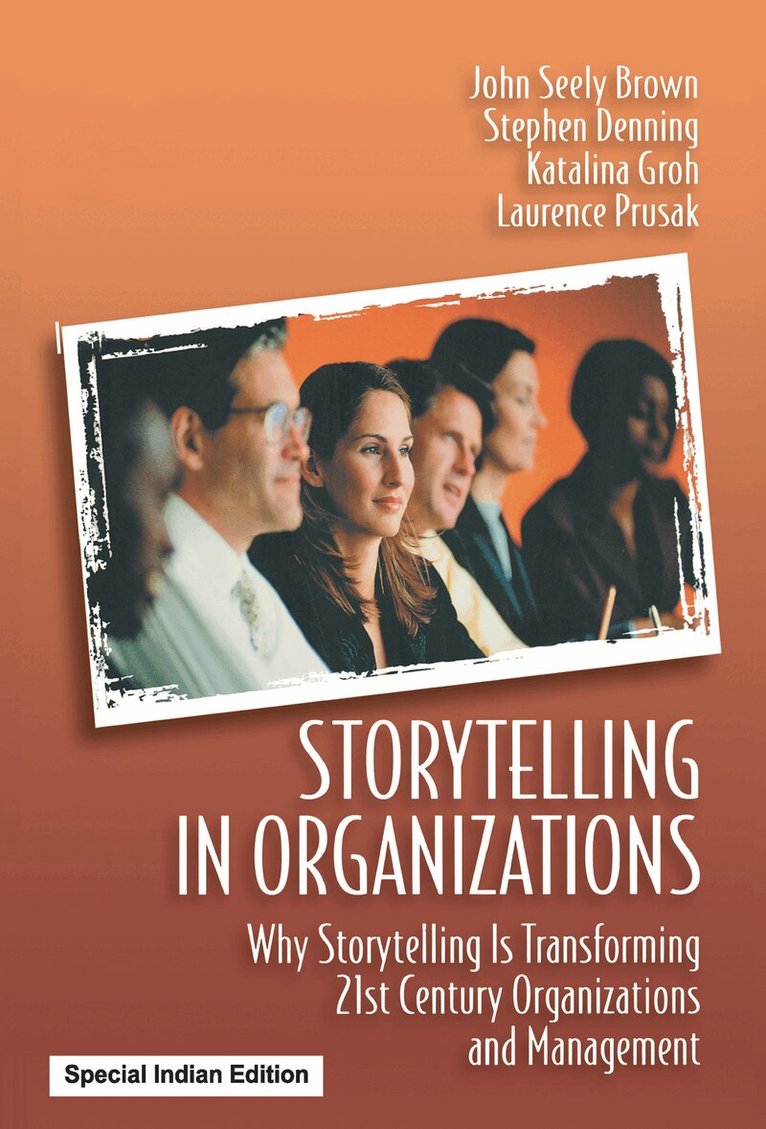
This book is the story of how four busy executives, from different backgrounds and perspectives, were surprised to find themselves converging on the idea of narrative as a valuable lens for understanding and managing organizations. The authors describe the power of narrative and storytelling in their own experience working on knowledge management, change management, and innovation strategies in organizations such as Xerox, the World Bank, and IBM. Storytelling in Organizations lays out for the first time why narrative and storytelling should be part of the mainstream of organizational and management thinking.
270 kr
Tillfälligt slut
To see the future we can build with information technology, we must look beyond mere information to the social context that creates and gives meaning to it. For years, pundits have predicted that information technology will obliterate the need for almost everything--from travel to supermarkets to business organizations to social life itself. Individual users, however, tend to be more sceptical. Beaten down by info-glut and exasperated by computer systems fraught with software crashes, viruses, and unintelligible error messages, they find it hard to get a fix on the true potential of the digital revolution. John Seely Brown and Paul Duguid help us to see through frenzied visions of the future to the real forces for change in society. They argue that the gap between digerati hype and end-user gloom is largely due to the 'tunnel vision' that information-driven technologies breed. We've become so focused on where we think we ought to be--a place where technology empowers individuals and obliterates social organizations--that we often fail to see where we're really going and what's helping us get there.We need, they argue, to look beyond our obsession with information and individuals to include the critical social networks of which these are always a part. Drawing from rich learning experiences at Xerox PARC, from examples such as IBM, Chiat/Day Advertising, and California's 'Virtual University', and from historical, social, and cultural research, the authors sharply challenge the futurists' sweeping predictions.They explain how many of the tools, jobs, and organizations seemingly targeted for future extinction in fact provide useful social resources that people will fight to keep. Rather than aiming technological bullets at these 'relics', we should instead look for ways that the new world of bits can learn from and complement them. Arguing elegantly for the important role that human sociability plays, even--perhaps especially--in the world of bits, The Social Life of Information gives us an optimistic look beyond the simplicities of information and individuals.It shows how a better understanding of the contribution that communities, organizations, and institutions make to learning, working and innovating can lead to the richest possible use of technology in our work and everyday lives.
2 166 kr
Skickas inom 10-15 vardagar
This book is the story of how four busy executives, from different backgrounds and different perspectives, were surprised to find themselves converging on the idea of narrative as an extraordinarily valuable lens for understanding and managing organizations in the twenty-first century. The idea that narrative and storytelling could be so powerful a tool in the world of organizations was initially counter-intuitive. But in their own words, John Seely Brown, Steve Denning, Katalina Groh, and Larry Prusak describe how they came to see the power of narrative and storytelling in their own experience working on knowledge management, change management, and innovation strategies in organizations such as Xerox, the World Bank, and IBM.Storytelling in Organizations lays out for the first time why narrative and storytelling should be part of the mainstream of organizational and management thinking. This case has not been made before. The tone of the book is also unique. The engagingly personal and idiosyncratic tone comes from a set of presentations made at a Smithsonian symposium on storytelling in April 2001. Reading it is as stimulating as spending an evening with Larry Prusak or John Seely Brown. The prose is probing, playful, provocative, insightful and sometime profound. It combines the liveliness and freshness of spoken English with the legibility of a ready-friendly text. Interviews will all the authors done in 2004 add a new dimension to the material, allowing the authors to reflect on their ideas and clarify points or highlight ideas that may have changed or deepened over time.
290 kr
Tillfälligt slut
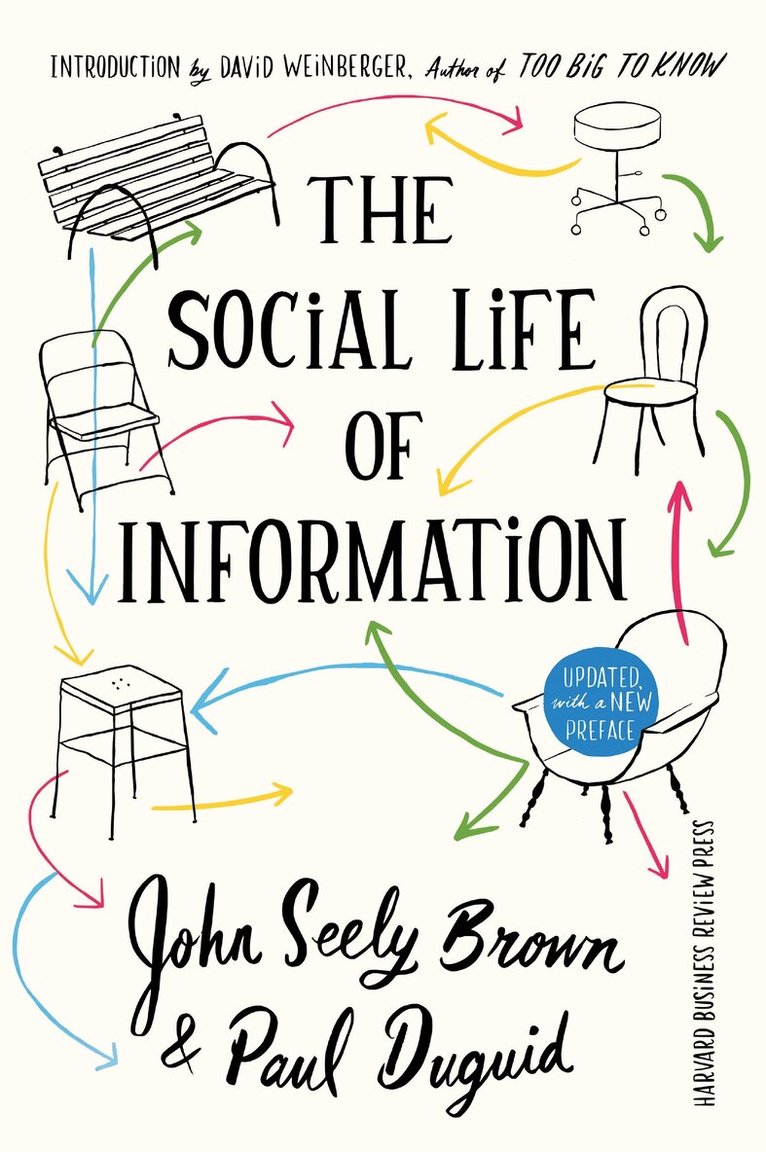
"Should be read by anyone interested in understanding the future," The Times Literary Supplement raved about the original edition of The Social Life of Information. We're now living in that future, and one of the seminal books of the Internet Age is more relevant than ever. The future was a place where technology was supposed to empower individuals and obliterate social organizations. Pundits predicted that information technology would obliterate the need for almost everything--from mass media to bureaucracies, universities, politics, and governments. Clearly, we are not living in that future. The Social Life of Information explains why. John Seely Brown and Paul Duguid show us how to look beyond mere information to the social context that creates and gives meaning to it. Arguing elegantly for the important role that human sociability plays, even--perhaps especially--in the digital world, The Social Life of Information gives us an optimistic look beyond the simplicities of information and individuals.It shows how a better understanding of the contribution that communities, organizations, and institutions make to learning, working, and innovating can lead to the richest possible use of technology in our work and everyday lives. With a new introduction by David Weinberger and reflections by the authors on developments since the book's first publication, this new edition is essential reading for anyone seeking to understand the human place in a digital world.
136 kr
Skickas
»Det lärande som kommer att definiera det tjugoförsta århundradet äger inte rum i klassrum ? i alla fall inte i dagens klassrum. Istället äger det rum överallt omkring oss. Vi kallar detta fenomen för den nya lärandekulturen, och den bottnar i en väldigt enkel fråga: Vad händer med lärandet när vi går från 1900-talets stabila infrastruktur till 2000-talets flytande infrastruktur, där ny teknologi hela tiden genererar, och förhåller sig till, förändring? ?Svaret är överraskande enkelt. Den obevekligt snabba förändring som har fått oss att mista fotfästet är ironiskt nog också vårt största hopp. En växande digital och nätverksbaserad infrastruktur stärker vår förmåga att använda oss av nästan obegränsade resurser och otroliga verktyg, samtidigt som vi får kontakt med andra människor.» Så skriver Douglas Thomas och John Seely Brown i inledningen till denna inspirerande bok om en ny lärandekultur. En lärandekultur som framför allt baserar sig på en ständigt förnyelsebar mänsklig resurs: fantasin.