John Tiffin - Böcker
Visar alla böcker från författaren John Tiffin. Handla med fri frakt och snabb leverans.
6 produkter
6 produkter
2 617 kr
Skickas inom 10-15 vardagar
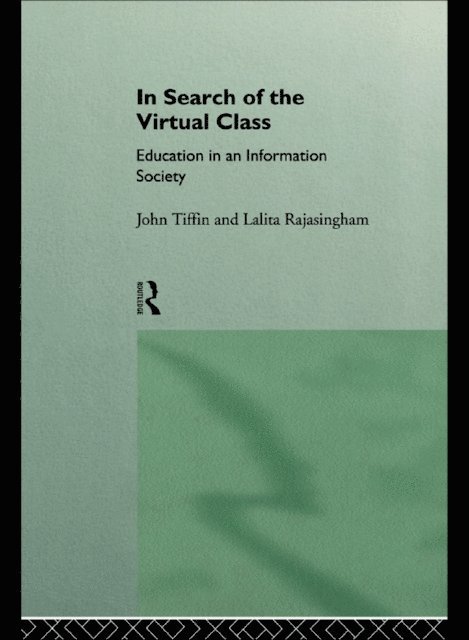
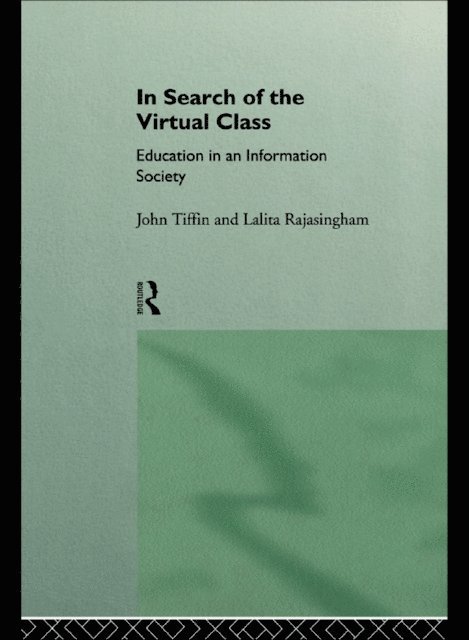
'Shirley zips into her skin-tight school uniform, which on the outside looks something like a ski suit. The lining of the suit in fact contains cabling that makes the suit a communication system and there are pressure pads where the suit touches skin that give a sense of touch. Next, she sits astride something that is a bit like a motorbike, except that it has no wheels and is attached firmly to the floor. Her feet fit on to something similar to a brake and accelerator and her gloved hands hold onto handlebars. She shouts, "I'm off to school, Dad". Her father, who is taking time out from his teleworking, begins to remind her that the family are going teleshopping in the virtual city later in the day, but it is too late, his daughter has already donned her school helmet. She is no longer in the real world of her real home, she is in the virtual world of her virtual school.'Is this the shape of the future of education? This book presents a vision of what will happen to education and training as information technology develops. The argument is simple. To prepare people for life in an information society they need to be taught with the technology of an information society. But what shape will that take? Can the classroom as we know it - a communications system which has been in place for four thousand years - be replaced? The authors argue that through the development of telecommunications for telelearning a genuine revolution in education is in the making. The book describes how, through the convergence of a cluster of new technologies including virtual reality, artificial intelligence, nanotechnology and the superhighways of telecommunications, a new educational paradigm will emerge in the form of a virtual class. Teachers, trainers and educators who worry about how best to prepare students for life in an ever-changing world will find much inspiration in this engagingly written and jargon-free book
635 kr
Tillfälligt slut
'Shirley zips into her skin-tight school uniform, which on the outside looks something like a ski suit. The lining of the suit in fact contains cabling that makes the suit a communication system and there are pressure pads where the suit touches skin that give a sense of touch. Next, she sits astride something that is a bit like a motorbike, except that it has no wheels and is attached firmly to the floor. Her feet fit on to something similar to a brake and accelerator and her gloved hands hold onto handlebars. She shouts, "I'm off to school, Dad". Her father, who is taking time out from his teleworking, begins to remind her that the family are going teleshopping in the virtual city later in the day, but it is too late, his daughter has already donned her school helmet. She is no longer in the real world of her real home, she is in the virtual world of her virtual school.'Is this the shape of the future of education? This book presents a vision of what will happen to education and training as information technology develops. The argument is simple. To prepare people for life in an information society they need to be taught with the technology of an information society. But what shape will that take? Can the classroom as we know it - a communications system which has been in place for four thousand years - be replaced? The authors argue that through the development of telecommunications for telelearning a genuine revolution in education is in the making. The book describes how, through the convergence of a cluster of new technologies including virtual reality, artificial intelligence, nanotechnology and the superhighways of telecommunications, a new educational paradigm will emerge in the form of a virtual class. Teachers, trainers and educators who worry about how best to prepare students for life in an ever-changing world will find much inspiration in this engagingly written and jargon-free book
594 kr
Skickas inom 10-15 vardagar
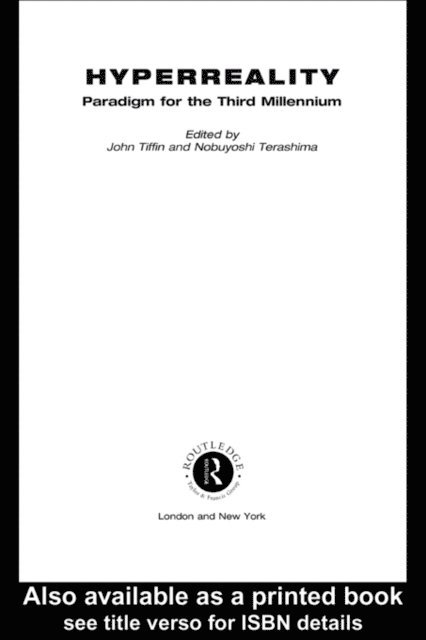
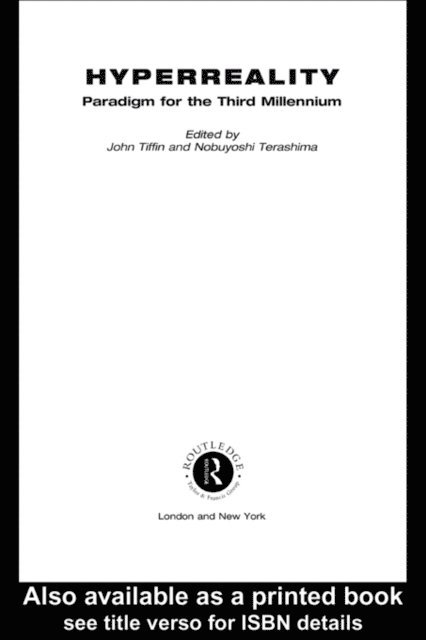
'HyperReality is a technological capability like nanotechnology, human cloning and artificial intelligence. Like them, it does not as yet exist in the sense of being clearly demonstrable and publicly available. Like them, it is maturing in laboratories where the question "if" has been replaced by the question "when?" and like them, the implications of its appearance as a basic infrastructure technology are profound and merit careful consideration.' - Nobuyoshi TerashimaWhat comes after the Internet? Imagine a world where it is difficult to tell if the person standing next to you is real or a virtual reality, and whether they have human intelligence or artificial intelligence; a world where people can appear to be anything they want to be. HyperReality makes this possible.HyperReality offers a window into the world of the future, an interface between the natural and artificial. Nobuyoshi Terashima led the team that developed the prototype for HyperReality at Japan's ATT laboratories. John Tiffin studied they way HyperReality would create a new communications paradigm. Together with a stellar list of contributors from around the globe who are engaged in researching different aspects of HyperReality, they offer the first account of this extraordinary technology and its implications.This fascinating book explores the defining features of HyperReality: what it is, how it works and how it could become to the information society what mass media was to the industrial society. It describes ongoing research into areas such as the design of virtual worlds and virtual humans, and the role of intelligent agents. It looks at applications and ways in which HyperReality may impact on fields such as translation, medicine, education, entertainment and leisure. What are its implications for lifestyles and work, for women and the elderly: Will we grow to prefer the virtual worlds we create to the physical world we adapt to?HyperReality at the beginning of the third millennium is like steam power at the beginning of the nineteenth century and radio at the start of the twentieth century, an idea that has been shown to work but has yet to be applied. This book is for anyone concerned about the future and the effects of technology on our lives.
356 kr
Skickas inom 10-15 vardagar
'HyperReality is a technological capability like nanotechnology, human cloning and artificial intelligence. Like them, it does not as yet exist in the sense of being clearly demonstrable and publicly available. Like them, it is maturing in laboratories where the question "if" has been replaced by the question "when?" and like them, the implications of its appearance as a basic infrastructure technology are profound and merit careful consideration.' - Nobuyoshi TerashimaWhat comes after the Internet? Imagine a world where it is difficult to tell if the person standing next to you is real or a virtual reality, and whether they have human intelligence or artificial intelligence; a world where people can appear to be anything they want to be. HyperReality makes this possible.HyperReality offers a window into the world of the future, an interface between the natural and artificial. Nobuyoshi Terashima led the team that developed the prototype for HyperReality at Japan's ATT laboratories. John Tiffin studied they way HyperReality would create a new communications paradigm. Together with a stellar list of contributors from around the globe who are engaged in researching different aspects of HyperReality, they offer the first account of this extraordinary technology and its implications.This fascinating book explores the defining features of HyperReality: what it is, how it works and how it could become to the information society what mass media was to the industrial society. It describes ongoing research into areas such as the design of virtual worlds and virtual humans, and the role of intelligent agents. It looks at applications and ways in which HyperReality may impact on fields such as translation, medicine, education, entertainment and leisure. What are its implications for lifestyles and work, for women and the elderly: Will we grow to prefer the virtual worlds we create to the physical world we adapt to?HyperReality at the beginning of the third millennium is like steam power at the beginning of the nineteenth century and radio at the start of the twentieth century, an idea that has been shown to work but has yet to be applied. This book is for anyone concerned about the future and the effects of technology on our lives.
2 486 kr
Skickas inom 10-15 vardagar
This book is about the shift from the modern university of the nation state to the global virtual university of the future. John Tiffin and Lalita Rajasingham launched the idea of virtual universities on the Internet with the publication of 'In Search of the Virtual Class: Education in an Information Society' in 1995. Since then, virtual universities have multiplied worldwide. However, the authors argue that globalisation and the Internet are still in their infancy, and universities have yet to face the challenges of global free trade in broadband telecommunications, artificial intelligence and HyperReality.Based on material gathered from research in the USA, Japan, Taiwan, Brazil, Malaysia, Australia and New Zealand, this book describes how a global university could function in the future and presents a paradigm from which it might be constructed.This unique, visionary text will be critical reading for academics, postgraduate students and for anyone involve din policymaking and planning within the university community and administration.
771 kr
Skickas inom 10-15 vardagar
This book is about the shift from the modern university of the nation state to the global virtual university of the future. John Tiffin and Lalita Rajasingham launched the idea of virtual universities on the Internet with the publication of 'In Search of the Virtual Class: Education in an Information Society' in 1995. Since then, virtual universities have multiplied worldwide. However, the authors argue that globalisation and the Internet are still in their infancy, and universities have yet to face the challenges of global free trade in broadband telecommunications, artificial intelligence and HyperReality.Based on material gathered from research in the USA, Japan, Taiwan, Brazil, Malaysia, Australia and New Zealand, this book describes how a global university could function in the future and presents a paradigm from which it might be constructed.This unique, visionary text will be critical reading for academics, postgraduate students and for anyone involve din policymaking and planning within the university community and administration.