Nobuyoshi Terashima - Böcker
Visar alla böcker från författaren Nobuyoshi Terashima. Handla med fri frakt och snabb leverans.
5 produkter
5 produkter
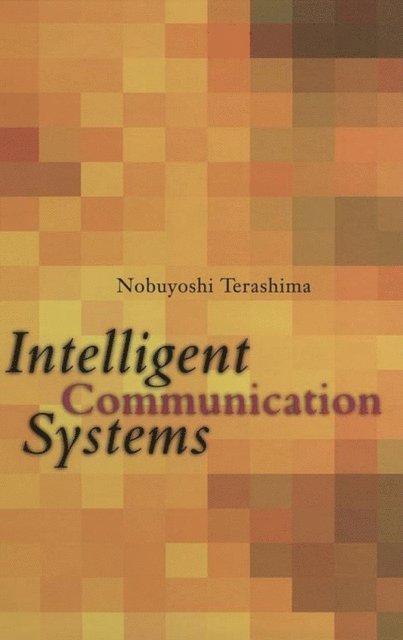
Intelligent Communication Systems
Toward Constructing Human Friendly Communication Environment
Inbunden, Engelska, 2001
702 kr
Skickas inom 7-10 vardagar
This book offers a thorough review of research on intelligent communication systems, focusing on the applications of artificial intelligence to telecommunications that help realize user-friendly interfaces.Intelligent Communication Systems presents the direct result of more than a decade of the author's experiences, research activity, and education in applying artificial intelligence to telecommunications technology. In this book, several fundamental research areas are covered. Some of the areas covered are human-friendly interfaces for telecommunication services with such concepts as Telesensation and HyperReality, computer vision, and the telecommunication description method based on state space. In artificial intelligence research state space is the set of all attainable states of a problem and the possible alternative courses of action to determine the best solution to the problem.
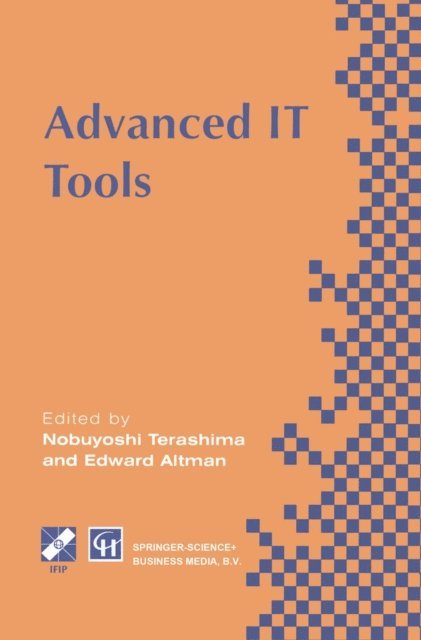
Advanced IT Tools
IFIP World Conference on IT Tools 2–6 September 1996, Canberra, Australia
Inbunden, Engelska, 1996
2 163 kr
Skickas inom 10-15 vardagar
This book provides a review of information technology tools for multimedia and its applications. It explores specifically the integration of multimedia applications and the information superhighway. The book is divided into three main parts. Part one discusses innovative applications in the public sector. Multimedia and intelligent systems will have a significant influence in many aspects of the public sector in the future. Part two is entitled innovative applications on the horizon, and is concerned with turning current technological opportunities into real benefits in the future. Part three, intelligent systems, deals with systems used for application development, platforms for these systems and intelligent applications. This title contains the selected proceedings of the 1996 World Conference on Advanced IT Tools, organized by the International Federation for Information Processing and held in Canberra, Australia, in September 1996.
594 kr
Skickas inom 10-15 vardagar
'HyperReality is a technological capability like nanotechnology, human cloning and artificial intelligence. Like them, it does not as yet exist in the sense of being clearly demonstrable and publicly available. Like them, it is maturing in laboratories where the question "if" has been replaced by the question "when?" and like them, the implications of its appearance as a basic infrastructure technology are profound and merit careful consideration.' - Nobuyoshi TerashimaWhat comes after the Internet? Imagine a world where it is difficult to tell if the person standing next to you is real or a virtual reality, and whether they have human intelligence or artificial intelligence; a world where people can appear to be anything they want to be. HyperReality makes this possible.HyperReality offers a window into the world of the future, an interface between the natural and artificial. Nobuyoshi Terashima led the team that developed the prototype for HyperReality at Japan's ATT laboratories. John Tiffin studied they way HyperReality would create a new communications paradigm. Together with a stellar list of contributors from around the globe who are engaged in researching different aspects of HyperReality, they offer the first account of this extraordinary technology and its implications.This fascinating book explores the defining features of HyperReality: what it is, how it works and how it could become to the information society what mass media was to the industrial society. It describes ongoing research into areas such as the design of virtual worlds and virtual humans, and the role of intelligent agents. It looks at applications and ways in which HyperReality may impact on fields such as translation, medicine, education, entertainment and leisure. What are its implications for lifestyles and work, for women and the elderly: Will we grow to prefer the virtual worlds we create to the physical world we adapt to?HyperReality at the beginning of the third millennium is like steam power at the beginning of the nineteenth century and radio at the start of the twentieth century, an idea that has been shown to work but has yet to be applied. This book is for anyone concerned about the future and the effects of technology on our lives.
356 kr
Skickas inom 10-15 vardagar
'HyperReality is a technological capability like nanotechnology, human cloning and artificial intelligence. Like them, it does not as yet exist in the sense of being clearly demonstrable and publicly available. Like them, it is maturing in laboratories where the question "if" has been replaced by the question "when?" and like them, the implications of its appearance as a basic infrastructure technology are profound and merit careful consideration.' - Nobuyoshi TerashimaWhat comes after the Internet? Imagine a world where it is difficult to tell if the person standing next to you is real or a virtual reality, and whether they have human intelligence or artificial intelligence; a world where people can appear to be anything they want to be. HyperReality makes this possible.HyperReality offers a window into the world of the future, an interface between the natural and artificial. Nobuyoshi Terashima led the team that developed the prototype for HyperReality at Japan's ATT laboratories. John Tiffin studied they way HyperReality would create a new communications paradigm. Together with a stellar list of contributors from around the globe who are engaged in researching different aspects of HyperReality, they offer the first account of this extraordinary technology and its implications.This fascinating book explores the defining features of HyperReality: what it is, how it works and how it could become to the information society what mass media was to the industrial society. It describes ongoing research into areas such as the design of virtual worlds and virtual humans, and the role of intelligent agents. It looks at applications and ways in which HyperReality may impact on fields such as translation, medicine, education, entertainment and leisure. What are its implications for lifestyles and work, for women and the elderly: Will we grow to prefer the virtual worlds we create to the physical world we adapt to?HyperReality at the beginning of the third millennium is like steam power at the beginning of the nineteenth century and radio at the start of the twentieth century, an idea that has been shown to work but has yet to be applied. This book is for anyone concerned about the future and the effects of technology on our lives.
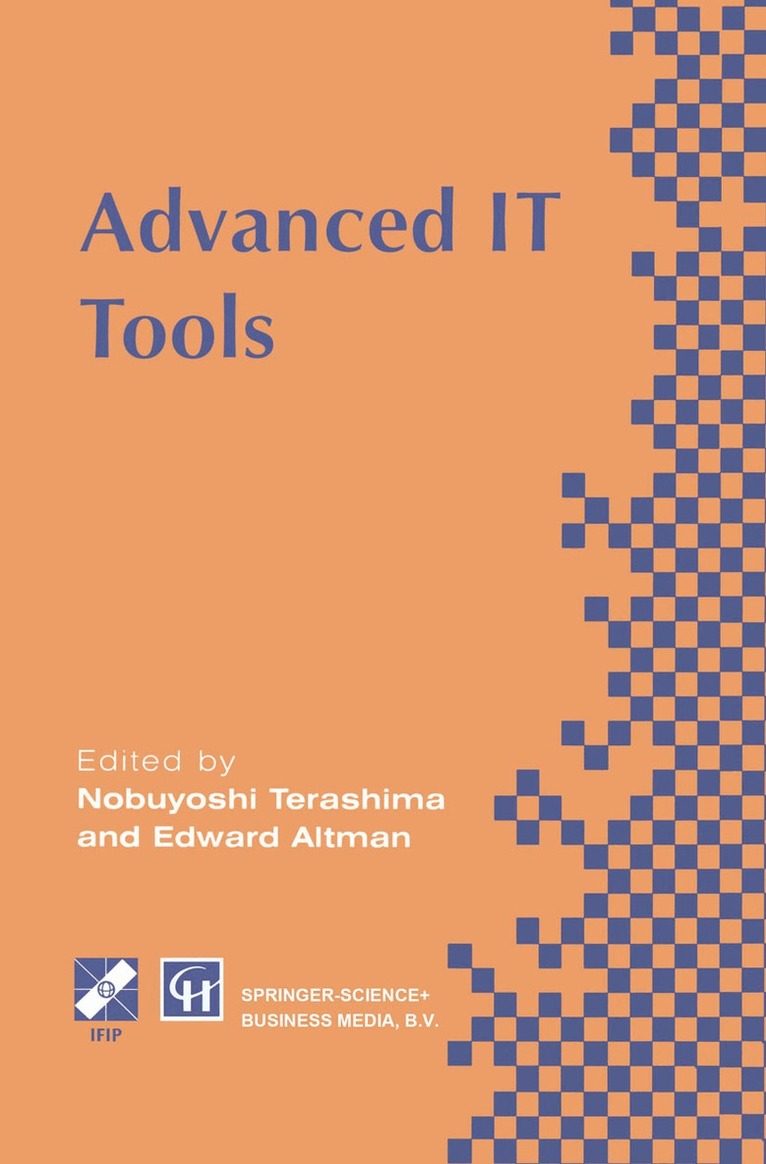
Advanced IT Tools
IFIP World Conference on IT Tools 2–6 September 1996, Canberra, Australia
Häftad, Engelska, 2013
2 163 kr
Skickas inom 10-15 vardagar
TRACK 1: Innovative Applications in the Public Sector The integration of multimedia based applications and the information superhighway fundamentally concerns the creation of a communication technology to support the ac tivities of people. Communication is a profoundly social activity involving interactions among groups or individuals, common standards of exchange, and national infrastruc tures to support telecommunications activities. The contributions of the invited speakers and others in this track begin to explore the social dimension of communication within the context of integrated, information systems for the public sector. Interactions among businesses and households are described by Ralf Strauss through the development within a real community of a "wired city" with information and electronic services provided by the latest telecommunications technologies. A more specific type of interaction between teacher and student forms the basis of education. John Tiffin demonstrates how virtual classrooms can be used to augment the educational process. Carl Loeffler presents yet another perspective on interaction through the integration of A-life and agent technologies to investigate the dynamics of complex behaviors within networked simulation environments. Common standards for communication in the form of electronic documents or CSCW (Computer Supported Cooperative Work), according to Roland Traunmiiller, provide en abling technologies for a paradigm shift in the management of organizations. As pointed out by William Olle, the impact of standardization work on the future of information technology depends critically upon the interoperability of software systems.