John W. Traphagan - Böcker
Visar alla böcker från författaren John W. Traphagan. Handla med fri frakt och snabb leverans.
11 produkter
11 produkter
1 057 kr
Tillfälligt slut
Examines the cultural construction of senility in Japan and the moral implications of dependent behavior for older Japanese.Taming Oblivion examines the cultural construction of senility in Japan and the moral implications of dependent behavior for older Japanese. While the biomedical construction of senility-as-pathology has become increasingly the norm in North America, in Japan a folk category of senility exists known as boke. Although symptomatically and conceptually overlapping with Alzheimer's disease and other forms of senile dementia, boke is distinguished from unambiguously pathological conditions. Rather than being viewed as a disease, boke is seen as an illness over which people have some degree of control. John Traphagan's ethnographic study of older Japanese explores their experiences as they contemplate and attempt to prevent or delay the boke condition.
382 kr
Tillfälligt slut
Examines the cultural construction of senility in Japan and the moral implications of dependent behavior for older Japanese.Taming Oblivion examines the cultural construction of senility in Japan and the moral implications of dependent behavior for older Japanese. While the biomedical construction of senility-as-pathology has become increasingly the norm in North America, in Japan a folk category of senility exists known as boke. Although symptomatically and conceptually overlapping with Alzheimer's disease and other forms of senile dementia, boke is distinguished from unambiguously pathological conditions. Rather than being viewed as a disease, boke is seen as an illness over which people have some degree of control. John Traphagan's ethnographic study of older Japanese explores their experiences as they contemplate and attempt to prevent or delay the boke condition.
566 kr
Skickas inom 3-6 vardagar
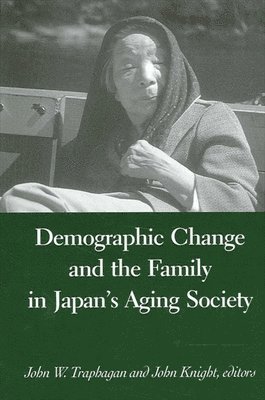
A demographic and ethnographic exploration of how the aging Japanese society is affecting the family.Incorporating qualitative and quantitative data and research methods from both demography and social anthropology, this book explores demographic trends in contemporary Japan's rapidly aging society. The contributors describe and analyze trends by addressing the ways in which demographic change is experienced in the context of family. The book considers the social effects, welfare issues, and private and public responses to demographic change and how this change has influenced the experiences of family caregivers and the elderly themselves. It offers both a specific regional contribution to the emerging field of demographic anthropology and an anthropological contribution to cross-disciplinary research on aging.
Wearing Cultural Styles in Japan
Concepts of Tradition and Modernity in Practice
Inbunden, Engelska, 2006
1 057 kr
Tillfälligt slut
Explores how tradition and modernity coexist in regional Japan, arguing that the rural/urban dichotomy is outmoded for understanding this contemporary society.This groundbreaking collection examines the regional dynamics of state societies, looking at how people use the concepts of urban and rural, traditional and modern, and industrial and agricultural to define their existence and the experience of living in contemporary Japanese society. The book focuses on the Tohoku (Northeast) region, which many Japanese consider rural, agrarian, undeveloped economically, and the epitome of the traditional way of life. While this stereotype overstates the case-the region is home to one of Japan's largest cities-most Japanese contrast Tohoku (everything traditional) with Tokyo (everything modern). However, the contributors show how various regional phenomena-internationalization, lacquerware production, farming, enka (modern Japanese ballads), women's roles, and professional dance -combine the traditional, the modern, and the global. Wearing Cultural Styles in Japan demonstrates that while people use the dichotomies of urban/rural and traditional/modern in order to define their experiences, these categories are no longer useful in analyzing contemporary Japan.
Wearing Cultural Styles in Japan
Concepts of Tradition and Modernity in Practice
Häftad, Engelska, 2007
348 kr
Skickas inom 11-20 vardagar
Explores how tradition and modernity coexist in regional Japan, arguing that the rural/urban dichotomy is outmoded for understanding this contemporary society.This groundbreaking collection examines the regional dynamics of state societies, looking at how people use the concepts of urban and rural, traditional and modern, and industrial and agricultural to define their existence and the experience of living in contemporary Japanese society. The book focuses on the Tohoku (Northeast) region, which many Japanese consider rural, agrarian, undeveloped economically, and the epitome of the traditional way of life. While this stereotype overstates the case-the region is home to one of Japan's largest cities-most Japanese contrast Tohoku (everything traditional) with Tokyo (everything modern). However, the contributors show how various regional phenomena-internationalization, lacquerware production, farming, enka (modern Japanese ballads), women's roles, and professional dance -combine the traditional, the modern, and the global. Wearing Cultural Styles in Japan demonstrates that while people use the dichotomies of urban/rural and traditional/modern in order to define their experiences, these categories are no longer useful in analyzing contemporary Japan.
801 kr
Tillfälligt slut
An interdisciplinary look at the dramatic changes in the contemporary Japanese family, including both empirical data and analyses of popular culture.The Japanese family is at a crossroads of demographic change and altered cultural values. While the population of children has been shrinking and that of elders rising, attitudes about rights and responsibilities within the family have changed significantly. The realities of life in postmodern society have shaped both the imagined family of popular culture and the lived experience of Japanese family members. Imagined Families, Lived Families takes an interdisciplinary approach toward these dramatic changes by looking at the Japanese family from a variety of perspectives, including media studies, anthropology, sociology, literature, and popular culture. The contributors look at representations of family in manga and anime, outsider families and families that must contend with state prosecution of political activists, the stereotype of the absolute Japanese father, and old age and end-of-life decisions in a rapidly aging society with changing family configurations.
376 kr
Tillfälligt slut
An interdisciplinary look at the dramatic changes in the contemporary Japanese family, including both empirical data and analyses of popular culture.The Japanese family is at a crossroads of demographic change and altered cultural values. While the population of children has been shrinking and that of elders rising, attitudes about rights and responsibilities within the family have changed significantly. The realities of life in postmodern society have shaped both the imagined family of popular culture and the lived experience of Japanese family members. Imagined Families, Lived Families takes an interdisciplinary approach toward these dramatic changes by looking at the Japanese family from a variety of perspectives, including media studies, anthropology, sociology, literature, and popular culture. The contributors look at representations of family in manga and anime, outsider families and families that must contend with state prosecution of political activists, the stereotype of the absolute Japanese father, and old age and end-of-life decisions in a rapidly aging society with changing family configurations.
376 kr
Tillfälligt slut
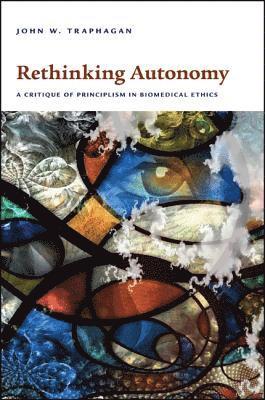
Provides a critique of and alternative to the dominant paradigm used in biomedical ethics by exploring the Japanese concept of autonomy.This groundbreaking book offers a critical examination of the concept of autonomy, one with major implications for biomedical ethics. Working from the perspectives of ethnography and medical anthropology, John W. Traphagan argues that the notion of autonomy as a foundational principle of a common morality, the view dominant in North America, is inadequate as a universal moral category because culture deeply influences how people think about autonomy and the fundamental nature of being human. Drawing from fieldwork in Japan, Traphagan reveals a notably different sensibility, demonstrating how Japanese moral concepts and actions are based upon a deep awareness of the social embeddedness of people and an aesthetic sensitivity that emphasizes context and situation over universality in making moral evaluations of behavior. Traphagan develops data from Japan into a critical examination of how scholarly research in biomedical ethics, and ethics more generally, is conducted in North America. Arguing in a vein related to the emerging area of naturalized biomedical ethics, Traphagan proposes the creation of an empirically grounded study of moral behavior.
1 057 kr
Tillfälligt slut
Provides a critique of and alternative to the dominant paradigm used in biomedical ethics by exploring the Japanese concept of autonomy.This groundbreaking book offers a critical examination of the concept of autonomy, one with major implications for biomedical ethics. Working from the perspectives of ethnography and medical anthropology, John W. Traphagan argues that the notion of autonomy as a foundational principle of a common morality, the view dominant in North America, is inadequate as a universal moral category because culture deeply influences how people think about autonomy and the fundamental nature of being human. Drawing from fieldwork in Japan, Traphagan reveals a notably different sensibility, demonstrating how Japanese moral concepts and actions are based upon a deep awareness of the social embeddedness of people and an aesthetic sensitivity that emphasizes context and situation over universality in making moral evaluations of behavior. Traphagan develops data from Japan into a critical examination of how scholarly research in biomedical ethics, and ethics more generally, is conducted in North America. Arguing in a vein related to the emerging area of naturalized biomedical ethics, Traphagan proposes the creation of an empirically grounded study of moral behavior.
Cosmopolitan Rurality, Depopulation, and Entrepreneurial Ecosystems in 21st-Century Japan
Inbunden, Engelska, 2020
1 271 kr
Skickas inom 5-8 vardagar
324 kr
Skickas inom 10-15 vardagar
This book explores humanity’s thoughts and ideas about extraterrestrial life, paying close attention to the ways science and culture interact with one another to create a context of imagination and discovery related to life on other worlds. Despite the recent explosion in our knowledge of other planets and the seeming era of discovery in which we live, to date we have found no concrete evidence that we are not alone. Our thinking about life on other worlds has been and remains the product of a combination of scientific investigation and human imagination shaped by cultural values--particularly values of exploration and discovery connected to American society.The rapid growth in our awareness of other worlds makes this a crucial moment to think about and assess the influence of cultural values on the scientific search for extraterrestrial life. Here the author considers the junction of science and culture with a focus on two main themes: (1) the underlying assumptions, many ofwhich are tacitly based upon cultural values common in American society, that have shaped the ways researchers in astrobiology and SETI have conceptualized the nature of their endeavor and represented ideas about the potential influence contact might have on human civilization, and (2) the empirical evidence we can access as a way of thinking about the social impact that contact with alien intelligence might have for humanity.