John Ziman - Böcker
Visar alla böcker från författaren John Ziman. Handla med fri frakt och snabb leverans.
8 produkter
8 produkter
974 kr
Skickas inom 7-10 vardagar
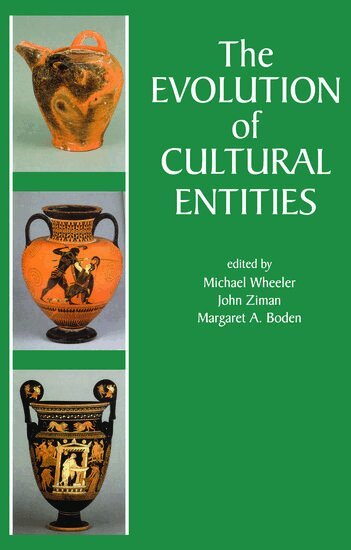
Ever since Darwin, scholars have noted that cultural entities such as languages, laws, firms and theories seem to 'evolve' through sequences of variation, selection and replication, in many ways just like living organisms. These essays consider whether this comparison is 'just a metaphor', or whether modern evolutionary theory can help us to understand the dynamics of different cultural domains. The 'evolutionary paradigm of rationality' has a significant role to play throughout the human sciences, but raises complex issues in every cultural context where it is applied. By fostering discussion between scholars from a wide range of research traditions, this volume aims to influence the evolution of all of them.
1 039 kr
Skickas inom 7-10 vardagar
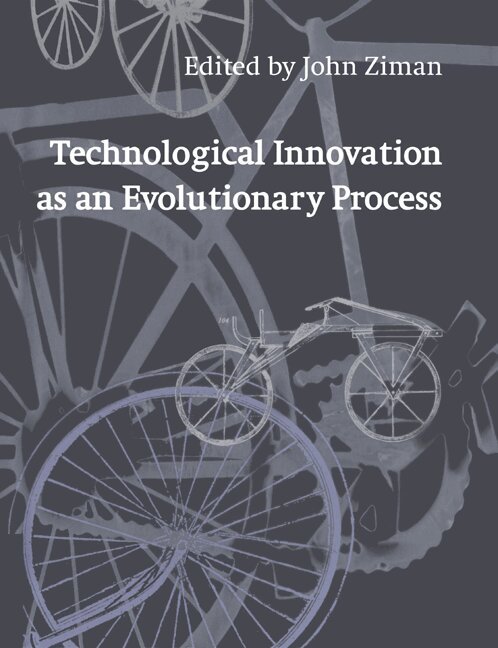
Technological artefacts and biological organisms 'evolve' by very similar processes of blind variation and selective retention. This analogy is explored systematically, for the first time, by a team of international experts from evolutionary biology, history and sociology of science and technology, cognitive and computer science, economics, psychology, education, cultural anthropology and research management. Do technological 'memes' play the role of genes? In what sense are novel inventions 'blind'? Does the element of design make them 'Lamarckian' rather than 'Darwinian'? Is the recombination of ideas the essence of technological creativity? Can invention be simulated computationally? What are the entities that actually evolve - artefacts, ideas or organisations? These are only some of the many questions stimulated and partially answered by this powerful metaphor. With its practical demonstration of the explanatory potential of 'evolutionary reasoning' in a well-defined context, this book is a ground-breaking contribution to every discipline concerned with cultural change.
1 329 kr
Skickas inom 7-10 vardagar
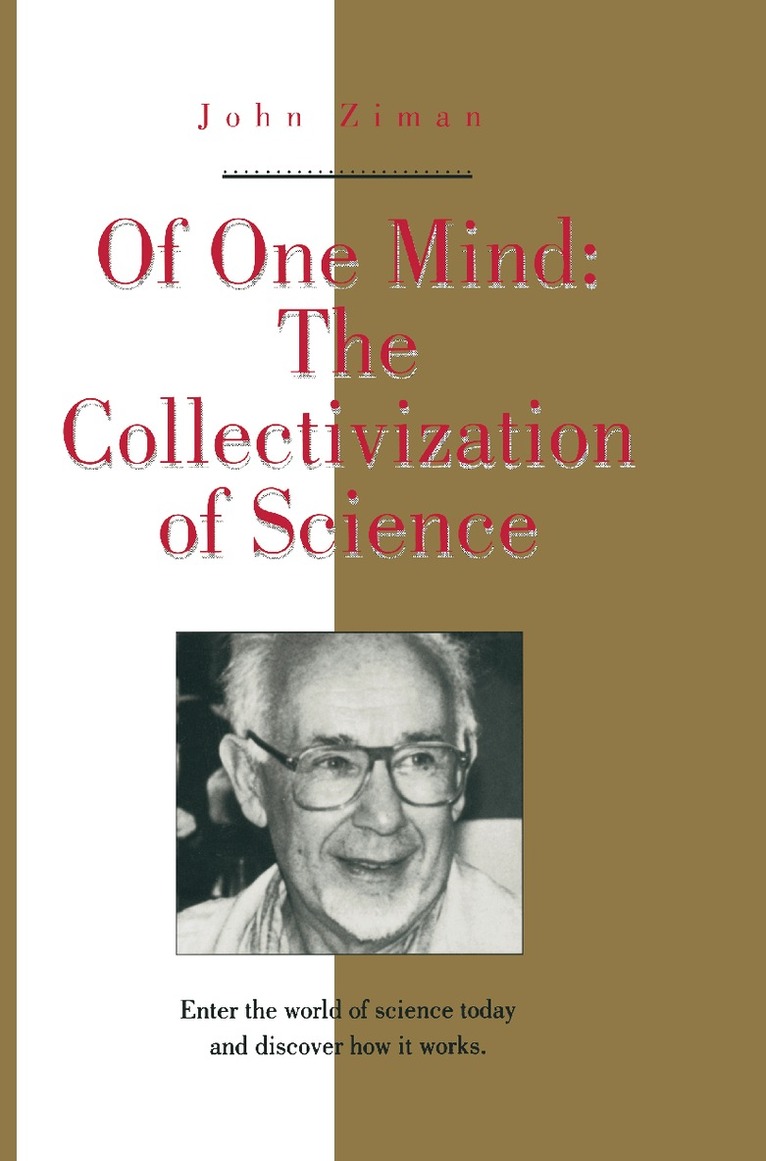
Scientists and 'anti-scientists' alike need a more realistic image of science. The traditional mode of research, academic science, is not just a 'method': it is a distinctive culture, whose members win esteem and employment by making public their findings. Fierce competition for credibility is strictly regulated by established practices such as peer review. Highly specialized international communities of independent experts form spontaneously and generate the type of knowledge we call 'scientific' - systematic, theoretical, empirically-tested, quantitative, and so on. Ziman shows that these familiar 'philosophical' features of scientific knowledge are inseparable from the ordinary cognitive capabilities and peculiar social relationships of its producers. This wide-angled close-up of the natural and human sciences recognizes their unique value, whilst revealing the limits of their rationality, reliability, and universal applicability. It also shows how, for better or worse, the new 'post-academic' research culture of teamwork, accountability, etc. is changing these supposedly eternal philosophical characteristics.
359 kr
Skickas inom 7-10 vardagar
Scientists and 'anti-scientists' alike need a more realistic image of science. The traditional mode of research, academic science, is not just a 'method': it is a distinctive culture, whose members win esteem and employment by making public their findings. Fierce competition for credibility is strictly regulated by established practices such as peer review. Highly specialized international communities of independent experts form spontaneously and generate the type of knowledge we call 'scientific' - systematic, theoretical, empirically-tested, quantitative, and so on. Ziman shows that these familiar 'philosophical' features of scientific knowledge are inseparable from the ordinary cognitive capabilities and peculiar social relationships of its producers. This wide-angled close-up of the natural and human sciences recognizes their unique value, whilst revealing the limits of their rationality, reliability, and universal applicability. It also shows how, for better or worse, the new 'post-academic' research culture of teamwork, accountability, etc. is changing these supposedly eternal philosophical characteristics.
2 115 kr
Skickas inom 10-15 vardagar
On a mountainside in sunny Tuscany, in October 1989, 96 people from 23 countries on five continents gathered to learn and teach about the problems of managing contemporary science. The diversity of economic and political systems represented in the group was matched by our occupations, which stretched from science policy practitioners, through research scientists and engineers, through academic observers of science and science policy. It was this diversity, along with the opportunities for infonnal discussion provided by long meals and remote location, that made the conference a special learning experience. Except at lecture time, it was impossible to distinguish the "students" at this event from the "teachers," and even the most senior members of the teaching staff went away with a sense that they had learned more from this group than from many a standard conference on science policy they had attended. The flavor of the conference experience cannot be captured adequately in a proceedings volume, and so we have not tried to create a historical record in this book. Instead, we have attempted to illustrate the core problems the panicipants at the conference shared, discussed, and debated, using both lectures delivered by the fonnal teaching staff and summaries of panel discussions, which extended to other panicipants and therefore increased the range of experiences reponed.
375 kr
Skickas inom 10-15 vardagar
This superb collection by the eminent physicist and critic John Ziman, opens with an album of portraits of scientists--Albert Einstein, Freeman Dyson, Lev Landau, Mark Azbel, Andrei Sakharov. Ziman takes readers into the world of the contemporary scientist, showing how discoveries are made and how claims are tested. He then travels into the minds of scientists as they are drawn into competing directions. Here Ziman exposes the path of discovery, which is strewn with complex human needs, governmental restrictions, the desire for profits, and the exercise of technical virtuosity.
250 kr
Tillfälligt slut
2 115 kr
Skickas inom 10-15 vardagar
On a mountainside in sunny Tuscany, in October 1989, 96 people from 23 countries on five continents gathered to learn and teach about the problems of managing contemporary science. The diversity of economic and political systems represented in the group was matched by our occupations, which stretched from science policy practitioners, through research scientists and engineers, through academic observers of science and science policy. It was this diversity, along with the opportunities for infonnal discussion provided by long meals and remote location, that made the conference a special learning experience. Except at lecture time, it was impossible to distinguish the "students" at this event from the "teachers," and even the most senior members of the teaching staff went away with a sense that they had learned more from this group than from many a standard conference on science policy they had attended. The flavor of the conference experience cannot be captured adequately in a proceedings volume, and so we have not tried to create a historical record in this book. Instead, we have attempted to illustrate the core problems the panicipants at the conference shared, discussed, and debated, using both lectures delivered by the fonnal teaching staff and summaries of panel discussions, which extended to other panicipants and therefore increased the range of experiences reponed.