Jolyon Baraka Thomas - Böcker
Visar alla böcker från författaren Jolyon Baraka Thomas. Handla med fri frakt och snabb leverans.
6 produkter
6 produkter
274 kr
Skickas inom 7-10 vardagar
Religious freedom is a founding tenet of the United States, and it has frequently been used to justify policies towards other nations. Such was the case in 1945 when Americans occupied Japan following World War II. Though the Japanese constitution had guaranteed freedom of religion since 1889, the United States declared that protection faulty, and when the occupation ended in 1952, they claimed to have successfully replaced it with "real" religious freedom.Through a fresh analysis of pre-war Japanese law, Jolyon Baraka Thomas demonstrates that the occupiers' triumphant narrative obscured salient Japanese political debates about religious freedom. Indeed, Thomas reveals that American occupiers also vehemently disagreed about the topic. By reconstructing these vibrant debates, Faking Liberties unsettles any notion of American authorship and imposition of religious freedom. Instead, Thomas shows that, during the Occupation, a dialogue about freedom of religion ensued that constructed a new global set of political norms that continue to form policies today.
650 kr
Skickas inom 10-15 vardagar
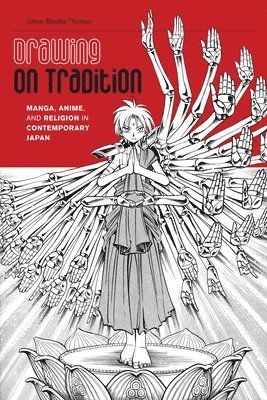
Manga and anime (illustrated serial novels and animated films) are highly influential Japanese entertainment media that boast tremendous domestic consumption as well as worldwide distribution and an international audience. Drawing on Tradition examines religious aspects of the culture of manga and anime production and consumption through a methodological synthesis of narrative and visual analysis, history, and ethnography. Rather than merely describing the incidence of religions such as Buddhism or Shinto in these media, Jolyon BarakaThomas shows that authors and audiences create and re-create “religious frames of mind” through their imaginative and ritualised interactions with illustrated worlds. Manga and anime therefore not only contribute to familiarity with traditional religious doctrines and imagery, but also allow authors, directors, and audiences to modify and elaborate upon such traditional tropes, sometimes creating hitherto unforeseen religious ideas and practices.The book takes play seriously by highlighting these recursive relationships between recreation and religion, emphasising throughout the double sense of play as entertainment and play as adulteration (i.e., the whimsical or parodic representation of religious figures, doctrines, and imagery). Building on recent developments in academic studies of manga and anime—as well as on recent advances in the study of religion as related to art and film—Thomas demonstrates that the specific aesthetic qualities and industrial dispositions of manga and anime invite practices of rendition and reception that can and do influence the ways that religious institutions and lay authors have attempted to captivate new audiences.Drawing on Tradition will appeal to both the dilettante and the specialist: Fans and self-professed otaku will find an engaging academic perspective on often overlooked facets of the media and culture of manga and anime, while scholars and students of religion will discover a fresh approach to the complicated relationships between religion and visual media, religion and quotidian practice, and the putative differences between “traditional” and “new” religions.
284 kr
Skickas inom 11-20 vardagar
Manga and anime (illustrated serial novels and animated films) are highly influential Japanese entertainment media that boast tremendous domestic consumption as well as worldwide distribution and an international audience. Drawing on Tradition examines religious aspects of the culture of manga and anime production and consumption through a methodological synthesis of narrative and visual analysis, history, and ethnography. Rather than merely describing the incidence of religions such as Buddhism or Shinto in these media, Jolyon BarakaThomas shows that authors and audiences create and re-create “religious frames of mind” through their imaginative and ritualised interactions with illustrated worlds. Manga and anime therefore not only contribute to familiarity with traditional religious doctrines and imagery, but also allow authors, directors, and audiences to modify and elaborate upon such traditional tropes, sometimes creating hitherto unforeseen religious ideas and practices.The book takes play seriously by highlighting these recursive relationships between recreation and religion, emphasising throughout the double sense of play as entertainment and play as adulteration (i.e., the whimsical or parodic representation of religious figures, doctrines, and imagery). Building on recent developments in academic studies of manga and anime—as well as on recent advances in the study of religion as related to art and film—Thomas demonstrates that the specific aesthetic qualities and industrial dispositions of manga and anime invite practices of rendition and reception that can and do influence the ways that religious institutions and lay authors have attempted to captivate new audiences.Drawing on Tradition will appeal to both the dilettante and the specialist: Fans and self-professed otaku will find an engaging academic perspective on often overlooked facets of the media and culture of manga and anime, while scholars and students of religion will discover a fresh approach to the complicated relationships between religion and visual media, religion and quotidian practice, and the putative differences between “traditional” and “new” religions.
559 kr
Skickas inom 7-10 vardagar
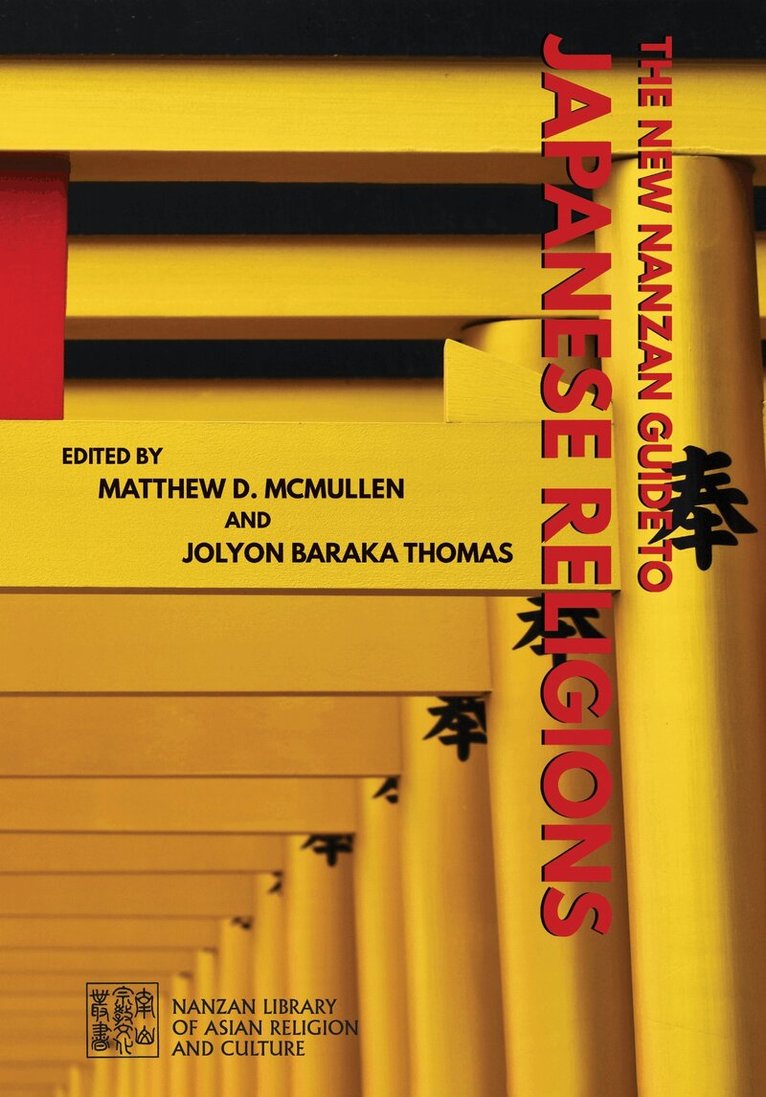
For nearly two decades, the Nanzan Guide to Japanese Religions has served as a valuable resource for students and scholars of religion in Japan. This exciting update expands the audience to include non-specialists of Japan while also complicating the notions of "Japan" and "religion." Asking the provocative question "why study Japanese religions?" the editors argue that studying Japan is vital for the academic study of religion writ large and make a case for the continued importance of religious topics in Japan studies, broadly conceived.The volume addresses the question of why—and how—to study Japanese religions in seven sections, each overseen by a leading expert in that subfield. The section on "Knowledge Production" investigates medicine, sacred objects, and the politico-economic structures undergirding academia. "Cosmology and Time" reveals how religion shaped worldviews in both premodern and modern Japan by taking up topics such as the afterlife, divination, and relationships between science and religion. "Space and Environment" considers geography, relationships between the human and nonhuman denizens of the Japanese archipelago, and religion in Japan’s overseas colonies and among diasporic outmigrants. "Feelings and Belonging" focuses on affective relationships generated through confraternities, homiletics, and caring professions. "Politics and Governance" describes longstanding relationships between religion and the state, covering everything from sacred kingship to contemporary electoral politics. The final two sections include practical advice for conducting fieldwork and helpful introductions to several relevant archives. Overall, the volume reflects the impact of recent scholarly trends in the study of Japanese religions, including material religion studies, affect theory, environmental humanities, and critical secularism studies. The breadth of topics as well as the accessibility of the individual chapters makes The New Nanzan Guide to Japanese Religions an indispensable resource for the classroom. It will be useful not only for scholars of Japan, but also for anyone interested in the academic study of religion.
749 kr
Kommande
350 kr
Kommande