Jon R. Lindsay - Böcker
Visar alla böcker från författaren Jon R. Lindsay. Handla med fri frakt och snabb leverans.
9 produkter
9 produkter
China and Cybersecurity
Espionage, Strategy, and Politics in the Digital Domain
Inbunden, Engelska, 2015
1 617 kr
Skickas inom 5-8 vardagar
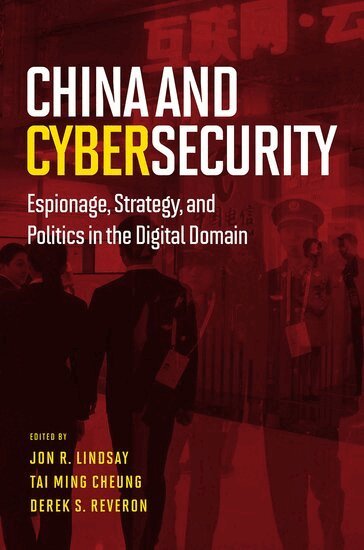
China's emergence as a great power in the twenty-first century is strongly enabled by cyberspace. Leveraged information technology integrates Chinese firms into the global economy, modernizes infrastructure, and increases internet penetration which helps boost export-led growth. China's pursuit of "informatization " reconstructs industrial sectors and solidifies the transformation of the Chinese People's Liberation Army into a formidable regional power. Even as the government censors content online, China has one of the fastest growing internet populations and most of the technology is created and used by civilians. Western political discourse on cybersecurity is dominated by news of Chinese military development of cyberwarfare capabilities and cyber exploitation against foreign governments, corporations, and non-governmental organizations. Western accounts, however, tell only one side of the story. Chinese leaders are also concerned with cyber insecurity, and Chinese authors frequently note that China is also a victim of foreign cyber---attacks---predominantly from the United States.China and Cybersecurity: Political, Economic, and Strategic Dimensions is a comprehensive analysis of China's cyberspace threats and policies. The contributors---Chinese specialists in cyber dynamics, experts on China, and experts on the use of information technology between China and the West---address cyberspace threats and policies, emphasizing the vantage points of China and the U.S. on cyber exploitation and the possibilities for more positive coordination with the West. The volume's multi-disciplinary, cross-cultural approach does not pretend to offer wholesale resolutions. Contributors take different stances on how problems may be analyzed and reduced, and aim to inform the international audience of how China's political, economic, and security systems shape cyber activities. The compilation provides empirical and evaluative depth on the deepening dependence on shared global information infrastructure and the growing willingness to exploit it for political or economic gain.
China and Cybersecurity
Espionage, Strategy, and Politics in the Digital Domain
Häftad, Engelska, 2015
511 kr
Skickas inom 5-8 vardagar
China's emergence as a great power in the twenty-first century is strongly enabled by cyberspace. Leveraged information technology integrates Chinese firms into the global economy, modernizes infrastructure, and increases internet penetration which helps boost export-led growth. China's pursuit of "informatization " reconstructs industrial sectors and solidifies the transformation of the Chinese People's Liberation Army into a formidable regional power. Even as the government censors content online, China has one of the fastest growing internet populations and most of the technology is created and used by civilians. Western political discourse on cybersecurity is dominated by news of Chinese military development of cyberwarfare capabilities and cyber exploitation against foreign governments, corporations, and non-governmental organizations. Western accounts, however, tell only one side of the story. Chinese leaders are also concerned with cyber insecurity, and Chinese authors frequently note that China is also a victim of foreign cyber---attacks---predominantly from the United States.China and Cybersecurity: Political, Economic, and Strategic Dimensions is a comprehensive analysis of China's cyberspace threats and policies. The contributors---Chinese specialists in cyber dynamics, experts on China, and experts on the use of information technology between China and the West---address cyberspace threats and policies, emphasizing the vantage points of China and the U.S. on cyber exploitation and the possibilities for more positive coordination with the West. The volume's multi-disciplinary, cross-cultural approach does not pretend to offer wholesale resolutions. Contributors take different stances on how problems may be analyzed and reduced, and aim to inform the international audience of how China's political, economic, and security systems shape cyber activities. The compilation provides empirical and evaluative depth on the deepening dependence on shared global information infrastructure and the growing willingness to exploit it for political or economic gain.
2 280 kr
Skickas inom 5-8 vardagar
The complexity of the twenty-first century threat landscape contrasts markedly with the bilateral nuclear bargaining context envisioned by classical deterrence theory. Nuclear and conventional arsenals continue to develop alongside anti-satellite programs, autonomous robotics or drones, cyber operations, biotechnology, and other innovations barely imagined in the early nuclear age. The concept of cross-domain deterrence (CDD) emerged near the end of the George W. Bush administration as policymakers and commanders confronted emerging threats to vital military systems in space and cyberspace. The Pentagon now recognizes five operational environments or so-called domains (land, sea, air, space, and cyberspace), and CDD poses serious problems in practice. In Cross-Domain Deterrence, Erik Gartzke and Jon R. Lindsay assess the theoretical relevance of CDD for the field of International Relations. As a general concept, CDD posits that how actors choose to deter affects the quality of the deterrence they achieve. Contributors to this volume include senior and junior scholars and national security practitioners. Their chapters probe the analytical utility of CDD by examining how differences across, and combinations of, different military and non-military instruments can affect choices and outcomes in coercive policy in historical and contemporary cases.
415 kr
Skickas inom 5-8 vardagar
The complexity of the twenty-first century threat landscape contrasts markedly with the bilateral nuclear bargaining context envisioned by classical deterrence theory. Nuclear and conventional arsenals continue to develop alongside anti-satellite programs, autonomous robotics or drones, cyber operations, biotechnology, and other innovations barely imagined in the early nuclear age. The concept of cross-domain deterrence (CDD) emerged near the end of the George W. Bush administration as policymakers and commanders confronted emerging threats to vital military systems in space and cyberspace. The Pentagon now recognizes five operational environments or so-called domains (land, sea, air, space, and cyberspace), and CDD poses serious problems in practice. In Cross-Domain Deterrence, Erik Gartzke and Jon R. Lindsay assess the theoretical relevance of CDD for the field of International Relations. As a general concept, CDD posits that how actors choose to deter affects the quality of the deterrence they achieve. Contributors to this volume include senior and junior scholars and national security practitioners. Their chapters probe the analytical utility of CDD by examining how differences across, and combinations of, different military and non-military instruments can affect choices and outcomes in coercive policy in historical and contemporary cases.
Elements of Deterrence
Strategy, Technology, and Complexity in Global Politics
Inbunden, Engelska, 2024
875 kr
Skickas inom 7-10 vardagar
Global politics in the twenty-first century is complicated by dense economic interdependence, rapid technological innovation, and fierce security competition. How should governments formulate grand strategy in this complex environment? Many strategists look to deterrence as the answer, but how much can we expect of deterrence? Classical deterrence theory developed in response to the nuclear threats of the Cold War, but strategists since have applied it to a variety of threats in the land, sea, air, space, and cyber domains. If war is the continuation of politics by other means, then the diversity of technologies in modern war suggests a diversity of political effects. Some military forces or postures are most useful for "winning" various kinds of wars. Others are effective for "warning" adversaries of consequences or demonstrating resolve. Still others may accomplish these goals at lower political cost, or with greater strategic stability. Deterrence is not a simple strategy, therefore, but a complex relationship between many ends and many means. This book presents findings from a decade-long research program on "cross-domain deterrence." Through a series of theoretical and empirical studies, we explore fundamental trade-offs that have always been implicit in practice but have yet to be synthesized into a general theory of deterrence. Gartzke and Lindsay integrate newly revised and updated versions of published work alongside new work into a holistic framework for understanding how deterrence works--or fails to work--in multiple domains. Their findings show that in deterrence, all good things do not go together.
341 kr
Skickas
Global politics in the twenty-first century is complicated by dense economic interdependence, rapid technological innovation, and fierce security competition. How should governments formulate grand strategy in this complex environment? Many strategists look to deterrence as the answer, but how much can we expect of deterrence? Classical deterrence theory developed in response to the nuclear threats of the Cold War, but strategists since have applied it to a variety of threats in the land, sea, air, space, and cyber domains. If war is the continuation of politics by other means, then the diversity of technologies in modern war suggests a diversity of political effects. Some military forces or postures are most useful for "winning" various kinds of wars. Others are effective for "warning" adversaries of consequences or demonstrating resolve. Still others may accomplish these goals at lower political cost, or with greater strategic stability. Deterrence is not a simple strategy, therefore, but a complex relationship between many ends and many means. This book presents findings from a decade-long research program on "cross-domain deterrence." Through a series of theoretical and empirical studies, we explore fundamental trade-offs that have always been implicit in practice but have yet to be synthesized into a general theory of deterrence. Gartzke and Lindsay integrate newly revised and updated versions of published work alongside new work into a holistic framework for understanding how deterrence works--or fails to work--in multiple domains. Their findings show that in deterrence, all good things do not go together.
543 kr
Skickas inom 10-15 vardagar
Militaries with state-of-the-art information technology sometimes bog down in confusing conflicts. To understand why, it is important to understand the micro-foundations of military power in the information age, and this is exactly what Jon R. Lindsay's Information Technology and Military Power gives us. As Lindsay shows, digital systems now mediate almost every effort to gather, store, display, analyze, and communicate information in military organizations. He highlights how personnel now struggle with their own information systems as much as with the enemy.Throughout this foray into networked technology in military operations, we see how information practice—the ways in which practitioners use technology in actual operations—shapes the effectiveness of military performance. The quality of information practice depends on the interaction between strategic problems and organizational solutions. Information Technology and Military Power explores information practice through a series of detailed historical cases and ethnographic studies of military organizations at war. Lindsay explains why the US military, despite all its technological advantages, has struggled for so long in unconventional conflicts against weaker adversaries. This same perspective suggests that the US retains important advantages against advanced competitors like China that are less prepared to cope with the complexity of information systems in wartime. Lindsay argues convincingly that a better understanding of how personnel actually use technology can inform the design of command and control, improve the net assessment of military power, and promote reforms to improve military performance. Warfighting problems and technical solutions keep on changing, but information practice is always stuck in between.
1 518 kr
Skickas inom 10-15 vardagar
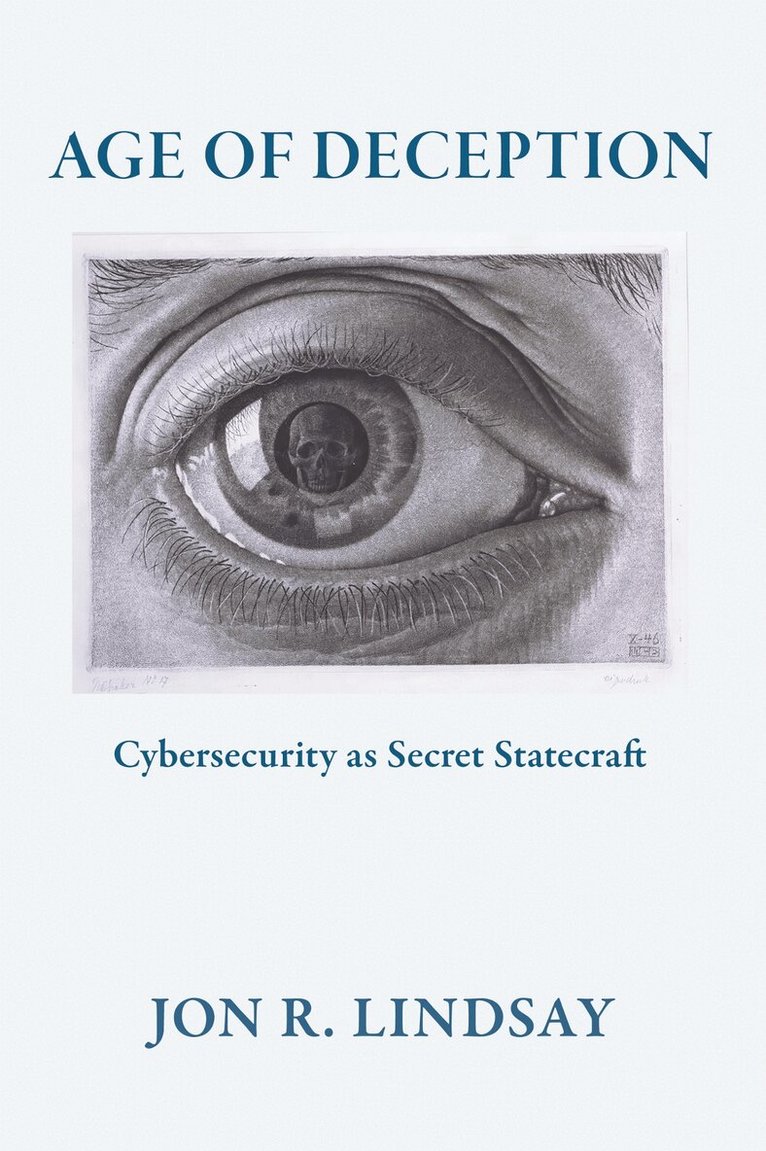
At the heart of cybersecurity lies a paradox: Cooperation makes conflict possible. In Age of Deception, Jon R. Lindsay shows that widespread trust in cyberspace enables espionage and subversion. While such acts of secret statecraft have long been part of global politics, digital systems have dramatically expanded their scope and scale. Yet success in secret statecraft hinges less on sophisticated technology than on political context. To make sense of this, Lindsay offers a general theory of intelligence performance– the analogue to military performance in battle – that explains why spies and hackers alike depend on clandestine organizations and vulnerable institutions. Through cases spanning codebreaking at Bletchley Park during WWII to the weaponization of pagers by Israel in 2024, he traces both continuity and change in secret statecraft. Along the way, he explains why popular assumptions about cyber warfare are profoundly misleading. Offense does not simply dominate defense, for example, because the same digital complexity that expands opportunities for deception also creates potential for self-deception and counterdeception. Provocative and persuasive, Age of Deception offers crucial insights into the future of secret statecraft in cyberspace and beyond.
287 kr
Skickas inom 10-15 vardagar
At the heart of cybersecurity lies a paradox: Cooperation makes conflict possible. In Age of Deception, Jon R. Lindsay shows that widespread trust in cyberspace enables espionage and subversion. While such acts of secret statecraft have long been part of global politics, digital systems have dramatically expanded their scope and scale. Yet success in secret statecraft hinges less on sophisticated technology than on political context. To make sense of this, Lindsay offers a general theory of intelligence performance - the analogue to military performance in battle - that explains why spies and hackers alike depend on clandestine organizations and vulnerable institutions. Through cases spanning codebreaking at Bletchley Park during WWII to the weaponization of pagers by Israel in 2024, he traces both continuity and change in secret statecraft. Along the way, he explains why popular assumptions about cyber warfare are profoundly misleading. Offense does not simply dominate defense, for example, because the same digital complexity that expands opportunities for deception also creates potential for self-deception and counterdeception. Provocative and persuasive, Age of Deception offers crucial insights into the future of secret statecraft in cyberspace and beyond.