Tai Ming Cheung – författare
Visar alla böcker från författaren Tai Ming Cheung. Handla med fri frakt och snabb leverans.
15 produkter
15 produkter
Inbunden, Engelska, 2015
1 594 kr
Skickas inom 5-8 vardagar
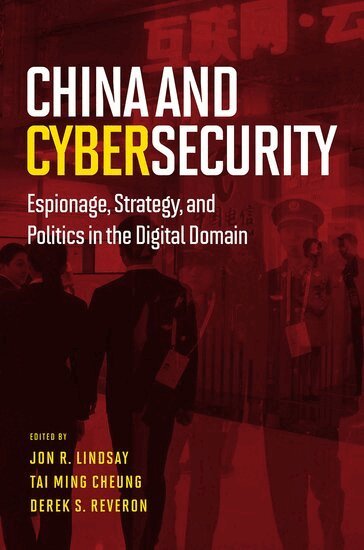
China's emergence as a great power in the twenty-first century is strongly enabled by cyberspace. Leveraged information technology integrates Chinese firms into the global economy, modernizes infrastructure, and increases internet penetration which helps boost export-led growth. China's pursuit of "informatization " reconstructs industrial sectors and solidifies the transformation of the Chinese People's Liberation Army into a formidable regional power. Even as the government censors content online, China has one of the fastest growing internet populations and most of the technology is created and used by civilians. Western political discourse on cybersecurity is dominated by news of Chinese military development of cyberwarfare capabilities and cyber exploitation against foreign governments, corporations, and non-governmental organizations. Western accounts, however, tell only one side of the story. Chinese leaders are also concerned with cyber insecurity, and Chinese authors frequently note that China is also a victim of foreign cyber---attacks---predominantly from the United States.China and Cybersecurity: Political, Economic, and Strategic Dimensions is a comprehensive analysis of China's cyberspace threats and policies. The contributors---Chinese specialists in cyber dynamics, experts on China, and experts on the use of information technology between China and the West---address cyberspace threats and policies, emphasizing the vantage points of China and the U.S. on cyber exploitation and the possibilities for more positive coordination with the West. The volume's multi-disciplinary, cross-cultural approach does not pretend to offer wholesale resolutions. Contributors take different stances on how problems may be analyzed and reduced, and aim to inform the international audience of how China's political, economic, and security systems shape cyber activities. The compilation provides empirical and evaluative depth on the deepening dependence on shared global information infrastructure and the growing willingness to exploit it for political or economic gain.
Häftad, Engelska, 2015
503 kr
Skickas inom 5-8 vardagar
China's emergence as a great power in the twenty-first century is strongly enabled by cyberspace. Leveraged information technology integrates Chinese firms into the global economy, modernizes infrastructure, and increases internet penetration which helps boost export-led growth. China's pursuit of "informatization " reconstructs industrial sectors and solidifies the transformation of the Chinese People's Liberation Army into a formidable regional power. Even as the government censors content online, China has one of the fastest growing internet populations and most of the technology is created and used by civilians. Western political discourse on cybersecurity is dominated by news of Chinese military development of cyberwarfare capabilities and cyber exploitation against foreign governments, corporations, and non-governmental organizations. Western accounts, however, tell only one side of the story. Chinese leaders are also concerned with cyber insecurity, and Chinese authors frequently note that China is also a victim of foreign cyber---attacks---predominantly from the United States.China and Cybersecurity: Political, Economic, and Strategic Dimensions is a comprehensive analysis of China's cyberspace threats and policies. The contributors---Chinese specialists in cyber dynamics, experts on China, and experts on the use of information technology between China and the West---address cyberspace threats and policies, emphasizing the vantage points of China and the U.S. on cyber exploitation and the possibilities for more positive coordination with the West. The volume's multi-disciplinary, cross-cultural approach does not pretend to offer wholesale resolutions. Contributors take different stances on how problems may be analyzed and reduced, and aim to inform the international audience of how China's political, economic, and security systems shape cyber activities. The compilation provides empirical and evaluative depth on the deepening dependence on shared global information infrastructure and the growing willingness to exploit it for political or economic gain.
Inbunden, Engelska, 2025
2 727 kr
Skickas inom 3-6 vardagar
The Oxford Handbook of Geoeconomics and Economic Statecraft is a comprehensive, critical, and contemporary exploration of issues at the intersection of political economy and security studies. Long considered separate branches of political science, economics and security have become increasingly intertwined. The volume examines the state of the field, where it has been in the recent past, and where it is likely to go in future. Contributors examine conceptual edges of geoeconomics and economic statecraft as well as its core, the globalizing context of the field, and the challenges posed by social, economic, and technological changes.The twenty-eight chapters in the volume are divided into six parts. After the introduction to the volume, section 2 considers past and present thinking about the field. Section 3 explores the methods used in geoeconomics and economic statecraft. Section 4 looks at key issues. Section 5 covers the intersection of national security and geoeconomics, and the last section looks at regional perspectives in the field. Geoeconomics and economic statecraft are issues of contemporary concern and on the front pages of newspapers on an almost daily basis. This book provides the intellectual context and insights to understand the challenges and prospects that the world faces currently and over the long-term, making it a useful resource for academics, practitioners, business executives, journalists, and students.
Inbunden, Engelska, 2001
2 290 kr
Skickas inom 5-8 vardagar
China's Entrepreneurial Army offers a fascinating insight into the complex interwoven relationship between state power, military burden, and economic prosperity in today's China. From the early 1980s to the end of the 1990s, the People's Liberation Army went into business to make up for falling defence spending. It established the world's largest military business complex comprising thousands of army-owned enterprises stretching into virtually every corner of the Chinese economy and overseas.This participation in business gave the military substantial economic strength and allowed it to adapt to the changing locus of power and authority in China in the reform era, which was increasingly measured through economic might. But the rapid ascent of the military commercial juggernaut also sowed the seeds of its ignominious demise. Corruption, smuggling, and profiteering became so rampant that the political reliability of the military and the health of the Chinese economy began to be undermined. In 1998, the armed forces were ordered to get out of business.Tai Ming Cheung traces the origins, examines the participation, and details the demise of the Chinese military business complex. This path-breaking study is a uniquely comprehensive and in-depth account of this Byzantine and opaque institution, and provides a vivid portrait of the corporations, military units personalities, and other entities that were at the heart of this commercial powerhouse.Based upon extensive research of primary source Chinese publications and field work,China's Entrepreneurial Army looks at the role of the military business complex from a number of different perspectives: its success as a commercial venue, the impact on civil--military relations, and the broader benefits and drawbacks of this commercialism on military professionalism and economic modernization in China and elsewhere.
Inbunden, Engelska, 2012
2 215 kr
Skickas inom 10-15 vardagar
China is flexing its growing military and strategic clout in the pursuit of broadening national security interests. At the same time, the country’s economic and technology policies have also become more nationalistic, state-centered, and ambitious. China’s defense economy has set its sights on catching up with the West by the beginning of the 2020s and is making steady progress in building up its innovation capabilities, although this is presently in the form of incremental and sustaining types of activities. More high-end, disruptive forms of innovation that would lead to major breakthroughs are likely to be beyond China’s reach in the near-to medium term. This volume provides a wide-ranging and detailed assessment of the present state of the Chinese defense economy at a time of rapid change and accelerating advancement in its innovation capabilities and performance. This collection of articles has three main goals: (1) to locate China’s defense innovation dynamics within broader historical, technological and methodological frameworks of analysis; (2) to assess the performance of the Chinese defense economy’s six principal subsectors; and (3) to compare China’s approach to defense industrialization with major counterparts in the Asia-Pacific region.This book was originally published as a special issue of the Journal of Strategic Studies.
Inbunden, Engelska, 2008
620 kr
Skickas inom 10-15 vardagar
Fortifying China explores the titanic struggle to turn China into an aspiring world-class military technological power. The defense economy is leveraging the country's vibrant civilian economy and gaining access to foreign sources of technology and know-how. Drawing on extensive Chinese-language sources, Tai Ming Cheung explains that this transformation has two key dimensions. The defense economy is being reengineered to break down bureaucratic barriers and reduce the role of the state, fostering a more competitive and entrepreneurial culture to facilitate the rapid diffusion and absorption of technology and knowledge. At the same time, the civilian and defense economies are being integrated to form a dual-use technological and industrial base. In Cheung's view, the Chinese authorities believe this strategy will play a key role in supporting long-term defense modernization.For China's neighbors and the United States, understanding China's technological, industrial, and military capabilities is critical to the formulation of economic and security policies. Fortifying China provides crucial insight into the impact of China's dual-use technology strategy. Cheung's "systems of innovation" framework considers the structure, dynamics, and performance of the defense economy from a systems-level perspective.
Häftad, Engelska, 2013
341 kr
Skickas inom 10-15 vardagar
Fortifying China explores the titanic struggle to turn China into an aspiring world-class military technological power. The defense economy is leveraging the country's vibrant civilian economy and gaining access to foreign sources of technology and know-how. Drawing on extensive Chinese-language sources, Tai Ming Cheung explains that this transformation has two key dimensions. The defense economy is being reengineered to break down bureaucratic barriers and reduce the role of the state, fostering a more competitive and entrepreneurial culture to facilitate the rapid diffusion and absorption of technology and knowledge. At the same time, the civilian and defense economies are being integrated to form a dual-use technological and industrial base. In Cheung's view, the Chinese authorities believe this strategy will play a key role in supporting long-term defense modernization.For China's neighbors and the United States, understanding China's technological, industrial, and military capabilities is critical to the formulation of economic and security policies. Fortifying China provides crucial insight into the impact of China's dual-use technology strategy. Cheung's "systems of innovation" framework considers the structure, dynamics, and performance of the defense economy from a systems-level perspective.
Inbunden, Engelska, 2022
2 151 kr
Skickas inom 10-15 vardagar
Gaining a decisive technological edge is a never-ending pursuit for defense establishments and the countries they protect. Intensifying geo-strategic and geo-economic rivalry among major powers, especially the U.S. and China, and the global technology revolution occurring in the civilian and military domains promise to reshape the nature and distribution of global power.This book examines the state of global defense innovation in a select number of countries chosen because they are representative of the diverse make-up of the global defense innovation community. These include small countries with advanced defense innovation capabilities (Israel and Singapore), closed authoritarian powers (North Korea and Russia), large catch-up states (China and India), and advanced large powers (U.S.).The chapters in this book were originally published as a special issue of the Journal of Strategic Studies.
Häftad, Engelska, 2024
588 kr
Skickas inom 10-15 vardagar
Gaining a decisive technological edge is a never-ending pursuit for defense establishments and the countries they protect. Intensifying geo-strategic and geo-economic rivalry among major powers, especially the U.S. and China, and the global technology revolution occurring in the civilian and military domains promise to reshape the nature and distribution of global power.This book examines the state of global defense innovation in a select number of countries chosen because they are representative of the diverse make-up of the global defense innovation community. These include small countries with advanced defense innovation capabilities (Israel and Singapore), closed authoritarian powers (North Korea and Russia), large catch-up states (China and India), and advanced large powers (U.S.).The chapters in this book were originally published as a special issue of the Journal of Strategic Studies.
Häftad, Engelska, 2014
848 kr
Skickas inom 10-15 vardagar
China is flexing its growing military and strategic clout in the pursuit of broadening national security interests. At the same time, the country’s economic and technology policies have also become more nationalistic, state-centered, and ambitious. China’s defense economy has set its sights on catching up with the West by the beginning of the 2020s and is making steady progress in building up its innovation capabilities, although this is presently in the form of incremental and sustaining types of activities. More high-end, disruptive forms of innovation that would lead to major breakthroughs are likely to be beyond China’s reach in the near-to medium term. This volume provides a wide-ranging and detailed assessment of the present state of the Chinese defense economy at a time of rapid change and accelerating advancement in its innovation capabilities and performance. This collection of articles has three main goals: (1) to locate China’s defense innovation dynamics within broader historical, technological and methodological frameworks of analysis; (2) to assess the performance of the Chinese defense economy’s six principal subsectors; and (3) to compare China’s approach to defense industrialization with major counterparts in the Asia-Pacific region.This book was originally published as a special issue of the Journal of Strategic Studies.
Inbunden, Engelska, 2014
620 kr
Skickas inom 5-8 vardagar
Among the most important issues in international security today are the nature and the global implications of China's emergence as a world-class defense technology power. Since the beginning of the twenty-first century, the Chinese defense industry has reinvented itself by emphasizing technological innovation and technology. This reinvention and its potential effects, both positive and negative, are attracting global scrutiny. Drawing insights from a range of disciplines, including history, social science, business, and strategic studies, Tai Ming Cheung and the contributors to Forging China's Military Might develop an analytical framework to evaluate the nature, dimensions, and spectrum of Chinese innovation in the military and broader defense spheres. Forging China's Military Might provides an overview of the current state of the Chinese defense industry and then focuses on subjects critical to understanding short- and long-term developments, including the relationship among defense contractors, regulators, and end-users; civil-military integration; China's defense innovation system; and China's place in the global defense economy.Case studies look in detail at the Chinese space and missile industry.
Häftad, Engelska, 2014
354 kr
Skickas inom 5-8 vardagar
Among the most important issues in international security today are the nature and the global implications of China's emergence as a world-class defense technology power. Since the beginning of the twenty-first century, the Chinese defense industry has reinvented itself by emphasizing technological innovation and technology. This reinvention and its potential effects, both positive and negative, are attracting global scrutiny. Drawing insights from a range of disciplines, including history, social science, business, and strategic studies, Tai Ming Cheung and the contributors to Forging China's Military Might develop an analytical framework to evaluate the nature, dimensions, and spectrum of Chinese innovation in the military and broader defense spheres. Forging China's Military Might provides an overview of the current state of the Chinese defense industry and then focuses on subjects critical to understanding short- and long-term developments, including the relationship among defense contractors, regulators, and end-users; civil-military integration; China's defense innovation system; and China's place in the global defense economy.Case studies look in detail at the Chinese space and missile industry.
Inbunden, Engelska, 2022
582 kr
Skickas inom 10-15 vardagar
In Innovate to Dominate, Tai Ming Cheung offers insight into why, how, and whether China will overtake the United States to become the world's preeminent technological and security power. This examination of the means and ends of China's quest for techno-security supremacy is required reading for anyone looking for clues as to the long-term direction of the global order. The techno-security domain, Cheung argues, is where national security, innovation, and economic development converge, and it has become the center of power and prosperity in the twenty-first century. China's paramount leader Xi Jinping recognizes that effectively harnessing the complex interactions among security, innovation, and development is essential in enabling China to compete for global dominance. Cheung offers a richly detailed account of how China is building a potent techno-security state. In Innovate to Dominate he takes readers from the strategic vision guiding this transformation to the nuts-and-bolts of policy implementation. The state-led top-down mobilizational model that China is pursuing has been a winning formula so far, but the sternest test is ahead as China begins to compete head-to-head with the United States and aims to surpass its archrival by mid-century if not sooner. Innovate to Dominate is a timely and analytically rigorous examination of the key strategies guiding China's transformation of its capabilities in the national, technological, military, and security spheres and how this is taking place. Cheung authoritatively addresses the burning questions being asked in capitals around the world: Can China become the dominant global techno-security power? And if so, when?
Inbunden, Engelska, 2018
1 217 kr
Skickas inom 5-8 vardagar
Häftad, Engelska, 2018
415 kr
Skickas inom 5-8 vardagar