Jonathan S. Burgess – författare
Visar alla böcker från författaren Jonathan S. Burgess. Handla med fri frakt och snabb leverans.
9 produkter
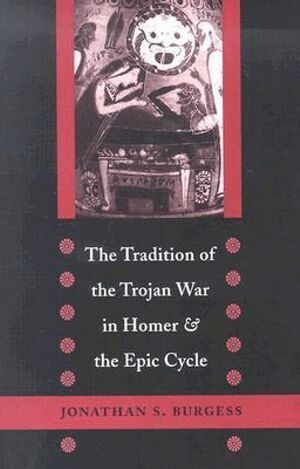
Tradition of the Trojan War in Homer and the Epic Cycle
Häftad, 2004
449 kr
Lägg i varukorg
Although the Iliad and Odyssey narrate only relatively small portions of the Trojan War and its aftermath, for centuries these works have overshadowed other, more comprehensive narratives of the conflict, particularly the poems known as the Epic Cycle. In The Tradition of the Trojan War in Homer …
The Travels of Odysseus
Inbunden, 2025
1935 kr
Lägg i varukorg
The Travels of Odysseus employs the theme of travel to explore the Odyssey and its contexts. After an introductory chapter, Chapter 2 provides analysis of the “wanderings” or Apologos of Odysseus, Chapter 3 explores the “lying tales” told by Odysseus in disguise upon his return to Ithaca, and …
Travels of Odysseus
E-bok, 2025
1106 kr
Lägg i varukorg
The Travels of Odysseus employs the theme of travel to explore the Odyssey and its contexts. After an introductory chapter, Chapter 2 provides analysis of the "e;wanderings"e; or Apologos of Odysseus, Chapter 3 explores the "e;lying tales"e; told by Odysseus in disguise upon his …
Travels of Odysseus
E-bok, 2026
1106 kr
Lägg i varukorg
The Travels of Odysseus employs the theme of travel to explore the Odyssey and its contexts. After an introductory chapter, Chapter 2 provides analysis of the "e;wanderings"e; or Apologos of Odysseus, Chapter 3 explores the "e;lying tales"e; told by Odysseus in disguise upon his …
Homer
E-bok, 2014
377 kr
Lägg i varukorg
What reader could fail to be enthralled by the Iliad and the Odyssey, those greatest heroic epics of antiquity? Yet the author of those immortal text remains, in the end, an enigma. The central paradox of 'Homer' is that- while recognized as producing poetry of incomparable genius- even in the …
Homer
E-bok, 2014
368 kr
Lägg i varukorg
What reader could fail to be enthralled by the Iliad and the Odyssey, those greatest heroic epics of antiquity? Yet the author of those immortal text remains, in the end, an enigma. The central paradox of 'Homer' is that- while recognized as producing poetry of incomparable genius- even in the …
Homer
Av Jonathan S. Burgess, Richard Stoneman
Häftad, 2014
345 kr
Lägg i varukorg
What reader could fail to be enthralled by the Iliad and the Odyssey, those greatest heroic epics of antiquity? Yet the author of those immortal text remains, in the end, an enigma. The central paradox of 'Homer' is that- while recognized as producing poetry of incomparable genius- even in the …
Tradition of the Trojan War in Homer and the Epic Cycle
Inbunden, 2002
607 kr
Tillfälligt slut
Although the Iliad and Odyssey narrate only relatively small portions of the Trojan War and its aftermath, for centuries these works have overshadowed other, more comprehensive narratives of the conflict, particularly the poems known as the Epic Cycle. In The Tradition of the Trojan War in Homer …
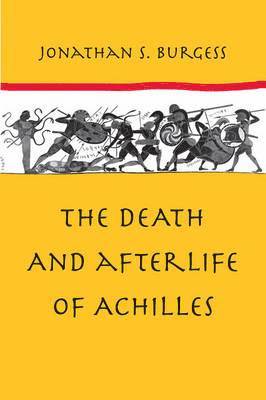
Death and Afterlife of Achilles
Inbunden, 2009
562 kr
Tillfälligt slut
Achilles' death-by an arrow shot through the vulnerable heel of the otherwise invincible mythic hero-was as well known in antiquity as the rest of the history of the Trojan War. However, this important event was not described directly in either of the great Homeric epics, the Iliad or the Odyssey. …