Jonathan Swainger - Böcker
Visar alla böcker från författaren Jonathan Swainger. Handla med fri frakt och snabb leverans.
5 produkter
5 produkter
1 150 kr
Skickas inom 7-10 vardagar
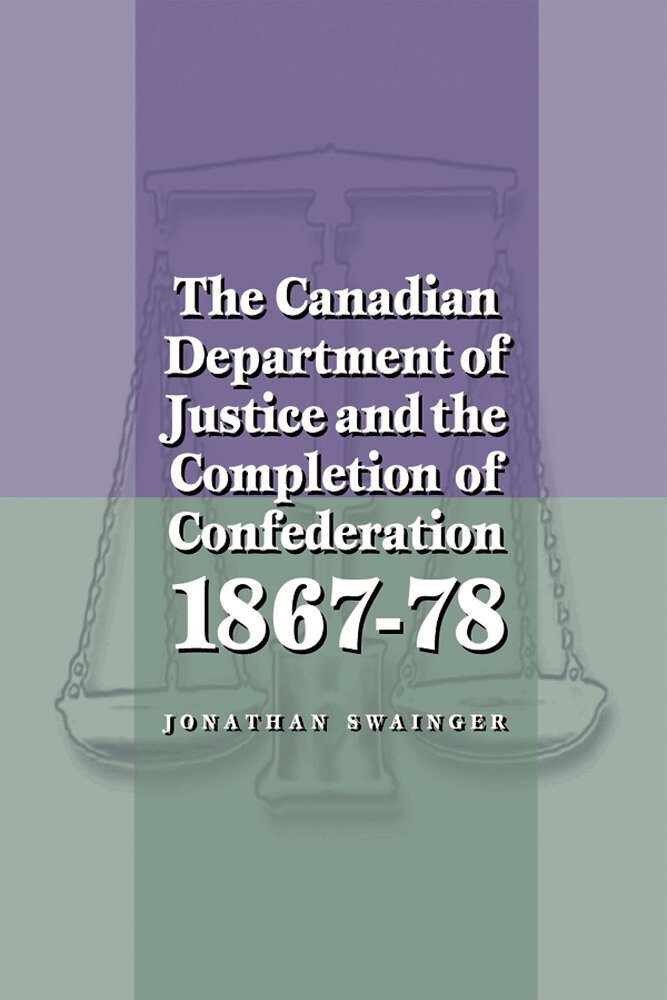
The federal Department of Justice was established by John A. Macdonald as part of the Conservative party's program for reform of the parliamentary system following Confederation. Among other things, it was charged with establishing national institutions such as the Supreme Court and the North West Mounted Police and with centralizing the penitentiary system. In the process, the department took on a position of primary importance in post-Confederation politics. This was particularly so up to 1878, when Confederation was "completed."Jonathan Swainger considers the growth and development of the ostensibly apolitical Department of Justice in the eleven years after the union of 1867. Drawing on legal records and other archival documents, he details the complex interactions between law and politics, exploring how expectations both inside and outside the legal system created an environment in which the department acted as an advisor to the government. He concludes by considering the post-1878 legacy of the department's approach to governance, wherein any problem, legal or otherwise, was made amenable to politicized solutions. Unfortunately for the department and the federal government, this left them ill-prepared for the constitutional battles to come.One crucial task was to establish responsibilities within the federal government, rather than just duplicate offices which had existed prior to union. Others were the establishment of national or quasi- national institutions such as the Supreme Court (1875) and the North-West Mounted Police (1873), the redrafting of the Governor-General's instructions (which was done between 1875 and 1877), and centralization of the penitentiary system (completed by 1875).The Department benefited from a deeply rooted expectation that law was both apolitical and necessary. This ideology functioned in a variety of ways: it gave the Department considerable latitude for setting policy and solving problems, but rationalized the appearance of politicized legal decisions. It also legitimized Department officials' claim that it was especially suited to review all legislation, advise on the royal prerogative of mercy, administer national penitentiaries, and appoint judges to the bench. Ultimately, the fictional notion of law as apolitical and necessary placed the Department of Justice squarely in the midst of the completion of Confederation.The Canadian Department of Justice and the Completion of Confederation will be of particular interest to students and scholars of Canadian legal and political history.
402 kr
Skickas inom 7-10 vardagar
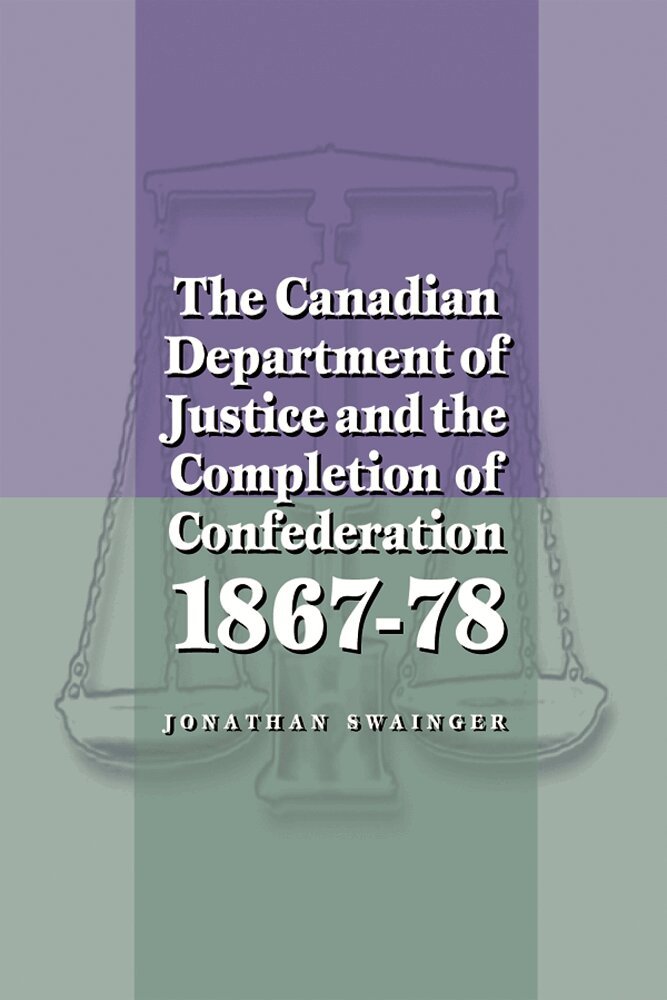
The federal Department of Justice was established by John A. Macdonald as part of the Conservative party's program for reform of the parliamentary system following Confederation. Among other things, it was charged with establishing national institutions such as the Supreme Court and the North West Mounted Police and with centralizing the penitentiary system. In the process, the department took on a position of primary importance in post-Confederation politics. This was particularly so up to 1878, when Confederation was "completed."Jonathan Swainger considers the growth and development of the ostensibly apolitical Department of Justice in the eleven years after the union of 1867. Drawing on legal records and other archival documents, he details the complex interactions between law and politics, exploring how expectations both inside and outside the legal system created an environment in which the department acted as an advisor to the government. He concludes by considering the post-1878 legacy of the department's approach to governance, wherein any problem, legal or otherwise, was made amenable to politicized solutions. Unfortunately for the department and the federal government, this left them ill-prepared for the constitutional battles to come.One crucial task was to establish responsibilities within the federal government, rather than just duplicate offices which had existed prior to union. Others were the establishment of national or quasi- national institutions such as the Supreme Court (1875) and the North-West Mounted Police (1873), the redrafting of the Governor-General's instructions (which was done between 1875 and 1877), and centralization of the penitentiary system (completed by 1875).The Department benefited from a deeply rooted expectation that law was both apolitical and necessary. This ideology functioned in a variety of ways: it gave the Department considerable latitude for setting policy and solving problems, but rationalized the appearance of politicized legal decisions. It also legitimized Department officials' claim that it was especially suited to review all legislation, advise on the royal prerogative of mercy, administer national penitentiaries, and appoint judges to the bench. Ultimately, the fictional notion of law as apolitical and necessary placed the Department of Justice squarely in the midst of the completion of Confederation.The Canadian Department of Justice and the Completion of Confederation will be of particular interest to students and scholars of Canadian legal and political history.
1 150 kr
Skickas inom 7-10 vardagar
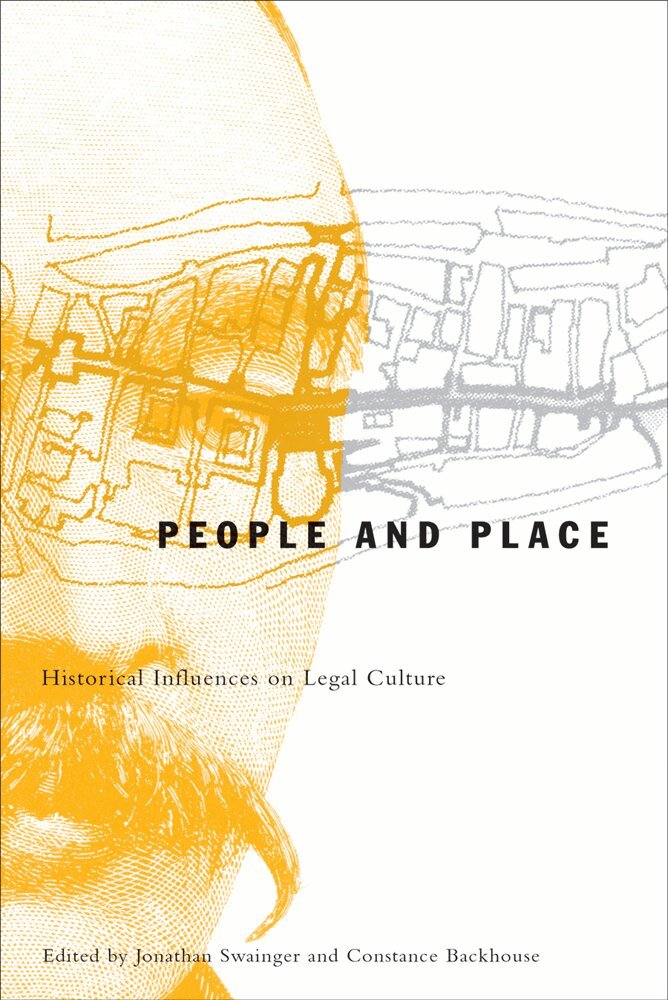
People and Place presents a path-breaking collection ofessays demonstrating the fascinating ways in which personalitiesinteract with physical locale in shaping the law. Examining law throughthe framework of history, this anthology presents a mixture ofinnovative articles produced by established scholars as well asrepresentatives of the next generation.The collection represents a rich array of interdisciplinaryexpertise, with authors who are law professors, historians,sociologists and criminologists. Their essays include studies into thelives of judges and lawyers, rape victims, prostitutes, religious sectleaders, and common criminals. The geographic scope touches Canada, theUnited States and Australia. The essays explore how one individual, orsmall self-identified groups, were able to make a difference in how lawwas understood, applied, and interpreted. They also probe the degree towhich locale and location influenced legal culture history.The essays offer snapshots of human history, capturing thecentrality of law as individuals located themselves in relation toothers and to the places and times in which they lived. Accessible toacademics, students, and general readers interested in the formation oflaw within a social context, this collection offers a compellingperspective of this subtle relationship. The close examination ofpeople and place will allow readers to unpack law's variousmeanings across communities and time, and to move closer to a moreprofound awareness of the complexity of human society.
359 kr
Skickas inom 7-10 vardagar
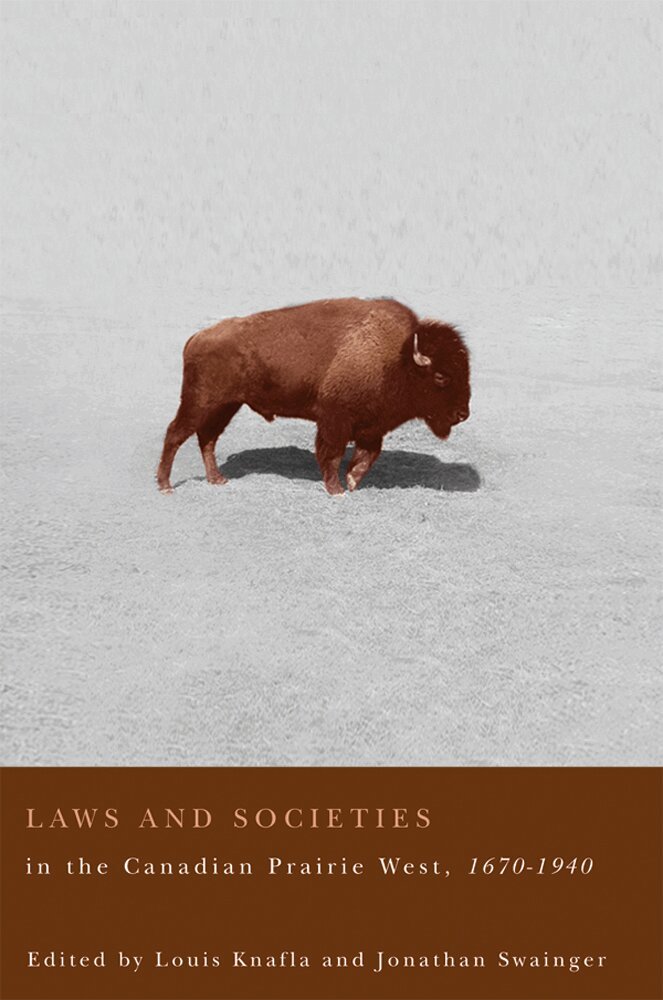
Laws and Societies in the Canadian Prairie West, 1670-1940 examines the legal history of the north-west frontier, from the earliest years of European-Native contact in the seventeenth century to the mid-1900s. Challenging myths about a peaceful west and prairie exceptionalism, the book explores the substance of prairie legal history and the degree to which the region's mentality is rooted in the historical experience of distinctive prairie peoples. The chapters, written by a cross-section of established and emerging scholars working in the allied fields of law, legal history, sociology, and criminology, focus on what is distinctive in prairie legal culture.By approaching the issue from a variety of perspectives – those of colonial administrators, fur company employees, Native peoples, women, men, entrepreneurs, judges, magistrates, and the police, among others – the authors find evidence of a conscious effort to apply broad, non-regional experiences to seemingly familiar, local issues. The ways in which prairie peoples perceived themselves and their relationships to a wider world were directly framed by notions of law and legal remedy shaped by the course and themes of prairie history. Legal history is not just about black letter law. It is also deeply concerned with the ways in which people affect and are affected by the law in their daily lives. By examining how central and important the law has been to individuals, communities, and societies in the Canadian Prairies, this book makes an original contribution.
Notorious Georges
Crime and Community in British Columbia's Northern Interior, 1905–25
Häftad, Engelska, 2023
375 kr
Skickas inom 7-10 vardagar
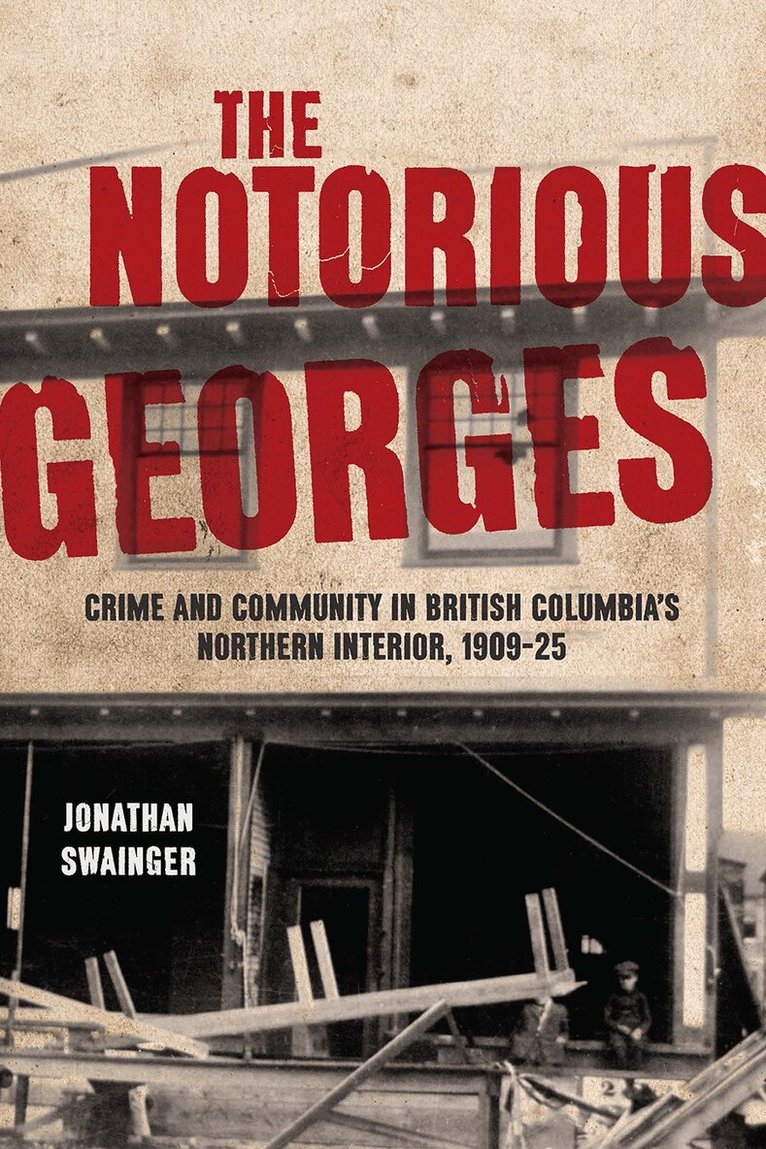
Boozy and boisterous. The Georges – the communities of South Fort George and Fort George that ultimately became Prince George – acquired a seedy reputation for a century, at times branded the dubious title of Canada's "most dangerous city." Is Prince George really such a bad lad?The Notorious Georges explores how the pursuit of respectability collided with caricatures of a riotous settlement frontier in its early years. Anxious about being marginalized by the provincial government and venture capitalists, municipal leaders blamed Indigenous and mixed-heritage people, non-preferred immigrants, and transient labourers for local crime. Jonathan Swainger combs through police and legal records, government publications, and media commentary to demonstrate that the disorder was not so different from the rest of the province – and "respectable" white residents were often to blame.This lively account tells us about more than a particular community's identity. It also sheds light on small-town disaffection in modern Canada.