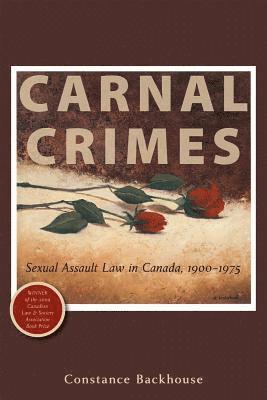
Constance Backhouse – författare
Visar alla böcker från författaren Constance Backhouse. Handla med fri frakt och snabb leverans.
17 produkter
Royally Wronged
The Royal Society of Canada and Indigenous Peoples
Av Constance Backhouse, Cynthia E. Milton m. fl.
Häftad, 2021
454 kr
Lägg i varukorg
The Royal Society of Canada's mandate is to elect to its membership leading scholars in the arts, humanities, social sciences, and sciences, lending its seal of excellence to those who advance artistic and intellectual knowledge in Canada. Duncan Campbell Scott, one of the architects of the Indian …
Royally Wronged
The Royal Society of Canada and Indigenous Peoples
Av Adele Perry, Margaret Kovach m. fl.
E-bok, 2021
316 kr
Lägg i varukorg
The Royal Society of Canada’s mandate is to elect to its membership leading scholars in the arts, humanities, social sciences, and sciences, lending its seal of excellence to those who advance artistic and intellectual knowledge in Canada. Duncan Campbell Scott, one of the architects of the Indian …
Royally Wronged
The Royal Society of Canada and Indigenous Peoples
Av Adele Perry, Margaret Kovach m. fl.
E-bok, 2021
316 kr
Lägg i varukorg
The Royal Society of Canada’s mandate is to elect to its membership leading scholars in the arts, humanities, social sciences, and sciences, lending its seal of excellence to those who advance artistic and intellectual knowledge in Canada. Duncan Campbell Scott, one of the architects of the Indian …
Challenging Times
The Women''s Movement in Canada and the United States
Av David H. Flaherty, Constance Backhouse
E-bok, 1992
1197 kr
Lägg i varukorg
By allowing the reader to draw comparisons between women''s movements in Canada and the United States, Challenging Times shows that certain political and theoretical issues transcend international borders, ebbing and flowing between the two countries symbiotically. Topics discussed include the …
Claire L'Heureux-Dubé
A Life
Inbunden, 2017
602 kr
Lägg i varukorg
Both lionized and vilified, Claire L'Heureux-Dubé has shaped the Canadian legal landscape – and in particular its highest court. The second woman appointed to the Supreme Court of Canada, and the first from Quebec, she was known as "the great dissenter" on the bench, making judgments that were …
Reckoning with Racism
Police, Judges, and the RDS Case
Inbunden, 2022
779 kr
Lägg i varukorg
In 1997, complacency about the racial neutrality of a predominantly white judiciary was shattered as the Supreme Court of Canada considered a complaint of judicial racial bias for the first time. The judge in question was Corrine Sparks, the country's first Black female judge.Reckoning with Racism …
Reckoning with Racism
Police, Judges, and the RDS Case
Häftad, 2022
354 kr
Lägg i varukorg
In 1997, complacency about the racial neutrality of a predominantly white judiciary was shattered as the Supreme Court of Canada considered a complaint of judicial racial bias for the first time. The judge in question was Corrine Sparks, the country's first Black female judge.Reckoning with Racism …
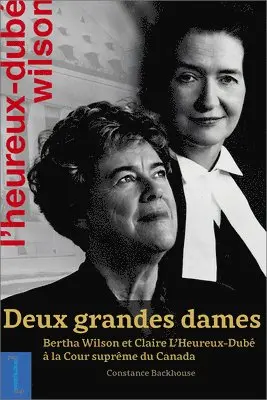
Deux grandes dames: Bertha Wilson et Claire L’Heureux-Dubé à la Cour suprême du Canada
Häftad, 2021
1079 kr
Kommande
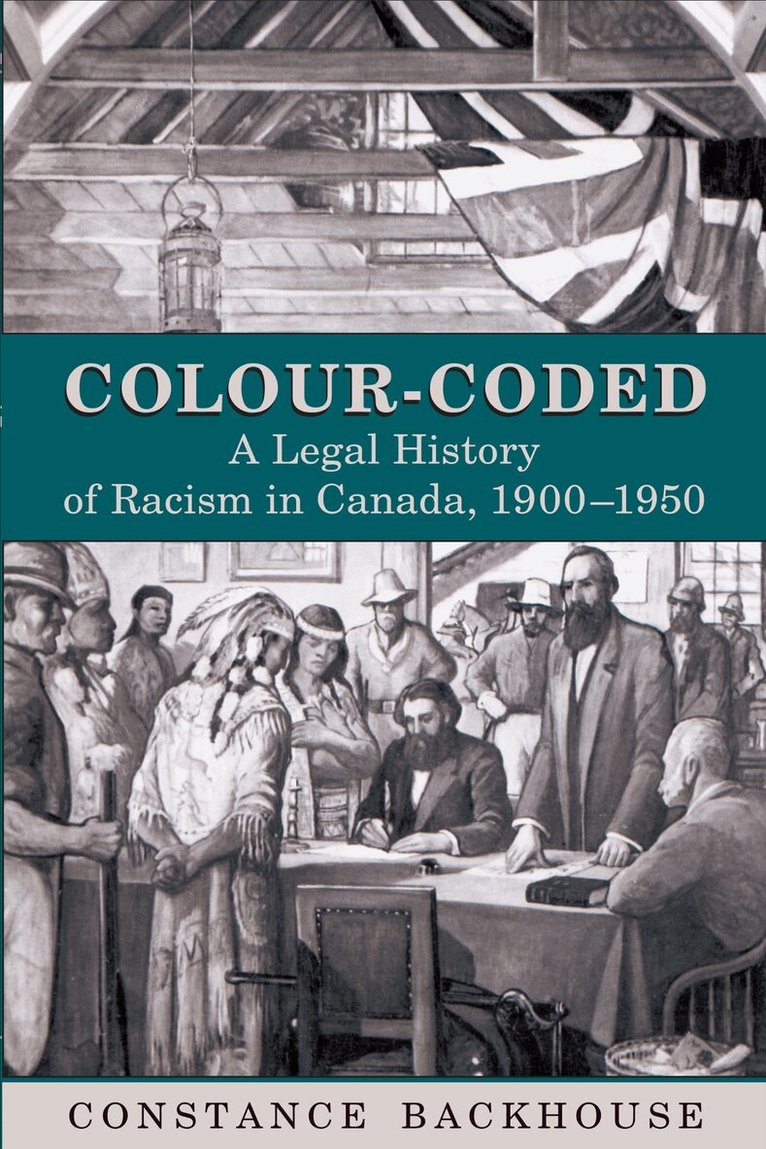
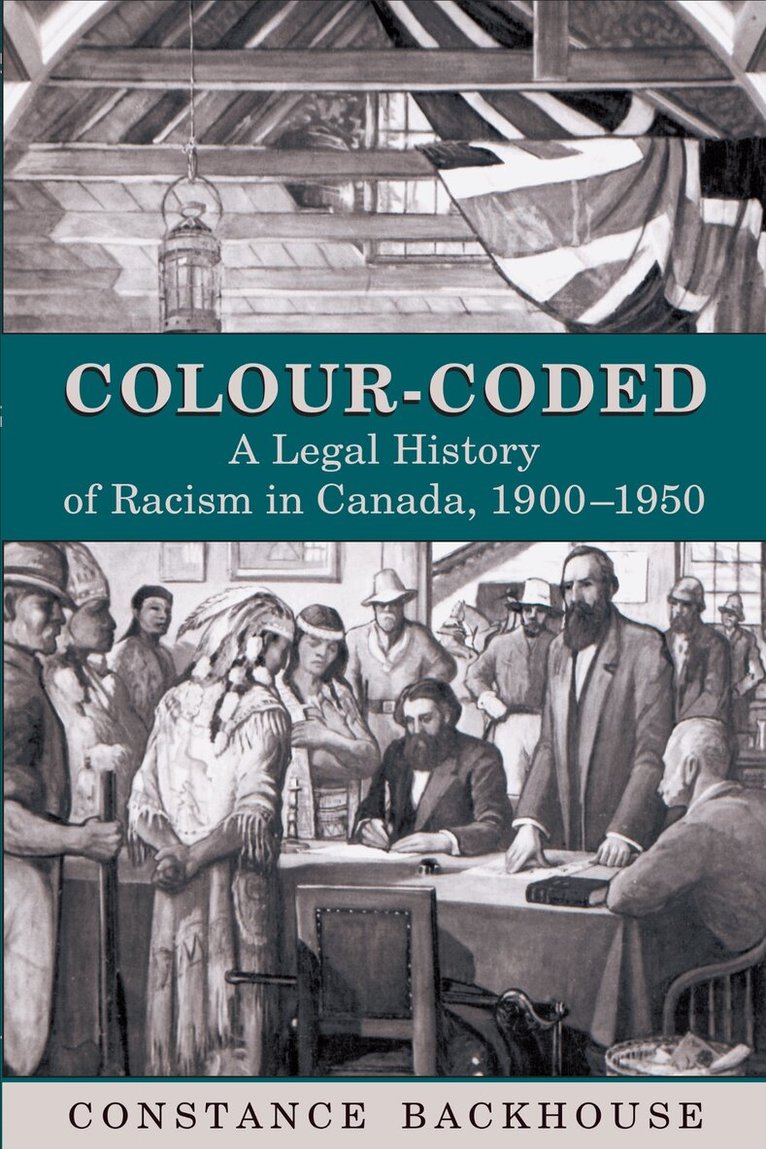
Colour-Coded
A Legal History of Racism in Canada, 1900-1950
Häftad, 1999
526 kr
Lägg i varukorg
Historically Canadians have considered themselves to be more or less free of racial prejudice. Although this conception has been challenged in recent years, it has not been completely dispelled. In Colour-Coded, Constance Backhouse illustrates the tenacious hold that white supremacy had on our …
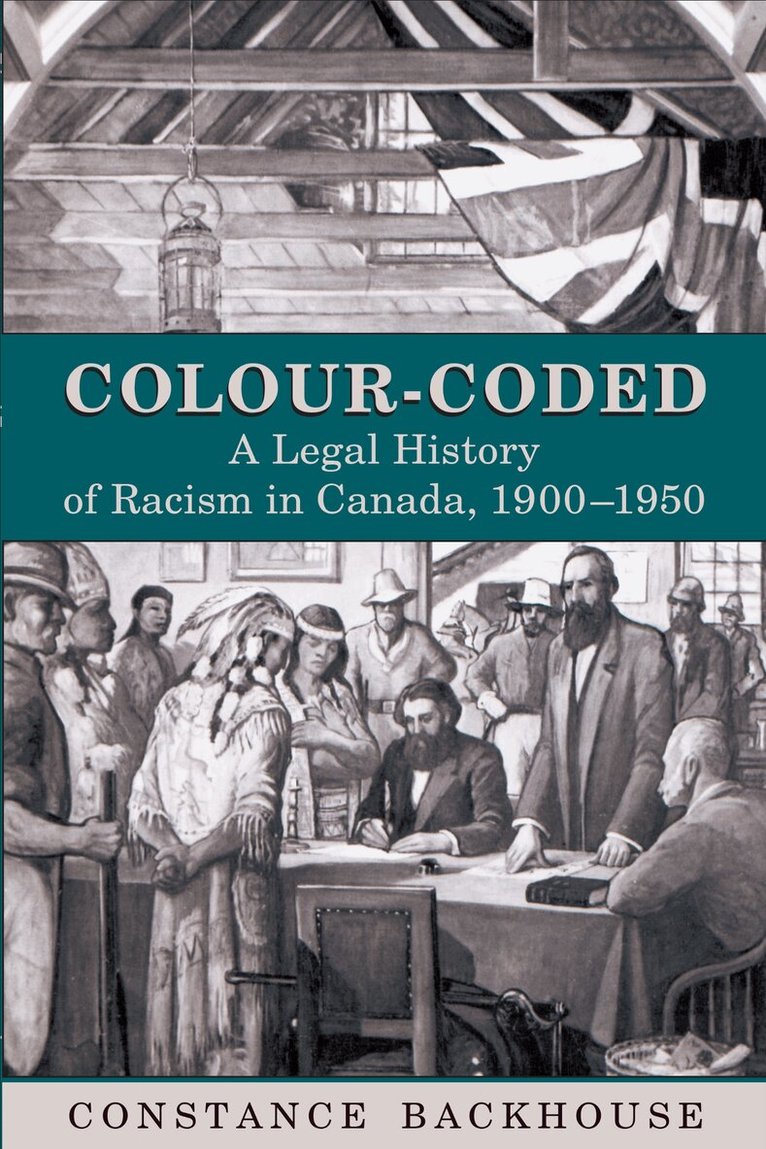
Colour-Coded
A Legal History of Racism in Canada, 1900-1950
E-bok, 1999
1531 kr
Lägg i varukorg
Historically Canadians have considered themselves to be more or less free of racial prejudice. Although this conception has been challenged in recent years, it has not been completely dispelled. In Colour-Coded, Constance Backhouse illustrates the tenacious hold that white supremacy had on our …
Colour-Coded
A Legal History of Racism in Canada, 1900-1950
E-bok, 1999
766 kr
Lägg i varukorg
Historically Canadians have considered themselves to be more or less free of racial prejudice. Although this conception has been challenged in recent years, it has not been completely dispelled. In Colour-Coded, Constance Backhouse illustrates the tenacious hold that white supremacy had on our …
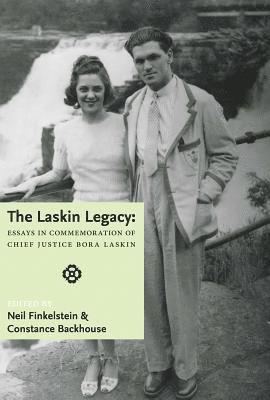
Laskin Legacy
Essays in Commemoration of Chief Justice Bora Laskin
Av Neil Finkelstein, Constance Backhouse
Häftad, 2007
648 kr
Lägg i varukorg
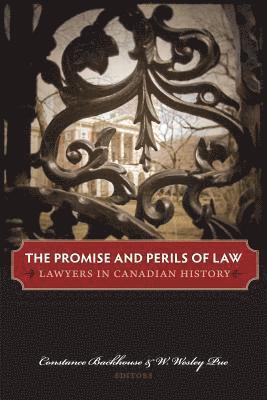
Promise and Perils of Law
Lawyers in Canadian History
Av Constance Backhouse, W. Wesley Pue
Häftad, 2009
523 kr
Lägg i varukorg
Deux grandes dames
Bertha Wilson et Claire L’Heureux-Dubé à la Cour suprême du Canada
Häftad, 2021
477 kr
Lägg i varukorg
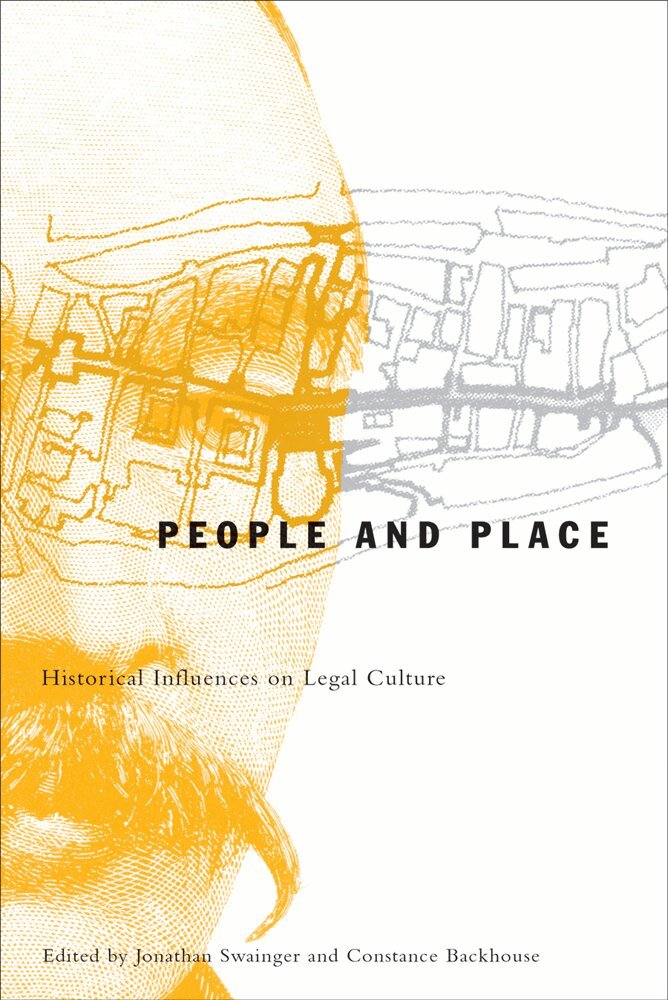
People and Place
Historical Influences on Legal Culture
Av Jonathan Swainger, Constance Backhouse
Inbunden, 2003
1214 kr
Tillfälligt slut
People and Place presents a path-breaking collection ofessays demonstrating the fascinating ways in which personalitiesinteract with physical locale in shaping the law. Examining law throughthe framework of history, this anthology presents a mixture ofinnovative articles produced by established …