Jonathan Yeager - Böcker
Visar alla böcker från författaren Jonathan Yeager. Handla med fri frakt och snabb leverans.
2 produkter
2 produkter
2 006 kr
Skickas inom 5-8 vardagar
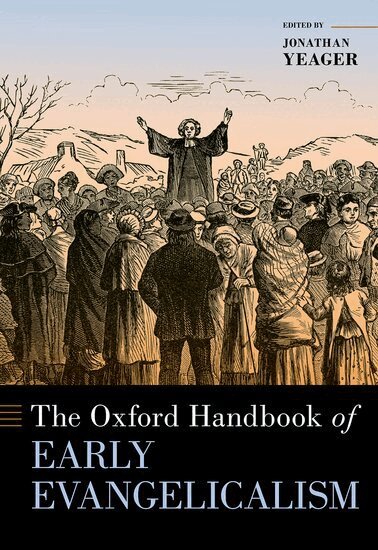
Evangelicalism, a worldwide interdenominational movement within Protestant Christianity, is one of the most popular and diverse religious movements in the world today. Evangelicals maintain the belief that the essence of the Gospel consists of the doctrine of salvation by grace, through faith in Jesus' atonement. Evangelicals can be found on every continent and among nearly all Christian denominations. The origin of this group of people has been traced to the turn of the eighteenth century, with roots in the Puritan and Pietist movements in England and Germany. The earliest evangelicals could be found among Anglicans, Baptists, Congregationalists, Methodists, Moravians, and Presbyterians throughout North America, Britain, and Western Europe, and included some of the foremost names of the age, such as Jonathan Edwards, John Wesley, and George Whitefield. Early evangelicals were abolitionists, historians, hymn writers, missionaries, philanthropists, poets, preachers, and theologians. They participated in the major cultural and intellectual currents of the day, and founded institutions of higher education not limited to Dartmouth College, Brown University, and Princeton University. The Oxford Handbook of Early Evangelicalism provides the most authoritative and comprehensive overview of the significant figures and religious communities associated with early evangelicalism within the contextual and cultural environment of the long eighteenth century, with essays written by the world's leading experts in the field of eighteenth-century studies.
1 600 kr
Skickas inom 5-8 vardagar
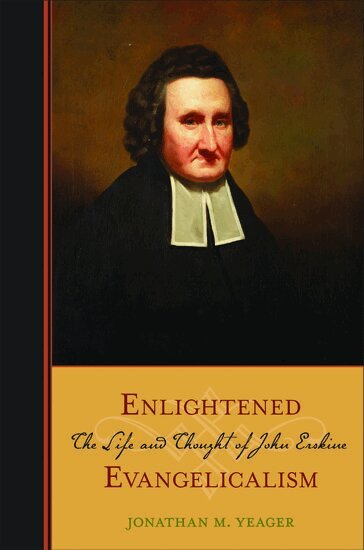
John Erskine was the leading evangelical in the Church of Scotland in the latter half of the eighteenth century. Educated in an enlightened setting at Edinburgh University, he learned to appreciate the epistemology of John Locke and other empiricists alongside key Scottish Enlightenment figures such as his ecclesiastical rival, William Robertson. Although groomed to follow in his father's footsteps as a lawyer, Erskine changed career paths in order to become a minister of the Kirk. He was deeply moved by the endemic revivals in the west of Scotland and determined that his contribution to the burgeoning evangelical movement on both sides of the Atlantic would be much greater as a clergyman than a lawyer. Yet Erskine was no "enthusiast." He integrated the style and moral teachings of the Moderate Enlightenment into his discourses and posited new theories on traditional views of Calvinism in his theological treatises. Erskine's thought never transgressed the boundaries of orthodoxy; his goal was to update evangelicalism with the new style and techniques of the age without sacrificing the gospel message. While widely recognized as an able preacher and theologian, Erskine's primary contribution to evangelicalism was as a disseminator. He sent correspondents like the New England pastor Jonathan Edwards countless religious and philosophical works so that he and others could learn about current ideas, update their writings, and provide an apologetic against perceived heretical authors. Erskine also was crucial in the publishing of books and pamphlets by some of the best evangelical theologians in America and Britain. Within his lifetime, Erskine's main contribution was as a propagator of an enlightened form of evangelicalism.