José Esteban Muñoz - Böcker
Visar alla böcker från författaren José Esteban Muñoz. Handla med fri frakt och snabb leverans.
9 produkter
9 produkter
905 kr
Skickas inom 7-10 vardagar
The LGBT agenda for too long has been dominated by pragmatic issues like same-sex marriage and gays in the military. It has been stifled by this myopic focus on the present, which is short-sighted and assimilationist.Cruising Utopia seeks to break the present stagnancy by cruising ahead. Drawing on the work of Ernst Bloch, José Esteban Muñoz recalls the queer past for guidance in presaging its future. He considers the work of seminal artists and writers such as Andy Warhol, LeRoi Jones, Frank O'Hara, Ray Johnson, Fred Herko, Samuel Delany, and Elizabeth Bishop, alongside contemporary performance and visual artists like Dynasty Handbag, My Barbarian, Luke Dowd, Tony Just, and Kevin McCarty in order to decipher the anticipatory illumination of art and its uncanny ability to open windows to the future.In a startling repudiation of what the LGBT movement has held dear, Muñoz contends that queerness is instead a futurity bound phenomenon, a "not yet here" that critically engages pragmatic presentism. Part manifesto, part love-letter to the past and the future, Cruising Utopia argues that the here and now are not enough and issues an urgent call for the revivification of the queer political imagination.
258 kr
Skickas inom 7-10 vardagar
The LGBT agenda for too long has been dominated by pragmatic issues like same-sex marriage and gays in the military. It has been stifled by this myopic focus on the present, which is short-sighted and assimilationist.Cruising Utopia seeks to break the present stagnancy by cruising ahead. Drawing on the work of Ernst Bloch, José Esteban Muñoz recalls the queer past for guidance in presaging its future. He considers the work of seminal artists and writers such as Andy Warhol, LeRoi Jones, Frank O'Hara, Ray Johnson, Fred Herko, Samuel Delany, and Elizabeth Bishop, alongside contemporary performance and visual artists like Dynasty Handbag, My Barbarian, Luke Dowd, Tony Just, and Kevin McCarty in order to decipher the anticipatory illumination of art and its uncanny ability to open windows to the future.In a startling repudiation of what the LGBT movement has held dear, Muñoz contends that queerness is instead a futurity bound phenomenon, a "not yet here" that critically engages pragmatic presentism. Part manifesto, part love-letter to the past and the future, Cruising Utopia argues that the here and now are not enough and issues an urgent call for the revivification of the queer political imagination.
238 kr
Skickas inom 7-10 vardagar
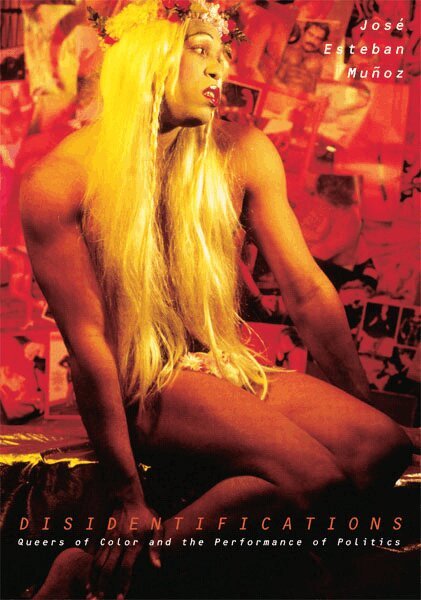
There is more to identity than identifying with one’s culture or standing solidly against it. JosÉ Esteban MuÑoz looks at how those outside the racial and sexual mainstream negotiate majority culture-not by aligning themselves with or against exclusionary works but rather by transforming these works for their own cultural purposes. MuÑoz calls this process “disidentification,” and through a study of its workings, he develops a new perspective on minority performance, survival, and activism.Disidentifications is also something of a performance in its own right, an attempt to fashion a queer world by working on, with, and against dominant ideology. By examining the process of identification in the work of filmmakers, performance artists, ethnographers, Cuban choteo, forms of gay male mass culture (such as pornography), museums, art photography, camp and drag, and television, MuÑoz persistently points to the intersecting and short-circuiting of identities and desires that result from misalignments with the cultural and ideological mainstream in contemporary urban America.MuÑoz calls attention to the world-making properties found in performances by queers of color-in Carmelita Tropicana’s “Camp/Choteo” style politics, Marga Gomez’s performances of queer childhood, Vaginal Creme Davis’s “Terrorist Drag,” Isaac Julien’s critical melancholia, Jean-Michel Basquiat’s disidentification with Andy Warhol and pop art, Felix Gonzalez-Torres’s performances of “disidentity,” and the political performance of Pedro Zamora, a person with AIDS, within the otherwise artificial environment of the MTV serialThe Real World.
557 kr
Skickas inom 3-6 vardagar
Andy Warhol was queer in more ways than one. A fabulous queen, a fan of prurience and pornography, a great admirer of the male body, he was well known as such to the gay audiences who enjoyed his films, the police who censored them, the gallery owners who refused to show his male nudes, and the artists who shied from his swishiness, not to mention all the characters who populated the Factory. Yet even though Warhol became the star of postmodernism, avant-garde, and pop culture, this collection of essays is the first to explore, analyze, appreciate, and celebrate the role of Warhol’s queerness in the making and reception of his film and art. Ranging widely in approach and discipline, Pop Out demonstrates that to ignore Warhol’s queerness is to miss what is most valuable, interesting, sexy, and political about his life and work.Written from the perspectives of art history, critical race theory, psychoanalysis, feminist theory, cinema studies, and social and literary theory, these essays consider Warhol in various contexts and within the history of the communities in which he figured. The homoerotic subjects, gay audiences, and queer contexts that fuel a certain fascination with Warhol are discussed, as well as Batman, Basquiat, and Valerie Solanas. Taken together, the essays in this collection depict Warhol’s career as a practical social reflection on a wide range of institutions and discourses, including those, from the art world to mass culture, that have almost succeeded in sanitizing his work and his image. Contributors. Jennifer Doyle, Jonathan Flatley, Marcie Frank, David E. James, Mandy Merck, Michael Moon, JosÉ Esteban MuÑoz, Eve Kosofsky Sedgwick, Brian Selsky, Sasha Torres, Simon Watney, Thomas Waugh
624 kr
Skickas inom 3-6 vardagar
The function of dance in Latin/o American culture is the focus of the essays collected in Everynight Life. The contributors interpret how Latin/o culture expresses itself through dance, approaching the material from the varying perspectives of literary, cultural, dance, performance, queer, and feminist studies. Viewing dance as privileged sites of identity formation and cultural resistance in Latin/o America, Everynight Life translates the motion of bodies into speech, and the gestures of dance into a provocative socio-political grammar. This anthology looks at many modes of dance-including salsa, merengue, cumbia, rumba, mambo, tango, samba, and norteÑo-as models for the interplay of cultural memory and regional conflict. Barbara Browning’s essay on capoeira, for instance, demonstrates how dance has been used as a literal form of resistance, while JosÉ Piedra explores the meanings conveyed by women of color dancing the rumba. Pieces such as Gustavo Perez FÍrmat’s "I Came, I Saw, I Conga’d" and Jorge Salessi’s "Medics, Crooks, and Tango Queens" illustrate the lively scope of this volume’s subject matter. Contributors. Barbara Browning, Celeste Fraser Delgado, Jane C. Desmond, Mayra Santos Febres, Juan Carlos Quintero Herencia, Josh Kun, Ana M. LÓpez, JosÉ Esteban MuÑoz, JosÉ Piedra, Gustavo Perez FÍrmat, Augusto C. Puleo, David RomÁn, Jorge Salessi, Alberto Sandoval
1 254 kr
Skickas inom 7-10 vardagar
The Sense of Brown is JosÉ Esteban MuÑoz's treatise on brownness and being as well as his most direct address to queer Latinx studies. In this book, which he was completing at the time of his death, MuÑoz examines the work of playwrights Ricardo Bracho and Nilo Cruz, artists Nao Bustamante, Isaac Julien, and Tania Bruguera, and singer JosÉ Feliciano, among others, arguing for a sense of brownness that is not fixed within the racial and national contours of Latinidad. This sense of brown is not about the individualized brown subject; rather, it demonstrates that for brown peoples, being exists within what MuÑoz calls the brown commons-a lifeworld, queer ecology, and form of collectivity. In analyzing minoritarian affect, ethnicity as a structure of feeling, and brown feelings as they emerge in, through, and beside art and performance, MuÑoz illustrates how the sense of brown serves as the basis for other ways of knowing and being in the world.
312 kr
Skickas inom 7-10 vardagar
The Sense of Brown is JosÉ Esteban MuÑoz's treatise on brownness and being as well as his most direct address to queer Latinx studies. In this book, which he was completing at the time of his death, MuÑoz examines the work of playwrights Ricardo Bracho and Nilo Cruz, artists Nao Bustamante, Isaac Julien, and Tania Bruguera, and singer JosÉ Feliciano, among others, arguing for a sense of brownness that is not fixed within the racial and national contours of Latinidad. This sense of brown is not about the individualized brown subject; rather, it demonstrates that for brown peoples, being exists within what MuÑoz calls the brown commons-a lifeworld, queer ecology, and form of collectivity. In analyzing minoritarian affect, ethnicity as a structure of feeling, and brown feelings as they emerge in, through, and beside art and performance, MuÑoz illustrates how the sense of brown serves as the basis for other ways of knowing and being in the world.
Cruising Utopia, 10th Anniversary Edition
The Then and There of Queer Futurity
Inbunden, Engelska, 2019
959 kr
Skickas inom 10-15 vardagar
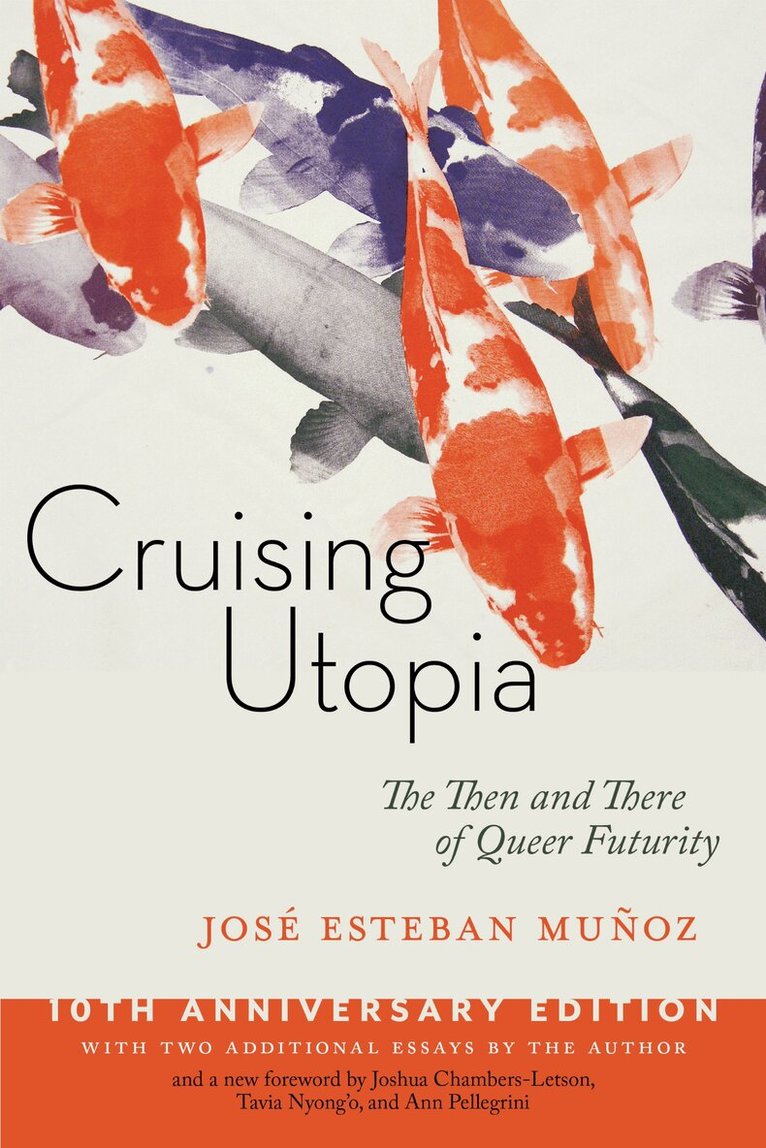
A 10th anniversary edition of this field defining work—an intellectual inspiration for a generation of LGBTQ scholars Cruising Utopia arrived in 2009 to insist that queerness must be reimagined as a futurity-bound phenomenon, an insistence on the potentiality of another world that would crack open the pragmatic present. Part manifesto, part love-letter to the past and the future, José Esteban Muñoz argued that the here and now were not enough and issued an urgent call for the revivification of the queer political imagination.On the anniversary of its original publication, this edition includes two essays that extend and expand the project of Cruising Utopia, as well as a new foreword by the current editors of Sexual Cultures, the book series he co-founded with Ann Pellegrini 20 years ago. This 10th anniversary edition celebrates the lasting impact that Cruising Utopia has had on the decade of queer of color critique that followed and introduces a new generation of readers to a future not yet here.
324 kr
Skickas inom 7-10 vardagar
A 10th anniversary edition of this field defining work—an intellectual inspiration for a generation of LGBTQ scholars Cruising Utopia arrived in 2009 to insist that queerness must be reimagined as a futurity-bound phenomenon, an insistence on the potentiality of another world that would crack open the pragmatic present. Part manifesto, part love-letter to the past and the future, José Esteban Muñoz argued that the here and now were not enough and issued an urgent call for the revivification of the queer political imagination.On the anniversary of its original publication, this edition includes two essays that extend and expand the project of Cruising Utopia, as well as a new foreword by the current editors of Sexual Cultures, the book series he co-founded with Ann Pellegrini 20 years ago. This 10th anniversary edition celebrates the lasting impact that Cruising Utopia has had on the decade of queer of color critique that followed and introduces a new generation of readers to a future not yet here.