Joseph F. Pilat – författare
Visar alla böcker från författaren Joseph F. Pilat. Handla med fri frakt och snabb leverans.
9 produkter
9 produkter
The Future of the Nuclear Order
Arms Control, Nonproliferation, and the Russian Invasion of Ukraine
Inbunden, Engelska, 2026
1 426 kr
Kommande
For the past fifty years, international efforts to restrict nuclear weapons have relied on formal treaties, primarily bilateral US-Soviet and US-Russian arms-control and nuclear nonproliferation agreements. These treaties delivered major achievements during the late Cold War and after the collapse of the Soviet Union. In recent years, however, nonproliferation efforts have faced a host of setbacks, including North Korea’s and Iran’s nuclear ambitions. Now, Russia’s invasion of Ukraine threatens to topple the international nuclear order.The Future of the Nuclear Order explores the difficulties facing nuclear nonproliferation and arms-control efforts today, from the immediate consequences of Russia’s actions to deeper tensions that have been growing in significance. Joseph F. Pilat and Nathan E. Busch examine the history of international agreements to prevent the spread of nuclear weapons and to scale back the size of nuclear arsenals, placing old and new challenges in context. They analyze the short- and long-term effects of the Russian invasion on the nuclear order, arguing that although the prospects of formal arms-control and nonproliferation regimes have dimmed, a number of informal and nontraditional approaches remain possible, grounded in mutual interest. Timely and rigorous, this book identifies potential concrete steps that the United States and the international community can take to maintain limited progress on arms control despite significant obstacles.
The Future of the Nuclear Order
Arms Control, Nonproliferation, and the Russian Invasion of Ukraine
Häftad, Engelska, 2026
371 kr
Kommande
For the past fifty years, international efforts to restrict nuclear weapons have relied on formal treaties, primarily bilateral US-Soviet and US-Russian arms-control and nuclear nonproliferation agreements. These treaties delivered major achievements during the late Cold War and after the collapse of the Soviet Union. In recent years, however, nonproliferation efforts have faced a host of setbacks, including North Korea’s and Iran’s nuclear ambitions. Now, Russia’s invasion of Ukraine threatens to topple the international nuclear order.The Future of the Nuclear Order explores the difficulties facing nuclear nonproliferation and arms-control efforts today, from the immediate consequences of Russia’s actions to deeper tensions that have been growing in significance. Joseph F. Pilat and Nathan E. Busch examine the history of international agreements to prevent the spread of nuclear weapons and to scale back the size of nuclear arsenals, placing old and new challenges in context. They analyze the short- and long-term effects of the Russian invasion on the nuclear order, arguing that although the prospects of formal arms-control and nonproliferation regimes have dimmed, a number of informal and nontraditional approaches remain possible, grounded in mutual interest. Timely and rigorous, this book identifies potential concrete steps that the United States and the international community can take to maintain limited progress on arms control despite significant obstacles.
1 071 kr
Skickas inom 10-15 vardagar
2 134 kr
Skickas inom 10-15 vardagar
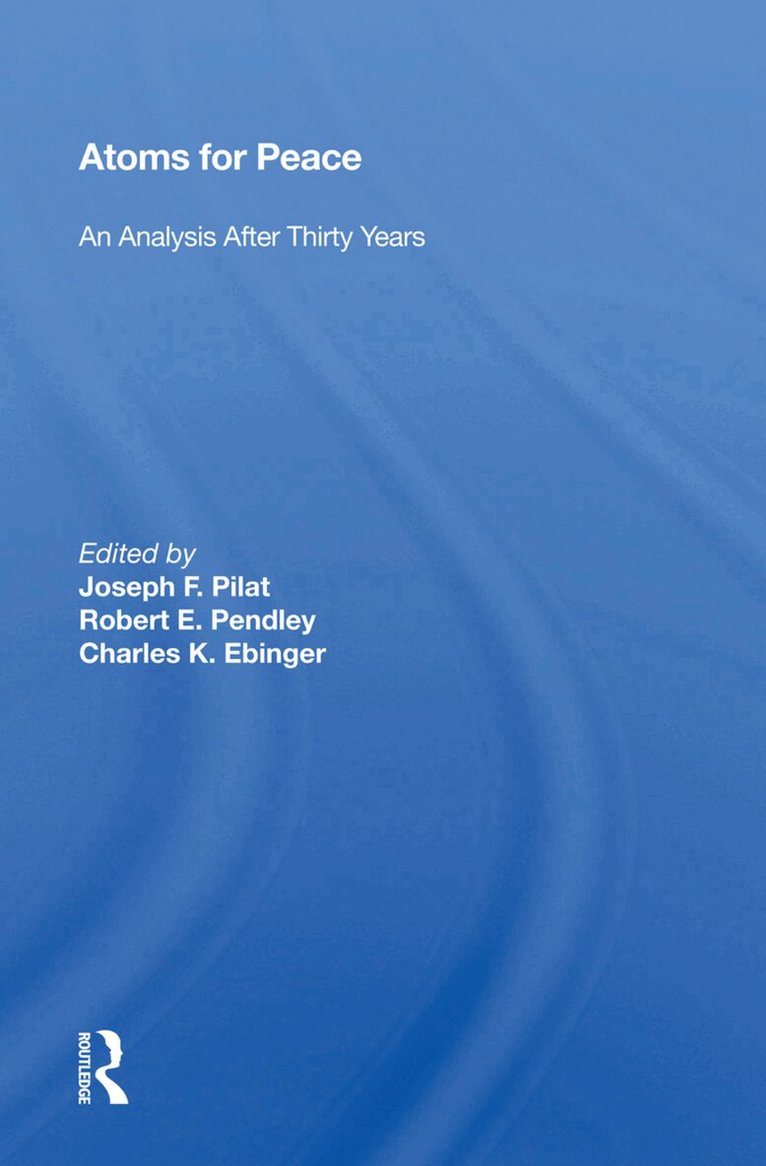
Thirty years ago, President Eisenhower's Atoms for Peace proposal to the United Nations provided the basis for development of nuclear cooperation, trade, and nonproliferation policy in the noncommunist world. Ever since its inception, however, the policy has sparked widespread debate, and it remains controversial today. Exploring the past, present, and future significance of Atoms for Peace, the contributors to this volume analyze the future role of the United States in international affairs, the nature of controls over nuclear cooperation and trade, the scope and limitations of international cooperation in nuclear energy and nonproliferation matters, and the prospects for multinational and international institutional measures to achieve these ends.
624 kr
Skickas inom 10-15 vardagar
This book analyzes the future role of the U.S. in international affairs, the nature of controls over nuclear cooperation and trade, and the scope and limitations of international cooperation in nuclear energy and nonproliferation matters.
International Atomic Energy Agency
Historical Reflections, Current Challenges and Future Prospects
Inbunden, Engelska, 2021
2 134 kr
Skickas inom 10-15 vardagar
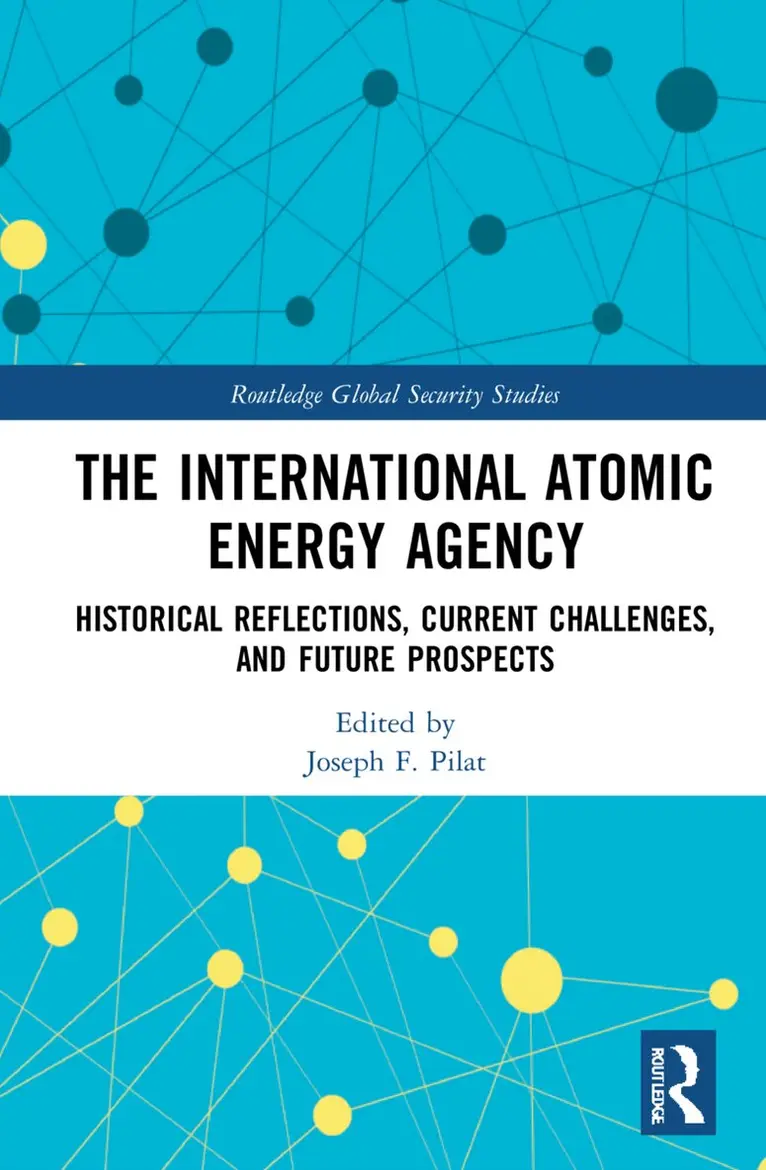
This volume offers a wide-ranging examination and discussion of the International Atomic Energy Agency’s (IAEA) past, present and future as it enters its seventh decade.Including contributions from leading experts across the globe, the book assesses the historical record of the IAEA; the issues and challenges it faces at present; and its future prospects. In doing so, it addresses the primary missions of the IAEA outlined in the IAEA’s statute, i.e., to safeguard and promote the peaceful uses of nuclear energy, as well as the missions over which it is expanding its mandate, including nuclear safety and security. The volume is divided into two parts: Part I focuses on historical recollections and reflections of participants in key events, ranging from a personal account of the initial negotiations of the IAEA to an account by its chairman on the dynamics of the Board of Governors in recent years. Part II covers current and future issues in the IAEA’s role in nuclear safeguards, the peaceful uses of nuclear energy, and nuclear safety and security. This book will be of much interest to students of nuclear proliferation and arms control, global governance and international security in general.
International Atomic Energy Agency
Historical Reflections, Current Challenges and Future Prospects
Häftad, Engelska, 2023
624 kr
Skickas inom 10-15 vardagar
This volume offers a wide-ranging examination and discussion of the International Atomic Energy Agency’s (IAEA) past, present and future as it enters its seventh decade.Including contributions from leading experts across the globe, the book assesses the historical record of the IAEA; the issues and challenges it faces at present; and its future prospects. In doing so, it addresses the primary missions of the IAEA outlined in the IAEA’s statute, i.e., to safeguard and promote the peaceful uses of nuclear energy, as well as the missions over which it is expanding its mandate, including nuclear safety and security. The volume is divided into two parts: Part I focuses on historical recollections and reflections of participants in key events, ranging from a personal account of the initial negotiations of the IAEA to an account by its chairman on the dynamics of the Board of Governors in recent years. Part II covers current and future issues in the IAEA’s role in nuclear safeguards, the peaceful uses of nuclear energy, and nuclear safety and security. This book will be of much interest to students of nuclear proliferation and arms control, global governance and international security in general.
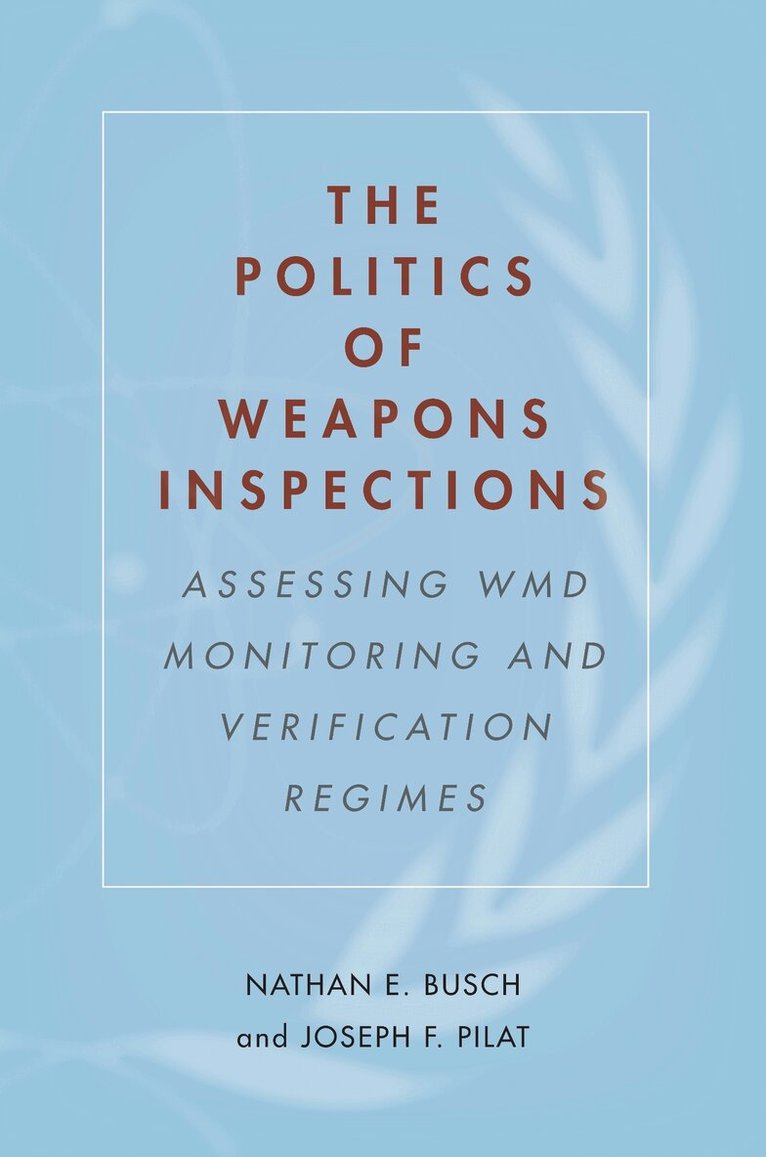
Politics of Weapons Inspections
Assessing WMD Monitoring and Verification Regimes
Inbunden, Engelska, 2017
1 498 kr
Skickas inom 5-8 vardagar
Given recent controversies over suspected WMD programs in proliferating countries, there is an increasingly urgent need for effective monitoring and verification regimes—the international mechanisms, including on-site inspections, intended in part to clarify the status of WMD programs in suspected proliferators. Yet the strengths and limitations of these nonproliferation and arms control mechanisms remain unclear. How should these regimes best be implemented? What are the technological, political, and other limitations to these tools? What technologies and other innovations should be utilized to make these regimes most effective? How should recent developments, such as the 2015 Iran nuclear deal or Syria's declared renunciation and actual use of its chemical weapons, influence their architecture?The Politics of Weapons Inspections examines the successes, failures, and lessons that can be learned from WMD monitoring and verification regimes in order to help determine how best to maintain and strengthen these regimes in the future. In addition to examining these regimes' technological, political, and legal contexts, Nathan E. Busch and Joseph F. Pilat reevaluate the track record of monitoring and verification in the historical cases of South Africa, Libya, and Iraq; assess the prospects of using these mechanisms in verifying arms control and disarmament; and apply the lessons learned from these cases to contemporary controversies over suspected or confirmed programs in North Korea, Iran, and Syria. Finally, they provide a forward-looking set of policy recommendations for the future.
Politics of Weapons Inspections
Assessing WMD Monitoring and Verification Regimes
Häftad, Engelska, 2017
267 kr
Skickas
Given recent controversies over suspected WMD programs in proliferating countries, there is an increasingly urgent need for effective monitoring and verification regimes—the international mechanisms, including on-site inspections, intended in part to clarify the status of WMD programs in suspected proliferators. Yet the strengths and limitations of these nonproliferation and arms control mechanisms remain unclear. How should these regimes best be implemented? What are the technological, political, and other limitations to these tools? What technologies and other innovations should be utilized to make these regimes most effective? How should recent developments, such as the 2015 Iran nuclear deal or Syria's declared renunciation and actual use of its chemical weapons, influence their architecture?The Politics of Weapons Inspections examines the successes, failures, and lessons that can be learned from WMD monitoring and verification regimes in order to help determine how best to maintain and strengthen these regimes in the future. In addition to examining these regimes' technological, political, and legal contexts, Nathan E. Busch and Joseph F. Pilat reevaluate the track record of monitoring and verification in the historical cases of South Africa, Libya, and Iraq; assess the prospects of using these mechanisms in verifying arms control and disarmament; and apply the lessons learned from these cases to contemporary controversies over suspected or confirmed programs in North Korea, Iran, and Syria. Finally, they provide a forward-looking set of policy recommendations for the future.