Nathan E. Busch – författare
Visar alla böcker från författaren Nathan E. Busch. Handla med fri frakt och snabb leverans.
8 produkter
8 produkter
1 255 kr
Skickas inom 5-8 vardagar
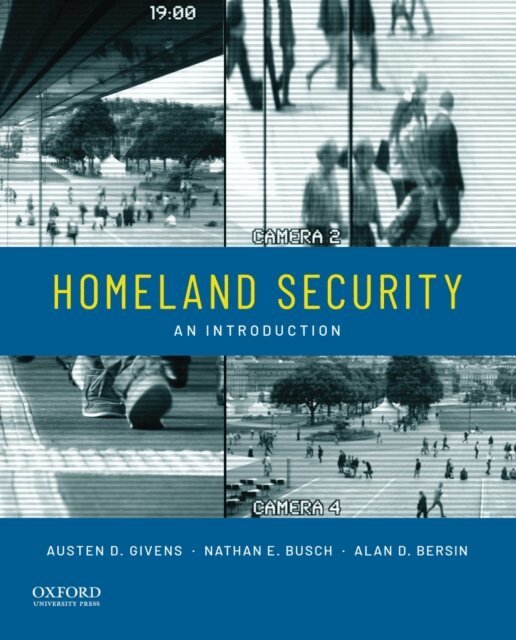
This textbook--written by experts in the field--delivers a comprehensive, systematic introduction to homeland security Throughout the course of the book, particular emphasis will be placed on three paradigm shifts in homeland security: the new role of so-called "big data" analytics for risk assessment in homeland security decision-making; emerging understandings of the "homeland security enterprise," a term used by practitioners to describe whole-of-government efforts to manage natural and man-made threats; and the growing recognition of how international affairs can influence and shape domestic security considerations.
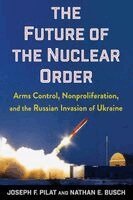
The Future of the Nuclear Order
Arms Control, Nonproliferation, and the Russian Invasion of Ukraine
Inbunden, Engelska, 2026
1 426 kr
Kommande
For the past fifty years, international efforts to restrict nuclear weapons have relied on formal treaties, primarily bilateral US-Soviet and US-Russian arms-control and nuclear nonproliferation agreements. These treaties delivered major achievements during the late Cold War and after the collapse of the Soviet Union. In recent years, however, nonproliferation efforts have faced a host of setbacks, including North Korea’s and Iran’s nuclear ambitions. Now, Russia’s invasion of Ukraine threatens to topple the international nuclear order.The Future of the Nuclear Order explores the difficulties facing nuclear nonproliferation and arms-control efforts today, from the immediate consequences of Russia’s actions to deeper tensions that have been growing in significance. Joseph F. Pilat and Nathan E. Busch examine the history of international agreements to prevent the spread of nuclear weapons and to scale back the size of nuclear arsenals, placing old and new challenges in context. They analyze the short- and long-term effects of the Russian invasion on the nuclear order, arguing that although the prospects of formal arms-control and nonproliferation regimes have dimmed, a number of informal and nontraditional approaches remain possible, grounded in mutual interest. Timely and rigorous, this book identifies potential concrete steps that the United States and the international community can take to maintain limited progress on arms control despite significant obstacles.
The Future of the Nuclear Order
Arms Control, Nonproliferation, and the Russian Invasion of Ukraine
Häftad, Engelska, 2026
371 kr
Kommande
For the past fifty years, international efforts to restrict nuclear weapons have relied on formal treaties, primarily bilateral US-Soviet and US-Russian arms-control and nuclear nonproliferation agreements. These treaties delivered major achievements during the late Cold War and after the collapse of the Soviet Union. In recent years, however, nonproliferation efforts have faced a host of setbacks, including North Korea’s and Iran’s nuclear ambitions. Now, Russia’s invasion of Ukraine threatens to topple the international nuclear order.The Future of the Nuclear Order explores the difficulties facing nuclear nonproliferation and arms-control efforts today, from the immediate consequences of Russia’s actions to deeper tensions that have been growing in significance. Joseph F. Pilat and Nathan E. Busch examine the history of international agreements to prevent the spread of nuclear weapons and to scale back the size of nuclear arsenals, placing old and new challenges in context. They analyze the short- and long-term effects of the Russian invasion on the nuclear order, arguing that although the prospects of formal arms-control and nonproliferation regimes have dimmed, a number of informal and nontraditional approaches remain possible, grounded in mutual interest. Timely and rigorous, this book identifies potential concrete steps that the United States and the international community can take to maintain limited progress on arms control despite significant obstacles.
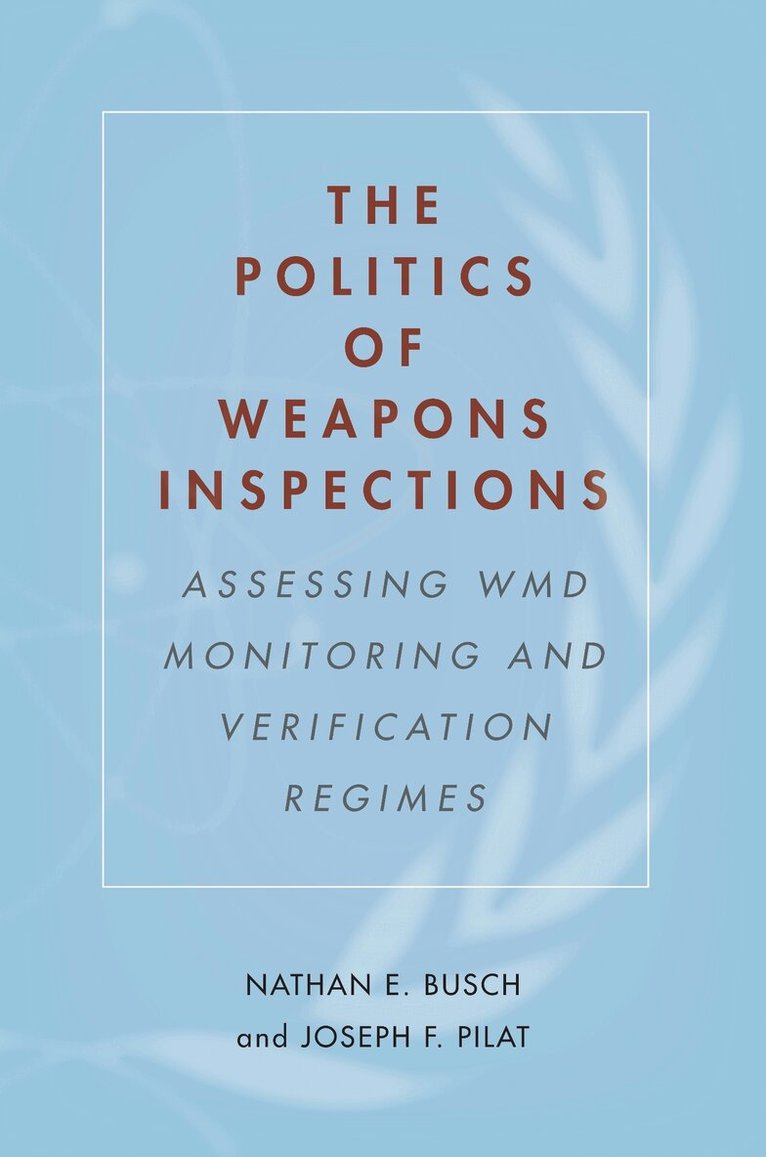
Politics of Weapons Inspections
Assessing WMD Monitoring and Verification Regimes
Inbunden, Engelska, 2017
1 498 kr
Skickas inom 5-8 vardagar
Given recent controversies over suspected WMD programs in proliferating countries, there is an increasingly urgent need for effective monitoring and verification regimes—the international mechanisms, including on-site inspections, intended in part to clarify the status of WMD programs in suspected proliferators. Yet the strengths and limitations of these nonproliferation and arms control mechanisms remain unclear. How should these regimes best be implemented? What are the technological, political, and other limitations to these tools? What technologies and other innovations should be utilized to make these regimes most effective? How should recent developments, such as the 2015 Iran nuclear deal or Syria's declared renunciation and actual use of its chemical weapons, influence their architecture?The Politics of Weapons Inspections examines the successes, failures, and lessons that can be learned from WMD monitoring and verification regimes in order to help determine how best to maintain and strengthen these regimes in the future. In addition to examining these regimes' technological, political, and legal contexts, Nathan E. Busch and Joseph F. Pilat reevaluate the track record of monitoring and verification in the historical cases of South Africa, Libya, and Iraq; assess the prospects of using these mechanisms in verifying arms control and disarmament; and apply the lessons learned from these cases to contemporary controversies over suspected or confirmed programs in North Korea, Iran, and Syria. Finally, they provide a forward-looking set of policy recommendations for the future.
Combating Weapons of Mass Destruction
The Future of International Nonproliferation Policy
Inbunden, Engelska, 2009
1 231 kr
Skickas inom 5-8 vardagar
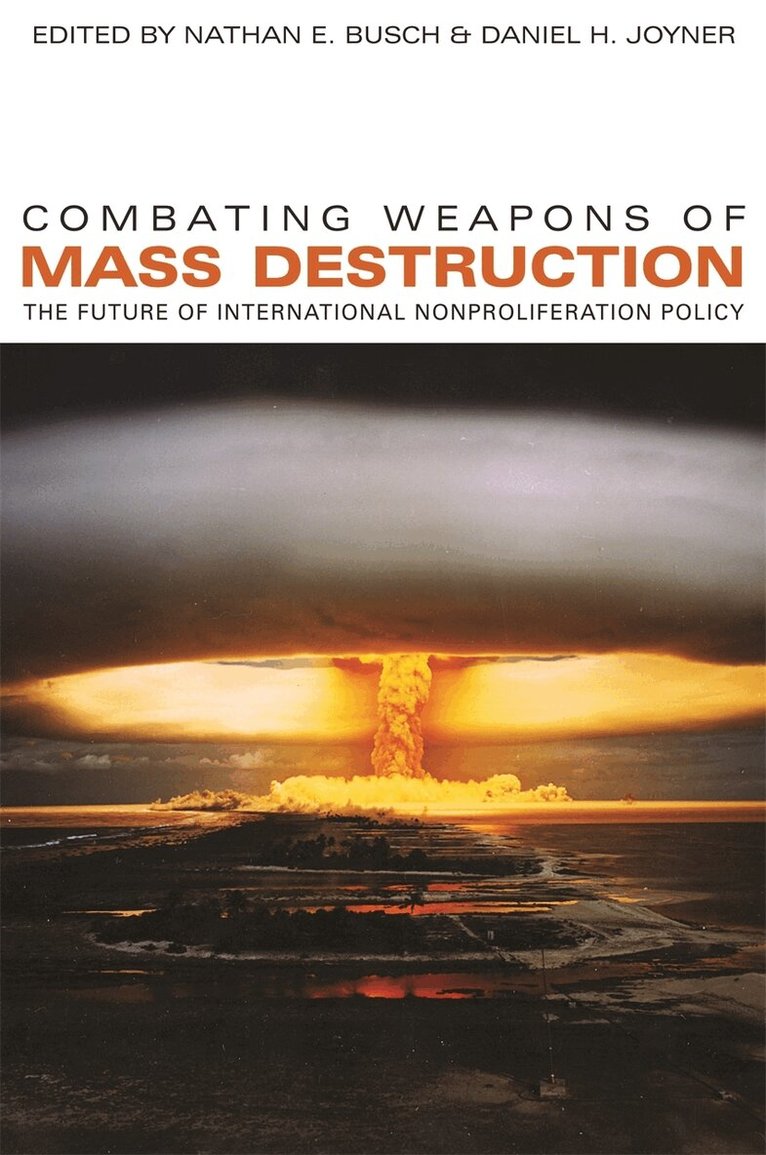
The spread of weapons of mass destruction poses one of the greatest threats to international peace and security in modern times—the specter of nuclear, chemical, and biological weapons looms over relations among many countries. The September 11 tragedy and other terrorist attacks have been painful warnings about gaps in nonproliferation policies and regimes, specifically with regard to nonstate actors.In this volume, experts in nonproliferation studies examine challenges faced by the international community and propose directions for national and international policy making and lawmaking. The first group of essays outlines the primary threats posed by WMD proliferation and terrorism. Essays in the second section analyze existing treaties and other normative regimes, including the Nuclear Non-Proliferation Treaty and the Chemical Weapons and Biological Weapons Conventions, and recommend ways to address the challenges to their effectiveness. Essays in part three examine the shift some states have made away from nonproliferation treaties and regimes toward more forceful and proactive policies of counterproliferation, such as the Proliferation Security Initiative, which coordinates efforts to search and seize suspect shipments of WMD-related materials.
Combating Weapons of Mass Destruction
The Future of International Nonproliferation Policy
Häftad, Engelska, 2009
500 kr
Skickas inom 5-8 vardagar
The spread of weapons of mass destruction poses one of the greatest threats to international peace and security in modern times—the specter of nuclear, chemical, and biological weapons looms over relations among many countries. The September 11 tragedy and other terrorist attacks have been painful warnings about gaps in nonproliferation policies and regimes, specifically with regard to nonstate actors.In this volume, experts in nonproliferation studies examine challenges faced by the international community and propose directions for national and international policy making and lawmaking. The first group of essays outlines the primary threats posed by WMD proliferation and terrorism. Essays in the second section analyze existing treaties and other normative regimes, including the Nuclear Non-Proliferation Treaty and the Chemical Weapons and Biological Weapons Conventions, and recommend ways to address the challenges to their effectiveness. Essays in part three examine the shift some states have made away from nonproliferation treaties and regimes toward more forceful and proactive policies of counterproliferation, such as the Proliferation Security Initiative, which coordinates efforts to search and seize suspect shipments of WMD-related materials.
Del 4 - Terrorism Studies
Business of Counterterrorism
Public-Private Partnerships in Homeland Security
Häftad, Engelska, 2014
260 kr
Tillfälligt slut
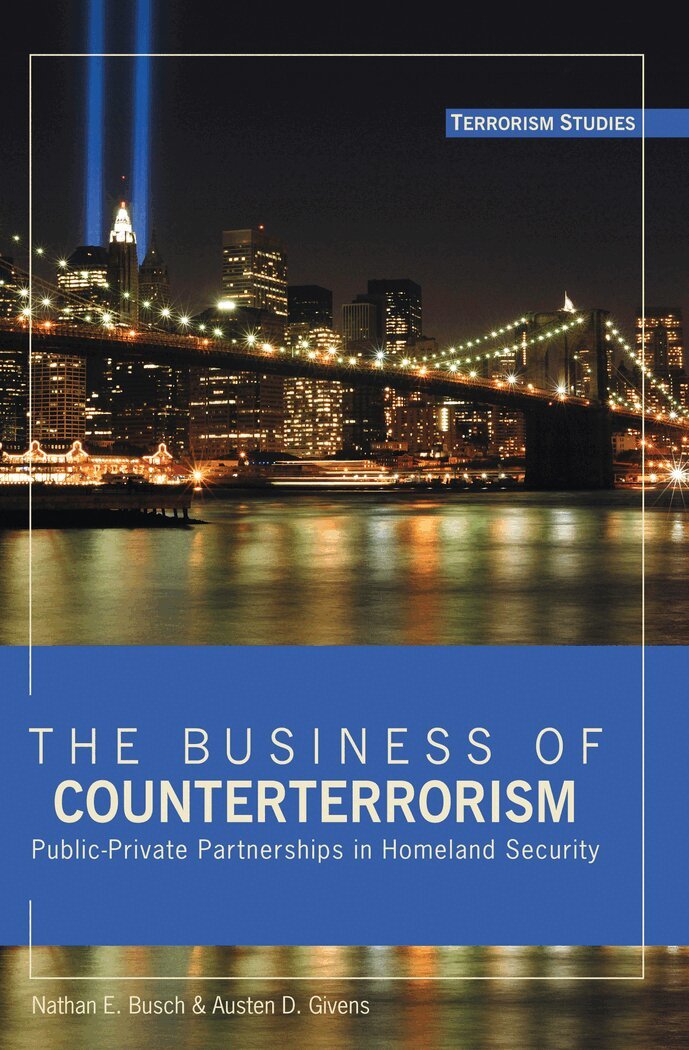
The Business of Counterterrorism focuses on the opportunities and challenges that public-private partnerships (PPPs) face in the post-9/11 world. Although these partnerships are a major topic of discussion and study among businesses and government agencies involved in homeland security efforts, they have received a much less thorough analysis by scholars. The Business of Counterterrorism identifies the essential role that PPPs are now taking in homeland security and explores the implications of this transformative shift in the field. In its discussion, it focuses on five areas in homeland security – critical infrastructure protection, cybersecurity, information sharing, security at U.S. ports of entry, and disaster recovery.
Politics of Weapons Inspections
Assessing WMD Monitoring and Verification Regimes
Häftad, Engelska, 2017
267 kr
Skickas
Given recent controversies over suspected WMD programs in proliferating countries, there is an increasingly urgent need for effective monitoring and verification regimes—the international mechanisms, including on-site inspections, intended in part to clarify the status of WMD programs in suspected proliferators. Yet the strengths and limitations of these nonproliferation and arms control mechanisms remain unclear. How should these regimes best be implemented? What are the technological, political, and other limitations to these tools? What technologies and other innovations should be utilized to make these regimes most effective? How should recent developments, such as the 2015 Iran nuclear deal or Syria's declared renunciation and actual use of its chemical weapons, influence their architecture?The Politics of Weapons Inspections examines the successes, failures, and lessons that can be learned from WMD monitoring and verification regimes in order to help determine how best to maintain and strengthen these regimes in the future. In addition to examining these regimes' technological, political, and legal contexts, Nathan E. Busch and Joseph F. Pilat reevaluate the track record of monitoring and verification in the historical cases of South Africa, Libya, and Iraq; assess the prospects of using these mechanisms in verifying arms control and disarmament; and apply the lessons learned from these cases to contemporary controversies over suspected or confirmed programs in North Korea, Iran, and Syria. Finally, they provide a forward-looking set of policy recommendations for the future.