Joseph Shatzmiller - Böcker
Visar alla böcker från författaren Joseph Shatzmiller. Handla med fri frakt och snabb leverans.
9 produkter
9 produkter
1 031 kr
Skickas inom 3-6 vardagar
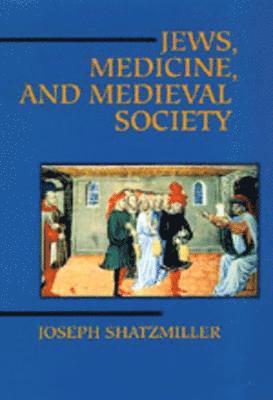
Jews were excluded from most professions in medieval, predominantly Christian Europe. Bigotry was widespread, yet Jews were accepted as doctors and surgeons, administering not only to other Jews but to Christians as well. Why did medieval Christians suspend their fear and suspicion of the Jews, allowing them to inspect their bodies, and even, at times, to determine their survival? What was the nature of the doctor-patient relationship? And did the law protect Jewish doctors in disputes over care and treatment? Joseph Shatzmiller explores these and other intriguing questions in the first full social history of the medieval Jewish doctor. Based on extensive archival research in Provence, Spain, and Italy, and a deep reading of the widely scattered literature, Shatzmiller examines the social and economic forces that allowed Jewish medical professionals to survive and thrive in thirteenth- and fourteenth-century Europe. His insights will prove fascinating to scholars and students of Judaica, medieval history, and the history of medicine.
480 kr
Skickas inom 7-10 vardagar
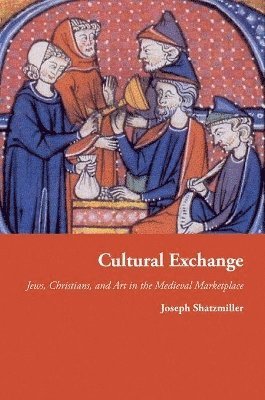
Demonstrating that similarities between Jewish and Christian art in the Middle Ages were more than coincidental, Cultural Exchange meticulously combines a wide range of sources to show how Jews and Christians exchanged artistic and material culture. Joseph Shatzmiller focuses on communities in northern Europe, Iberia, and other Mediterranean societies where Jews and Christians coexisted for centuries, and he synthesizes the most current research to describe the daily encounters that enabled both societies to appreciate common artistic values. Detailing the transmission of cultural sensibilities in the medieval money market and the world of Jewish money lenders, this book examines objects pawned by peasants and humble citizens, sacred relics exchanged by the clergy as security for loans, and aesthetic goods given up by the Christian well-to-do who required financial assistance. The work also explores frescoes and decorations likely painted by non-Jews in medieval and early modern Jewish homes located in Germanic lands, and the ways in which Jews hired Christian artists and craftsmen to decorate Hebrew prayer books and create liturgical objects.Conversely, Christians frequently hired Jewish craftsmen to produce liturgical objects used in Christian churches. With rich archival documentation, Cultural Exchange sheds light on the social and economic history of the creation of Jewish and Christian art, and expands the general understanding of cultural exchange in brand-new ways.
210 kr
Skickas inom 7-10 vardagar
Demonstrating that similarities between Jewish and Christian art in the Middle Ages were more than coincidental, Cultural Exchange meticulously combines a wide range of sources to show how Jews and Christians exchanged artistic and material culture. Joseph Shatzmiller focuses on communities in northern Europe, Iberia, and other Mediterranean societies where Jews and Christians coexisted for centuries, and he synthesizes the most current research to describe the daily encounters that enabled both societies to appreciate common artistic values. Detailing the transmission of cultural sensibilities in the medieval money market and the world of Jewish money lenders, this book examines objects pawned by peasants and humble citizens, sacred relics exchanged by the clergy as security for loans, and aesthetic goods given up by the Christian well-to-do who required financial assistance. The work also explores frescoes and decorations likely painted by non-Jews in medieval and early modern Jewish homes located in Germanic lands, and the ways in which Jews hired Christian artists and craftsmen to decorate Hebrew prayer books and create liturgical objects.Conversely, Christians frequently hired Jewish craftsmen to produce liturgical objects used in Christian churches. With rich archival documentation, Cultural Exchange sheds light on the social and economic history of the creation of Jewish and Christian art, and expands the general understanding of cultural exchange in brand-new ways.
Transmitting a Text Through Three Languages
The Future History of Galen's Peri Anomalou Dyskrasias, Transactions, American Philosophical Society (Vol. 104, Part 5)
Häftad, Engelska, 2014
489 kr
Skickas inom 10-15 vardagar
2 325 kr
Skickas inom 5-8 vardagar
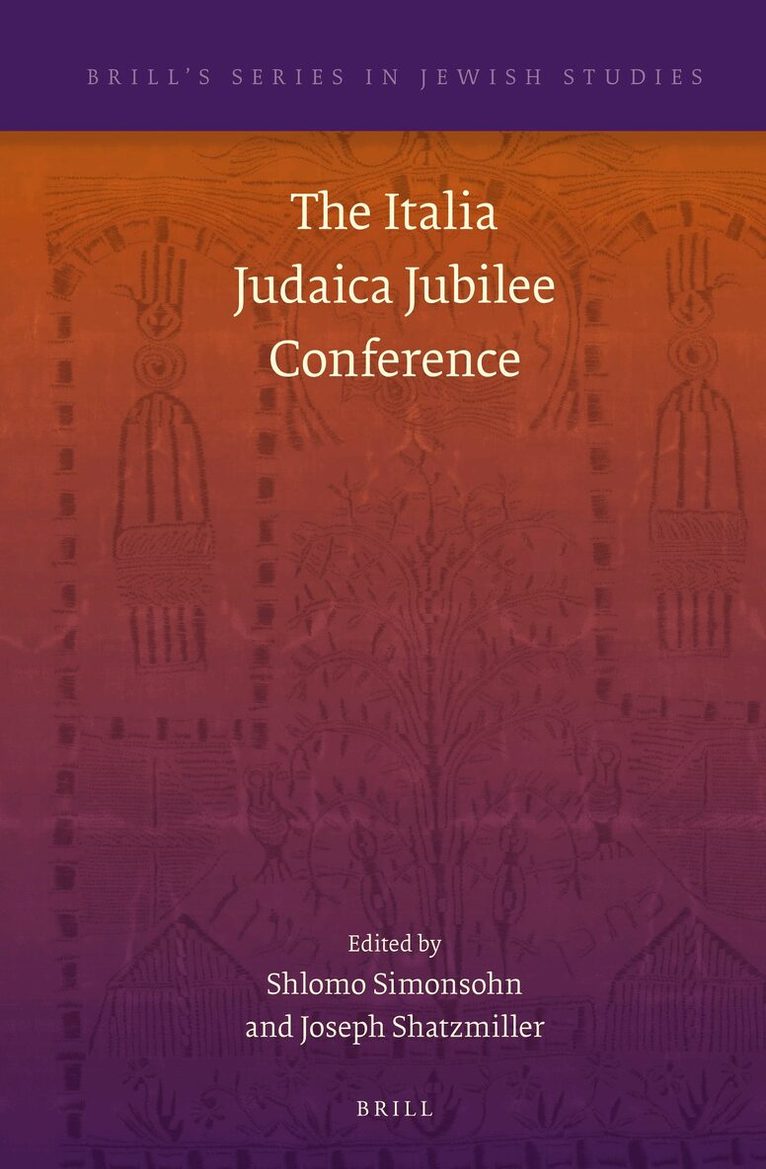
This volume contains the proceedings of the Italia Judaica Jubilee Conference, held at Tel Aviv University 3-5 January, 2010, on the occasion of the jubilee celebration of outstanding scholarship on the history of Italian Jewry. Established in 1960 by Professor Shlomo Simonsohn and scholars from Israel and other countries, the Italia Judaica Project has sponsored documentation and research and organized international conferences, including some as part of the Israeli-Italian cultural agreement. The conference records the success of the project, exploring a broad range of topics related to the culture and history of the Jews in Italy in the Middle Ages and early modern times, such as: Jewish community, economy, literature, medicine and science, and the Arts. This volume contains nineteen of the twenty-seven lectures presented at the conference, including such topics as “International Trade and Italian Jews at the Turn of the Middle Ages,” “The Angevins of Naples and the Jews,” and “Dante and the Literary Identity of Jews in Italy.” The conference was organized by the Goldstein-Goren Diaspora Research Centre at Tel Aviv University, in cooperation with the Fred W. Lessing Institute for European History and Civilization, the Cymbalista Jewish Heritage Centre, the Faculty of Jewish Studies and the Golda and Israel Koschitzky Department of Jewish History at Bar-Ilan University, and the Istituto Italiano di Cultura.
665 kr
Skickas inom 5-8 vardagar
In Collected Studies (Volume 1): The Jews of Provence, Joseph Shatzmiller, the foremost expert on Provençal Judaism, offers a comprehensive overview of the medieval history of the Jews in Provence. Through an analysis of community regulations, tax distribution, rabbinic leadership, and everyday life, Shatzmiller provides a rich and powerful mosaic of Jewish society in Provence. This masterful work sheds light on the diverse experiences of Jews in the region, from their interactions with Christian neighbors to their internal conflicts and struggles. With its insightful analysis and meticulous research, The Jews of Provence is an essential read for anyone interested in the history of Jewish communities in medieval Europe.“The collection of studies that these four volumes offer is the result of more than sixty years of commitment to scholarship. Like many colleagues, I relied in the beginning on printed material in books that dealt with law, religion, and secular literature. Then, as a disciple of George Duby, I discovered the world of archives and hand-written Latin manuscripts. The present collection relies, to a great extent, on previously unknown information discovered during years of search in the archives of Southern France, mostly on those of the county of Provence. They are situated in the cities of Marseille and Aix-en-Provence as well as the town of Digne. The legal registers of the High Middle Ages (1250-1350) as well as those produced by the counties’ administration introduce us to the ordinary people of the region, to their daily life and to their preoccupations; their names are spelled out, the dates are recorded and the localities in which they were active are designated. At times these documents encourage us to endorse information found in contemporary literary sources and to overcome our hesitation and excessive caution concerning their value as historical evidence.”— Joseph Shatzmiller
688 kr
Skickas inom 5-8 vardagar
In Collected Studies (Volume 2): Christian Majority—Jewish Minority, Joseph Shatzmiller, the preeminent scholar of the Jews in Provence, examines the complex relationship between Christians and Jews during the Middle Ages. Through a careful analysis of historical documents and primary sources, Shatzmiller sheds light on the diverse experiences of the Jewish minority in Provence, from their legal status in Christian courts to the persecution and violence they faced during times of crisis. This book provides a nuanced understanding of the relationship between Christians and Jews in medieval Western Europe, and the role of the Jewish community in shaping the social and political landscape of the region.“The collection of studies that these four volumes offer is the result of more than sixty years of commitment to scholarship. Like many colleagues, I relied in the beginning on printed material in books that dealt with law, religion, and secular literature. Then, as a disciple of George Duby, I discovered the world of archives and hand-written Latin manuscripts. The present collection relies, to a great extent, on previously unknown information discovered during years of search in the archives of Southern France, mostly on those of the county of Provence. They are situated in the cities of Marseille and Aix-en-Provence as well as the town of Digne. The legal registers of the High Middle Ages (1250-1350) as well as those produced by the counties’ administration introduce us to the ordinary people of the region, to their daily life and to their preoccupations; their names are spelled out, the dates are recorded and the localities in which they were active are designated. At times these documents encourage us to endorse information found in contemporary literary sources and to overcome our hesitation and excessive caution concerning their value as historical evidence.”— Joseph Shatzmiller
688 kr
Skickas inom 5-8 vardagar
Joseph Shatzmiller’s Collected Studies (Volume 3): Maimonidean Argument in France is a comprehensive compilation of his research on the intellectual and mental history of the Jews in Provence. The central focus of the book is the ongoing conflict between adherents of Maimonidean philosophy and its opponents, which persisted throughout the thirteenth century due to the movement of translations from Arabic to Hebrew. Additionally, the book delves into other important aspects of Provence Jewry, including their attitudes towards the Albigensian heresy and the intellectual contributions of figures such as Kalonymus ben Kalonymus, Jacob ben Eliyahu, and the renowned biblical commentator, astronomer, and philosopher Gersonides. Shatzmiller’s research illuminates the significance of Provence Jewry within the larger framework of Jewish communities in the Mediterranean and western Europe during the Middle Ages.“The collection of studies that these four volumes offer is the result of more than sixty years of commitment to scholarship. Like many colleagues, I relied in the beginning on printed material in books that dealt with law, religion, and secular literature. Then, as a disciple of George Duby, I discovered the world of archives and hand-written Latin manuscripts. The present collection relies, to a great extent, on previously unknown information discovered during years of search in the archives of Southern France, mostly on those of the county of Provence. They are situated in the cities of Marseille and Aix-en-Provence as well as the town of Digne. The legal registers of the High Middle Ages (1250-1350) as well as those produced by the counties’ administration introduce us to the ordinary people of the region, to their daily life and to their preoccupations; their names are spelled out, the dates are recorded and the localities in which they were active are designated. At times these documents encourage us to endorse information found in contemporary literary sources and to overcome our hesitation and excessive caution concerning their value as historical evidence.”— Joseph Shatzmiller
775 kr
Skickas
In Collected Studies (Volume 4): Jews in the Medical Profession, Joseph Shatzmiller, the prominent scholar of Provence Jewry, presents a fascinating glimpse into the world of Jewish doctors and medicine in medieval Western Europe. Drawing on a wealth of archival sources and intellectual history, Shatzmiller delves into the lives and experiences of Jewish physicians who played a crucial role in the medical profession during the Middle Ages. From their scientific collaborations with Christian colleagues to their role as leaders within the Jewish community, this book provides a rich portrait of the complex and dynamic world of medieval medicine. The book covers topics such as the Jewish students in the Faculty of Medicine at the University of Montpellier, Jewish women in medicine, doctors’ salaries, pharmacology, and medical books. With its insightful analysis and meticulous research, Jews in the Medical Profession is a valuable contribution to the history of medicine and Jewish studies.“The collection of studies that these four volumes offer is the result of more than sixty years of commitment to scholarship. Like many colleagues, I relied in the beginning on printed material in books that dealt with law, religion, and secular literature. Then, as a disciple of George Duby, I discovered the world of archives and hand-written Latin manuscripts. The present collection relies, to a great extent, on previously unknown information discovered during years of search in the archives of Southern France, mostly on those of the county of Provence. They are situated in the cities of Marseille and Aix-en-Provence as well as the town of Digne. The legal registers of the High Middle Ages (1250-1350) as well as those produced by the counties’ administration introduce us to the ordinary people of the region, to their daily life and to their preoccupations; their names are spelled out, the dates are recorded and the localities in which they were active are designated. At times these documents encourage us to endorse information found in contemporary literary sources and to overcome our hesitation and excessive caution concerning their value as historical evidence.”— Joseph Shatzmiller