Joseph V. Simone – författare
Visar alla böcker från författaren Joseph V. Simone. Handla med fri frakt och snabb leverans.
14 produkter
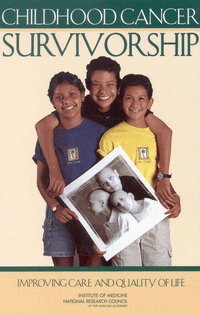
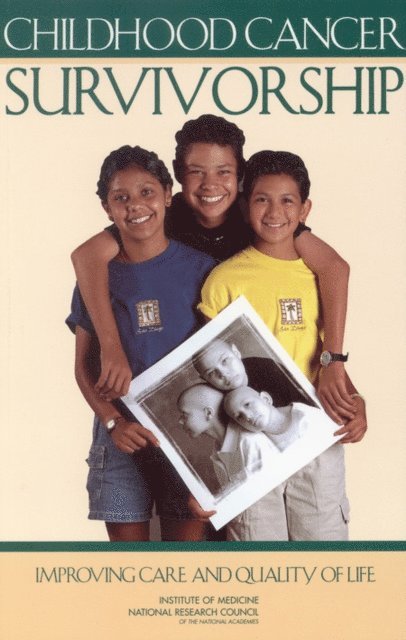
Childhood Cancer Survivorship
Improving Care and Quality of Life
Av National Research Council, Institute of Medicine m. fl.
Häftad, 2003
674 kr
Lägg i varukorg
Only more recently has it been realized that the intense effort to care for and cure a child with cancer does not end with survival. Continued surveillance and a variety of interventions may, in many cases, be needed to identify and care for consequences of treatment that can appear early or only …
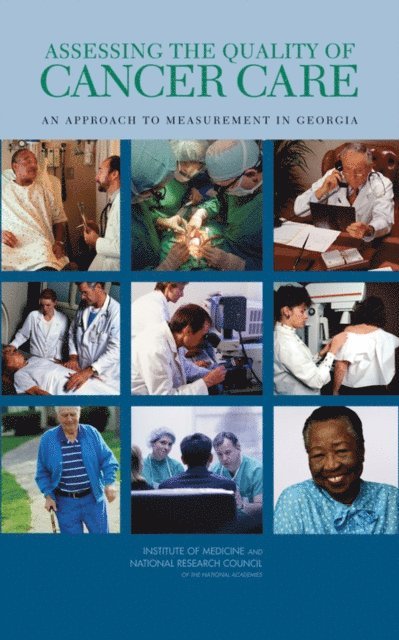
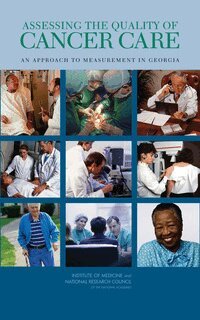
Assessing the Quality of Cancer Care
An Approach to Measurement in Georgia
Av Committee on Assessing Improvements in Cancer Care in Georgia, National Cancer Policy Board m. fl.
E-bok, 2005
981 kr
Lägg i varukorg
Shortly after 1998, leading members of Georgia''s government, medical community, and public-spirited citizenry began considering ways in which some of Georgia''s almost $5 billion, 25-year settlement from the tobacco industry''s Master Settlement Agreement with the 50 states could be used to …
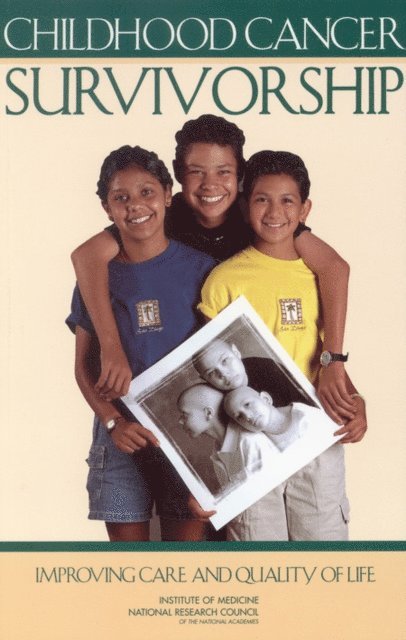
Childhood Cancer Survivorship
Improving Care and Quality of Life
Av National Cancer Policy Board, Institute of Medicine m. fl.
E-bok, 2003
628 kr
Lägg i varukorg
Only more recently has it been realized that the intense effort to care for and cure a child with cancer does not end with survival. Continued surveillance and a variety of interventions may, in many cases, be needed to identify and care for consequences of treatment that can appear early or only …
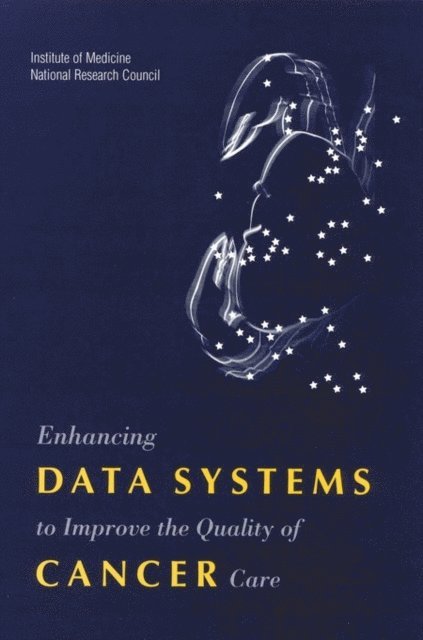
Enhancing Data Systems to Improve the Quality of Cancer Care
Av National Cancer Policy Board, Institute of Medicine m. fl.
E-bok, 2000
856 kr
Lägg i varukorg
One of the barriers to improving the quality of cancer care in the United States is the inadequacy of data systems. Out-of-date or incomplete information about the performance of doctors, hospitals, health plans, and public agencies makes it hard to gauge the quality of care. Augmenting today''s …
Ensuring Quality Cancer Care
Av National Cancer Policy Board, Institute of Medicine m. fl.
E-bok, 1999
749 kr
Lägg i varukorg
We all want to believe that when people get cancer, they will receive medical care of the highest quality. Even as new scientific breakthroughs are announced, though, many cancer patients may be getting the wrong care, too little care, or too much care, in the form of unnecessary procedures. How …
Making Better Drugs for Children with Cancer
Av Committee on Shortening the Time Line for New Cancer Treatments, National Cancer Policy Board m. fl.
E-bok, 2005
428 kr
Lägg i varukorg
The successes that have been achieved in treating childhood cancers stand as beacons against the less dramatic improvements for adults with cancer. Progress began to accelerate in the 1960s and 1970s, as treatment regimens were built up, primarily by building combinations of chemotherapeutic drugs. …
Childhood Cancer Survivorship
Improving Care and Quality of Life
Av National Cancer Policy Board, Institute of Medicine m. fl.
E-bok, 2003
455 kr
Lägg i varukorg
Only more recently has it been realized that the intense effort to care for and cure a child with cancer does not end with survival. Continued surveillance and a variety of interventions may, in many cases, be needed to identify and care for consequences of treatment that can appear early or only …
Enhancing Data Systems to Improve the Quality of Cancer Care
Av National Cancer Policy Board, Institute of Medicine m. fl.
E-bok, 2000
687 kr
Lägg i varukorg
One of the barriers to improving the quality of cancer care in the United States is the inadequacy of data systems. Out-of-date or incomplete information about the performance of doctors, hospitals, health plans, and public agencies makes it hard to gauge the quality of care. Augmenting today''s …
Ensuring Quality Cancer Care
Av National Cancer Policy Board, Institute of Medicine m. fl.
E-bok, 1999
511 kr
Lägg i varukorg
We all want to believe that when people get cancer, they will receive medical care of the highest quality. Even as new scientific breakthroughs are announced, though, many cancer patients may be getting the wrong care, too little care, or too much care, in the form of unnecessary procedures. How …
Assessing the Quality of Cancer Care
An Approach to Measurement in Georgia
Av Committee on Assessing Improvements in Cancer Care in Georgia, National Cancer Policy Board m. fl.
E-bok, 2005
669 kr
Lägg i varukorg
Shortly after 1998, leading members of Georgia''s government, medical community, and public-spirited citizenry began considering ways in which some of Georgia''s almost $5 billion, 25-year settlement from the tobacco industry''s Master Settlement Agreement with the 50 states could be used to …
Making Better Drugs for Children with Cancer
Av Committee on Shortening the Time Line for New Cancer Treatments, National Cancer Policy Board m. fl.
E-bok, 2005
288 kr
Lägg i varukorg
The successes that have been achieved in treating childhood cancers stand as beacons against the less dramatic improvements for adults with cancer. Progress began to accelerate in the 1960s and 1970s, as treatment regimens were built up, primarily by building combinations of chemotherapeutic drugs. …
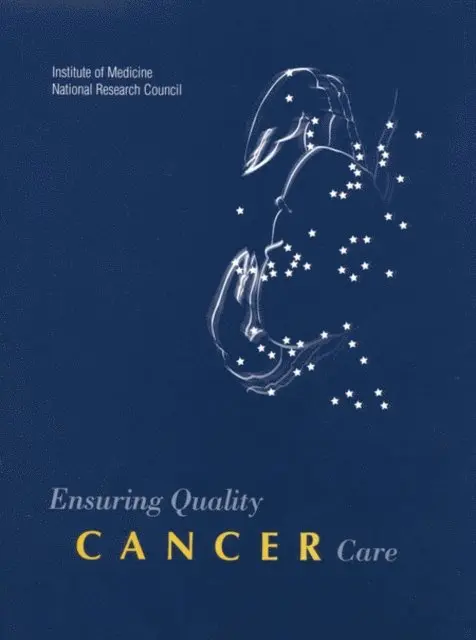
Ensuring Quality Cancer Care
Av Institute of Medicine and National Research Council, Commission on Life Sciences m. fl.
Häftad, 1999
1467 kr
Tillfälligt slut
We all want to believe that when people get cancer, they will receive medical care of the highest quality. Even as new scientific breakthroughs are announced, though, many cancer patients may be getting the wrong care, too little care, or too much care, in the form of unnecessary procedures. How …
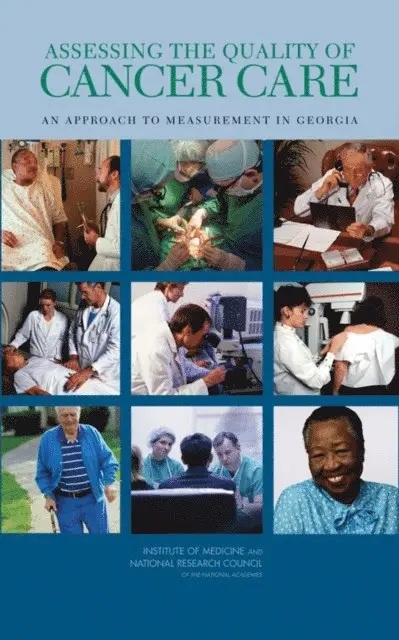
Assessing the Quality of Cancer Care
An Approach to Measurement in Georgia
Av National Research Council, Institute of Medicine m. fl.
Häftad, 2005
888 kr
Tillfälligt slut
Shortly after 1998, leading members of Georgia's government, medical community, and public-spirited citizenry began considering ways in which some of Georgia's almost $5 billion, 25-year settlement from the tobacco industry's Master Settlement Agreement with the 50 states could be used to benefit …
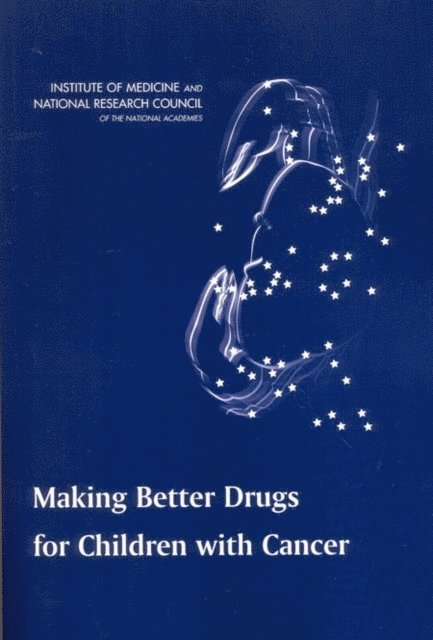
Making Better Drugs for Children with Cancer
Av National Research Council, Institute of Medicine m. fl.
Häftad, 2005
523 kr
Tillfälligt slut
The successes that have been achieved in treating childhood cancers stand as beacons against the less dramatic improvements for adults with cancer. Progress began to accelerate in the 1960s and 1970s, as treatment regimens were built up, primarily by building combinations of chemotherapeutic drugs. …