Josephine A. Roberts – författare
Visar alla böcker från författaren Josephine A. Roberts. Handla med fri frakt och snabb leverans.
6 produkter
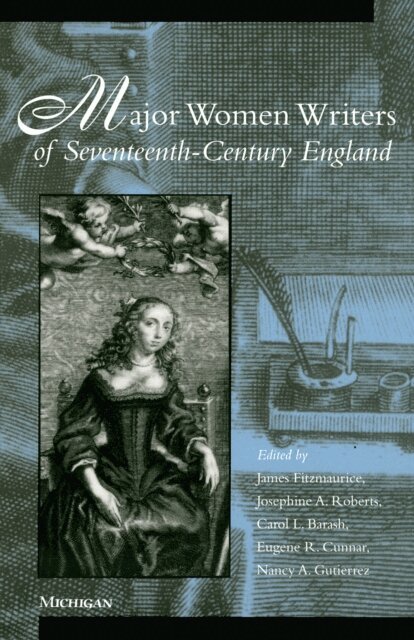
Major Women Writers of Seventeenth-Century England
Av James Fitzmaurice, Carol Barash m. fl.
Häftad, 1997
545 kr
Lägg i varukorg
Many would find it difficult to name a woman writer in England before Jane Austen, even though women were writing as early as the time of Chaucer. It was during the seventeenth century, however, that women writers ceased to be viewed as odd or remarkable and became accepted as regular and often …
Major Women Writers of Seventeenth-Century England
Av Josephine A. Roberts, Nancy A. Gutierrez m. fl.
E-bok, 2025
1230 kr
Lägg i varukorg
Many would find it difficult to name a woman writer in England before Jane Austen, even though women were writing as early as the time of Chaucer. It was during the seventeenth century, however, that women writers ceased to be viewed as odd or remarkable and became accepted as regular and often …
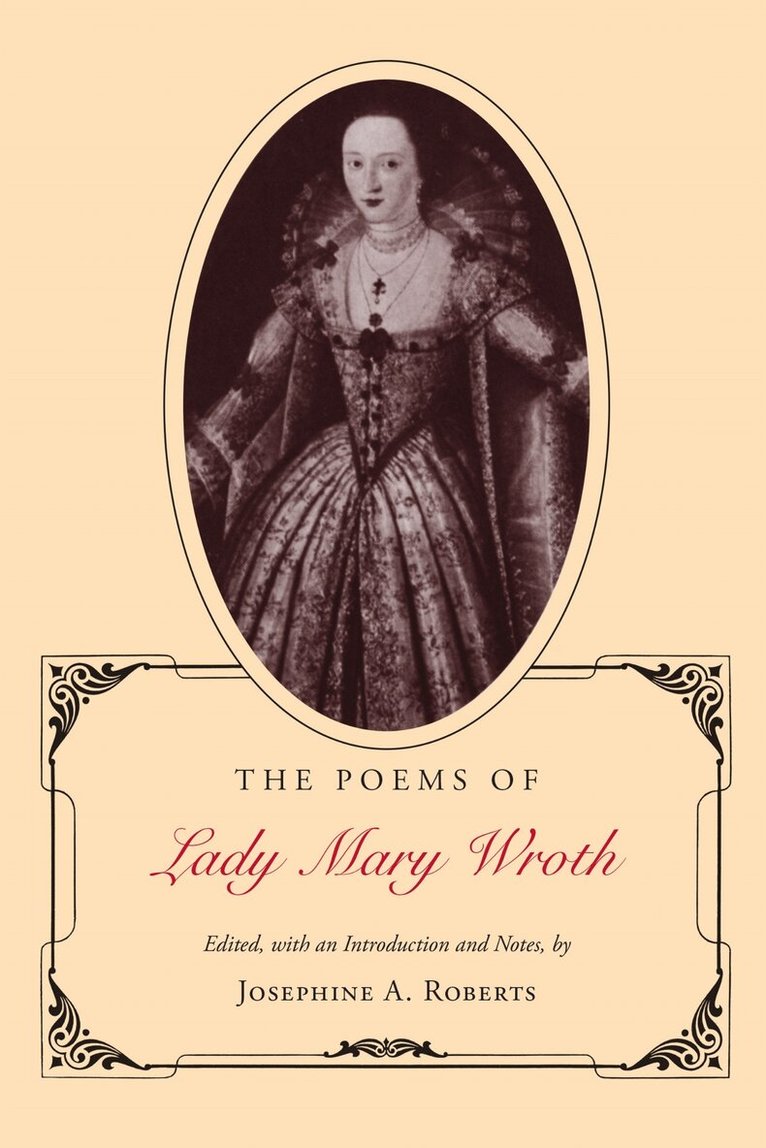
Poems of Lady Mary Wroth
Av Mary Wroth, Josephine A. Roberts
Häftad, 1992
334 kr
Lägg i varukorg
Although her poems are little know today, Lady Mary Wroth was one of the most accomplished women writers of the English Renaissance. Her poems were circulated among many of the leading authors of her time, including Ben Johnson, who praised her work for its profound understanding of the nature of …
Mary Wroth
Printed Writings 1500-1640: Series 1, Part One, Volume 10
E-bok, 2016
936 kr
Lägg i varukorg
Mary Wroth (1587-1653?) was niece and god-daughter of Mary Sidney Herbert. She was married in 1604 to Sir Robert Wroth with whom she joined the Court circle of James I. In 1618 she began work on her enormous prose romance The Countesse of Mountgomeries Urania. The first known work of original …
Mary Wroth
Printed Writings 1500-1640: Series 1, Part One, Volume 10
E-bok, 2016
916 kr
Lägg i varukorg
Mary Wroth (1587-1653?) was niece and god-daughter of Mary Sidney Herbert. She was married in 1604 to Sir Robert Wroth with whom she joined the Court circle of James I. In 1618 she began work on her enormous prose romance The Countesse of Mountgomeries Urania. The first known work of original …
Mary Wroth
Printed Writings 1500–1640: Series 1, Part One, Volume 10
Inbunden, 1996
878 kr
Lägg i varukorg
Mary Wroth (1587-1653?) was niece and god-daughter of Mary Sidney Herbert. She was married in 1604 to Sir Robert Wroth with whom she joined the Court circle of James I. In 1618 she began work on her enormous prose romance The Countesse of Mountgomeries Urania. The first known work of original …