Juan Pan-Montojo - Böcker
Visar alla böcker från författaren Juan Pan-Montojo. Handla med fri frakt och snabb leverans.
4 produkter
4 produkter
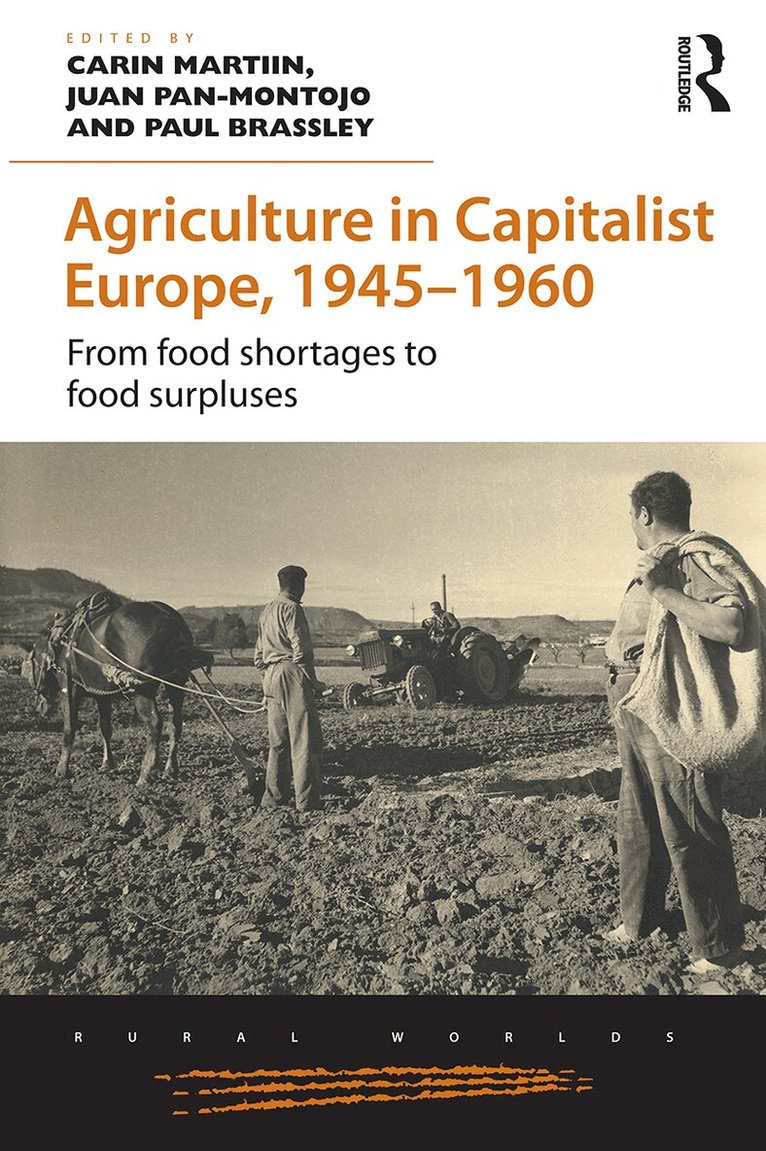
Agriculture in Capitalist Europe, 1945–1960
From food shortages to food surpluses
Häftad, Engelska, 2022
649 kr
Skickas inom 10-15 vardagar
In the years before the Second World War agriculture in most European states was carried out on peasant or small family farms using technologies that relied mainly on organic inputs and local knowledge and skills, supplying products into a market that was partly local or national, partly international. The war applied a profound shock to this system. In some countries farms became battlefields, causing the extensive destruction of buildings, crops and livestock. In others, farmers had to respond to calls from the state for increased production to cope with the effects of wartime disruption of international trade. By the end of the war food was rationed when it was obtainable at all. Only fifteen years later the erstwhile enemies were planning ways of bringing about a single agricultural market across much of continental western Europe, as farmers mechanised, motorized, shed labour, invested capital, and adopted new technologies to increase output. This volume brings together scholars working on this period of dramatic technical, commercial and political change in agriculture, from the end of the Second World War to the emergence of the Common Agricultural Policy in the early 1960s. Their work is structured around four themes: the changes in the international political order within which agriculture operated; the emergence of a range of different market regulation schemes that preceded the CAP; changes in technology and the extent to which they were promoted by state policy; and the impact of these political and technical changes on rural societies in western Europe.
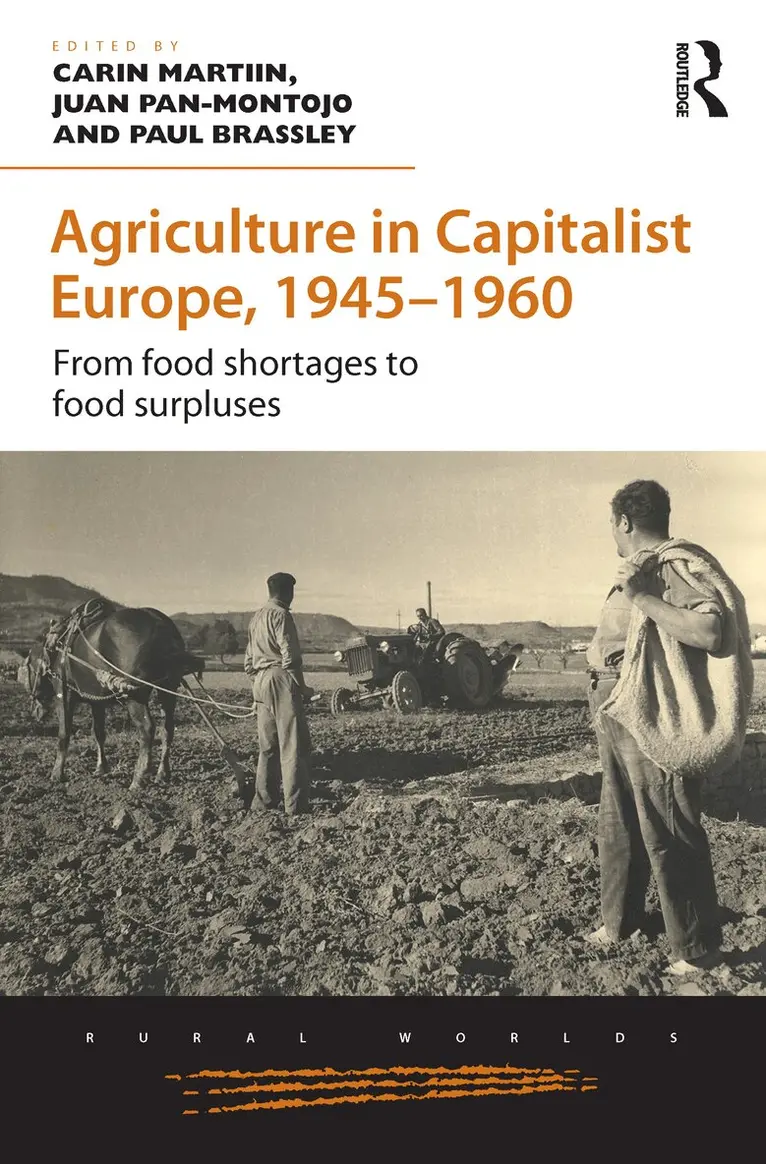
Agriculture in Capitalist Europe, 1945–1960
From food shortages to food surpluses
Inbunden, Engelska, 2016
2 357 kr
Skickas inom 10-15 vardagar
In the years before the Second World War agriculture in most European states was carried out on peasant or small family farms using technologies that relied mainly on organic inputs and local knowledge and skills, supplying products into a market that was partly local or national, partly international. The war applied a profound shock to this system. In some countries farms became battlefields, causing the extensive destruction of buildings, crops and livestock. In others, farmers had to respond to calls from the state for increased production to cope with the effects of wartime disruption of international trade. By the end of the war food was rationed when it was obtainable at all. Only fifteen years later the erstwhile enemies were planning ways of bringing about a single agricultural market across much of continental western Europe, as farmers mechanised, motorized, shed labour, invested capital, and adopted new technologies to increase output. This volume brings together scholars working on this period of dramatic technical, commercial and political change in agriculture, from the end of the Second World War to the emergence of the Common Agricultural Policy in the early 1960s. Their work is structured around four themes: the changes in the international political order within which agriculture operated; the emergence of a range of different market regulation schemes that preceded the CAP; changes in technology and the extent to which they were promoted by state policy; and the impact of these political and technical changes on rural societies in western Europe.
Del 9 - Boydell Studies in Rural History
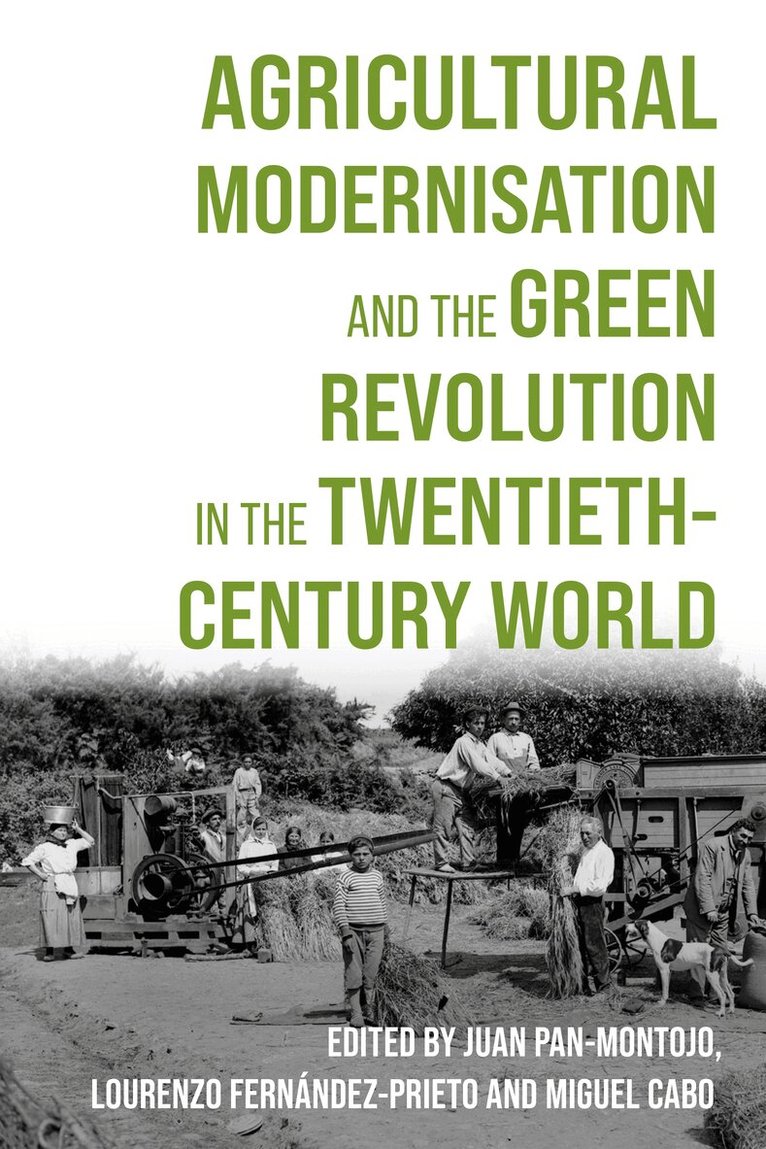
Agricultural Modernisation and the Green Revolution in the Twentieth-Century World
Inbunden, Engelska, 2026
1 160 kr
Skickas inom 7-10 vardagar
An overarching history of the origins, development, and application of agricultural innovation in the past, and of the paradigms and institutional frameworks in which they were developed throughout the twentieth century.From the late nineteenth century onwards, rural societies and agrarian production across the world were profoundly transformed. Prior to the Second World War, technological innovations developed within an intensive organic framework and advanced largely in dialogue with existing producers. After the war, social engineering became the prevailing model in agricultural and rural policies almost everywhere. Modernisation was imposed from above, targeting so-called "archaic" or "anti-modern" peasants and farmers, who were pushed to produce ever-greater quantities of food, timber, and other raw materials through the expanded use of industrial and inorganic resources. Applied as a USA political programme in Asian, Latin American and African countries, this strategy became known as the "Green Revolution". Although it undermined rural societies and eroded the sustainability of agricultural production, it remained central to political agendas, leaving a difficult legacy for future generations.This book analyses agrarian change and agricultural policies before and after 1945, highlighting the socio-economic and environmental consequences of these two very different periods in global agrarian history. Its diverse case studies span continents and political systems, considering topics from post-war reconstruction in the UK and Denmark to development policies in the Belgian Congo and post-fascist Ethiopia; from production projects in communist Hungary to agricultural transformations across the Southern Cone and India.Chapter 6 is available as Open Access under the Creative Commons licence CC BY-NC-ND
1 355 kr
Skickas inom 5-8 vardagar