Judah M. Cohen - Böcker
Visar alla böcker från författaren Judah M. Cohen. Handla med fri frakt och snabb leverans.
5 produkter
5 produkter
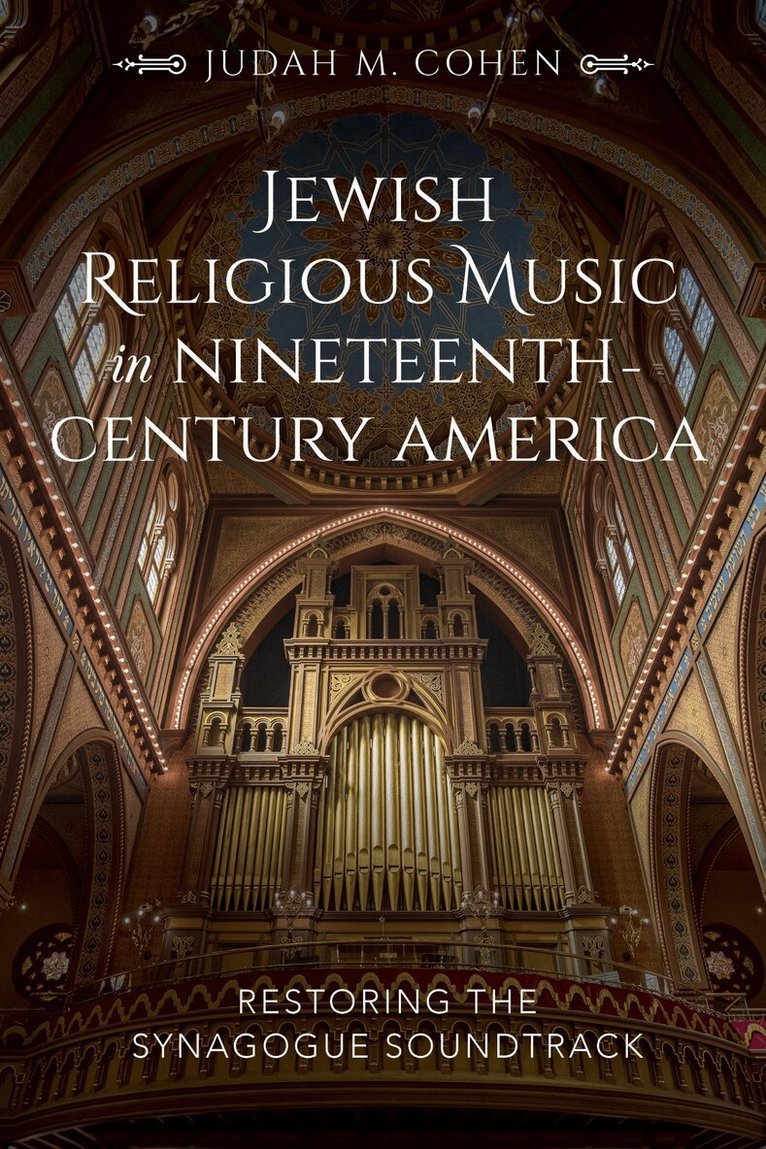
Jewish Religious Music in Nineteenth-Century America
Restoring the Synagogue Soundtrack
Inbunden, Engelska, 2019
874 kr
Skickas inom 7-10 vardagar
In Jewish Religious Music in Nineteenth-Century America: Restoring the Synagogue Soundtrack, Judah M. Cohen demonstrates that Jews constructed a robust religious musical conversation in the United States during the mid- to late-19th century. While previous studies of American Jewish music history have looked to Europe as a source of innovation during this time, Cohen's careful analysis of primary archival sources tells a different story. Far from seeing a fallow musical landscape, Cohen finds that Central European Jews in the United States spearheaded a major revision of the sounds and traditions of synagogue music during this period of rapid liturgical change.Focusing on the influences of both individuals and texts, Cohen demonstrates how American Jewish musicians sought to balance artistry and group singing, rather than "progressing" from solo chant to choir and organ. Congregations shifted between musical genres and practices during this period in response to such factors as finances, personnel, and communal cohesiveness. Cohen concludes that the "soundtrack" of 19th-century Jewish American music heavily shapes how we look at Jewish American music and life in the first part of the 21st-century, arguing that how we see, and especially hear, history plays a key role in our understanding of the contemporary world around us. Supplemented with an interactive website that includes the primary source materials, recordings of the music discussed, and a map that highlights the movement of key individuals, Cohen's research defines more clearly the sound of 19th-century American Jewry.
Jewish Religious Music in Nineteenth-Century America
Restoring the Synagogue Soundtrack
Häftad, Engelska, 2019
427 kr
Skickas inom 7-10 vardagar
In Jewish Religious Music in Nineteenth-Century America: Restoring the Synagogue Soundtrack, Judah M. Cohen demonstrates that Jews constructed a robust religious musical conversation in the United States during the mid- to late-19th century. While previous studies of American Jewish music history have looked to Europe as a source of innovation during this time, Cohen's careful analysis of primary archival sources tells a different story. Far from seeing a fallow musical landscape, Cohen finds that Central European Jews in the United States spearheaded a major revision of the sounds and traditions of synagogue music during this period of rapid liturgical change.Focusing on the influences of both individuals and texts, Cohen demonstrates how American Jewish musicians sought to balance artistry and group singing, rather than "progressing" from solo chant to choir and organ. Congregations shifted between musical genres and practices during this period in response to such factors as finances, personnel, and communal cohesiveness. Cohen concludes that the "soundtrack" of 19th-century Jewish American music heavily shapes how we look at Jewish American music and life in the first part of the 21st-century, arguing that how we see, and especially hear, history plays a key role in our understanding of the contemporary world around us. Supplemented with an interactive website that includes the primary source materials, recordings of the music discussed, and a map that highlights the movement of key individuals, Cohen's research defines more clearly the sound of 19th-century American Jewry.
332 kr
Skickas inom 7-10 vardagar
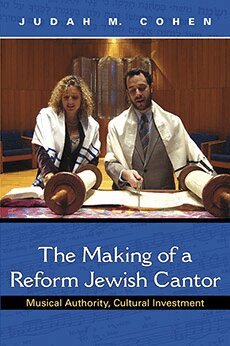
The Making of a Reform Jewish Cantor provides an unprecedented look into the meaning of attaining musical authority among American Reform Jews at the turn of the 21st century. How do aspiring cantors adapt traditional musical forms to the practices of contemporary American congregations? What is the cantor's role in American Jewish religious life today? Cohen follows cantorial students at the School of Sacred Music, Hebrew Union College, over the course of their training, as they prepare to become modern Jewish musical leaders. Opening a window on the practical, social, and cultural aspects of aspiring to musical authority, this book provides unusual insights into issues of musical tradition, identity, gender, community, and high and low musical culture.
362 kr
Skickas inom 7-10 vardagar
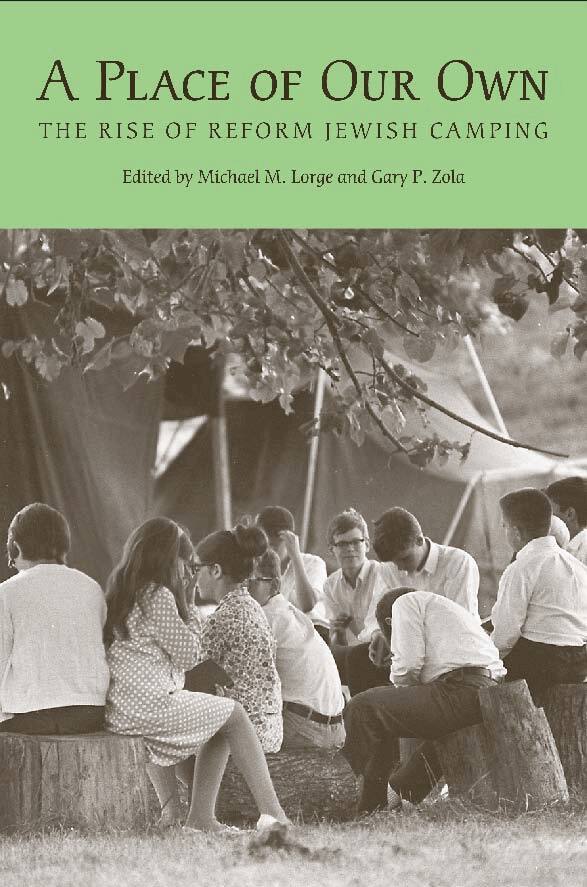
Reform Judaism is not the only religious group in America to make the summer camp experience a vital part of a faith community's effort to impart its values and beliefs to its adolescents, but perhaps no group relied more on summer camp as an adjunct to home and community for this purpose. Summer camp became an important part of Reform group identity, a bulwark against the attraction of assimilation into the greater society and mere nominal Judaism. These seven essays, which commemorate the fiftieth anniversary of the founding of the first Reform Jewish educational camp in the United States (Olin-Sang-Ruby Union Institute [OSRUI], in Oconomowoc, Wisconsin) cover a wide range of topics related to both the Reform Judaism movement and the development of the Reform Jewish camping system in the United States. Donald M. Splansky's chapter on 'Prayer at Reform Jewish Camps' documents changes in prayer services that took place both at OSRUI and in the Reform movement in general; Michael Zeldin's 'Making the Magic in Reform Jewish Summer Camps' describes the educational philosophies employed at many camps and analyzes their effectiveness; and Jonathan D. Sarna's 'The Crucial Decade in Jewish Camping' explains how social, political, and cultural conditions paved the way for the Reform camping movement.
331 kr
Skickas inom 7-10 vardagar
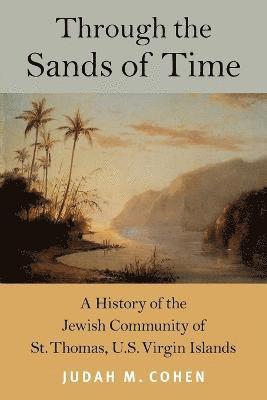
In 1796, the Jews of St. Thomas founded the first Jewish congregation on this Caribbean island. By 1803, new arrivals from England, France, and the neighboring islands of St. Eustatius and Curaçao increased the original number from a handful of congregants to twenty-two families. Their small synagogue was destroyed by fires and rebuilt several times. The congregation numbered sixty-four families by the time the present synagogue was erected in 1833. It is by now the oldest synagogue in continuous use under the American flag. The congregation was also among the first to receive copies of the new West London Reform liturgy when it came out in 1841 and the first in this hemisphere to hold a Jewish confirmation ceremony, two years later. In addition, the St. Thomas Synagogue has produced its own unique religious literature relating to hurricanes!While the synagogue has served for over 200 years as a central religious and social gathering place, the Jews of St. Thomas have been highly mobile members of a progressive, cosmopolitan society that at times rivaled any in the world. As an accepted part of the larger community, members were accomplished, model citizens in a highly tolerant Danish colonial society. Jews took positions in government, served as auctioneers, participated in the local Masonic lodges, and represented other countries as consuls in St. Thomas. As traders in a mercantile culture, the Jews contributed to the activity of one of the world's busiest harbors and played a crucial role in St. Thomas's nineteenth-century rise to prominence in the northern Caribbean.