Judy Eaton - Böcker
Visar alla böcker från författaren Judy Eaton. Handla med fri frakt och snabb leverans.
6 produkter
6 produkter
728 kr
Skickas inom 10-15 vardagar
Apologies from Death Row explores the notion of remorse, apologies, and forgiveness within the context of capital punishment in the United States, through the final words of offenders on death row, and the covictims’ responses to them in their statements to the press after witnessing the execution. The book demonstrates that there is evidence that some offenders on death row are truly remorseful and that some of the family members of their victims could benefit from this remorse, but that this is unlikely in the current system of capital punishment. Drawing from the fields of criminology, psychology, and sociology, the book begins with a theoretically informed introduction to the concepts of remorse and forgiveness, followed by an exploration of apology and forgiveness specifically in the context of capital punishment. It discusses how some initiatives within the criminal justice system, such as apology laws and restorative justice programmes, are being used to make it easier for offenders to apologize to their victims. Offenders on death row are considered, addressing why they might or might not apologize, and whether they are even capable of showing true remorse. The book then considers the family members of their victims ("covictims"), addressing whether they benefit from hearing the offender express remorse and witnessing the execution, and whether forgiveness is possible in this context. Evidence to support the arguments presented in the book come from the offenders’ final words and the covictims’ responses to them in their statements to the press. The book dispels two common myths about the death penalty. First, it shows that offenders on death row are not simply "monsters" who are incapable of understanding the severity of their crimes. Second, it provides evidence that, despite the popular belief that the death penalty is necessary in order to provide closure for the victims’ family members, it may actually have the opposite effect. The family members’ statements to the press after witnessing the execution contain more negative themes like anger and disappointment than positive themes like closure and peace. The book concludes with a discussion of the implications this has for systems of justice in general, and how a better understanding of the emotional state of offenders can help both victims and offenders. Apologies from Death Row will be of great interest to students and scholars of Criminology, Psychology, and Sociology.
268 kr
Skickas inom 10-15 vardagar
Apologies from Death Row explores the notion of remorse, apologies, and forgiveness within the context of capital punishment in the United States, through the final words of offenders on death row, and the covictims’ responses to them in their statements to the press after witnessing the execution. The book demonstrates that there is evidence that some offenders on death row are truly remorseful and that some of the family members of their victims could benefit from this remorse, but that this is unlikely in the current system of capital punishment. Drawing from the fields of criminology, psychology, and sociology, the book begins with a theoretically informed introduction to the concepts of remorse and forgiveness, followed by an exploration of apology and forgiveness specifically in the context of capital punishment. It discusses how some initiatives within the criminal justice system, such as apology laws and restorative justice programmes, are being used to make it easier for offenders to apologize to their victims. Offenders on death row are considered, addressing why they might or might not apologize, and whether they are even capable of showing true remorse. The book then considers the family members of their victims ("covictims"), addressing whether they benefit from hearing the offender express remorse and witnessing the execution, and whether forgiveness is possible in this context. Evidence to support the arguments presented in the book come from the offenders’ final words and the covictims’ responses to them in their statements to the press. The book dispels two common myths about the death penalty. First, it shows that offenders on death row are not simply "monsters" who are incapable of understanding the severity of their crimes. Second, it provides evidence that, despite the popular belief that the death penalty is necessary in order to provide closure for the victims’ family members, it may actually have the opposite effect. The family members’ statements to the press after witnessing the execution contain more negative themes like anger and disappointment than positive themes like closure and peace. The book concludes with a discussion of the implications this has for systems of justice in general, and how a better understanding of the emotional state of offenders can help both victims and offenders. Apologies from Death Row will be of great interest to students and scholars of Criminology, Psychology, and Sociology.
350 kr
Kommande
632 kr
Skickas inom 7-10 vardagar
Academic Literacy in the Social Sciences is a practical introductory guide that supports students through the process of understanding and critically evaluating research in the Social Sciences. This essential text develops and strengthens students’ ability to develop research paper topics, conduct thorough literature searches, critically evaluate research, and effectively summarize and share information. The textbook is broken down into ten chapters, focusing on topics such as theory and research methods in the social sciences, citing APA style, ethics and integrity, and statistics. This is an ideal resource for all students in undergraduate courses based in the social sciences.
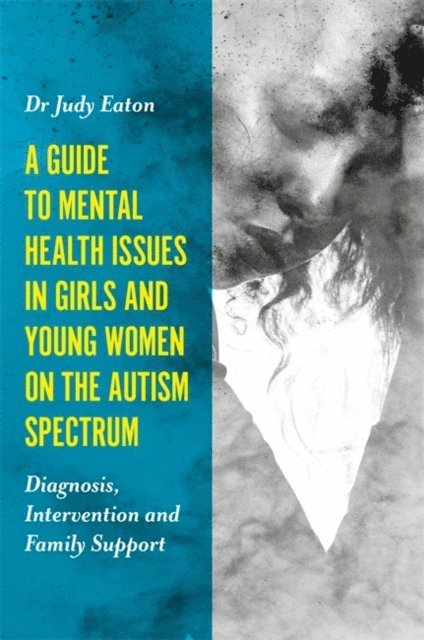
Guide to Mental Health Issues in Girls and Young Women on the Autism Spectrum
Diagnosis, Intervention and Family Support
Häftad, Engelska, 2017
374 kr
Skickas
This book addresses the specific mental health needs of girls and young women with autism spectrum disorder (ASD). Looking at the ways autism presents differently in girls than in boys, and the mental health conditions that occur most frequently in girls with ASD, this is the essential guide for clinicians and educators on tailoring interventions and support to meet girls' needs.Describing the current assessment process for autism diagnosis, the book explains why girls are under- or mis-diagnosed, leading to later mental health issues. It outlines the types of intervention that are particularly helpful for working with girls to reduce anxiety, improve social interaction skills, and manage self-harm. The book also covers how to manage eating disorders and feeding difficulties, focusing on working with girls with sensory processing difficulties. There is advice on how to deal with the emotional impact on parents, carers and families, and the challenges they face when negotiating appropriate psychological and educational support.
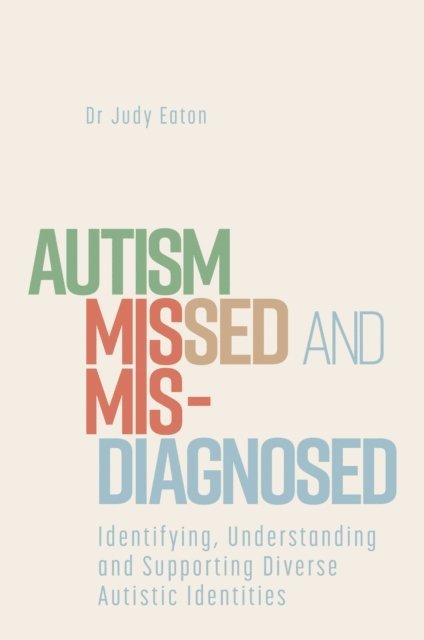
Autism Missed and Misdiagnosed
Identifying, Understanding and Supporting Diverse Autistic Identities
Häftad, Engelska, 2023
388 kr
Skickas
Autism presents in a multitude of different and highly nuanced ways - particularly as it intersects with variance in class, gender, race and age. Misunderstanding and misinformation around variant and differing presentations means that misdiagnosed individuals and those who do not receive a diagnosis at all are often failed by medical, education, social care and criminal justice systems. They are detained in inappropriate settings; don't receive beneficial therapeutic input; have their families accused of fabricated or induced illness (FII); are kept in prison or youth offending institutions longer than their original tariffs, and shockingly their life expectancy is often curtailed as a result. This comprehensive resource will help multidisciplinary professions to understand, contextualise, and better identify diverse autistic presentations. It includes an overview of the autism diagnostic process, an exploration of controversial and commonly confused diagnoses such as PDA, ODD, CD, ASPD, and BPD; discussions of best practice for investigating FII; and analysis of the specific challenges of autism diagnosis in relation to women and girls, BAME communities, schools, and the criminal justice system.