Juin Jei Liou - Böcker
Visar alla böcker från författaren Juin Jei Liou. Handla med fri frakt och snabb leverans.
6 produkter
6 produkter
1 593 kr
Skickas inom 10-15 vardagar
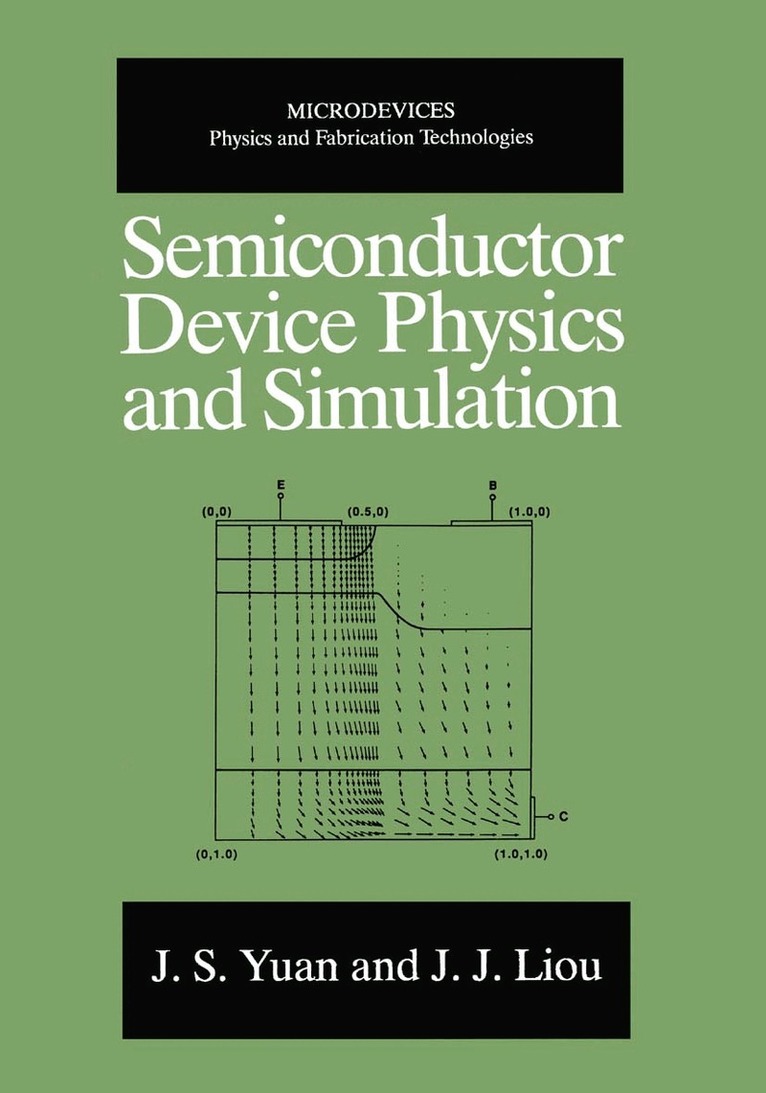
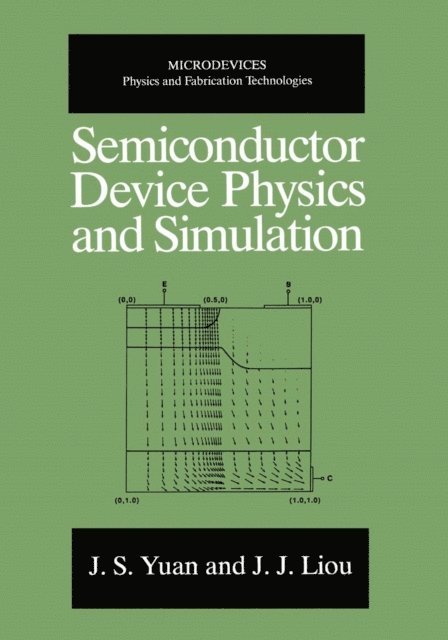
The advent of the microelectronics technology has made ever-increasing numbers of small devices on a same chip. The rapid emergence of ultra-large-scaled-integrated (ULSI) technology has moved device dimension into the sub-quarter-micron regime and put more than 10 million transistors on a single chip. While traditional closed-form analytical models furnish useful intuition into how semiconductor devices behave, they no longer provide consistently accurate results for all modes of operation of these very small devices. The reason is that, in such devices, various physical mechanisms affect the device performance in a complex manner, and the conventional assumptions (i. e. , one-dimensional treatment, low-level injection, quasi-static approximation, etc. ) em ployed in developing analytical models become questionable. Thus, the use of numerical device simulation becomes important in device modeling. Researchers and engineers will rely even more on device simulation for device design and analysis in the future. This book provides comprehensive coverage of device simulation and analysis for various modem semiconductor devices. It will serve as a reference for researchers, engineers, and students who require in-depth, up-to-date information and understanding of semiconductor device physics and characteristics. The materials of the book are limited to conventional and mainstream semiconductor devices; photonic devices such as light emitting and laser diodes are not included, nor does the book cover device modeling, device fabrication, and circuit applications.
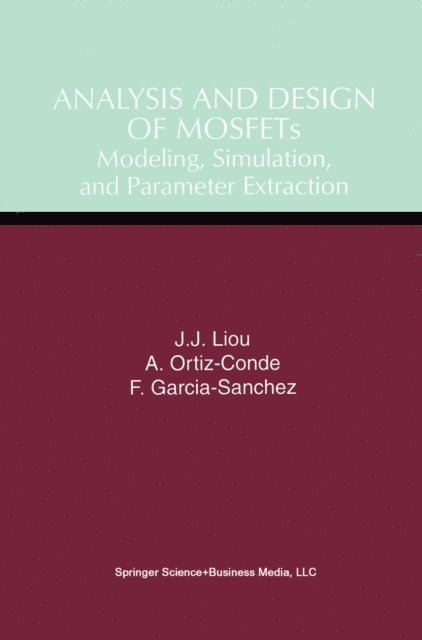
Analysis and Design of MOSFETs
Modeling, Simulation, and Parameter Extraction
Inbunden, Engelska, 1998
1 593 kr
Skickas inom 10-15 vardagar
This text is devoted to a broad spectrum of analysis and design issues related to the semiconductor device called metal-oxide semiconductor field-effect transistor (MOSFET). These issues include MOSFET device physics, modelling, numerical simulation, and parameter extraction. The discussion of the application of device simulation to the extraction of MOSFET parameters, such as the threshold voltage, effective channel lengths, and series resistances, is of particular interest to all readers and provides a valuable learning and reference tool for students, researchers and engineers.
1 064 kr
Skickas inom 10-15 vardagar
Electrostatic Discharge (ESD) is a pervasive issue in the semiconductor industry affecting both manufacturers and users of semiconductors. The problem worsens with each new generation of parts and components. As technology scales to higher levels of integration, circuits become more sensitive to ESD and the design of protection becomes more difficult. This text presents an overview of ESD as it effects electronic circuits and provides a concise introduction for students, engineers, circuit designers and failure analysts. This handbook is written in simple terms and is filled with practical advice and examples to illustrate the concepts presented. While this treatment is not exhaustive, it presents many of the most important areas of the ESD problem and suggests methods for improving them. The key topics covered include the physics of the event, failure analysis, protection, characterization, and simulation techniques. The book is intended as both an introductory text on ESD and a useful reference tool to draw on as the reader gains experience.The authors have tried to balance the level of detail in the "ESD Design and Analysis Handbook" against the wealth of literature published on ESD every year. To that end, each chapter has a topical list of references to facilitate further in-depth study.
1 064 kr
Skickas inom 10-15 vardagar
ESD Design and Analysis Handbook presents an overview of ESD as it effects electronic circuits and provides a concise introduction for students, engineers, circuit designers and failure analysts. This handbook is written in simple terms and is filled with practical advice and examples to illustrate the concepts presented. While this treatment is not exhaustive, it presents many of the most important areas of the ESD problem and suggests methods for improving them. The key topics covered include the physics of the event, failure analysis, protection, characterization, and simulation techniques. The book is intended as both an introductory text on ESD and a useful reference tool to draw on as the reader gains experience. The authors have tried to balance the level of detail in the ESD Design and Analysis Handbook against the wealth of literature published on ESD every year. To that end, each chapter has a topical list of references to facilitate further in-depth study.
1 593 kr
Skickas inom 10-15 vardagar
Analysis and Design of MOSFETs: Modeling, Simulation, and Parameter Extraction is the first book devoted entirely to a broad spectrum of analysis and design issues related to the semiconductor device called metal-oxide semiconductor field-effect transistor (MOSFET). These issues include MOSFET device physics, modeling, numerical simulation, and parameter extraction. The discussion of the application of device simulation to the extraction of MOSFET parameters, such as the threshold voltage, effective channel lengths, and series resistances, is of particular interest to all readers and provides a valuable learning and reference tool for students, researchers and engineers. Analysis and Design of MOSFETs: Modeling, Simulation, and Parameter Extraction, extensively referenced, and containing more than 180 illustrations, is an innovative and integral new book on MOSFETs design technology.
1 698 kr
Skickas inom 10-15 vardagar
The advent of the microelectronics technology has made ever-increasing numbers of small devices on a same chip. The rapid emergence of ultra-large-scaled-integrated (ULSI) technology has moved device dimension into the sub-quarter-micron regime and put more than 10 million transistors on a single chip. While traditional closed-form analytical models furnish useful intuition into how semiconductor devices behave, they no longer provide consistently accurate results for all modes of operation of these very small devices. The reason is that, in such devices, various physical mechanisms affect the device performance in a complex manner, and the conventional assumptions (i. e. , one-dimensional treatment, low-level injection, quasi-static approximation, etc. ) em ployed in developing analytical models become questionable. Thus, the use of numerical device simulation becomes important in device modeling. Researchers and engineers will rely even more on device simulation for device design and analysis in the future. This book provides comprehensive coverage of device simulation and analysis for various modem semiconductor devices. It will serve as a reference for researchers, engineers, and students who require in-depth, up-to-date information and understanding of semiconductor device physics and characteristics. The materials of the book are limited to conventional and mainstream semiconductor devices; photonic devices such as light emitting and laser diodes are not included, nor does the book cover device modeling, device fabrication, and circuit applications.