Julia A. Hendon - Böcker
Visar alla böcker från författaren Julia A. Hendon. Handla med fri frakt och snabb leverans.
6 produkter
6 produkter
1 594 kr
Skickas inom 7-10 vardagar
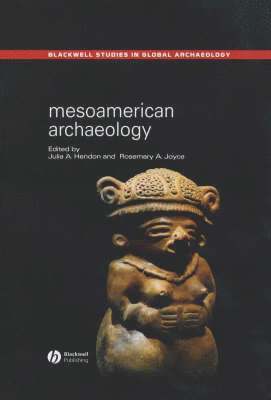
Offering an alternative to traditional textbooks, Mesoamerican Archaeology: Theory and Practice places the reader in the middle of contemporary debates by top archaeologists actively exploring the major prehispanic societies of Central America. Offers a comprehensive introduction to the archaeology of Mesoamerica by focusing on key time periods, sites, and the issues these times and places require us to confront. Examines key moments in the Mesoamerican historical tradition, from the earliest villages where Olmec art flourished, to the Aztec and Maya City-states that Spanish invaders described in the 16th century. Engages the chronological benchmarks of precolumbian social development in Mesoamerica, such as the transition to village life, emergence of political stratification, and formation of Mesoamerican urban centers. Includes an extensive introduction by the editors that situates contemporary Mesoamerican archaeology in the broader terms of the social politics of archaeology. For further resources to use with this book - including study questions, maps and photographs - visit the website at www.blackwellpublishing.com/BSGA/mesoam
1 286 kr
Skickas inom 7-10 vardagar
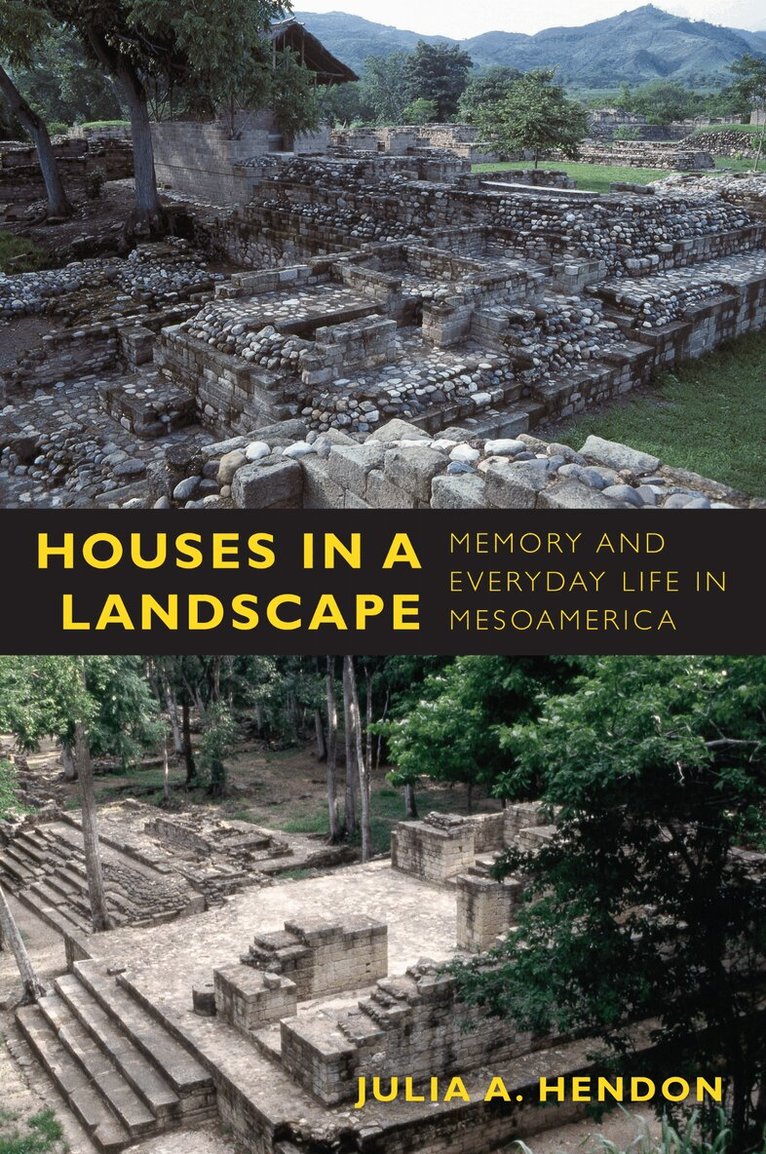
In Houses in a Landscape, Julia A. Hendon examines the connections between social identity and social memory using archaeological research on indigenous societies that existed more than one thousand years ago in what is now Honduras. While these societies left behind monumental buildings, the remains of their dead, remnants of their daily life, intricate works of art, and fine examples of craftsmanship such as pottery and stone tools, they left only a small body of written records. Despite this paucity of written information, Hendon contends that an archaeological study of memory in such societies is possible and worthwhile. It is possible because memory is not just a faculty of the individual mind operating in isolation, but a social process embedded in the materiality of human existence. Intimately bound up in the relations people develop with one another and with the world around them through what they do, where and how they do it, and with whom or what, memory leaves material traces.Hendon conducted research on three contemporaneous Native American civilizations that flourished from the seventh century through the eleventh CE: the Maya kingdom of Copan, the hilltop center of Cerro Palenque, and the dispersed settlement of the Cuyumapa valley. She analyzes domestic life in these societies, from cooking to crafting, as well as public and private ritual events including the ballgame. Combining her findings with a rich body of theory from anthropology, history, and geography, she explores how objects-the things people build, make, use, exchange, and discard-help people remember. In so doing, she demonstrates how everyday life becomes part of the social processes of remembering and forgetting, and how “memory communities” assert connections between the past and the present.
557 kr
Skickas inom 3-6 vardagar
In Houses in a Landscape, Julia A. Hendon examines the connections between social identity and social memory using archaeological research on indigenous societies that existed more than one thousand years ago in what is now Honduras. While these societies left behind monumental buildings, the remains of their dead, remnants of their daily life, intricate works of art, and fine examples of craftsmanship such as pottery and stone tools, they left only a small body of written records. Despite this paucity of written information, Hendon contends that an archaeological study of memory in such societies is possible and worthwhile. It is possible because memory is not just a faculty of the individual mind operating in isolation, but a social process embedded in the materiality of human existence. Intimately bound up in the relations people develop with one another and with the world around them through what they do, where and how they do it, and with whom or what, memory leaves material traces.Hendon conducted research on three contemporaneous Native American civilizations that flourished from the seventh century through the eleventh CE: the Maya kingdom of Copan, the hilltop center of Cerro Palenque, and the dispersed settlement of the Cuyumapa valley. She analyzes domestic life in these societies, from cooking to crafting, as well as public and private ritual events including the ballgame. Combining her findings with a rich body of theory from anthropology, history, and geography, she explores how objects-the things people build, make, use, exchange, and discard-help people remember. In so doing, she demonstrates how everyday life becomes part of the social processes of remembering and forgetting, and how “memory communities” assert connections between the past and the present.
571 kr
Skickas inom 7-10 vardagar
A unique and wide-ranging introduction to the major prehispanic and colonial societies of Mexico and Central America, featuring new and revised material throughoutMesoamerican Archaeology: Theory and Practice, Second Edition, provides readers with a diverse and well-balanced view of the archaeology of the indigenous societies of Mexico and Central America, helping students better understand key concepts and engage with contemporary debates and issues within the field. The fully updated second edition incorporates contemporary research that reflects new approaches and trends in Mesoamerican archaeology. New and revised chapters from first-time and returning authors cover the archaeology of Mesoamerican cultural history, from the early Gulf Coast Olmec, to the Classic and Postclassic Maya, to the cultures of Oaxaca and Central Mexico before and after colonization. Presenting a wide range of approaches that illustrate political, socio-economic, and symbolic interpretations, this textbook: Encourages students to consider diverse ways of thinking about Mesoamerica: as a linguistic area, as a geographic region, and as a network of communities of practiceRepresents a wide spectrum of perspectives and approaches to Mesoamerican archaeology, including coverage of the Postclassic and Colonial periodsEnables readers to think critically about how explanations of the past are produced, verified, and debatedIncludes accessible introductory material to ensure that students and non-specialists understand the chronological and geographic frameworks of the Mesoamerican traditionDiscusses recent developments in the contemporary theory and practice of Mesoamerican archaeologyPresents new and original research by a team of internationally recognized contributorsMesoamerican Archaeology: Theory and Practice, Second Edition, is ideal for use in undergraduate courses on the archaeology of Mexico and Central America, as well as for broader courses on the archaeology of the Americas.
840 kr
Tillfälligt slut
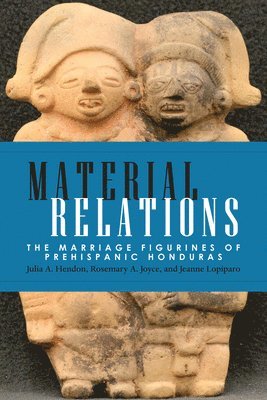
Focusing on marriage figurines—double human figurines that represent relations formed through social alliances—Hendon, Joyce, and Lopiparo examine the material relations created in Honduras between AD 500 and 1000, a period of time when a network of social houses linked settlements of a variety of sizes in the region. The authors analyze these small, seemingly insignificant artifacts using the theory of materiality to understand broader social processes.They examine the production, use, and disposal of marriage figurines from six sites—Campo Dos, Cerro Palenque, Copán, Currusté, Tenampua, and Travesia—and explore their role in rituals and ceremonies, as well as in the forming of social bonds and the celebration of relationships among communities. They find evidence of historical traditions reproduced over generations through material media in social relations among individuals, families, and communities, as well as social differences within this network of connected yet independent settlements.Material Relations provides a new and dynamic understanding of how social houses functioned via networks of production and reciprocal exchange of material objects and will be of interest to Mesoamerican archaeologists, anthropologists, and art historians.
525 kr
Skickas inom 5-8 vardagar
Relational Identities and Other-than-Human Agency in Archaeology explores the benefits and consequences of archaeological theorizing on and interpretation of the social agency of nonhumans as relational beings capable of producing change in the world. The volume cross-examines traditional understanding of agency and personhood, presenting a globally diverse set of case studies that cover a range of cultural, geographical, and historical contexts. Agency (the ability to act) and personhood (the reciprocal qualities of relational beings) have traditionally been strictly assigned to humans. In case studies from Ghana to Australia to the British Isles and Mesoamerica, contributors to this volume demonstrate that objects, animals, locations, and other nonhuman actors also potentially share this ontological status and are capable of instigating events and enacting change. This kind of other-than-human agency is not a one-way transaction of cause to effect but requires an appropriate form of reciprocal engagement indicative of relational personhood, which in these cases, left material traces detectable in the archaeological record. Modern dualist ontologies separating objects from subjects and the animate from the inanimate obscure our understanding of the roles that other-than-human agents played in past societies. Relational Identities and Other-than-Human Agency in Archaeology challenges this essentialist binary perspective. Contributors in this volume show that intersubjective (inherently social) ways of being are a fundamental and indispensable condition of all personhood and move the debate in posthumanist scholarship beyond the polarizing dichotomies of relational versus bounded types of persons. In this way, the book makes a significant contribution to theory and interpretation of personhood and other-than-human agency in archaeology. Contributors:Susan M. Alt, Joanna Brück, Kaitlyn Chandler, Erica Hill, Meghan C. L. Howey, Andrew Meirion Jones, Matthew Looper, Ian J. McNiven, Wendi Field Murray, Timothy R. Pauketat, Ann B. Stahl, Maria Nieves Zedeño