Rosemary A. Joyce - Böcker
Visar alla böcker från författaren Rosemary A. Joyce. Handla med fri frakt och snabb leverans.
19 produkter
19 produkter
643 kr
Skickas inom 5-8 vardagar
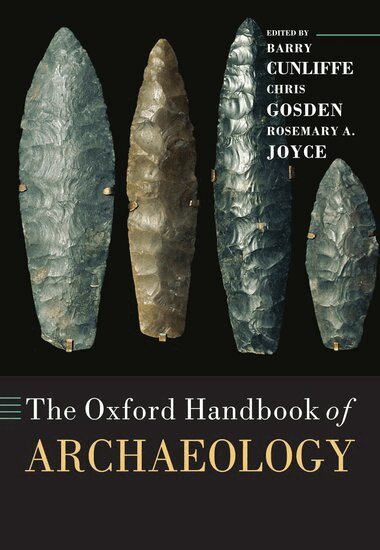
Archaeology is a vast subject - it is the study of human society everywhere in the world, from distant human origins 3-4 million years ago up to the present day. The Oxford Handbook of Archaeology brings together 35 authors - all specialists in their own fields - to explain what archaeology is really about. This is one of the most comprehensive treatments of the subject and of the key debates ever attempted. It is designed to open up the world of archaeology to non-specialists and to provide an essential starting point for those who want to pursue particular topics in more depth.
2 124 kr
Skickas inom 5-8 vardagar
Archaeology is a vast subject - it is the study of human society everywhere in the world, from distant human origins 3-4 million years ago up to the present day. The Oxford Handbook of Archaeology brings together 35 authors - all specialists in their own fields - to explain what archaeology is really about. This is one of the most comprehensive treatments of the subject and of the key debates ever attempted. It is designed to open up the world of archaeology to non-specialists and to provide an essential starting point for those who want to pursue particular topics in more depth.
314 kr
Skickas inom 10-15 vardagar
Gender was a fluid potential, not a fixed category, before the Spaniards came to Mesoamerica. Childhood training and ritual shaped, but did not set, adult gender, which could encompass third genders and alternative sexualities as well as "male" and "female." At the height of the Classic period, Maya rulers presented themselves as embodying the entire range of gender possibilities, from male through female, by wearing blended costumes and playing male and female roles in state ceremonies.This landmark book offers the first comprehensive description and analysis of gender and power relations in prehispanic Mesoamerica from the Formative Period Olmec world (ca. 1500-500 BC) through the Postclassic Maya and Aztec societies of the sixteenth century AD. Using approaches from contemporary gender theory, Rosemary Joyce explores how Mesoamericans created human images to represent idealized notions of what it meant to be male and female and to depict proper gender roles. She then juxtaposes these images with archaeological evidence from burials, house sites, and body ornaments, which reveals that real gender roles were more fluid and variable than the stereotyped images suggest.
378 kr
Skickas inom 10-15 vardagar
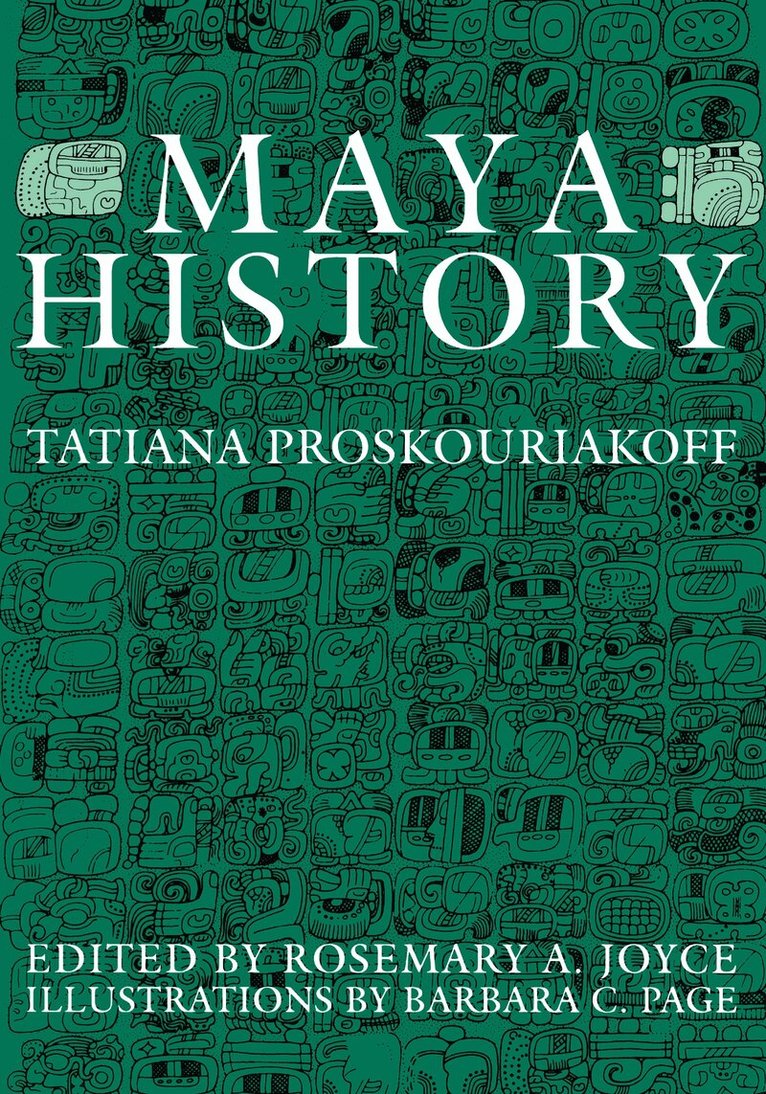
Tatiana Proskouriakoff, a preeminent student of the Maya, made many breakthroughs in deciphering Maya writing, particularly in demonstrating that the glyphs record the deeds of actual human beings, not gods or priests. This discovery opened the way for a history of the Maya, a monumental task that Proskouriakoff was engaged in before her death in 1985. Her work, Maya History, has been made ready for press by the able editorship of Rosemary Joyce.Maya History reconstructs the Classic Maya period (roughly A.D. 250-900) from the glyphic record on stelae at numerous sites, including Altar de Sacrificios, Copan, Dos Pilas, Naranjo, Piedras Negras, Quirigua, Tikal, and Yaxchilan. Proskouriakoff traces the spread of governmental institutions from the central Peten, especially from Tikal, to other city-states by conquest and intermarriage. Thirteen line drawings of monuments and over three hundred original drawings of glyphs amplify the text.
649 kr
Skickas inom 10-15 vardagar
Examining a wide range of archaeological data, and using it to explore issues such as the sexual body, mind/body dualism, body modification, and magical practices, Lynn Meskell and Rosemary Joyce offer a new approach to the Ancient Egyptian and Mayan understanding of embodiment. Drawing on insights from feminist theory, art history, phenomenology, anthropology and psychoanalysis, the book takes bodily materiality as a crucial starting point to the understanding and formation of self in any society, and sheds new light on Ancient Egyptian and Maya cultures. The book shows how a comparative project can open up new lines of inquiry by raising questions about accepted assumptions as the authors draw attention to the long-term histories and specificities of embodiment, and make the case for the importance of ancient materials for contemporary theorization of the body. For students new to the subject, and scholars already familiar with it, this will offer fresh and exciting insights into these ancient cultures.
524 kr
Kommande
619 kr
Skickas inom 7-10 vardagar
This volume provides the first critical examination of the relationship between archaeology and language, analysing the rhetorical practices through which archaeologists create representations of the past.
1 596 kr
Skickas inom 7-10 vardagar
Offering an alternative to traditional textbooks, Mesoamerican Archaeology: Theory and Practice places the reader in the middle of contemporary debates by top archaeologists actively exploring the major prehispanic societies of Central America. Offers a comprehensive introduction to the archaeology of Mesoamerica by focusing on key time periods, sites, and the issues these times and places require us to confront. Examines key moments in the Mesoamerican historical tradition, from the earliest villages where Olmec art flourished, to the Aztec and Maya City-states that Spanish invaders described in the 16th century. Engages the chronological benchmarks of precolumbian social development in Mesoamerica, such as the transition to village life, emergence of political stratification, and formation of Mesoamerican urban centers. Includes an extensive introduction by the editors that situates contemporary Mesoamerican archaeology in the broader terms of the social politics of archaeology. For further resources to use with this book - including study questions, maps and photographs - visit the website at www.blackwellpublishing.com/BSGA/mesoam
378 kr
Skickas inom 10-15 vardagar
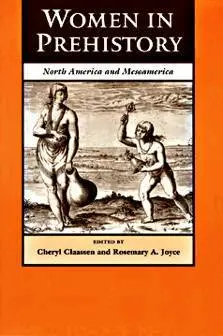
During the 1960s, in such works as Man the Hunter, scholars constructed a model of cultural evolution in which men were characterized as "cooperative hunters of big game." Women fit neatly into this model, such books as Woman the Gatherer explained, as gatherers of plant food. In spite of evidence of hunting by women, this model-which incorporated the unexamined assumption that women in prehistory were "immobilized" by pregnancy, lactation, and child care and therefore needed to be left at a home base-came to dominate archaeological interpretation of the economic roles of men and women. Women in Prehistory challenges this model and undertakes an examination of the archaeological record informed by insights into the cultural construction of gender that have emerged from scholarship in history, anthropology, biology, and related disciplines. Along with analysis of burial assemblages and of representations of gendered individuals, contributors study bone chemistry, assessment of skeletal pathologies, micro- and macro-scale distributional evidence, as well as analogical arguments from ethnoarchaeology and ethnohistory to discuss pottery, shell matrix sites, skeletal material, the domestic setting, and spinning.
314 kr
Skickas inom 10-15 vardagar
Beyond Kinship brings together ethnohistorians, archaeologists, and cultural anthropologists for the first time in a common discussion of the social model of house societies proposed by Claude Levi-Strauss. While kinship theory has been central to the study of social organization, an alternative approach has emerged-that of seeing the "house" both as a physical and symbolic structure and a principle of social organization.The house stands as a model social formation that is distinguished by its attention to a number of material domains (land, the dwelling, ritual and nonritual objects). As the essays in this volume make clear, the focus on material culture and on place contributes to the ongoing convergence of anthropology and history and helps erase the artificial distinctions between prehistory and history.Contributions to the volume offer significant new interpretations of primary data as well as reconsidering classic ethnographic material. Beyond Kinship crosses the boundaries within anthropology-not only between cultural anthropology and archaeology but between structural-symbolic and materialist approaches and between American and British schools of anthropology; it is intended to advance the fruitful dialogue now taking place within the field.
204 kr
Skickas inom 7-10 vardagar
Del 18 - Dumbarton Oaks Pre-Columbian Symposia and Colloquia
Social Patterns in Pre-Classic Mesoamerica
A Symposium at Dumbarton Oaks, 9 and 10 October 1993
Inbunden, Engelska, 1999
210 kr
Skickas inom 7-10 vardagar
579 kr
Skickas inom 10-15 vardagar
Sites, Traces, and Materiality proposes a new materialist model for archaeology that brings together the concept of site ontology from geography, a novel analysis of archaeological materiality as traces, and engagement with the concept of animacy hierarchy, in order to explore how geological materials can be reconceived as active.Using a sustained analysis of ancient Honduras, the book provides a contribution to global medieval studies showing how the concept of alchemy can help foreground the kinds of experiential knowledge indigenous people used to advance their technological engagements with mineral matter. Addressing a concern often raised with new materialist work in archaeology, the book relies on indigenous philosophy of the contemporary and historic Lenca people-- the descendants of the people who created the archaeological locales the book examines-- for guidance on how to think about minerals as lively. Taking seriously contemporary Lenca concerns with threats to water and land from global industries, the book links the archaeological case study to the present day politics of mineral extraction.Intended for readers interested in history, archaeology, and cultural studies, the book is accessibly written and appropriate for students as well as academics.
2 150 kr
Skickas inom 10-15 vardagar
Sites, Traces, and Materiality proposes a new materialist model for archaeology that brings together the concept of site ontology from geography, a novel analysis of archaeological materiality as traces, and engagement with the concept of animacy hierarchy, in order to explore how geological materials can be reconceived as active.Using a sustained analysis of ancient Honduras, the book provides a contribution to global medieval studies showing how the concept of alchemy can help foreground the kinds of experiential knowledge indigenous people used to advance their technological engagements with mineral matter. Addressing a concern often raised with new materialist work in archaeology, the book relies on indigenous philosophy of the contemporary and historic Lenca people-- the descendants of the people who created the archaeological locales the book examines-- for guidance on how to think about minerals as lively. Taking seriously contemporary Lenca concerns with threats to water and land from global industries, the book links the archaeological case study to the present day politics of mineral extraction.Intended for readers interested in history, archaeology, and cultural studies, the book is accessibly written and appropriate for students as well as academics.
569 kr
Skickas inom 7-10 vardagar
A unique and wide-ranging introduction to the major prehispanic and colonial societies of Mexico and Central America, featuring new and revised material throughoutMesoamerican Archaeology: Theory and Practice, Second Edition, provides readers with a diverse and well-balanced view of the archaeology of the indigenous societies of Mexico and Central America, helping students better understand key concepts and engage with contemporary debates and issues within the field. The fully updated second edition incorporates contemporary research that reflects new approaches and trends in Mesoamerican archaeology. New and revised chapters from first-time and returning authors cover the archaeology of Mesoamerican cultural history, from the early Gulf Coast Olmec, to the Classic and Postclassic Maya, to the cultures of Oaxaca and Central Mexico before and after colonization. Presenting a wide range of approaches that illustrate political, socio-economic, and symbolic interpretations, this textbook: Encourages students to consider diverse ways of thinking about Mesoamerica: as a linguistic area, as a geographic region, and as a network of communities of practiceRepresents a wide spectrum of perspectives and approaches to Mesoamerican archaeology, including coverage of the Postclassic and Colonial periodsEnables readers to think critically about how explanations of the past are produced, verified, and debatedIncludes accessible introductory material to ensure that students and non-specialists understand the chronological and geographic frameworks of the Mesoamerican traditionDiscusses recent developments in the contemporary theory and practice of Mesoamerican archaeologyPresents new and original research by a team of internationally recognized contributorsMesoamerican Archaeology: Theory and Practice, Second Edition, is ideal for use in undergraduate courses on the archaeology of Mexico and Central America, as well as for broader courses on the archaeology of the Americas.
213 kr
Skickas inom 10-15 vardagar
Excavations at Cerro Palenque, a hilltop site in the Ulua Valley of northwest Honduras, revolutionized scholars’ ideas about the Terminal Classic period (roughly ad 850–1050) of Maya history and about the way in which cultures of the southeast Maya periphery related to the Lowland Maya. In this pathfinding study, Rosemary Joyce combines archaeological data gleaned from site research in 1980–1983 with anthropological theory about the evolution of social power to reconstruct something of the culture and lifeways of the prehispanic inhabitants of Cerro Palenque.Joyce organizes her study in a novel way. Rather than presenting each category of excavated material (ceramics, lithics, etc.) in a separate chapter, she integrates this data in discussions of what people did and where they did it, resulting in a reconstruction of social activity more than in a description of material culture.Joyce’s findings indicate that the precolumbian elites of the Ulua Valley had very strong and diversified contacts with Lowland Maya culture, primarily through the Bay of Honduras, with far less contact with CopÁn in the Highlands. The elites used their contacts with these distant, powerful cultures to reinforce their difference from the people they ruled and the legitimacy of their privileged status. Indeed, their dependence on foreign contacts ultimately led to their downfall when their foreign partners reorganized their economic and social order during the Terminal Classic period.Although archaeological research in the region has been undertaken since the 1890s, Cerro Palenque is the first full-length study of an Ulua Valley site ever published. Joyce’s pioneering approach-archaeological ethnography-will be of interest to scholars dealing with any prehistoric people whose material remains provide the only clues to their culture.
840 kr
Tillfälligt slut
Focusing on marriage figurines—double human figurines that represent relations formed through social alliances—Hendon, Joyce, and Lopiparo examine the material relations created in Honduras between AD 500 and 1000, a period of time when a network of social houses linked settlements of a variety of sizes in the region. The authors analyze these small, seemingly insignificant artifacts using the theory of materiality to understand broader social processes.They examine the production, use, and disposal of marriage figurines from six sites—Campo Dos, Cerro Palenque, Copán, Currusté, Tenampua, and Travesia—and explore their role in rituals and ceremonies, as well as in the forming of social bonds and the celebration of relationships among communities. They find evidence of historical traditions reproduced over generations through material media in social relations among individuals, families, and communities, as well as social differences within this network of connected yet independent settlements.Material Relations provides a new and dynamic understanding of how social houses functioned via networks of production and reciprocal exchange of material objects and will be of interest to Mesoamerican archaeologists, anthropologists, and art historians.
684 kr
Skickas inom 3-6 vardagar
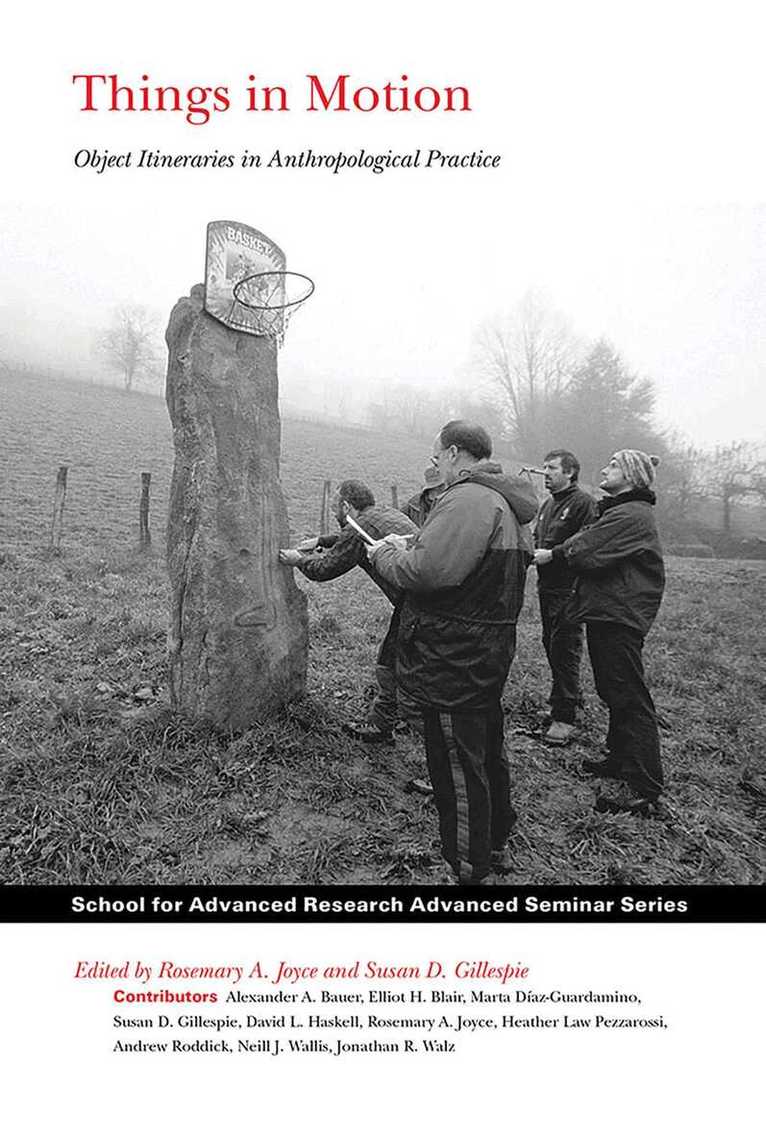
Complementing the concept of object biography, the contributors to this volume use the complex construct of “itineraries” to trace the places in which objects come to rest or are active, the routes through which things circulate, and the means by which they are moved. The contributors advocate for a broader engagement with the mobility of things, from the point at which things emerge from source material to the organization of their manufacture and use, their subsequent movements as mediated by economic and ritual exchanges, their deposition in places that become archaeological sites, their emergence through research and subsequent curation in museum collections, and their circulation in the contemporary world, including through reproduction in other media. Ultimately, the contributors explore movement as a fundamental capacity of things and demonstrate the dynamic capacity of things in motion.
Del 6 - Early Americas: History and Culture
Painted Pottery of Honduras
Object Lives and Itineraries
Inbunden, Engelska, 2017
2 394 kr
Skickas inom 5-8 vardagar
In Painted Pottery of Honduras Rosemary Joyce describes the development of the Ulua Polychrome tradition in Honduras from the fifth to sixteenth centuries AD, and critically examines archaeological research on these objects that began in the nineteenth century. Previously treated as a marginal product of Classic Maya society, this study shows that Ulua Polychromes are products of the ritual and social life of indigenous societies composed of wealthy farmers engaged in long-distance relationships extending from Costa Rica to Mexico.Drawing on concepts of agency, practice, and intention, Rosemary Joyce takes a potter's perspective and develops a generational workshop model for innovation by communities of practice who made and used painted pottery in serving meals and locally meaningful ritual practices.