Julia Lovell - Böcker
Visar alla böcker från författaren Julia Lovell. Handla med fri frakt och snabb leverans.
15 produkter
15 produkter
319 kr
Skickas inom 3-6 vardagar
152 kr
Skickas
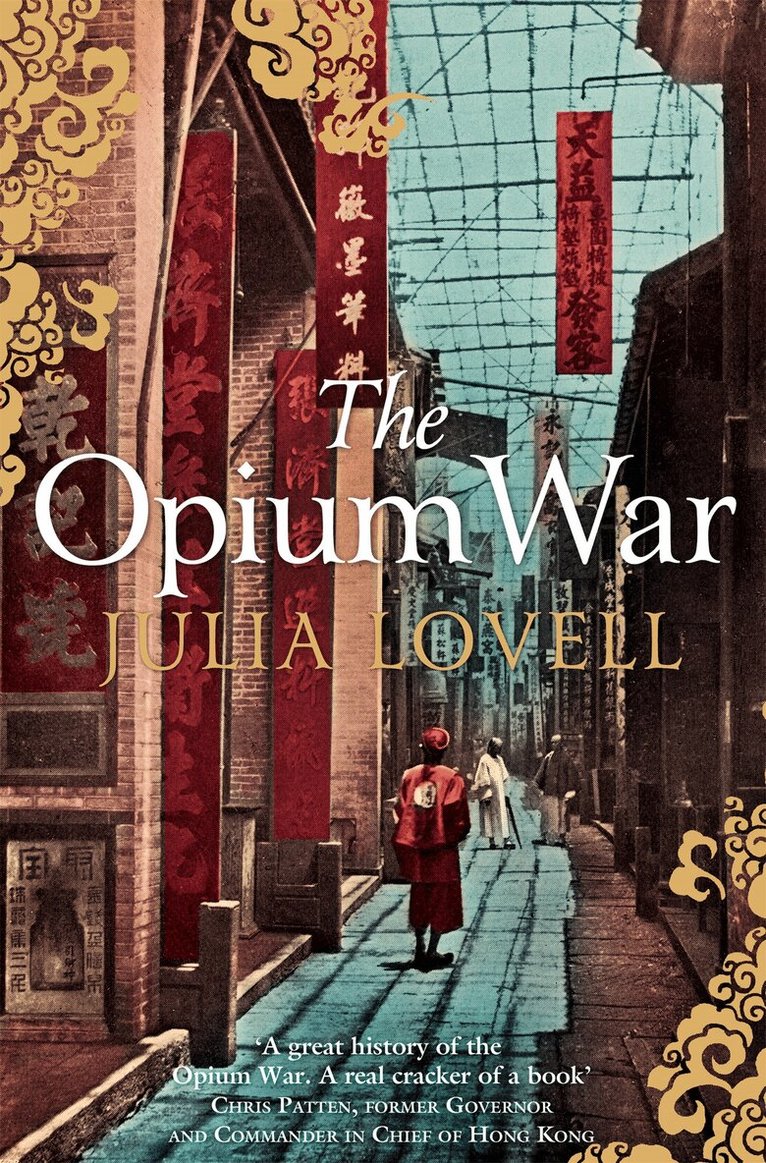
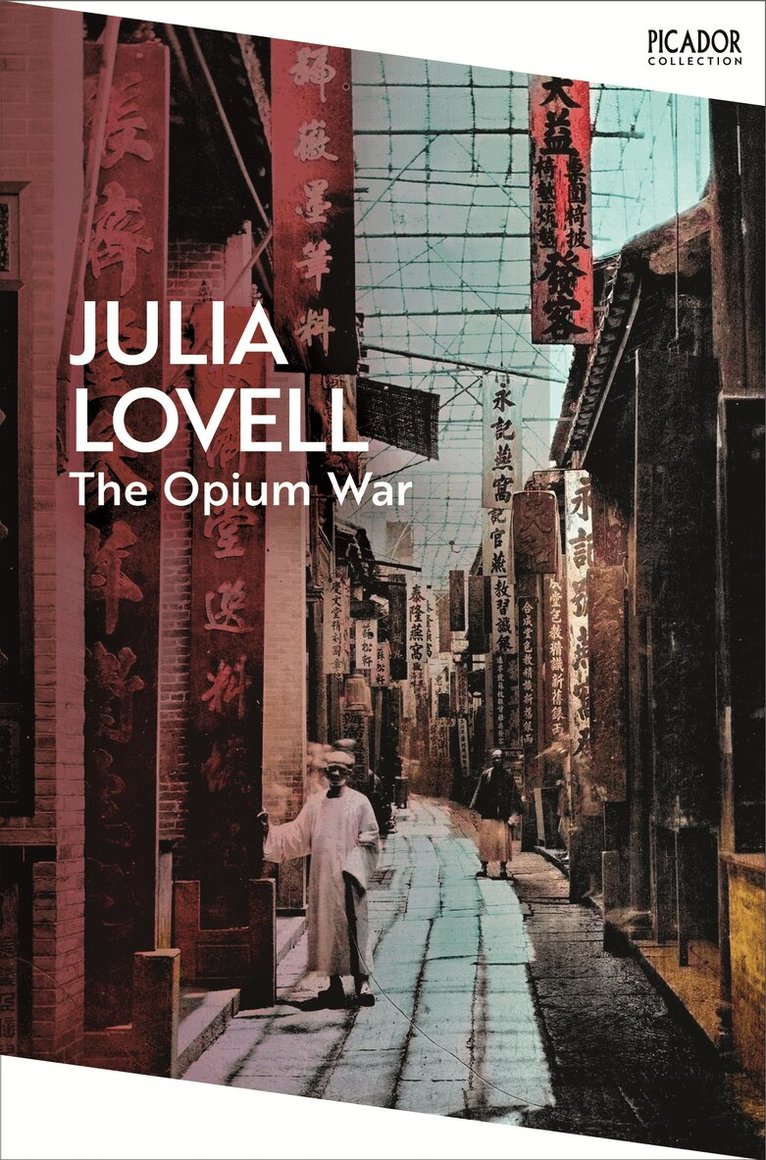
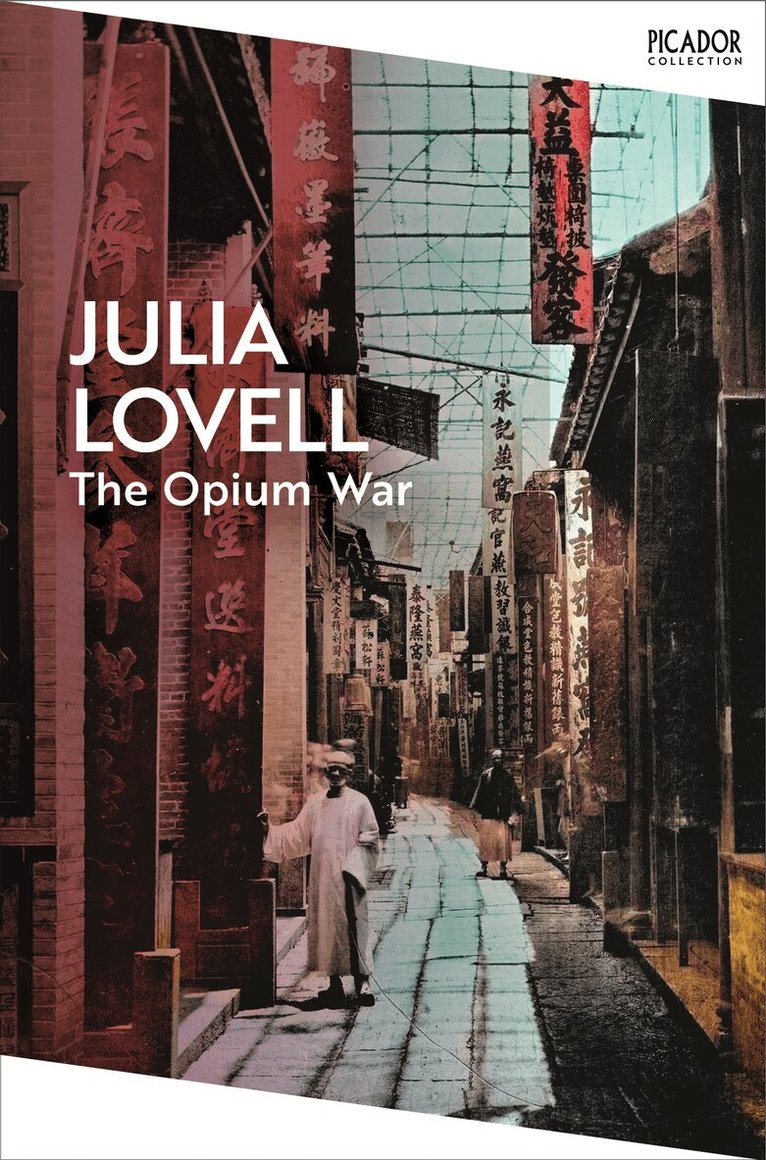
‘A gripping read as well as an important one.’ Rana Mitter, GuardianIn October 1839, Britain entered the first Opium War with China. Its brutality notwithstanding, the conflict was also threaded with tragicomedy: with Victorian hypocrisy, bureaucratic fumblings, military missteps, political opportunism and collaboration. Yet over the past hundred and seventy years, this strange tale of misunderstanding, incompetence and compromise has become the founding episode of modern Chinese nationalism.Starting from this first conflict, The Opium War explores how China’s national myths mould its interactions with the outside world, how public memory is spun to serve the present, and how delusion and prejudice have bedevilled its relationship with the modern West.‘Lively, erudite and meticulously researched’ Literary Review‘An important reminder of how the memory of the Opium War continues to cast a dark shadow.’ Sunday Times
158 kr
Skickas
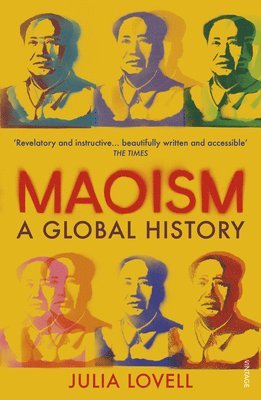
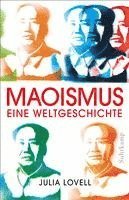
WINNER OF THE CUNDILL HISTORY PRIZE 2019SHORLISTED FOR THE BAILLIE GIFFORD PRIZE 2019'A landmark work giving a global panorama of Mao's ideology filled with historic events and enlivened by striking characters' Jonathan Fenby, author of The Penguin History of China'Wonderful' Andrew Marr, New StatesmanSince the 1980s, China seems to have abandoned the utopian turmoil of Mao's revolution in favour of authoritarian capitalism. But Mao and his ideas remain central to the People's Republic. With disagreements between China and the West on the rise, the need to understand the political legacy of Mao is urgent and growing.A crucial motor of the Cold War: Maoism shaped the course of the Vietnam War and brought to power the Khmer Rouge in Cambodia; it aided anti-colonial resistance movements in Africa; it inspired terrorism in Germany and Italy, and wars and insurgencies in Peru, India and Nepal, some of which are still with us today.Starting with the birth of Mao's revolution in northwest China in the 1930s and concluding with its violent afterlives in South Asia and resurgence in the People's Republic today, Julia Lovell re-evaluates Maoism as both a Chinese and an international force, linking its evolution in China with its global legacy.
278 kr
169 kr
Skickas
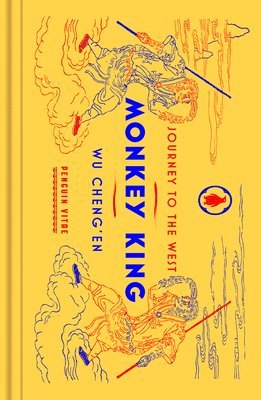
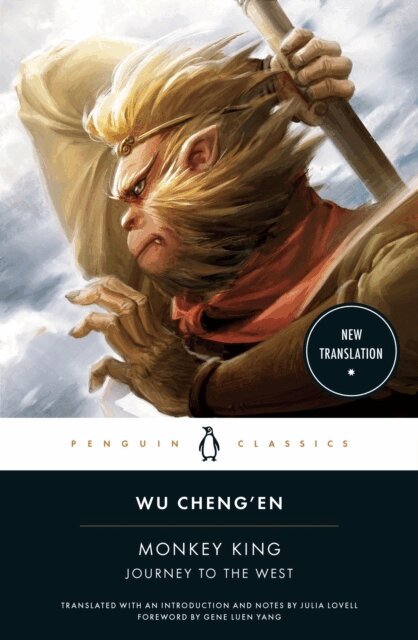
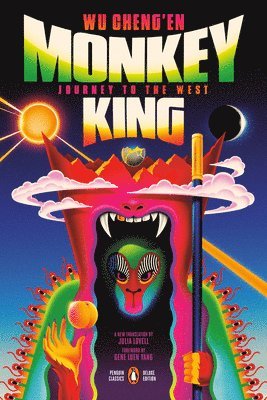
One of the world's greatest fantasy novels, and a timeless classic of Chinese literatureOne of China's Four Great Classical Novels, Monkey King was written anonymously during the Ming dynasty and is most commonly attributed to Wu Cheng'en, the son of a silk-shop clerk from east China. It recounts a Tang-dynasty monk's quest for Buddhist scriptures, accompanied by an omni-talented kung-fu Monkey King called Sun Wukong; a rice-loving divine pig; and a depressive man-eating river-sand monster.Comparable to The Canterbury Tales or Don Quixote, the tale is at once a comic adventure story, a humorous satire of Chinese bureaucracy, a spring of spiritual insight and an extended allegory in which the group of pilgrims journeys towards enlightenment.
2 719 kr
Kommande
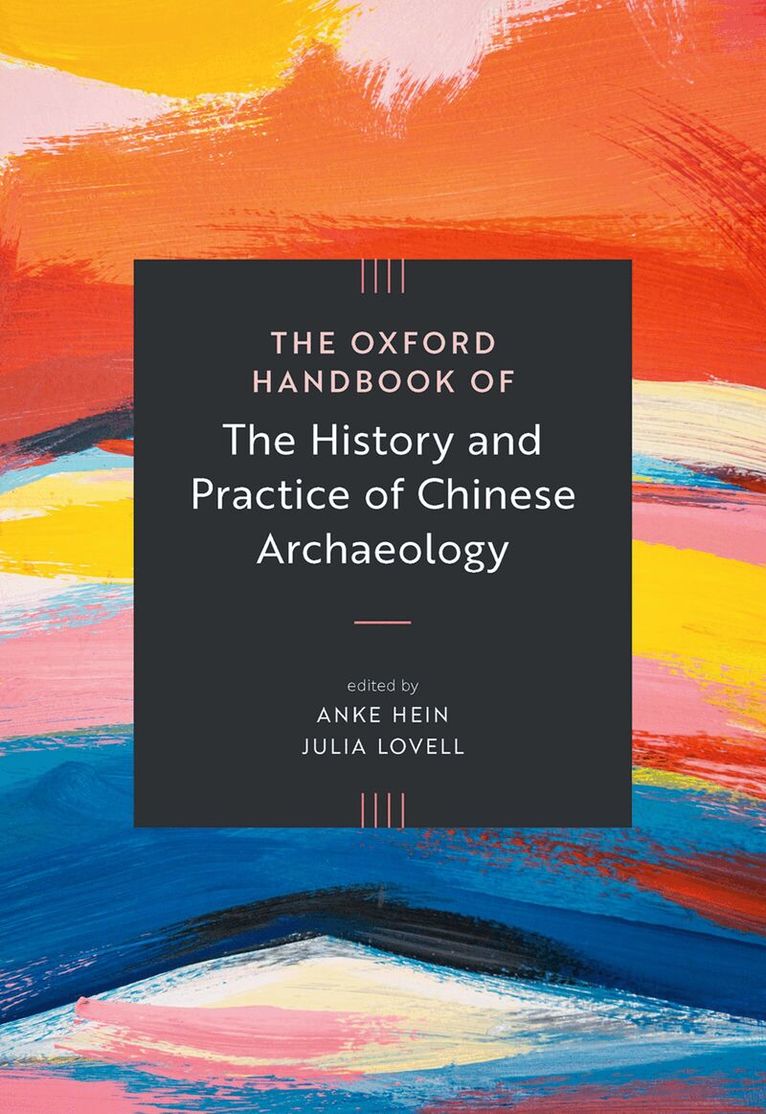
Archaeology publications tend to focus on the history of archaeology through a lens of an account and summary of discoveries without considering the contexts (cultural, intellectual, political, economic) of knowledge production that have shaped the course of these discoveries, the research questions asked, and the practice of the discipline. Chinese archaeology in particular has been presented largely in short single-author accounts that often focus exclusively on the Central Plains and to a lesser extent northern China. New and varied perspectives on this topic are essential for a better understanding of not just the practice of archaeology in China, but also a well-rounded understanding of modern and present-day China. Historians, anthropologists, and archaeologists alike would benefit from a comprehensive overview of the region and its notable relationship to the discipline of archaeology. The Oxford Handbook of the History and Practice of Chinese Archaeology is a multi-regional and multi-voiced account of the history of Chinese archaeology. It provides insights into the actors, structures, and motivations moving this history forward, from the beginnings of the discipline, up to the present day. This volume brings together 47 chapters contributed by a diverse community of scholars (archaeologists, historians, heritage specialists, and museum professionals) from Asia, Europe and North America to cover many of the most significant issues in Chinese archaeology: the discipline's origins in antiquarian practices at least a millennium old; its beginnings amid the cultural, intellectual and epistemological tumult of the early 20th century; the intersection of local and international scholarship in the formation of the discipline; the specificities of fieldwork practice and institutional organization; and the impact of scientific methods that have transformed knowledge production.
738 kr
Skickas inom 3-6 vardagar
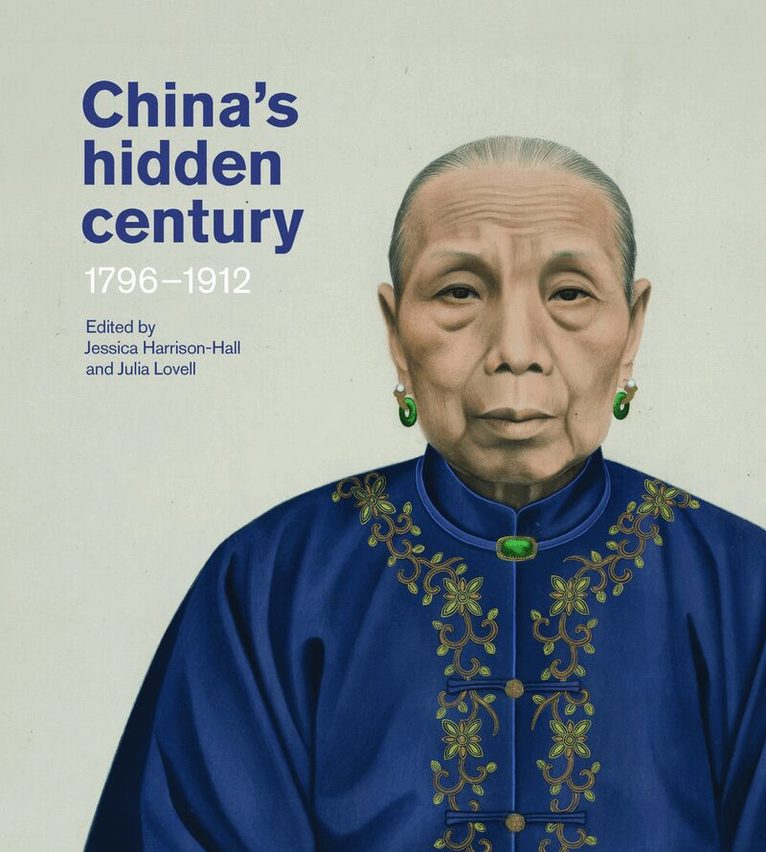
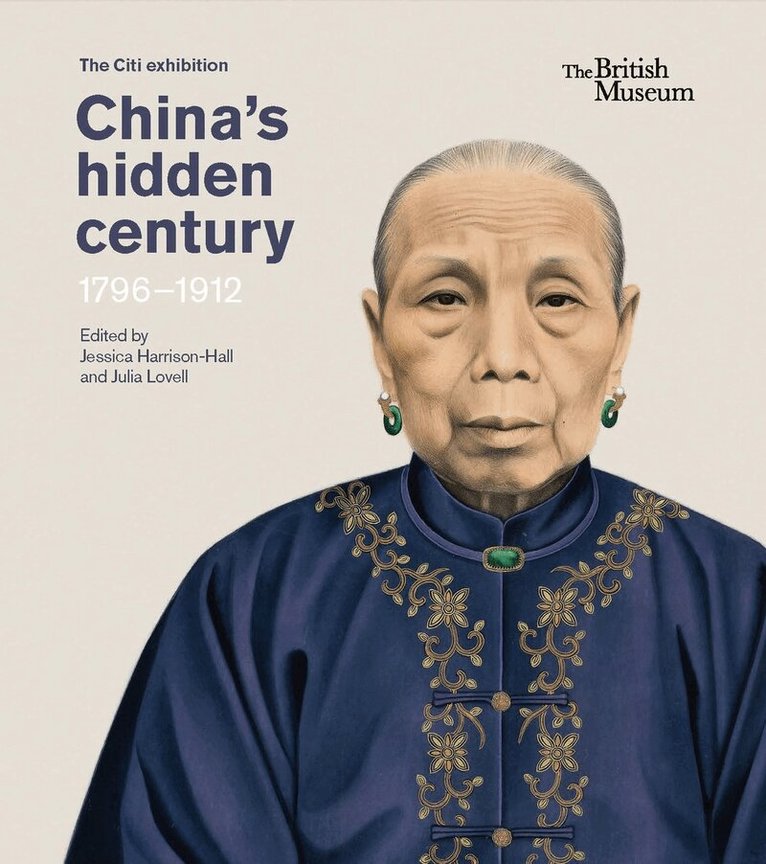
Cultural creativity in China between 1796 and 1912 demonstrated extraordinary resilience in a time of warfare, land shortages, famine, and uprisings. Innovation can be seen in material culture (including print, painting, calligraphy, textiles, jewelry, ceramics, lacquer, arms and armor, and photography) during a century in which China's art, literature, crafts, and technology faced unprecedented exposure to global influences.Until recently the nineteenth century in China has been defined as an era of cultural stagnation. Built on new research, this book sets out a fresh understanding of this important period and creates a detailed visual account of responses to war, technology, urbanization, political transformations, and external influences. The narratives are brought to life and individualized through illustrated biographical accounts that highlight the diversity of voices and experiences contributing to this fascinating, turbulent period in Chinese history.Exhibition dates: British Museum, May–October 2023
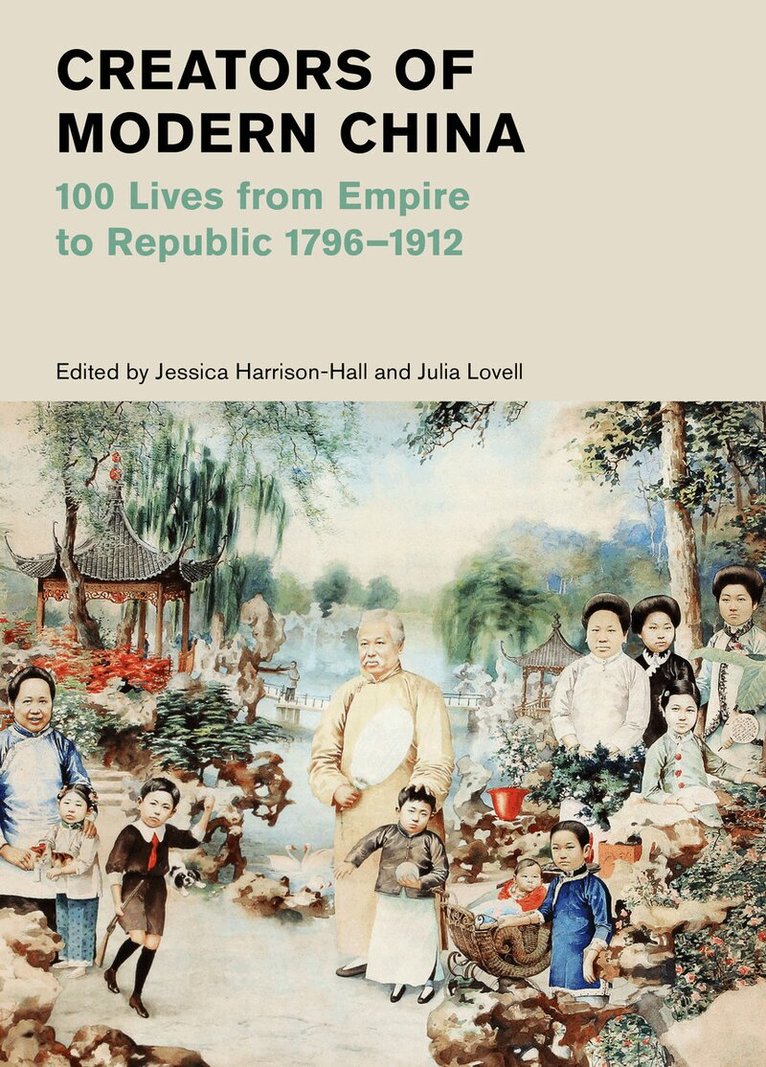
Creators of Modern China
100 Lives from Empire to Republic 1796–1912 (British Museum)
Inbunden, Engelska, 2023
370 kr
Skickas
Discover the stories of 100 women and men whose activities in the 19th century laid the foundations of modern China. Through telling the lives of one hundred significant individuals, this book explores how China transformed from dynastic empire to modern republican nation during the period 1796 to 1912. Both famous and surprisingly little-known women and men are brought together in eight thematic sections that bring to life the complexities of China’s path to modernity. Featured figures include the Dowager Empress Cixi, the power behind the throne of the Qing dynasty for fifty years; Yu Rongling, the aristocratic daughter of a Qing diplomat who trained in Paris with Isadora Duncan and is now seen as one of the founders of modern dance in China; Shi Yang, the most powerful woman pirate in the world, celebrated in popular culture as a female icon; the Manchu-Chinese Duanfang, a lynchpin of late Qing government and an avid collector of international art, murdered by his own troops in the 1911 Revolution that ended dynastic rule; Luo Zhenyu, a pioneer of Chinese archaeology whose discoveries and research empirically confirmed the antiquity of Chinese civilization; and many others. Written by an international team of specialists, this book populates the landscapes of modern Chinese history with extraordinary individuals, making sense of the drama and creativity of the country’s ‘long 19th century’.
268 kr
Skickas inom 3-6 vardagar
430 kr
Skickas inom 7-10 vardagar
Winner of the 2025 Bei Shan Tang Catalogue Prize ‘Handsomely illustrated’ – Nineteenth-Century Art Worldwide ‘The book is a resounding success… a valuable guide to laypeople, students and scholars on the late Qing for years to come.’ – SEHEPUNKTE ‘The exhibition catalogue’s seven essays…are a guide to [a] re-reading of the past, threading the relics on display into a rich tapestry of what life entailed under the last century of Manchu reign.’ – Rhoda Kwan, The Mekong Review Cultural creativity in China between 1796 and 1912 demonstrated extraordinary resilience at a time of intense external and internal warfare and socioeconomic turmoil. Innovation can be seen in material culture (including print, painting, calligraphy, textiles, fashion, jewellery, ceramics, lacquer, glass, arms and armour, silver, and photography) during a century in which China’s art, literature, crafts and technology faced unprecedented exposure to global influences. 1796 – the official end of the reign of the Qianlong emperor – is viewed as the close of the ‘high Qing’ and the start of a period of protracted crisis. In 1912, the last emperor, Puyi, abdicated after the revolution of 1911, bringing to an end some 2,000 years of dynastic rule and making way for the republic. Until recently the 19th century in China has been often defined – and dismissed – as an era of cultural decline. Built on new research from a four-year project supported by the Arts and Humanities Research Council and with chapter contributions by international scholars from leading institutions, this beautifully illustrated, 336-page book edited by Jessica Harrison-Hall and Julia Lovell sets out a fresh understanding of this important era. It presents a stunning array of objects and artworks to create a detailed visual account of responses to war, technology, urbanisation, political transformations and external influences.
231 kr
Skickas inom 3-6 vardagar
Legendarily 2,200 years old and 4,300 miles long, the Great Wall of China seems to make an overwhelmingly confident physical statement about the country it spans: about China’s age-old sense of itself being an advanced civilization anxious to draw a clear line between itself and the barbarians” at its borders. But behind the wall’s intimidating exteriorand the myths that have built up around itis a complex history that has both defined and undermined China. Author Julia Lovell has written a new and important history of the Great Wall that guides the reader through the conquests and cataclysms of the Chinese empire, from the second millennium BC to the present day.In recent years, the Wall has become an ever more potent symbol of Chinese nationalism, of a determination to resist foreign domination. But how successful was the Wall in reality, and what was its real purpose? Was it a precursor, albeit on a huge scale, of the Berlin Walla barrier designed to keep its population in as much as undesirables out? Lovell looks behind the modern mythology of the Great Wall, uncovering a three-thousand-year history far more fragmented and less illustrious than its crowds of visitors imagine today. The story of the Wall winds through that of the Chinese state and the frontier policy that defined it, through the lives of the millions of individuals who supported, criticized, built, and attacked it.
328 kr
Skickas inom 7-10 vardagar
In the 1980s, China's politicians, writers, and academics began to raise an increasingly urgent question: why had a Chinese writer never won a Nobel Prize for literature? Promoted to the level of official policy issue and national complex, Nobel anxiety generated articles, conferences, and official delegations to Sweden. Exiled writer Gao Xingjian's win in 2000 failed to satisfactorily end the matter, and the controversy surrounding the Nobel committee's choice has continued to simmer. Julia Lovell's comprehensive study of China's obsession spans the twentieth century and taps directly into the key themes of modern Chinese culture: national identity, international status, and the relationship between intellectuals and politics. The intellectual preoccupation with the Nobel literature prize expresses tensions inherent in China's move toward a global culture after the collapse of the Confucian world-view at the start of the twentieth century, and particularly since China's re-entry into the world economy in the post-Mao era. Attitudes toward the prize reveal the same contradictory mix of admiration, resentment, and anxiety that intellectuals and writers have long felt toward Western values as they struggled to shape a modern Chinese identity. In short, the Nobel complex reveals the pressure points in an intellectual community not entirely sure of itself. Making use of extensive original research, including interviews with leading contemporary Chinese authors and critics, ""The Politics of Cultural Capital"" is a comprehensive, up-to-date treatment of an issue that cuts to the heart of modern and contemporary Chinese thought and culture. It will be essential reading for scholars of modern Chinese literature and culture, globalization, post-colonialism, and comparative and world literature.
137 kr
Skickas inom 7-10 vardagar
‘A gripping read as well as an important one’ – Rana Mitter, The GuardianIn The Opium War, professor of Modern Chinese History and Literature Julia Lovell offers a compelling account of the causes and fallout of the Opium Wars.In October 1839, Britain entered the first Opium War with China. Its brutality notwithstanding, the conflict was also threaded with tragicomedy: with Victorian hypocrisy, bureaucratic fumblings, military missteps, political opportunism and collaboration. Yet over the past hundred and seventy years, this strange tale of misunderstanding, incompetence and compromise has become the founding episode of modern Chinese nationalism.Starting from this first conflict, The Opium War explores how China’s national myths mould its interactions with the outside world, how public memory is spun to serve the present, and how delusion and prejudice have bedevilled its relationship with the modern West.‘Lively, erudite and meticulously researched’ – Literary Review‘An important reminder of how the memory of the Opium War continues to cast a dark shadow’ – The Sunday TimesNow part of the Picador Collection, a series showcasing the very best of modern literature.
295 kr
Skickas inom 3-6 vardagar
440 kr
Skickas inom 3-6 vardagar