Julian F. Müller – författare
Visar alla böcker från författaren Julian F. Müller. Handla med fri frakt och snabb leverans.
3 produkter
3 produkter
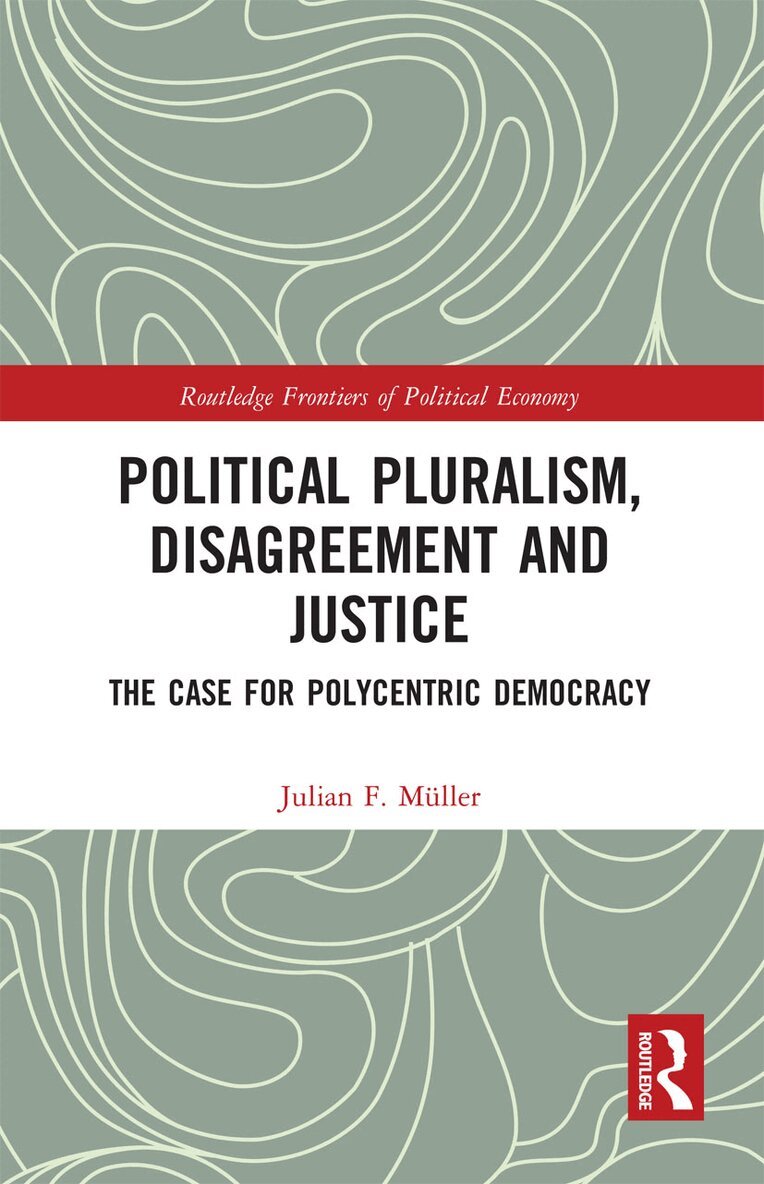
Political Pluralism, Disagreement and Justice
The Case for Polycentric Democracy
Häftad, Engelska, 2020
510 kr
Skickas inom 10-15 vardagar
This book poses the question: How can we organize society in such a way that our disagreement about facts and norms works to the benefit of everyone? In response, it makes the argument for polycentric democracy, a political arrangement consisting of various political units that enjoy different degrees of independence.It is argued that to progress towards justice, we first need to change our attitude towards reasonable disagreement. Theorists have always viewed reasonable disagreement as nuisance, if not as a threat. However, this work puts forward that the diversity of perspectives which underlie reasonable disagreement should be viewed as a resource to be harvested rather than a threat to be tamed. Resting on two key arguments, the author proposes the idea of polycentric democracy as the most capable method of making pluralism productive. The book explores what such a political order might look like and concludes that only an institutional system which is capable of profiting from diversity, such as polycentric democracy, might reasonably be expected to generate an overlapping consensus. Continuing in the tradition of Karl Popper and Friedrich August von Hayek, this book lies at the intersection of philosophy, political economy and political theory. It will be of great interest to academics and scholars working in philosophy, politics and economics.
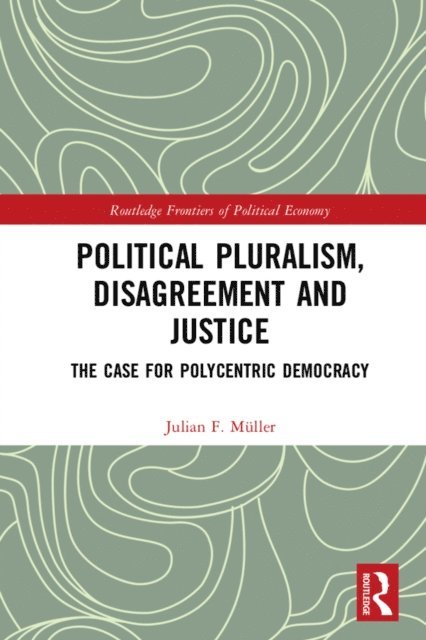
Political Pluralism, Disagreement and Justice
The Case for Polycentric Democracy
Inbunden, Engelska, 2019
1 773 kr
Skickas inom 10-15 vardagar
This book poses the question: How can we organize society in such a way that our disagreement about facts and norms works to the benefit of everyone? In response, it makes the argument for polycentric democracy, a political arrangement consisting of various political units that enjoy different degrees of independence.It is argued that to progress towards justice, we first need to change our attitude towards reasonable disagreement. Theorists have always viewed reasonable disagreement as nuisance, if not as a threat. However, this work puts forward that the diversity of perspectives which underlie reasonable disagreement should be viewed as a resource to be harvested rather than a threat to be tamed. Resting on two key arguments, the author proposes the idea of polycentric democracy as the most capable method of making pluralism productive. The book explores what such a political order might look like and concludes that only an institutional system which is capable of profiting from diversity, such as polycentric democracy, might reasonably be expected to generate an overlapping consensus. Continuing in the tradition of Karl Popper and Friedrich August von Hayek, this book lies at the intersection of philosophy, political economy and political theory. It will be of great interest to academics and scholars working in philosophy, politics and economics.
1 534 kr
Skickas inom 7-10 vardagar
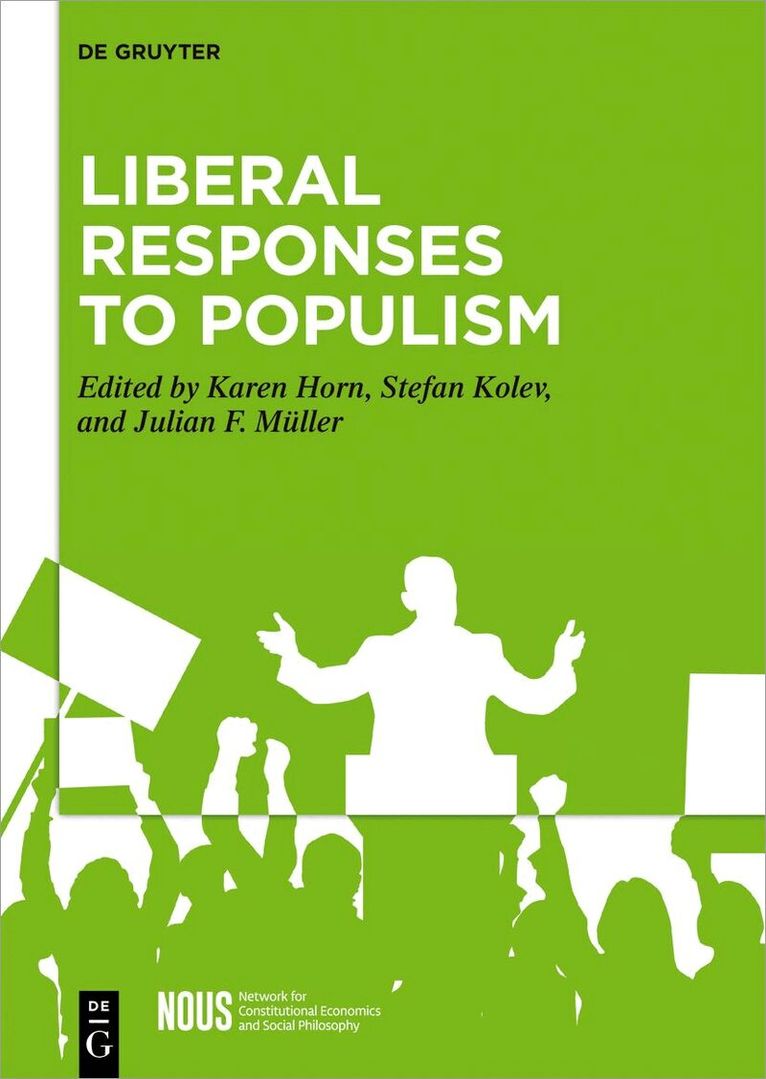
Populism has taken root almost everywhere in the West. It is crucial to understand how it has come about, where its antagonistic worldview, its nativism, its illiberalism and its anti-pluralism will take us, and how we should seek to fend off this threat to liberal democracy. In particular, what could liberal answers look like? This book is a collection of essays written by young and senior scholars in various fields from philosophy to economics. Part I explores populism’s nature and causes, shedding light on the lure of sovereignty, the perceived representation gap and the process of radicalization, and human psychology. Part II is dedicated to observations inside the political arena, pitting liberalism and populism in a historical perspective, analyzing the risk of democratic backsliding, and asking how liberals should navigate the political need to make compromises. In Part III, the focus turns to liberal responses such as rules-based public deliberation, a liberal ethics attending to civic virtues, improved representation through the blockchain, and polycentric migration policies. Part IV, finally, houses critical engagements with influential relevant authors such as Foucault, Laclau, Berlin, and Harrington. Liberal Responses to Populism is a rich and thought-provoking read for scholars and students in political economy, political science, and political philosophy.