Julie Park - Böcker
Visar alla böcker från författaren Julie Park. Handla med fri frakt och snabb leverans.
9 produkter
9 produkter
1 141 kr
Skickas inom 7-10 vardagar
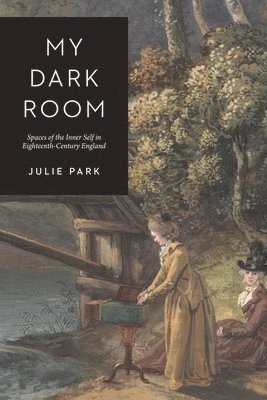
Examines spaces of inner life in eighteenth-century England to shed new light on interiority in literature and visual and material culture.In what kinds of spaces do we become most aware of the thoughts in our own heads? In My Dark Room, Julie Park explores places of solitude and enclosure that gave eighteenth-century subjects closer access to their inner worlds: grottos, writing closets, landscape follies, and the camera obscura, that beguiling “dark room” inside which the outside world in all its motion and color is projected. The camera obscura and its dreamlike projections within it served as a paradigm for the everyday spaces, whether in built environments or in imaginative writing, that generated the fleeting states of interiority eighteenth-century subjects were compelled to experience and inhabit.My Dark Room illuminates the spatial and physical dimensions of inner life in the long eighteenth century by synthesizing material analyses of diverse media, from optical devices and landscape architecture to women’s intimate dress, with close readings of literary texts not traditionally considered together, among them Andrew Marvell’s country house poem Upon Appleton House, Margaret Cavendish’s experimental epistolary work Sociable Letters, Alexander Pope’s heroic verse epistle Eloisa to Abelard, and Samuel Richardson’s novel Pamela. Park also analyzes letters and diaries, architectural plans, prints, drawings, paintings, and more, drawing our attention to the lively interactions between spaces and psyches in private environments. Park’s innovative method of “spatial formalism” reveals how physical settings enable psychic interiors to achieve vitality in lives both real and imagined.
325 kr
Skickas inom 7-10 vardagar
Examines spaces of inner life in eighteenth-century England to shed new light on interiority in literature and visual and material culture.In what kinds of spaces do we become most aware of the thoughts in our own heads? In My Dark Room, Julie Park explores places of solitude and enclosure that gave eighteenth-century subjects closer access to their inner worlds: grottos, writing closets, landscape follies, and the camera obscura, that beguiling “dark room” inside which the outside world in all its motion and color is projected. The camera obscura and its dreamlike projections within it served as a paradigm for the everyday spaces, whether in built environments or in imaginative writing, that generated the fleeting states of interiority eighteenth-century subjects were compelled to experience and inhabit.My Dark Room illuminates the spatial and physical dimensions of inner life in the long eighteenth century by synthesizing material analyses of diverse media, from optical devices and landscape architecture to women’s intimate dress, with close readings of literary texts not traditionally considered together, among them Andrew Marvell’s country house poem Upon Appleton House, Margaret Cavendish’s experimental epistolary work Sociable Letters, Alexander Pope’s heroic verse epistle Eloisa to Abelard, and Samuel Richardson’s novel Pamela. Park also analyzes letters and diaries, architectural plans, prints, drawings, paintings, and more, drawing our attention to the lively interactions between spaces and psyches in private environments. Park’s innovative method of “spatial formalism” reveals how physical settings enable psychic interiors to achieve vitality in lives both real and imagined.
2 167 kr
Skickas inom 10-15 vardagar
Haemophilia in Aotearoa New Zealand provides a richly detailed analysis of the experience of the bleeding disorder of haemophilia based on longterm ethnographic research. The chapters consider experiences of diagnosis; how parents, children, and adults care and integrate medical routines into family life; the creation of a gendered haemophilia; the use and ethical dilemmas of new technologies for treatment, testing and reproduction; and how individuals and the haemophilia community experienced the infected blood tragedy and its aftermath, which included extended and ultimately successful political struggles with the neoliberalising state. The authors reveal a complex interplay of cultural values and present a close-up view of the effects of health system reforms on lives and communities. While the book focuses on the local biology of haemophilia in Aotearoa New Zealand, the analysis allows for comparison with haemophilia elsewhere and with other chronic and genetic conditions.
676 kr
Skickas inom 10-15 vardagar
Haemophilia in Aotearoa New Zealand provides a richly detailed analysis of the experience of the bleeding disorder of haemophilia based on longterm ethnographic research. The chapters consider experiences of diagnosis; how parents, children, and adults care and integrate medical routines into family life; the creation of a gendered haemophilia; the use and ethical dilemmas of new technologies for treatment, testing and reproduction; and how individuals and the haemophilia community experienced the infected blood tragedy and its aftermath, which included extended and ultimately successful political struggles with the neoliberalising state. The authors reveal a complex interplay of cultural values and present a close-up view of the effects of health system reforms on lives and communities. While the book focuses on the local biology of haemophilia in Aotearoa New Zealand, the analysis allows for comparison with haemophilia elsewhere and with other chronic and genetic conditions.
2 172 kr
Skickas inom 10-15 vardagar
What does disgust have to do with citizenship? How might pain and pleasure, movement, taste, sound and smell be configured as aspects of national belonging? Senses and Citizenships: Embodying Political Life examines the intersections between sensory phenomena and national and supra-national forms of belonging, introducing the new concept of sensory citizenship. Expanding upon contemporary understandings of the rights and duties of citizens, the volume presents anthropological investigations of the sensory aspects of participation in collectivities such as face-to-face communities, ethnic groups, nations and transnational entities. Rethinking relationships between ideology, aesthetics, affect and bodily experience, the authors reveal the multiple political effects of the senses. The book demonstrates how various elements of political life, including some of the most fundamental aspects of citizenship, rest not only upon our senses, but on their perceived naturalization. Vivid ethnographic examples of sensory citizenship in Europe, the United States, the Pacific, Asia and the Middle East explore themes such as sight in political constructions; smell and ethnic conflict; pain in the constitution of communities; national soundscapes; taste in national identities; movement, memory and emplacement.
866 kr
Skickas inom 10-15 vardagar
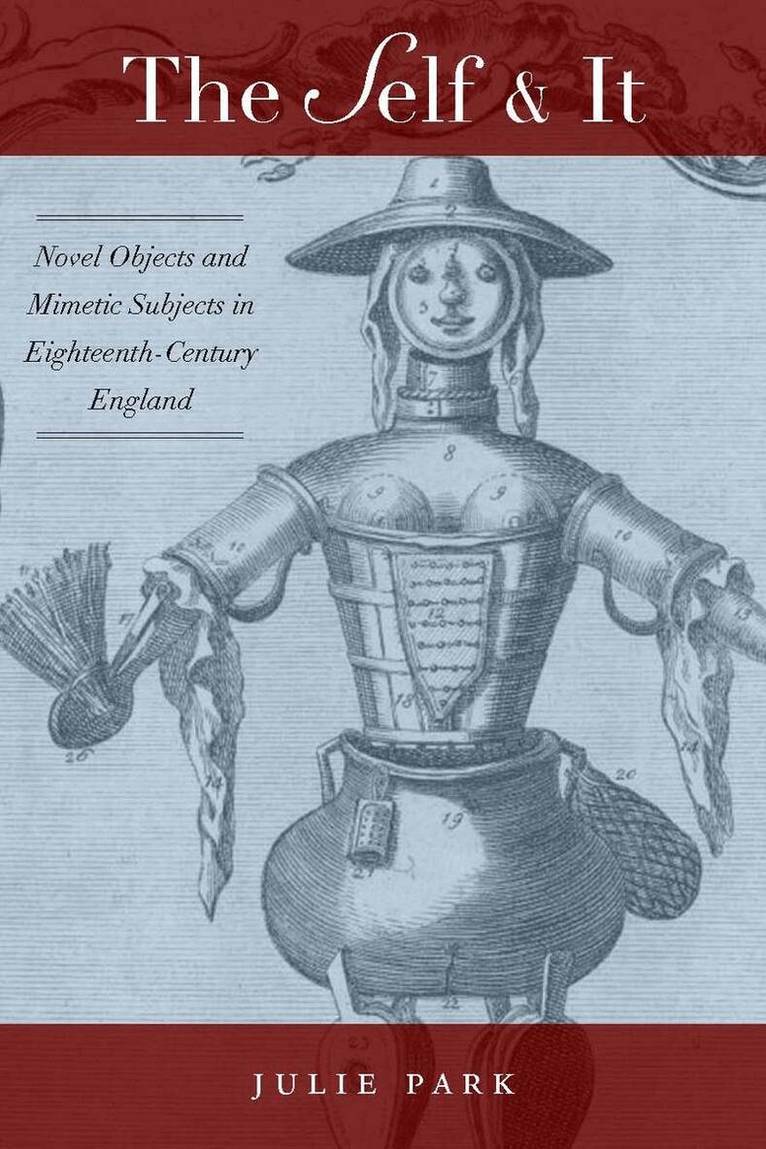
Objects we traditionally regard as "mere" imitations of the human—dolls, automata, puppets—proliferated in eighteenth-century England's rapidly expanding market culture. During the same period, there arose a literary genre called "the novel" that turned the experience of life into a narrated object of psychological plausibility. Park makes a bold intervention in histories of the rise of the novel by arguing that the material objects abounding in eighteenth-century England's consumer markets worked in conjunction with the novel, itself a commodity fetish, as vital tools for fashioning the modern self. As it constructs a history for the psychology of objects, The Self and It revises a story that others have viewed as originating later: in an age of Enlightenment, things have the power to move, affect people's lives, and most of all, enable a fictional genre of selfhood. The book demonstrates just how much the modern psyche—and its thrilling projections of "artificial life"—derive from the formation of the early novel, and the reciprocal activity between made things and invented identities that underlie it.
873 kr
Skickas inom 10-15 vardagar
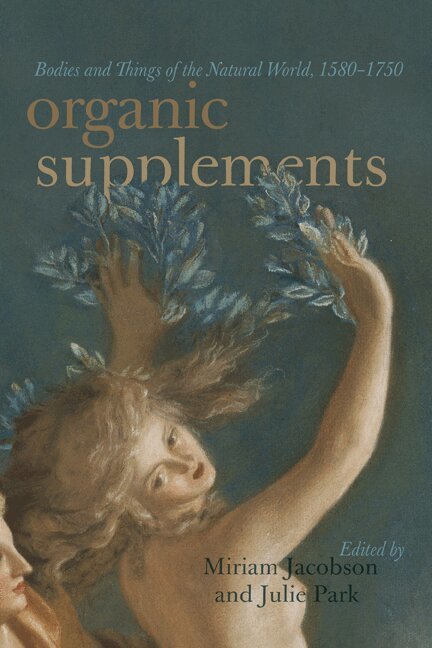
From the hair of a famous dead poet to botanical ornaments and meat pies, the subjects of this book are dynamic, organic artifacts. A cross-disciplinary collection of essays, Organic Supplements examines the interlaced relationships between natural things and human beings in early modern and eighteenth-century Europe. The material qualities of things as living organisms - and things that originate from living organisms - enabled a range of critical actions and experiences to take place for the people who wore, used, consumed, or perceived them.
420 kr
Skickas inom 10-15 vardagar
From the hair of a famous dead poet to botanical ornaments and meat pies, the subjects of this book are dynamic, organic artifacts. A cross-disciplinary collection of essays, Organic Supplements examines the interlaced relationships between natural things and human beings in early modern and eighteenth-century Europe. The material qualities of things as living organisms - and things that originate from living organisms - enabled a range of critical actions and experiences to take place for the people who wore, used, consumed, or perceived them.
683 kr
Skickas inom 10-15 vardagar
What does disgust have to do with citizenship? How might pain and pleasure, movement, taste, sound and smell be configured as aspects of national belonging? Senses and Citizenships: Embodying Political Life examines the intersections between sensory phenomena and national and supra-national forms of belonging, introducing the new concept of sensory citizenship. Expanding upon contemporary understandings of the rights and duties of citizens, the volume presents anthropological investigations of the sensory aspects of participation in collectivities such as face-to-face communities, ethnic groups, nations and transnational entities. Rethinking relationships between ideology, aesthetics, affect and bodily experience, the authors reveal the multiple political effects of the senses. The book demonstrates how various elements of political life, including some of the most fundamental aspects of citizenship, rest not only upon our senses, but on their perceived naturalization. Vivid ethnographic examples of sensory citizenship in Europe, the United States, the Pacific, Asia and the Middle East explore themes such as sight in political constructions; smell and ethnic conflict; pain in the constitution of communities; national soundscapes; taste in national identities; movement, memory and emplacement.