Junaid Rana - Böcker
Visar alla böcker från författaren Junaid Rana. Handla med fri frakt och snabb leverans.
4 produkter
4 produkter
816 kr
Skickas inom 7-10 vardagar
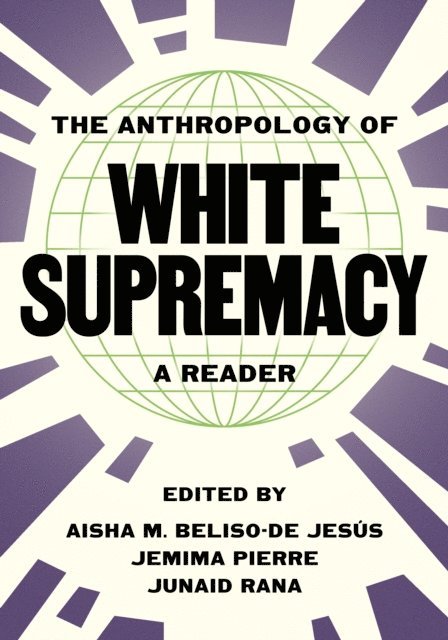
An anthology of original essays that examine white supremacy around the globe through the lens of anthropologyWhite supremacy, an entrenched global system that emerged alongside European colonialism, is based on presumed biological and cultural differences, racist practices, the hypervaluation of whiteness, and the devaluation of nonwhites. Anthropology has been shaped by—and has helped to shape—white supremacy, yet the discipline also offers powerful tools for understanding this system at a global scale. The Anthropology of White Supremacy gathers original essays from a diverse, international group of anthropologists to explore how this phenomenon works both within anthropology and in cultural and political structures around the world.The book features historical and ethnographic analysis about Brazil, Iceland, Japan, Mexico, Nigeria, Palestine, Senegal, South Africa, and the United States, and addresses the ways white supremacy impacts a broad range of issues, including finance, advertising and media representations, militarism, police training, migration, and development.The Anthropology of White Supremacy demonstrates not only how anthropology can help us to better comprehend white supremacy, but also how the discipline can help us begin to dismantle it.The contributors include Omolade Adunbi, Samar Al-Bulushi, Aisha M. Beliso-De Jesús, Michael L. Blakey, Mitzi Uehara Carter, Subhadra Mitra Channa, Celina de Sá, Vanessa Díaz, Britt Halvorson, Faye V. Harrison, Sarah Ihmoud, Anthony R. Jerry, Darryl Li, Kristín Loftsdóttir, Christopher A. Loperena, Keisha-Khan Y. Perry, Jemima Pierre, Jean Muteba Rahier, Laurence Ralph, Renya K. Ramirez, Junaid Rana, Joshua Reno, Rhea Rahman, Jonathan Rosa, Shalini Shankar, Shannon Speed, and Maria Dyveke Styve.
250 kr
Skickas inom 7-10 vardagar
An anthology of original essays that examine white supremacy around the globe through the lens of anthropologyWhite supremacy, an entrenched global system that emerged alongside European colonialism, is based on presumed biological and cultural differences, racist practices, the hypervaluation of whiteness, and the devaluation of nonwhites. Anthropology has been shaped by—and has helped to shape—white supremacy, yet the discipline also offers powerful tools for understanding this system at a global scale. The Anthropology of White Supremacy gathers original essays from a diverse, international group of anthropologists to explore how this phenomenon works both within anthropology and in cultural and political structures around the world.The book features historical and ethnographic analysis about Brazil, Iceland, Japan, Mexico, Nigeria, Palestine, Senegal, South Africa, and the United States, and addresses the ways white supremacy impacts a broad range of issues, including finance, advertising and media representations, militarism, police training, migration, and development.The Anthropology of White Supremacy demonstrates not only how anthropology can help us to better comprehend white supremacy, but also how the discipline can help us begin to dismantle it.The contributors include Omolade Adunbi, Samar Al-Bulushi, Aisha M. Beliso-De Jesús, Michael L. Blakey, Mitzi Uehara Carter, Subhadra Mitra Channa, Celina de Sá, Vanessa Díaz, Britt Halvorson, Faye V. Harrison, Sarah Ihmoud, Anthony R. Jerry, Darryl Li, Kristín Loftsdóttir, Christopher A. Loperena, Keisha-Khan Y. Perry, Jemima Pierre, Jean Muteba Rahier, Laurence Ralph, Renya K. Ramirez, Junaid Rana, Joshua Reno, Rhea Rahman, Jonathan Rosa, Shalini Shankar, Shannon Speed, and Maria Dyveke Styve.
278 kr
Skickas inom 7-10 vardagar
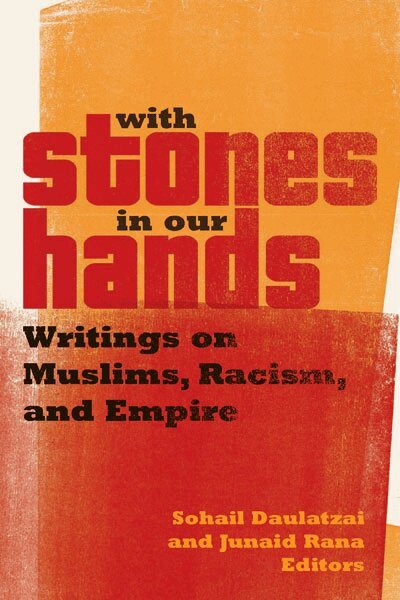
Bringing together scholars and activists, With Stones in Our Hands confronts the rampant anti-Muslim racism and imperialism across the globe todayAfter September 11, 2001, the global War on Terror has made clear that Islam and Muslims are central to an imperial system of racism. Prior to 9/11, white supremacy had a violent relationship of dominance with Islam and Muslims. Racism against Muslims today borrows from centuries of white supremacy and is a powerful and effective tool to maintain the status quo.With Stones in Our Hands compiles writings by scholars and activists who are leading the struggle to understand and combat anti-Muslim racism. Through a bold call for a politics of the Muslim Left and the poetics of the Muslim International, this book offers a glimpse into the possibilities of social justice, decolonial struggle, and political solidarity. The essays in this anthology reflect a range of concerns such as the settler colonial occupation of Palestine, surveillance and policing, blackness and radical protest traditions, militarism and empire building, social movements, and political repression. With Stones in Our Hands offers new ideas to achieve decolonization and global solidarity.Contributors: Rabab Ibrahim Abdulhadi, Abdullah Al-Arian, Arshad Imtiaz Ali, Evelyn Alsultany, Vivek Bald, Abbas Barzegar, Hatem Bazian, Sylvia Chan-Malik, Arash Davari, Fatima El-Tayeb, Hafsa Kanjwal, Ronak K. Kapadia, Maryam Kashani, Robin D. G. Kelley, Su‘ad Abdul Khabeer, Nadine Naber, Selim Nadi, Sherene H. Razack, Atef Said, Steven Salaita, Stephen Sheehi.
324 kr
Skickas inom 7-10 vardagar
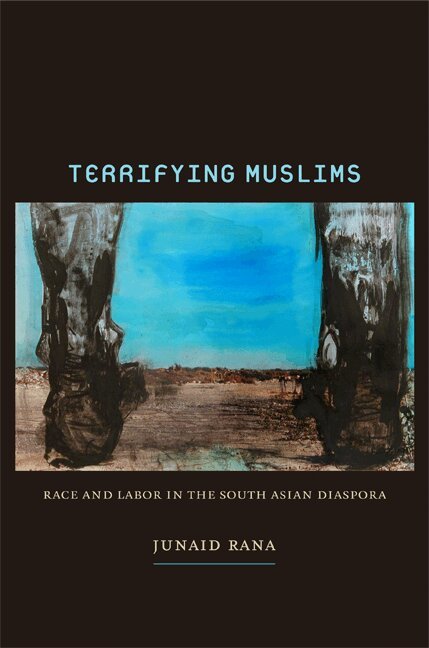
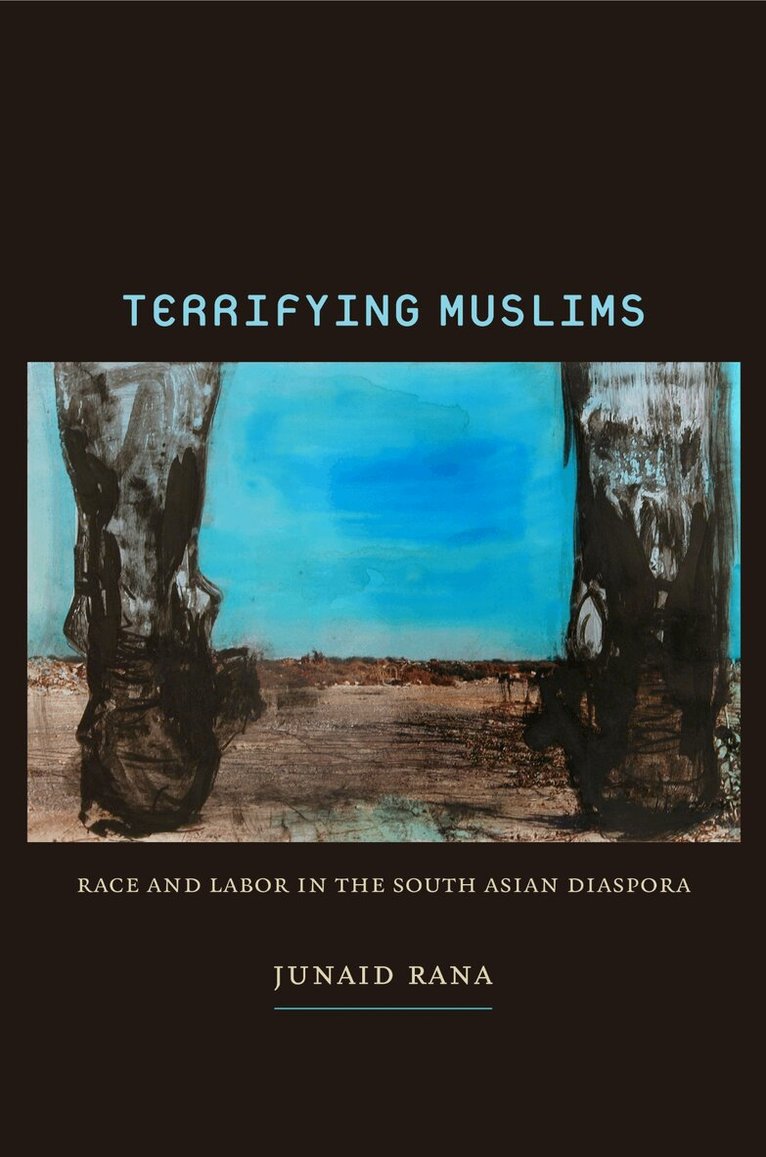
Terrifying Muslims highlights how transnational working classes from Pakistan are produced, constructed, and represented in the context of American empire and the recent global War on Terror. Drawing on ethnographic research that compares Pakistan, the Middle East, and the United States before and after 9/11, Junaid Rana combines cultural and material analyses to chronicle the worldviews of Pakistani labor migrants as they become part of a larger global racial system. At the same time, he explains how these migrants’ mobility and opportunities are limited by colonial, postcolonial, and new imperial structures of control and domination. He argues that the contemporary South Asian labor diaspora builds on and replicates the global racial system consolidated during the period of colonial indenture. Rana maintains that a negative moral judgment attaches to migrants who enter the global labor pool through the informal economy. This taint of the illicit intensifies the post-9/11 Islamophobia that collapses varied religions, nationalities, and ethnicities into the threatening racial figure of “the Muslim.” It is in this context that the racialized Muslim is controlled by a process that beckons workers to enter the global economy, and stipulates when, where, and how laborers can migrate. The demonization of Muslim migrants in times of crisis, such as the War on Terror, is then used to justify arbitrary policing, deportation, and criminalization.