

June Granatir Alexander - Böcker
Visar alla böcker från författaren June Granatir Alexander. Handla med fri frakt och snabb leverans.
2 produkter
2 produkter
833 kr
Skickas inom 10-15 vardagar
The second wave of US immigration—from 1870 to 1920—brought over twenty-six million men, women, and children onto American shores. This in-depth study of the period underscores the diversity of peoples who came to the U.S. and highlights the significant shifts in geographic origins—from northern and western Europe to southern and eastern Europe—that occurred in the late nineteenth century and led to distinguishing between old and new immigrants. Thematic chapters provide an overview of the daily lives of these migrants, including distribution and settlement patterns, individual and family migrations, and permanent and temporary residency. Also discussed are demographics and characteristics of each ethnic group, as well as pressures to Americanize and other facets of adjusting to a new country and culture. An ideal source for students of American history and culture, this comprehensive work features over 40 engaging photos, a glossary of key terms, a chronology of events, and an extensive print and nonprint bibliography.
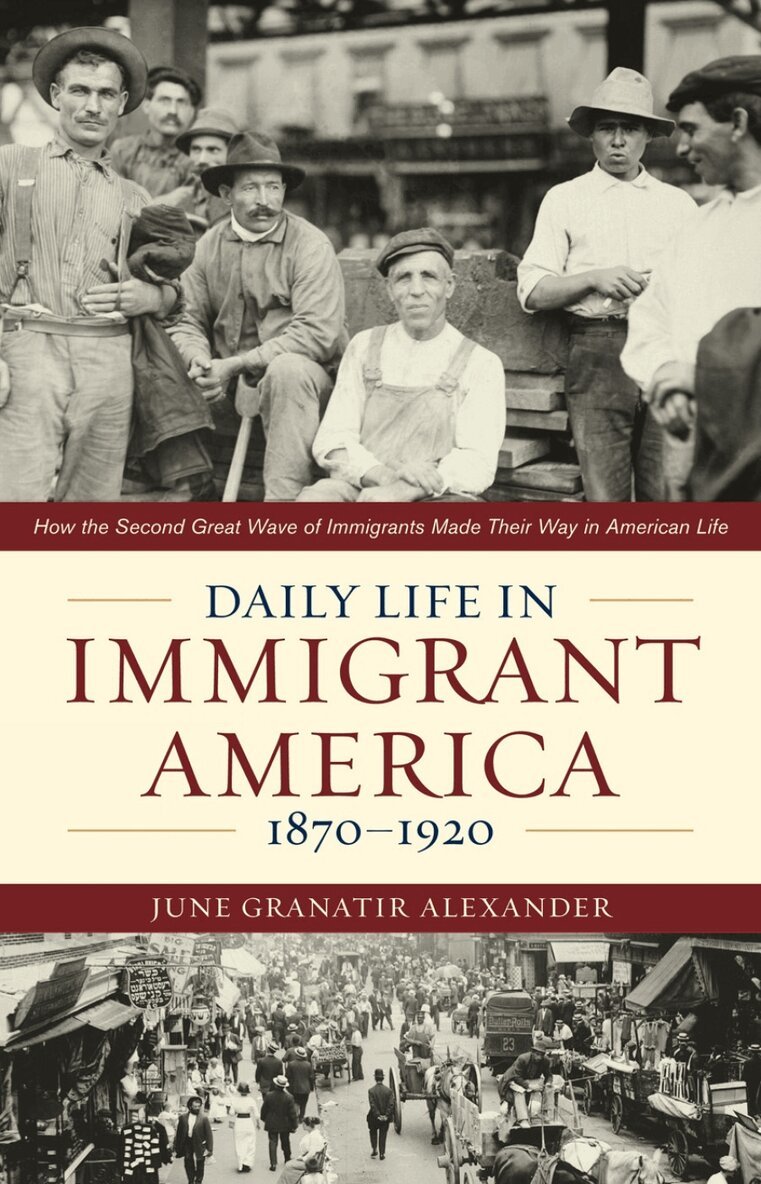
Daily Life in Immigrant America, 1870–1920
How the Second Great Wave of Immigrants Made Their Way in America
Häftad, Engelska, 2009
186 kr
Skickas inom 10-15 vardagar
The second "wave" of U.S. immigration, from 1870 to 1920, brought more than 26 million men, women, and children onto American shores. June Granatir Alexander's history of the period underscores the diversity of peoples who came to the United States in these years and emphasizes the important shifts in their geographic origins—from northern and western Europe to southern and eastern Europe—that led to the distinction between "old" and "new" immigrants. Alexander offers an engrossing picture of the immigrants' daily lives, including the settlement patterns of individuals and families, the demographics and characteristics of each of the ethnic groups, and the pressures to "Americanize" that often made the adjustment to life in a new country so difficult. The approach, similar to David Kyvig's highly successful Daily Life in the United States, 1920–1940 (published by Ivan R. Dee in 2004), presents history with an appealing immediacy, on a level that everyone can understand.