Jun'ichi Isomae – författare
Visar alla böcker från författaren Jun'ichi Isomae. Handla med fri frakt och snabb leverans.
11 produkter
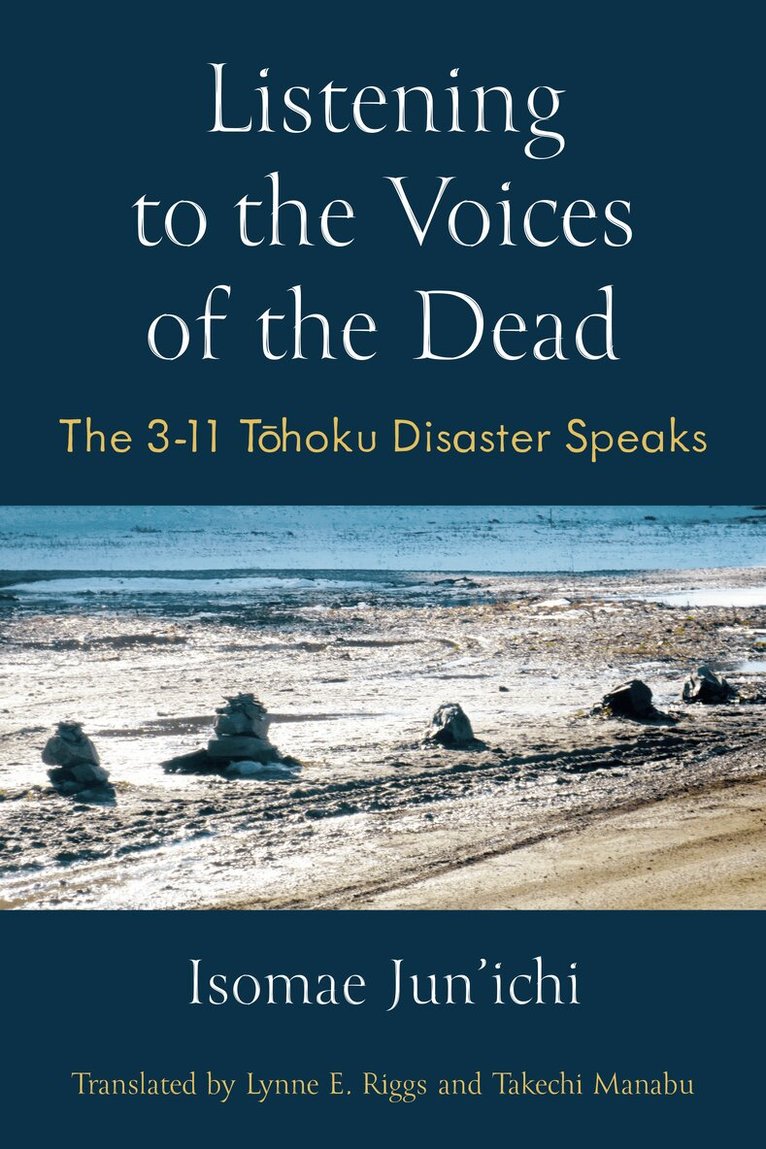
Listening to the Voices of the Dead
The 3-11 Tohoku Disaster Speaks
Häftad, 2024
504 kr
Lägg i varukorg
Listening to the Voices of the Dead is an account of the author’s search for the disquieted voices of the dead in the wake of the March 11, 2011, Tōhoku Disaster and his attempt to translate those voices for the living. Isomae Jun’ichi considers the disaster a challenge for outside observers to …
Listening to the Voices of the Dead
The 3-11 Tohoku Disaster Speaks
Inbunden, 2024
988 kr
Lägg i varukorg
Listening to the Voices of the Dead is an account of the author’s search for the disquieted voices of the dead in the wake of the March 11, 2011, Tōhoku Disaster and his attempt to translate those voices for the living. Isomae Jun’ichi considers the disaster a challenge for outside observers to …
Listening to the Voices of the Dead
The 3-11 Tohoku Disaster Speaks
E-bok, 2024
758 kr
Lägg i varukorg
Listening to the Voices of the Dead is an account of the author’s search for the disquieted voices of the dead in the wake of the March 11, 2011, Tōhoku Disaster and his attempt to translate those voices for the living. Isomae Jun’ichi considers the disaster a challenge for outside observers to …
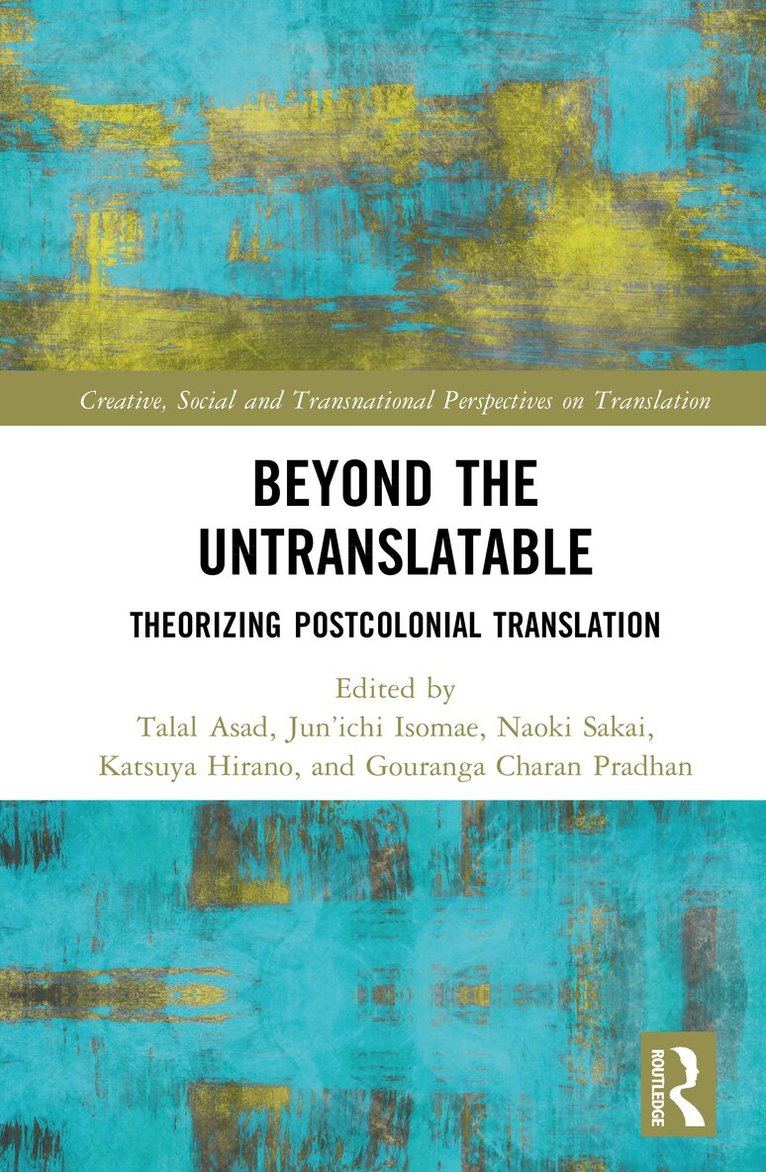
Beyond the Untranslatable
Theorizing Postcolonial Translation
Av Gouranga Charan Pradhan, Katsuya Hirano m. fl.
E-bok, 2026
956 kr
Lägg i varukorg
This collection examines postcolonial studies through the lens of translation studies, focusing on Asian and East Asian experiences. It redefines translation as a process of negotiating Otherness with language at its core.Following Talal Asad and Gayatri Chakravorty Spivak's critique, the book …
Beyond the Untranslatable
Theorizing Postcolonial Translation
Av Gouranga Charan Pradhan, Katsuya Hirano m. fl.
E-bok, 2026
956 kr
Lägg i varukorg
This collection examines postcolonial studies through the lens of translation studies, focusing on Asian and East Asian experiences. It redefines translation as a process of negotiating Otherness with language at its core.Following Talal Asad and Gayatri Chakravorty Spivak's critique, the book …
Beyond the Untranslatable
Theorizing Postcolonial Translation
Av Talal Asad, Jun’ichi Isomae m. fl.
Inbunden, 2026
2513 kr
Lägg i varukorg
This collection examines postcolonial studies through the lens of translation studies, focusing on Asian and East Asian experiences. It redefines translation as a process of negotiating Otherness with language at its core.Following Talal Asad and Gayatri Chakravorty Spivak’s critique, the book …
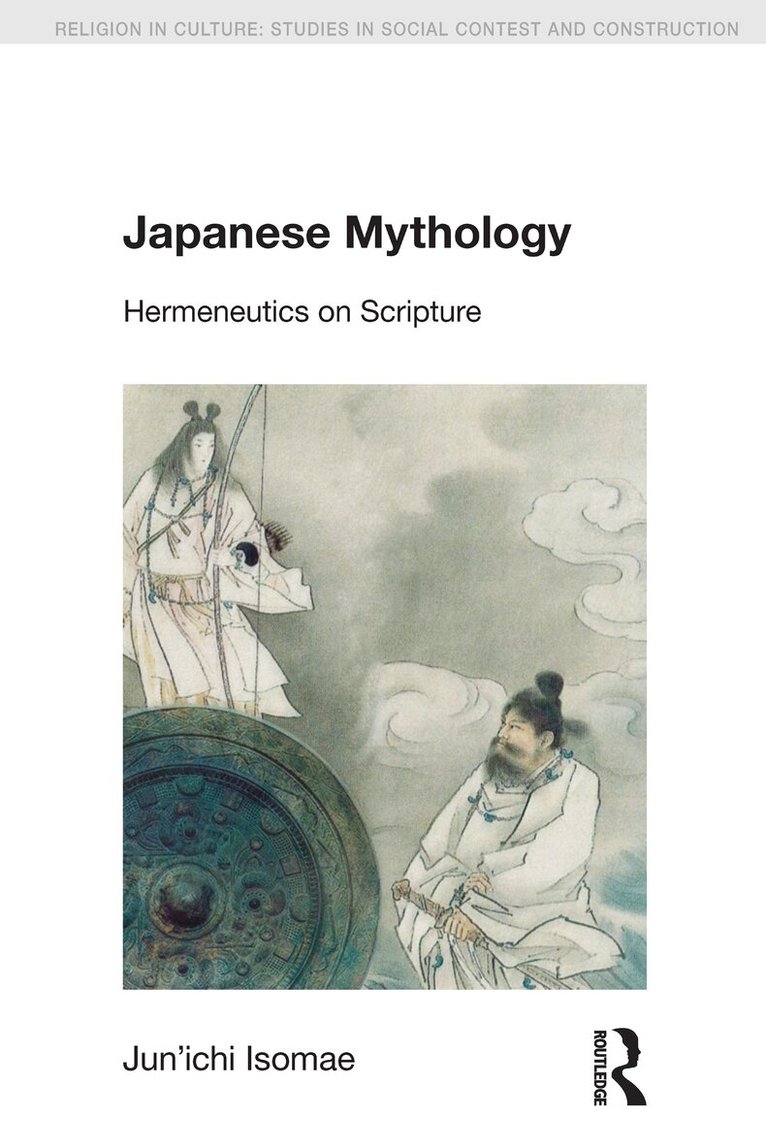
Japanese Mythology
Hermeneutics on Scripture
Av Mukund Subramanian, Jun'ichi Isomae
E-bok, 2016
746 kr
Lägg i varukorg
Before the westernisation of Japan, mythological events were treated as national history. Two key documents have contributed to this history, both written over 1300 years ago: ''Kojiki'', the Tale of Old Age, and ''Nihonshoki'', the Chronicle of Japanese History. Both the Imperial Court and the …
Japanese Mythology
Hermeneutics on Scripture
Av Mukund Subramanian, Jun'ichi Isomae
E-bok, 2016
762 kr
Lägg i varukorg
Before the westernisation of Japan, mythological events were treated as national history. Two key documents have contributed to this history, both written over 1300 years ago: ''Kojiki'', the Tale of Old Age, and ''Nihonshoki'', the Chronicle of Japanese History. Both the Imperial Court and the …
Japanese Mythology
Hermeneutics on Scripture
Av Jun'ichi Isomae, Mukund Subramanian
Häftad, 2009
648 kr
Lägg i varukorg
Before the westernisation of Japan, mythological events were treated as national history. Two key documents have contributed to this history, both written over 1300 years ago: 'Kojiki', the Tale of Old Age, and 'Nihonshoki', the Chronicle of Japanese History. Both the Imperial Court and the general …
OVERCOMING MODERNITY: EAST ASIAN COMMUNITY AND THE KYOTO SCHOOL
Av Naoki Sakai, Jun'ichi Isomae
Inbunden, 2029
2093 kr
Kommande
This book aims to present the historical and political significance of literary and philosophical debates conducted in East Asia during the war years of the 1930s and 1940s. The volume includes seven essays, an introduction and a translation of the manifesto “Principles of Thought for a New Japan …
Japanese Mythology
Hermeneutics on Scripture
Av Jun'ichi Isomae, Mukund Subramanian
Inbunden, 2009
2477 kr
Tillfälligt slut
Before the westernisation of Japan, mythological events were treated as national history. Two key documents have contributed to this history, both written over 1300 years ago: 'Kojiki', the Tale of Old Age, and 'Nihonshoki', the Chronicle of Japanese History. Both the Imperial Court and the general …